Beginner Guide to Identifying a Bakelite Beaded Necklace
Discover how to identify, price, and style a vintage bakelite beaded necklace. Learn the Simichrome test and avoid costly plastic fakes.

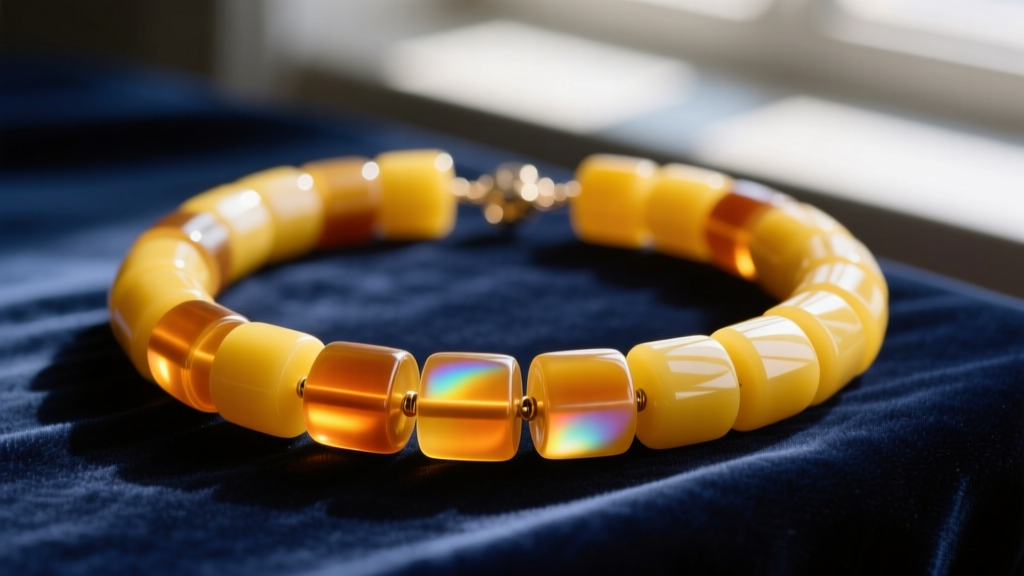
What Exactly is a Bakelite Beaded Necklace?
When you first encounter a vintage bakelite beaded necklace, the most striking feature is its undeniable weight and presence. Unlike modern costume jewelry, Bakelite is not a lightweight, injection-molded plastic. Invented by Leo Baekeland in 1907, Bakelite is a phenol formaldehyde resin. It was the world's first fully synthetic plastic, and because it is a thermosetting polymer, it cannot be melted down and recast once it hardens. Instead, vintage Bakelite beads were cast into large blocks or rods and then individually carved, turned on lathes, and polished by hand.
During the Art Deco boom of the 1920s and 1930s, Bakelite became the premier material for bold, geometric jewelry. Designers like Coco Chanel and Elsa Schiaparelli championed the material, elevating it from industrial insulators to high-fashion statements. Today, collecting these necklaces is a thrilling pursuit, but the market is flooded with modern acrylic and Lucite fakes. Understanding the material science and historical hardware is your best defense against overpaying for imitation plastics.
Material Breakdown: Bakelite vs. Lucite vs. Celluloid
To the untrained eye, all vintage plastics look similar. However, their chemical compositions result in vastly different physical properties. According to Collectors Weekly, knowing the difference between the "big three" vintage plastics is the foundation of authenticating your jewelry.
| Property | Bakelite (Phenolic) | Lucite (Acrylic) | Celluloid (Nitrocellulose) |
|---|---|---|---|
| Era of Peak Use | 1920s - 1940s | 1940s - 1960s | 1890s - 1920s |
| Weight & Density | Very Heavy, Dense | Lightweight, Glass-like | Extremely Light, Thin |
| Sound When Tapped | Dull, heavy "clunk" | Sharp, high-pitched "click" | Hollow, papery tap |
| Heat Reaction | Smells like formaldehyde | No distinct odor | Smells like camphor/pine |
| Carving Capability | Excellent (deep, crisp cuts) | Moderate (often molded) | Poor (brittle, thin sheets) |
The 3-Step Authentication Toolkit for Beginners
Authenticating a bakelite beaded necklace requires a multi-sensory approach. Never rely on a single test, as some modern resins can mimic one or two characteristics of phenolic resin. Use this three-step framework to verify your finds.
1. The Sound and Weight Test
Pick up the necklace. Genuine Bakelite is surprisingly heavy for its size. Gently tap two beads together. Bakelite produces a distinct, dull, and heavy "clunk." If you hear a sharp, glassy "click," you are likely holding Lucite or modern acrylic. If it sounds hollow or lightweight, it may be celluloid or a modern composite.
2. The Hot Water Smell Test
This is the safest non-destructive test. Run hot (not boiling) tap water over a bead for 15 to 20 seconds, or dip it in a cup of hot water. Immediately smell the bead. Authentic Bakelite will emit a harsh, chemical odor often described as formaldehyde, burnt hair, or a hospital disinfectant. As noted by Antique Trader, if the bead smells like camphor or Vicks VapoRub, it is celluloid. If it smells like nothing, it is likely Lucite or a modern plastic.
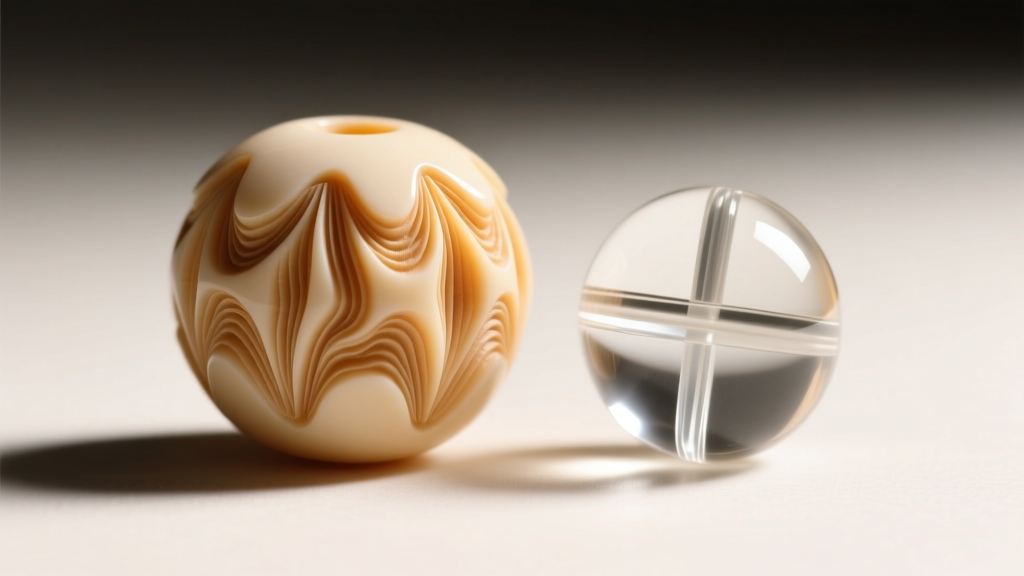
3. The Simichrome Polish Test
The gold standard for collectors is the Simichrome test. Dab a tiny amount of Simichrome metal polish onto a cotton swab and rub it firmly on an inconspicuous area of the bead. If the swab turns a bright mustard or yellowish-orange color, the piece is Bakelite. Important Caveat: This test does not work on black Bakelite, red Bakelite, or pieces that have been heavily lacquered or coated. Always wash the bead with mild soap and water immediately after testing to prevent long-term discoloration.
Pro-Tip: Never use the "hot pin" test. While some outdated guides suggest touching the bead with a heated needle to smell the smoke, this will permanently melt and scar the Bakelite, instantly destroying its collector value.
Color Grades and Pricing Matrix
The value of a bakelite beaded necklace is heavily dictated by its color, carving complexity, and hardware. Translucent and highly saturated colors command the highest premiums in the vintage market. Here is a breakdown of the most sought-after collector color grades and their current estimated market values for standard 18-inch strands.
- Apple Juice: A translucent, warm yellow-brown. Highly prized for its glowing clarity. Price Range: $150 - $350
- Creamed Corn: An opaque, rich, buttery yellow. Often features deep, hand-carved geometric grooves. Price Range: $200 - $450
- Root Beer: A deep, translucent brownish-red. Excellent for autumn wardrobes. Price Range: $120 - $250
- Cherry Juice: A vibrant, translucent red. Very rare in solid bead form. Price Range: $300 - $600+
- End of Day (EOD): A marbled mix of random colors created when factory workers mixed the leftover resin vats at the end of a shift. Price Range: $250 - $800+
Hardware and Restringing: What to Look For
A major indicator of a necklace's age and authenticity is its hardware. Original 1920s and 1930s Bakelite necklaces typically feature barrel clasps, tube clasps, or fishhook clasps. If your necklace has a modern, stamped lobster claw clasp, it has almost certainly been restrung in recent decades.
Restringing is not necessarily a dealbreaker—in fact, it is often a necessity. Bakelite beads are incredibly heavy, and the original cotton or silk cords used in the 1930s rot and stretch over time. Wearing a heavy Bakelite necklace on a 90-year-old cotton cord is a recipe for a catastrophic snap. If you buy a vintage piece, check the stringing material. Modern collectors and jewelers recommend restringing heavy Bakelite beads on 0.8mm to 1.2mm nylon-coated stainless steel beading wire, secured with crimp beads and wire guardians at the clasp to prevent the heavy beads from sawing through the metal.
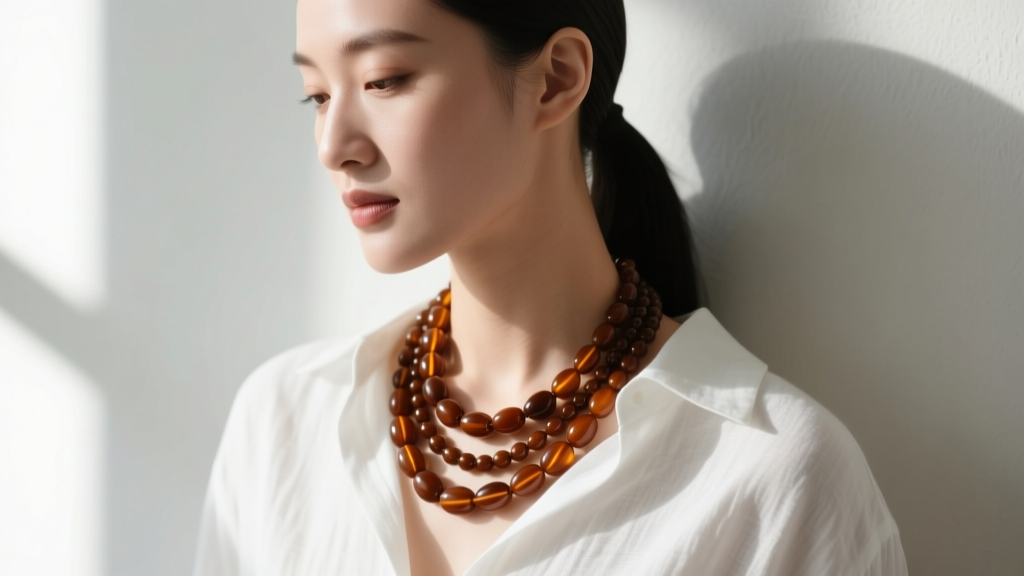
How to Style and Care for Vintage Bakelite
Styling a chunky bakelite beaded necklace requires balancing its visual weight. Because Art Deco Bakelite pieces are bold and geometric, they pair best with clean, structured necklines. A deep V-neck or a crisp, collared button-down shirt provides the perfect minimalist canvas for a translucent "Apple Juice" or "Root Beer" strand. Avoid wearing heavy Bakelite chokers with delicate silk fabrics, as the weight and hard carved edges of the beads can pull and snag delicate fibers.
When it comes to preservation, treat your Bakelite with respect. Never clean it in an ultrasonic jewelry cleaner, and keep it away from harsh chemical solvents, perfumes, and hairsprays, which can strip the vintage polish and leave the resin looking dull and chalky. To clean your necklace, simply wipe the beads gently with a damp microfiber cloth and dry them immediately. Store the necklace flat in a soft pouch away from direct sunlight and extreme heat, as prolonged UV exposure can cause lighter colors like creamed corn to oxidize and darken into a muddy brown over time.
For more in-depth identification strategies and market trends, the Ruby Lane Blog offers excellent ongoing resources for vintage jewelry collectors navigating the secondary market.


