Alaïa Necklace Skirt Styling: Troubleshooting Pairings
Troubleshoot the Alaïa necklace skirt trend. Learn how to balance visual weight, prevent hardware snagging, and choose the right necklace lengths.


The Architecture of the Alaïa Necklace Skirt
In the upper echelons of avant-garde fashion, the boundary between garment and jewelry has entirely collapsed. Nowhere is this more evident than in the modern Alaïa necklace skirt. Stemming from the house’s rich history of body-conscious, hardware-laden couture—originally pioneered by Azzedine Alaïa in the 1980s and radically reimagined by Pieter Mulier for the 2026 runway—these skirts are not merely clothing. With their laser-cut leather, heavy Zamac O-rings, and cascading metal drapery, they function as macro-jewelry pieces that anchor the lower half of the body.
The core styling problem? When your skirt already possesses the visual gravity and metallic complexity of a statement bib necklace, adding traditional necklaces and pendants to your upper half creates a chaotic visual clash. Worse, the physical mechanics of long chains interacting with heavy skirt hardware can lead to severe snagging, metal-on-metal scratching, and ruined garments. As a domain expert in jewelry styling, I have developed a precise troubleshooting framework to help you master the proportions, metallurgy, and physics of pairing necklaces with the Alaïa necklace skirt trend.
The Visual Weight Dilemma: The 80/20 Rule
The most common mistake stylists make when tackling the Alaïa necklace skirt is attempting to 'balance' the heavy hardware with an equally heavy, gemstone-encrusted pendant or a thick Cuban link chain. This violates the fundamental law of avant-garde proportion. According to Vogue's extensive Alaïa archive, the house's DNA relies on a singular, overwhelming focal point that celebrates the anatomy.
To troubleshoot visual clutter, apply the 80/20 Visual Weight Rule. If the skirt commands 80% of the outfit's metallic volume and structural interest, the neck must be restricted to 20%. This means abandoning traditional pendants entirely. Instead, opt for rigid, flush-fitting pieces that do not compete for spatial dominance. A 14k gold torque choker or a flush diamond-tennis collar provides the necessary luxury without introducing a pendulum effect that distracts from the skirt's architectural drape. For a comprehensive understanding of how the brand's founder integrated hardware into silhouette, Britannica's biography of Azzedine Alaïa offers vital historical context on his fetish-meets-couture methodology.
Metallurgical Clashes and Hardware Snagging
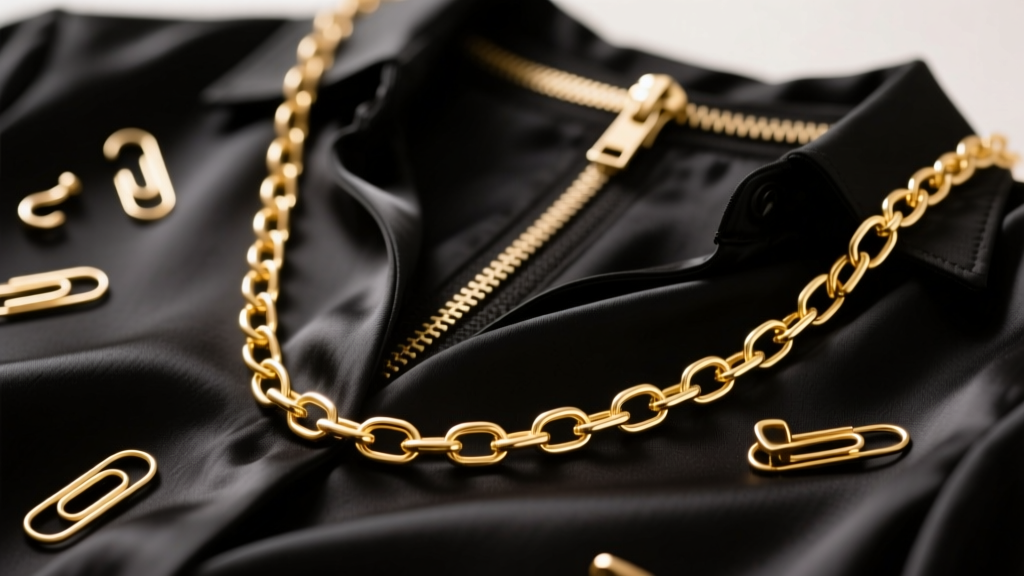
Beyond aesthetics, wearing long necklaces over or near an Alaïa necklace skirt introduces severe physical hazards. The hardware used in high-fashion skirts is typically crafted from Zamac (a zinc-aluminum alloy) or PVD-coated brass to keep the garment's weight manageable. In contrast, fine jewelry utilizes 316L stainless steel, 18k gold, or sterling silver.
The Mohs Hardness Problem
When a swinging stainless steel chain (Mohs hardness of 5.5) repeatedly strikes a Zamac skirt O-ring (Mohs hardness of 2.5), the skirt hardware will suffer severe micro-gouging and finish degradation. Over the course of a single evening, the friction can strip the PVD coating right off the skirt's metalwork. To prevent this, you must eliminate the 'swing zone' entirely.
The Snag Test: Clasp Mechanics
The laser-cut grates and interlocking rings of the skirt act as literal chain-catchers. Standard lobster clasps and spring-ring clasps feature protruding levers that will inevitably hook into the skirt's hardware when you sit or bend. The Fix: Retrofit your necklaces with neodymium magnetic clasps or swap to continuous, endless-loop chains that lack a clasp entirely. If you must wear a piece with a lobster clasp, thread a 1.5mm clear silicone jewelry guard tube over the clasp mechanism to blunt its profile and prevent it from catching on the skirt's O-rings.
The Length Matrix: Finding the Safe Zone
The physical distance between your collarbone and the skirt's waistband is a high-risk transit zone for jewelry. Use the matrix below to troubleshoot necklace lengths based on the specific rise and hardware placement of your skirt.
| Necklace Length | Skirt Hardware Rise | Risk Level | Troubleshooting Protocol |
|---|---|---|---|
| Choker (14'-16') | High-Waist O-Ring | Safe | Use rigid metals (torques/collars) to maintain a clean gap between chin and waist. |
| Princess (18') | Mid-Rise Laser-Cut | Moderate | High risk of resting directly on the waistband. Tuck behind the blouse or swap for silk. |
| Matinee (24') | Drop-Waist Chain | Critical | Will swing into the hardware when walking. Avoid entirely unless pinned to the sternum. |
| Opera (30'+) | Overlapping Hardware | Failure | Guarantees metal-on-metal scratching and severe tangling. Never pair with hardware skirts. |
Neckline Interventions: Mediating the Gap
The garment you wear between the necklace and the Alaïa necklace skirt acts as a crucial buffer. A deep V-neck silk blouse creates a 'no-man's land' of exposed skin that invites the eye to travel down to the skirt, making the lack of a long necklace feel like an omission. To troubleshoot this, manipulate the neckline to frame the choker and block the downward gaze.
High-neck, ribbed merino wool turtlenecks or structured mock-neck bodysuits are the ultimate mediators. They provide a textile barrier that absorbs the visual weight of the skirt while offering a flush, safe surface for a delicate 18k gold paperclip chain to rest against. According to the GIA Gem Encyclopedia, keeping precious metals flush against soft textiles rather than letting them swing freely is the best method for preserving chain integrity and preventing link distortion.
Real-World Emergency Fixes for the Runway-to-Street Transition
When you are already dressed and realize your necklace is clashing or catching on your Alaïa necklace skirt, employ these immediate, on-the-ground troubleshooting fixes:
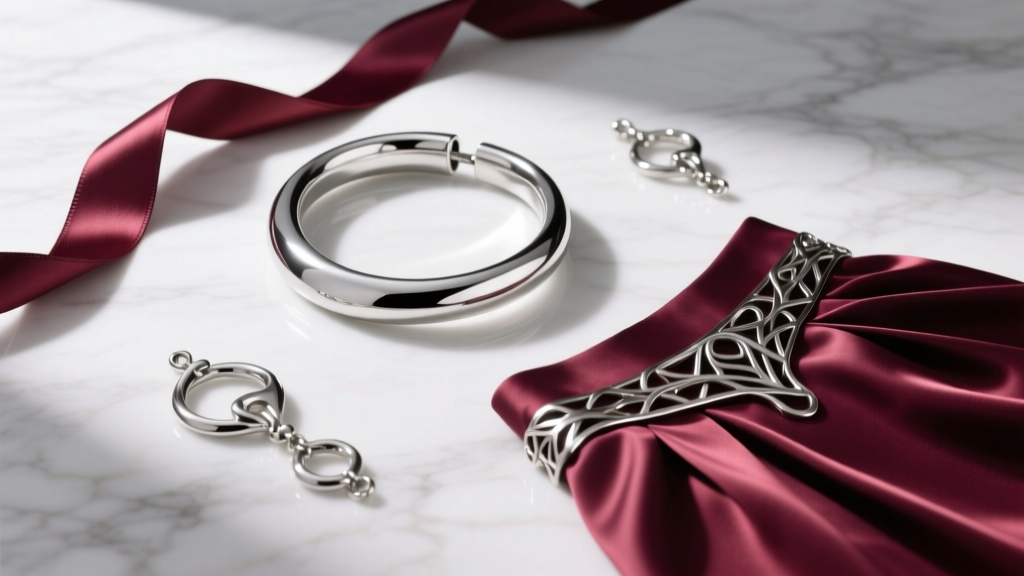
- The Silk Ribbon Swap: If your metal chain is aggressively scratching the skirt's hardware, remove it and thread your pendant onto a 3mm black silk ribbon. Silk eliminates all metallic friction and introduces a soft, romantic texture that contrasts beautifully with the skirt's industrial edge.
- The Multi-Strand Spacer: If you must wear multiple delicate chains, use a sterling silver multi-strand separator clasp at the nape of the neck. This forces the chains to lay perfectly flat and parallel against the sternum, neutralizing the pendulum swing that causes waist-level snagging.
- The Asymmetrical Distraction: Shift the focal point away from the center axis. Swap the traditional pendant for an ear-cuff or a heavy, sculptural single-drop earring. This draws the eye upward and laterally, entirely bypassing the vertical clash between the neck and the skirt's hardware.
Final Verdict: Mastering the Proportions
Styling the Alaïa necklace skirt is an exercise in restraint and spatial awareness. By treating the skirt as the primary statement piece and applying strict metallurgical and length-based troubleshooting protocols, you elevate the look from chaotic to haute-couture precise. Remember: when the garment itself is the jewelry, the best necklace is often the one that knows exactly when to stay out of the way.


