Colombian Necklace Care: Cleaning Emeralds & Filigree
Learn expert cleaning and maintenance tips for your Colombian necklace. Protect emerald treatments and delicate Mompox filigree with our complete guide.

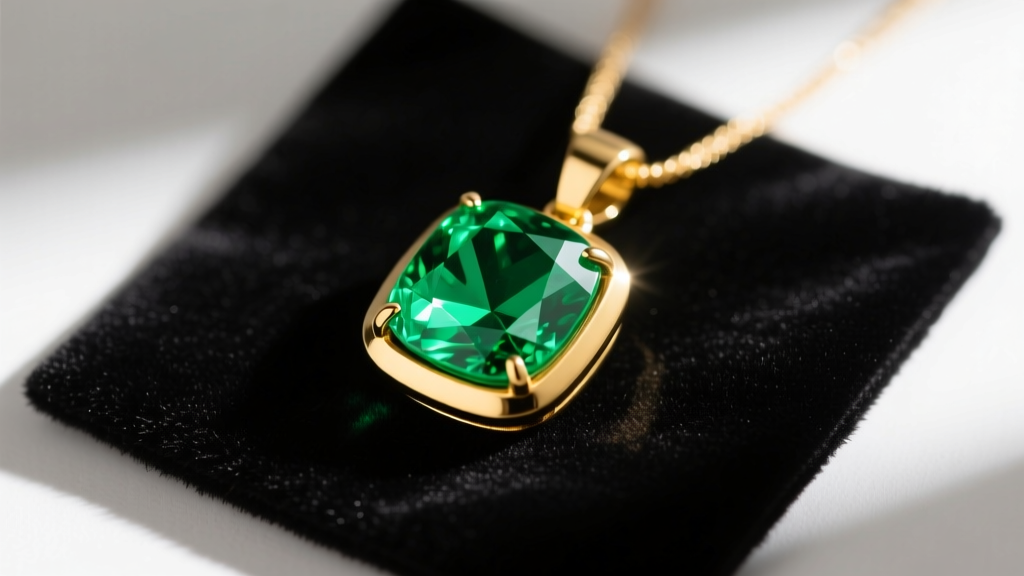
The Unique Anatomy of a Colombian Necklace
When collectors, gemologists, and jewelry enthusiasts refer to a 'Colombian necklace,' they are typically discussing one of two vastly different, yet equally magnificent, masterpieces of Latin American craftsmanship. The first is the world-renowned Colombian emerald necklace, featuring vivid green beryl sourced from the legendary Muzo, Chivor, or Coscuez mines, usually set in high-karat gold. The second is the traditional Mompox filigree collar, an intricate, lace-like wirework craft originating from Santa Cruz de Mompox, utilizing ultra-fine silver or gold threads. Both styles represent the pinnacle of Colombian heritage, but their physical structures demand radically different, highly specialized care regimens.
Unlike diamonds or sapphires, a Colombian emerald is defined by its jardin (French for 'garden')—the complex network of internal inclusions, fractures, and gas bubbles that give each stone its unique fingerprint. While emeralds rank a respectable 7.5 to 8 on the Mohs hardness scale, their toughness is notoriously poor due to this internal jardin. To enhance clarity and color, over 90% of Colombian emeralds are treated with clarity-enhancing agents. Understanding the specific treatment of your stone is the absolute first step in proper maintenance.
Cedar Oil vs. Opticon Resin
Historically, Colombian emeralds were submerged in natural cedar oil, which has a refractive index closely matching that of beryl, effectively masking internal fractures. However, cedar oil is organic; it can dry out, leak, or turn slightly yellow over time. In modern lapidary practices, synthetic polymer resins like Opticon are frequently used. Opticon is far more stable and resistant to temperature changes, but if a stone treated with Opticon suffers a hard impact, the resin can trap dirt deep within the fracture, making it nearly impossible to clean without professional intervention.
The Golden Rule: Never Use Ultrasonic Cleaners
If you take only one piece of advice from this guide, let it be this: never place a Colombian emerald necklace in an ultrasonic cleaner. Ultrasonic machines use high-frequency sound waves to create microscopic bubbles in a liquid solution. When these bubbles collapse—a process known as cavitation—they generate localized shockwaves and intense thermal heat.
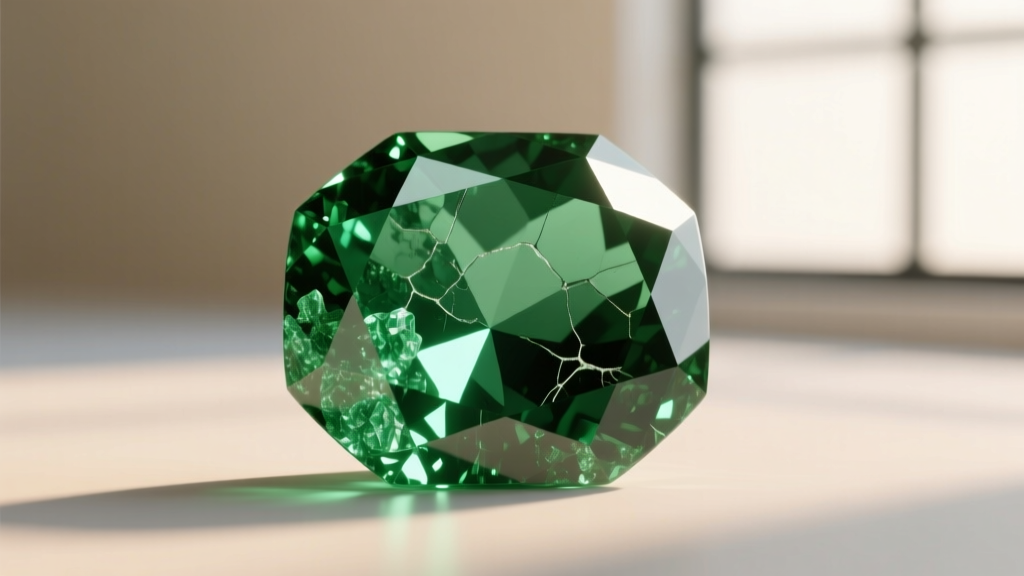
For a diamond, this is an effective way to dislodge grease. For a Colombian emerald, it is catastrophic. The thermal shock can cause the existing jardin fractures to expand, literally splitting the stone in half. Furthermore, the cavitation process will violently strip away the cedar oil or Opticon resin filling those fractures, leaving your once-vivid gem looking cloudy, white, and heavily fractured. According to the Gemological Institute of America (GIA), heat and ultrasonic vibrations are the primary causes of irreversible damage to clarity-enhanced emeralds in domestic settings.
Step-by-Step Cleaning for Colombian Emeralds
To safely remove accumulated sebum, cosmetics, and environmental dust from your emerald necklace, you must rely on gentle, manual agitation and pH-neutral chemistry. Follow this precise protocol:
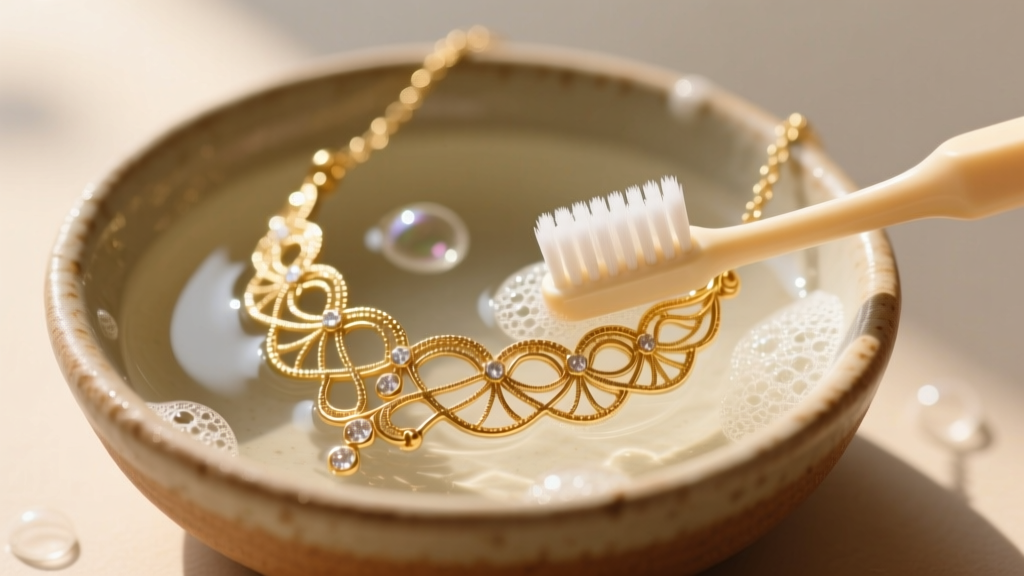
- Prepare the Solution: Fill a small, clean ceramic bowl with lukewarm distilled water. Avoid tap water, as the chlorine and hard minerals can leave microscopic deposits on the gold settings. Add exactly two drops of a pH-neutral, fragrance-free dish soap (such as original Dawn or a specialized jewelry wash).
- The 90-Second Soak: Submerge the necklace for no longer than 90 seconds. Prolonged exposure to water can weaken the silk threads if your necklace is a knotted emerald bead strand, and can degrade older, degraded cedar oil treatments.
- Gentle Agitation: Using a brand-new, extra-soft baby toothbrush, gently sweep the bristles across the back of the emerald (the pavilion) and the prongs of the setting. Never scrub the table (top facet) aggressively, as trapped quartz dust on the brush can cause micro-scratches.
- The Rinse: Rinse the piece under a very gentle stream of lukewarm distilled water. Ensure the drain is securely plugged.
- Drying: Pat the necklace dry with a lint-free microfiber cloth. Do not use paper towels or tissues, as the wood fibers can snag on the filigree or prongs. Allow it to air dry completely in a low-humidity room before storing.
Maintaining Mompox Filigree Wirework
If your Colombian necklace is a Mompox filigree piece, your primary enemy is not internal fracture, but structural fragility and tarnish. Authentic Mompox filigree is constructed from wires drawn down to an astonishing 0.2mm to 0.4mm thickness. These threads are curled, twisted, and soldered into intricate lace patterns.
Why Liquid Silver Dips are Dangerous
Many owners of silver filigree reach for commercial 'silver dip' solutions to remove tarnish (silver sulfide). These dips contain thiourea and harsh acids that strip tarnish instantly. However, in filigree wirework, the capillary action of the liquid pulls the acid deep into the microscopic solder joints. If not neutralized perfectly, the acid will eat through the delicate solder over the next few months, causing the wirework to spontaneously crumble.
Instead, use a treated polishing cloth, such as a Sunshine cloth, to gently wipe the flat surfaces of the wires. For the deep crevices between the curls, use a soft makeup brush dipped in a tiny amount of precipitated calcium carbonate (jeweler's rouge) to buff away tarnish without applying structural pressure to the wires.
Chemical Agents: What to Avoid and What is Safe
The chemical environment surrounding your Colombian necklace dictates its longevity. Below is a breakdown of common household agents and their specific reactions with emerald treatments and high-karat gold.
| Chemical Agent | Effect on Cedar Oil / Opticon | Effect on Gold/Filigree | Verdict |
|---|---|---|---|
| Isopropyl Alcohol | Dissolves cedar oil instantly; degrades Opticon over time. | Safe for bare gold, but dries out porous gemstones. | AVOID |
| Ammonia (Windex) | Strips all clarity enhancements; causes severe clouding. | Can cause stress-corrosion cracking in karat gold alloys. | AVOID |
| Bleach (Sodium Hypochlorite) | Irreversible chemical damage to the stone's surface. | Destroys gold alloys and dissolves silver filigree solder. | NEVER USE |
| pH-Neutral Dish Soap | Safe; does not interact with oils or resins. | Safe; gently lifts grease without oxidizing metals. | SAFE |
| Distilled Water | Safe for short soaks; prolonged exposure risks silk threads. | Safe; prevents hard water mineral buildup. | SAFE |
Long-Term Storage and Professional Re-Oiling
Proper storage is just as critical as cleaning. Emeralds are sensitive to extreme thermal shock and prolonged exposure to intense UV light, which can alter the color of certain organic treatments. Store your Colombian necklace in a fabric-lined jewelry box with individual compartments to prevent the gold setting from scratching the emerald's surface.
When to Seek Professional Re-Oiling
Even with meticulous care, a Colombian emerald treated with natural cedar oil will eventually dry out. You can identify the need for re-oiling by examining the stone under a 10x jeweler's loupe. If the internal fractures appear white, chalky, or highly reflective rather than blending seamlessly with the green body color, the oil has evaporated. According to Jewelers of America, this maintenance should only be performed by a certified gemologist who can safely clean the fractures and apply the correct grade of optically matched cedar oil or synthetic resin in a controlled vacuum environment.
Expert Appraisal Tip: Always keep the original laboratory report (from GIA, Gübelin, or AGL) with your necklace. The report will explicitly state the type and extent of clarity enhancement (e.g., 'F1' for minor oiling, 'F3' for significant resin). This documentation is vital not only for insurance purposes but also to inform any future jeweler of the exact chemical sensitivities of your specific stone before they attempt any sizing or repair work on the chain.
By respecting the delicate internal structure of the emerald and the fragile architecture of Colombian wirework, your necklace will retain its vivid fire and structural integrity for generations, serving as a wearable piece of South American history.


