How to Layer and Style a White Gold Paperclip Necklace
Learn how to perfectly layer, style, and maintain your white gold paperclip necklace with our expert guide on link gauges, lengths, and clasp types.

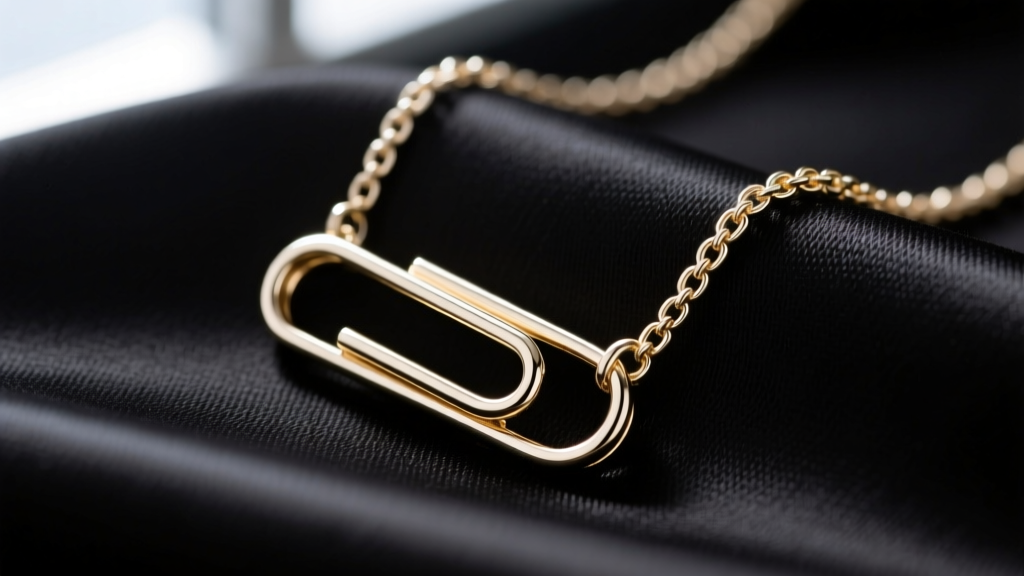
The white gold paperclip necklace has transcended its status as a fleeting trend to become a permanent staple in modern jewelry wardrobes. Characterized by elongated, rectangular links that mimic the shape of office paperclips, this chain style offers a unique blend of industrial edge and refined elegance. However, styling, layering, and maintaining white gold paperclip chains requires specific technical knowledge. Because of the unique geometry of the links and the specific metallurgical properties of white gold, treating this piece like a standard cable chain can lead to tangling, hardware failure, and accelerated rhodium wear.
In this comprehensive guide, we break down the exact specifications, layering frameworks, and maintenance protocols you need to get the most out of your white gold paperclip necklace.
Understanding White Gold Paperclip Chain Anatomy
Before diving into styling, it is crucial to understand the structural anatomy of a paperclip chain. Unlike round cable chains, paperclip links are elongated, typically ranging from 5mm to 25mm in length. This elongated shape creates a larger surface area that catches the light, but it also introduces structural vulnerabilities at the stress points where the links interlock.
14k vs. 18k: Choosing the Right Alloy
White gold is not a naturally occurring metal; it is an alloy of yellow gold mixed with white metals like nickel, palladium, or silver, and then plated with rhodium for a bright, silvery finish. According to the Gemological Institute of America (GIA), the karat weight dictates both the color and the durability of the alloy.
- 14k White Gold (58.5% Gold): The higher percentage of alloy metals makes 14k white gold significantly harder and more rigid. For paperclip chains, especially those with larger links, 14k is highly recommended because it resists bending and warping at the interlocking stress points.
- 18k White Gold (75% Gold): While 18k offers a slightly richer underlying tone and is hypoallergenic (if alloyed with palladium instead of nickel), it is softer. An 18k paperclip chain with a heavy pendant is more prone to link distortion over time.
Sizing Guide: Link Dimensions and Wire Gauges
The visual weight and durability of your necklace are determined by the link dimensions and the wire gauge (the thickness of the metal used to form each link). Below is a structural breakdown to help you identify the right chain for your styling needs.
| Chain Style | Link Size (mm) | Wire Gauge (mm) | Avg. Weight (18 inch) | Best Styling Application |
|---|---|---|---|---|
| Micro-Delicate | 3 x 8 | 0.8 - 1.0 | 2.5 - 3.5 grams | Base layering, subtle shimmer, minimal pendants |
| Standard | 5 x 12 | 1.2 - 1.5 | 4.5 - 6.5 grams | Everyday solo wear, medium-weight pendants |
| Chunky Statement | 10 x 25 | 2.5 - 3.0 | 18.0 - 24.0 grams | Bold focal piece, outerwear layering, no pendants |
Step-by-Step Layering Framework
Paperclip chains are notoriously prone to tangling when layered incorrectly. The elongated links can easily hook into the links of other chains, particularly satellite or cable chains. To prevent this, follow the 'Two-Inch Rule' and vary your chain textures.

Step 1: Anchor with a Close-Fitting Base
Start with a 14-inch or 15-inch choker. To avoid tangling with the paperclip links, choose a chain with a completely different geometry, such as a smooth box chain, a solid herringbone, or a simple velvet ribbon. This provides a visual anchor and keeps the necklines distinct.
Step 2: Position the Paperclip Focal Point
Place your white gold paperclip necklace at the 18-inch mark. This length allows the elongated links to rest perfectly on the collarbone, maximizing light reflection. If you are using a standard 5x12mm chain, this is the ideal length for adding a lightweight sliding pendant or a small diamond solitaire.
Step 3: Add a Pendant Chain for Depth
For the final layer, drop down to a 22-inch or 24-inch chain. Again, avoid using another paperclip chain. Instead, opt for a delicate rope chain or a Figaro chain holding a heavier, textured pendant. The 4-to-6-inch gap between the paperclip chain and the lowest layer ensures the chains glide past one another without interlocking.
Hardware Upgrades: Clasps and Jump Rings
One of the most common failure points on a white gold paperclip necklace is the hardware. Because the links are rectangular, a standard 4mm jump ring can easily slip through the gap of a 5x12mm link if the clasp is pulled at an angle.
The Fix: Take your necklace to a jeweler and request an upgrade to a soldered 6mm jump ring or a specialized paperclip clasp. A paperclip clasp is an elongated, custom-shaped trigger clasp designed to hook directly into the end link of the chain, eliminating the need for a jump ring entirely and providing a seamless, secure closure.
Maintenance: Managing Rhodium Wear on Interlocking Links
White gold requires rhodium plating to achieve its bright, mirror-like finish. However, the unique geometry of a paperclip chain accelerates rhodium wear. The friction generated at the flat, interlocking stress points of the rectangular links wears away the plating faster than it would on a smooth, round chain.
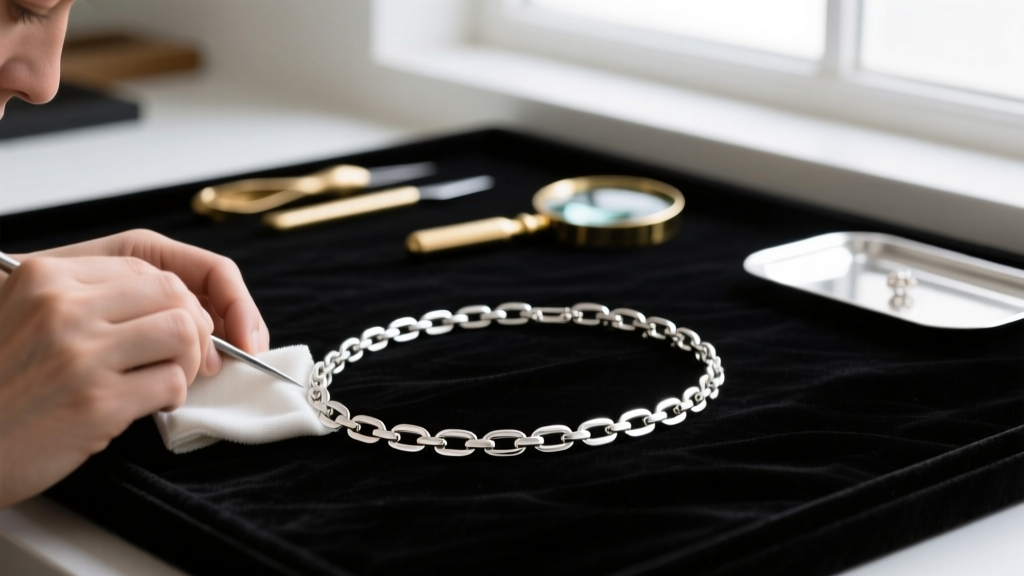
When to Replate
According to Jewelers of America, rhodium plating typically lasts between 12 to 24 months on standard rings, but on a daily-wear paperclip chain, you may notice the underlying yellowish-grey alloy showing through on the inner edges of the links within 6 to 9 months. When this happens, a professional polishing and replating (which typically costs between $40 and $80) will restore the chain to its original brilliance. Ensure your jeweler applies a standard thickness of 0.75 to 1.0 microns of rhodium for optimal durability.
Troubleshooting: Hair Snags and Chain Kinking
Issue: Hair Snagging
If your paperclip necklace is pulling your hair, it is usually due to a rough soldering seam on the links or a microscopic gap where the link was not fully closed during manufacturing. Solution: A jeweler can use a laser welder to seamlessly close any gaps and polish the solder seams flush with the link.
Issue: Chain Kinking
Elongated links can fold in on themselves and kink if stored improperly or caught on clothing. Solution: Never pull a kinked paperclip chain. Lay it flat on a table, use two pairs of smooth-jawed nylon pliers to gently massage the twisted links back into their rectangular alignment, and always store the necklace hanging vertically or laid completely flat in a lined jewelry box.


