What Necklace to Wear With What Neckline: A Material Guide
Discover what necklace to wear with what neckline based on metal properties, chain drape, and material weight for flawless styling.

The Physics of Drape: Why Material Dictates Neckline Pairing
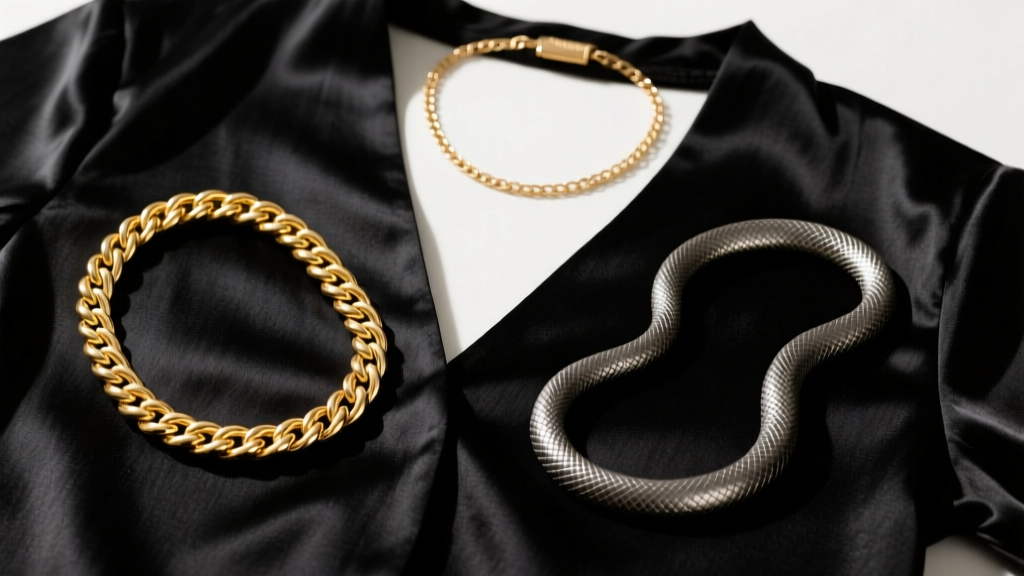
When deciding what necklace to wear with what neckline, most style guides focus solely on chain length and pendant geometry. While a 20-inch chain on a V-neck is a classic rule of thumb, ignoring the metallurgical properties of the jewelry leads to styling failures. A heavy 18k gold rope chain will pull a delicate silk blouse out of its natural drape, while a stiff titanium snake chain will awkwardly hover above a structured crew neck rather than laying flat. To master neckline pairing, we must analyze the specific gravity, Vickers hardness, and torsion limits of the materials involved.
The specific gravity (density) of a metal determines its visual and physical weight. For instance, platinum has a specific gravity of 21.4 g/cm³, making it exceptionally heavy, whereas titanium sits at a mere 4.5 g/cm³. According to the Gemological Institute of America (GIA), alloying metals like copper and silver into gold not only changes the color but drastically alters the stiffness and tensile strength of the chain. Understanding these physical properties is the secret to matching jewelry to fabric weight and neckline architecture.
V-Neck and Plunge Necklines: High-Density Metals & Angular Pendants
The V-neck and plunge necklines create a directional vector pointing toward the sternum. To complement this, you need materials that possess high reflectivity and enough density to maintain a strict vertical drop without tangling.
Optimal Materials and Weaves
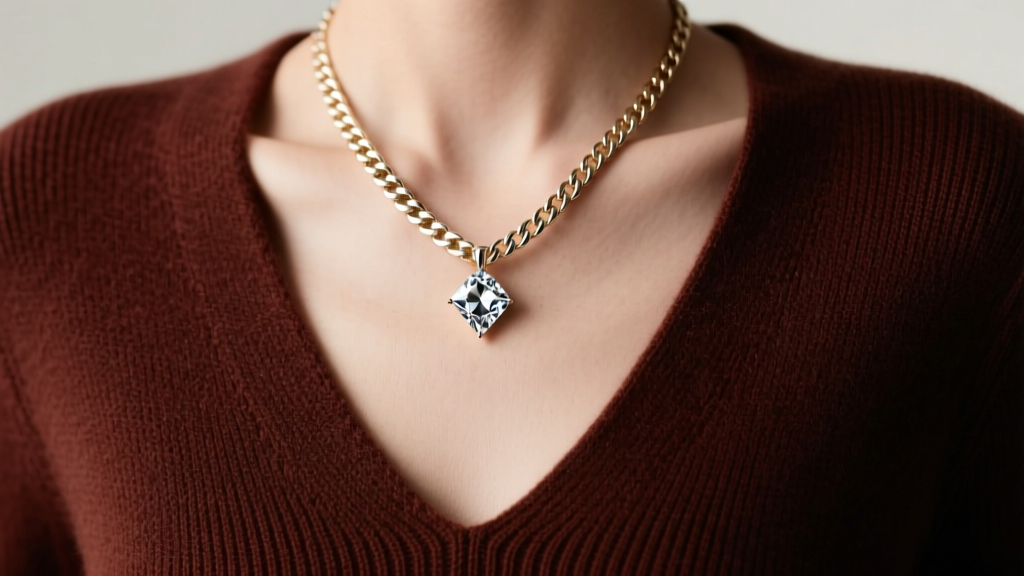
- 18k White Gold or Platinum: These high-density metals (15.6 g/cm³ and 21.4 g/cm³ respectively) provide the necessary weight to keep a pendant anchored at the exact center of the V. The bright, reflective nature of rhodium-plated white gold draws the eye down the neckline.
- Box Chains and Wheat Chains: These weaves offer structural rigidity. Unlike fluid rope chains, a 1.5mm 14k white gold box chain resists torsion, ensuring a geometric pendant (like a marquise or pear-cut diamond) stays facing forward.
Material Failures to Avoid
Avoid lightweight, hollow-cored aluminum or low-karat (10k) gold herringbone chains on deep V-necks. Herringbone weaves lack structural memory; they kink easily and will slide asymmetrically off-center, ruining the symmetry required for a plunging neckline.
Crew and Boat Necklines: Fluid Chains and Matte Materials
Crew necks and boat necks (bateau) feature high, horizontal fabric lines that cut across the collarbone. The goal here is to either sit flush against the skin above the fabric (choker length) or cascade entirely below it (matinee length, 20-24 inches). The material must possess high fluidity or extreme stiffness to avoid looking tangled.
The Titanium and Sterling Silver Advantage
For chokers (14-16 inches) worn just above a crew neck, Rio Grande's metallurgical guides highlight Grade 5 Titanium as an exceptional choice. Because it is lightweight, a 4mm titanium curb chain will sit comfortably on the upper clavicle without pulling the skin or looking overly bulky. For a softer, more organic look, oxidized sterling silver bead chains offer a matte finish that contrasts beautifully with the solid block of color typical of crew neck sweaters.
Why Snake Chains Fail Here
Snake chains are composed of tightly joined wavy rings that create a smooth, stiff tube. On a boat neck, a 16-inch snake chain will not drape; it will act like a rigid collar, sticking out awkwardly from the base of the throat. Always reserve snake chains for scoop necks where their semi-rigid structure can mirror a rounded fabric line.
Scoop and Sweetheart Necklines: Lightweight Alloys & Gemstone Tension
Scoop and sweetheart necklines feature continuous curves. The jewelry must mimic this curvature without crossing over the fabric boundary, which creates visual clutter.

Mastering the Curve with 14k Rose Gold
14k rose gold contains a higher copper content (up to 22%), which gives it a slightly lower Vickers hardness compared to 14k yellow gold, resulting in a softer, more fluid drape. A 2.5mm 14k rose gold rope chain is highly fluid, allowing it to pool gently into the curve of a sweetheart neckline. The warm, pinkish hue of the copper alloy complements the exposed skin of the décolletage without overpowering it.
Gemstone Weight Distribution
When adding pendants to scoop necks, the bail (the loop connecting the pendant to the chain) must have a wide, rounded interior. If you use a heavy gemstone like a 5-carat cabochon sapphire, the chain must be a durable, interlocking weave like a Cuban link or a thick rope chain to distribute the tension evenly across the curve of the neck.
Material Property Comparison Table
Use this reference matrix to quickly determine how different jewelry materials interact with fabric geometry.
| Material & Alloy | Specific Gravity | Drape Quality | Best Neckline Match | Worst Neckline Match |
|---|---|---|---|---|
| Platinum (950) | 21.4 g/cm³ | Heavy, Fluid | Deep V-Neck, Plunge | Delicate Silk Scoop |
| 18k Yellow Gold | 15.6 g/cm³ | Medium, Fluid | Scoop, Sweetheart | Tight Turtleneck |
| 14k White Gold | 13.5 g/cm³ | Stiff, Structured | V-Neck, Collared Shirt | Boat Neck (Choker) |
| Sterling Silver (Oxidized) | 10.4 g/cm³ | Light, Matte | Crew Neck, Bateau | Formal Sweetheart |
| Grade 5 Titanium | 4.5 g/cm³ | Ultra-Light, Stiff | Boat Neck (Choker), Crew | Deep Plunge |
Expert Troubleshooting: Clasp Weight and Chain Torsion
Even if you select the perfect chain material for your neckline, a poorly balanced clasp will ruin the presentation. The "spinning necklace" syndrome occurs when the clasp is heavier than the chain's center of gravity, causing it to slide down the neck.
The Counterweight Solution
For lightweight chains (like 14k gold cable chains under 1.2mm) worn on scoop necks, avoid heavy lobster clasps. Instead, opt for a lightweight spring-ring clasp. Conversely, if you are wearing a heavy platinum rope chain on a V-neck, the clasp must be substantial. A toggle clasp is ideal here; the horizontal bar acts as a counterweight at the nape of the neck, anchoring the heavy pendant at the sternum.
Friction and Fabric Snagging
Material finish matters as much as density. High-polish 18k gold box chains have microscopic sharp edges at the link joints. When paired with delicate fabrics like chiffon or loose-knit mohair (common in off-the-shoulder necklines), these edges will snag and pull threads. For off-the-shoulder and delicate knitwear, always select seamless, domed materials like polished bead chains or PVD-coated titanium, which offer a frictionless surface.
Final Styling Framework
Ultimately, knowing what necklace to wear with what neckline requires a synthesis of geometry and metallurgy. Treat your jewelry not just as an accessory, but as a physical weight that interacts with the tension and drape of your clothing. By matching the specific gravity and structural memory of your metals to the architectural lines of your garments, you elevate your styling from guesswork to an exact science.


