14k Gold Toggle Necklace Value: Pricing & Buying Guide
Discover the true value of a 14k gold toggle necklace. We break down pricing tiers, clasp mechanics, and solid vs. hollow construction to help you buy smart.

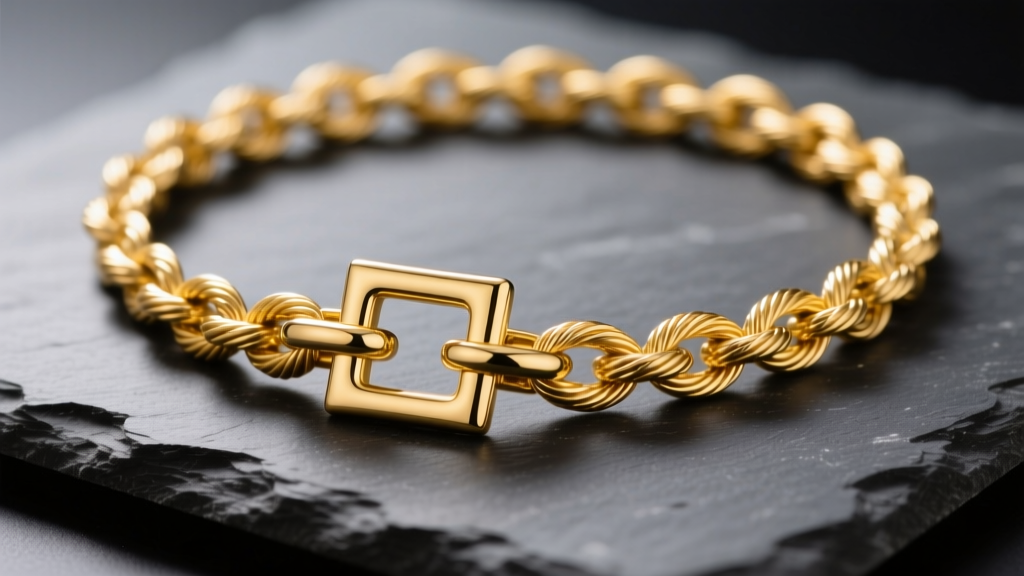
The 14k gold toggle necklace remains a cornerstone of fine jewelry, celebrated for its mechanical elegance and effortless drape. However, as gold prices continue their volatile upward trajectory in 2026, assessing the true value of these pieces requires more than a cursory glance at the karat stamp. The market is currently saturated with varying construction methods—from ultra-lightweight electroformed chains to heavy, die-struck heirloom pieces—that drastically alter both the price point and the lifespan of the jewelry.
Whether you are evaluating a vintage estate find or shopping for a modern luxury staple, understanding the structural integrity, weight metrics, and clasp engineering of a 14k gold toggle necklace is essential. This guide provides a rigorous budget and value assessment to ensure your investment holds its worth, both financially and aesthetically.
The Anatomy of a 14k Gold Toggle Necklace
Unlike spring-ring or lobster clasps that rely on internal springs and tiny levers, the toggle clasp is a marvel of simple physics. It consists of two primary components: a circular O-ring and a T-shaped bar. The value of the necklace is heavily dependent on how these components are integrated into the chain.
In high-quality 14k gold toggle necklaces, the jump rings connecting the toggle hardware to the chain must be fully soldered. Unsoldered jump rings are a primary failure point; the lateral stress of the T-bar pulling against the ring can easily pry an open jump ring apart, resulting in the loss of the entire piece. Furthermore, the chain gauge itself dictates the necklace's structural baseline. A premium toggle necklace typically features a chain gauge between 3.5mm and 5.0mm, providing enough tensile strength to support the weight of the gold hardware without stretching over time.
Solid vs. Hollow: Where Budgets Succeed or Fail
The single most deceptive factor in gold jewelry pricing is the distinction between solid and hollow construction. In the current market, many budget-friendly 14k gold toggle necklaces utilize electroforming or hollow-tube manufacturing. This process creates chains that look remarkably thick and substantial but are essentially gold shells filled with air or resin.
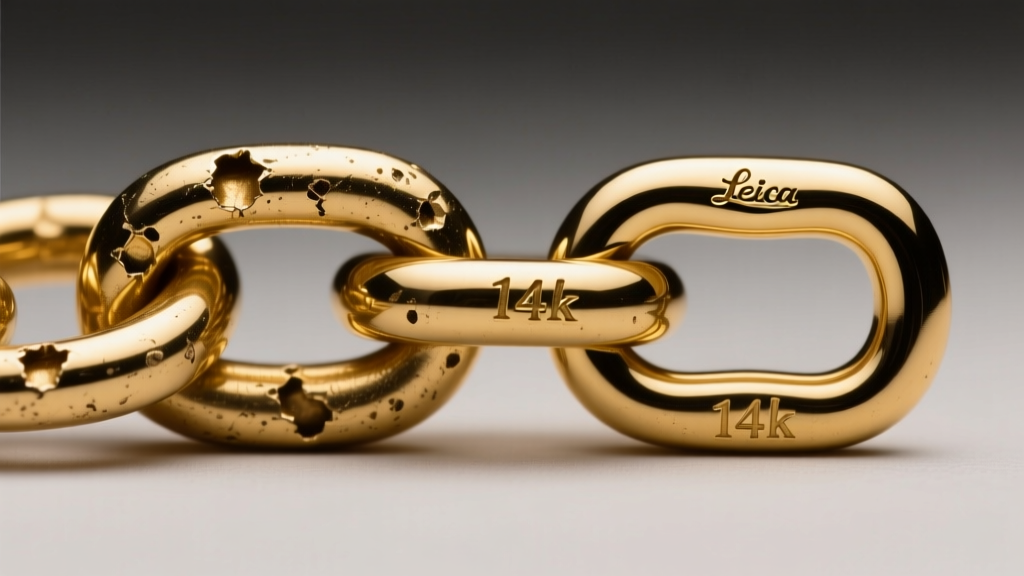
Hollow chains offer an immediate budget advantage, allowing consumers to achieve a bold, high-karat look for a fraction of the melt value. However, the long-term value assessment is poor. Hollow links are highly susceptible to crushing. Once a hollow 14k gold link is dented—often from something as simple as sleeping in the necklace or a heavy pendant pulling on it—it cannot be easily repaired by a jeweler. The metal is too thin to solder or reshape without collapsing entirely.
Conversely, solid 14k gold chains (whether cast or die-struck) carry a higher upfront premium but offer immense intrinsic value. They can be polished, soldered, and repaired indefinitely. When evaluating a piece, always ask the jeweler for the exact gram weight. A visually thick 18-inch hollow chain might weigh a mere 6 grams, while a solid chain of the exact same visual dimensions will weigh upwards of 25 to 40 grams.
2026 Pricing Tiers: What Should You Actually Pay?
With the spot price of gold maintaining a high baseline in 2026, pricing a 14k gold toggle necklace requires calculating the melt value (gold content) plus the manufacturing premium. 14k gold is 58.5% pure gold. Therefore, you must multiply the piece's total gram weight by the current daily spot price of 14k scrap gold, then add the retailer's markup for labor, design, and the toggle hardware.
Below is a structural breakdown of what you should expect to pay based on construction and weight for a standard 18-inch necklace:
| Value Tier | Construction Method | Weight (18-inch) | Estimated Price Range | Durability & Repairability |
|---|---|---|---|---|
| Budget | Hollow / Electroformed | 4 - 9 grams | $350 - $650 | Low; prone to denting, unrepairable |
| Mid-Range | Semi-Solid / Tube Chain | 10 - 18 grams | $750 - $1,400 | Medium; can withstand light tension |
| Premium | Solid Die-Struck / Cast | 20 - 35 grams | $1,600 - $2,800 | High; fully repairable, heirloom grade |
| Luxury | Heavy Solid Link / Artisan | 40 - 65+ grams | $3,200 - $5,500+ | Exceptional; virtually indestructible |
Note: Pricing fluctuates daily with the commodities market. Always verify the current 14k gold gram price before purchasing.
Assessing the Toggle Clasp: Security and Failure Modes
A 14k gold toggle necklace is only as valuable as its ability to stay securely around your neck. The most common failure mode of a toggle clasp is the 'slip-through,' where the T-bar inadvertently slides back out of the O-ring. This is rarely a flaw in the gold itself, but rather a failure in proportional engineering.
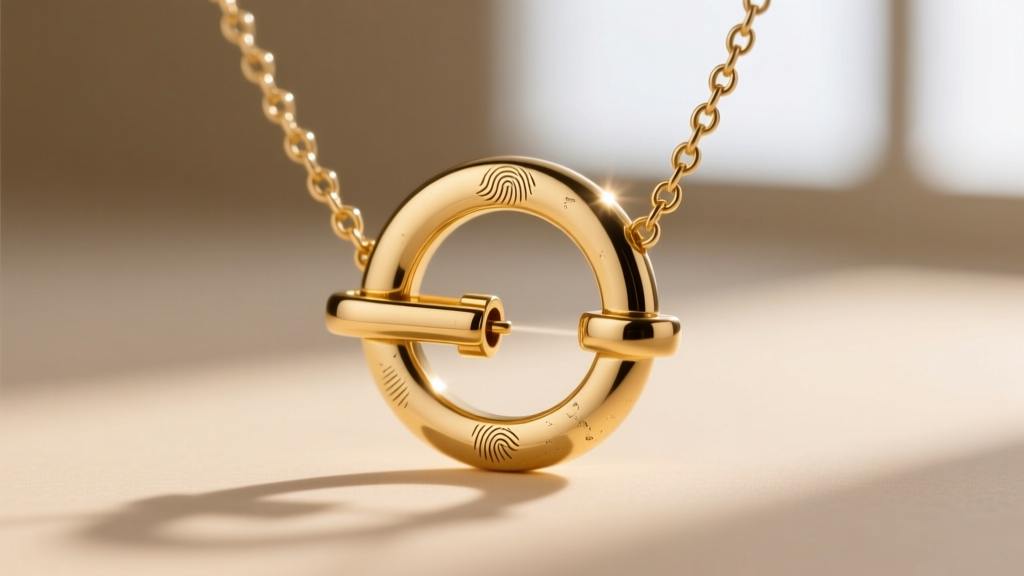
For a toggle clasp to be secure, the T-bar must be strictly proportional to the inner diameter of the O-ring. The golden rule of toggle engineering is that the bar must be at least 1.25 to 1.5 times longer than the inner diameter of the ring. If a manufacturer uses a massive, heavy O-ring to make the necklace look more substantial but pairs it with a standard-length T-bar, the clasp will constantly undo itself with minor movements.
The Pivot Test: When fastening the necklace, pull the chain taut. The T-bar should pivot freely inside the ring but should not be able to align itself parallel to the ring's opening without significant slack in the chain. If it slips out when the chain is pulled straight, the hardware ratio is flawed, and the piece should be avoided regardless of its gold purity.
How to Verify Authenticity and Purity
When investing hundreds or thousands of dollars into a 14k gold toggle necklace, verifying authenticity is non-negotiable. According to the Federal Trade Commission's Jewelry Guides, any piece marketed with a karat stamp must be accompanied by a registered manufacturer's hallmark or trademark. If you see a '14k' stamp but no accompanying maker's mark, the piece's provenance is highly suspect.
Furthermore, the Gemological Institute of America (GIA) notes that 14k gold should contain exactly 58.5% pure gold, often stamped as '585' in European and international markets. To definitively verify the gold content without damaging the piece, reputable jewelers utilize X-ray Fluorescence (XRF) spectrometry. This non-destructive test provides an exact elemental breakdown, ensuring the chain is not merely gold-plated over a base metal core—a common deception in hollow, lightweight chains.
Final Verdict: Maximizing Your Investment
The value of a 14k gold toggle necklace ultimately lies in the intersection of weight, structural integrity, and mechanical precision. While hollow chains offer an accessible entry point into luxury aesthetics, they are fundamentally a depreciating fashion expense rather than a lasting asset. For true budget optimization and long-term value retention, target solid or semi-solid die-struck chains in the 15 to 25-gram range. Ensure the jump rings are soldered, demand the exact gram weight from the seller, and rigorously test the T-bar-to-ring ratio. By prioritizing these technical specifications over mere visual bulk, you secure a piece of jewelry that will endure both the physical rigors of daily wear and the shifting tides of the gold market.


