Emerald Cut Aquamarine Necklace: Metal & Setting Guide
Discover how to choose the perfect metal and setting for your emerald cut aquamarine necklace, comparing durability, color pairing, and pricing.

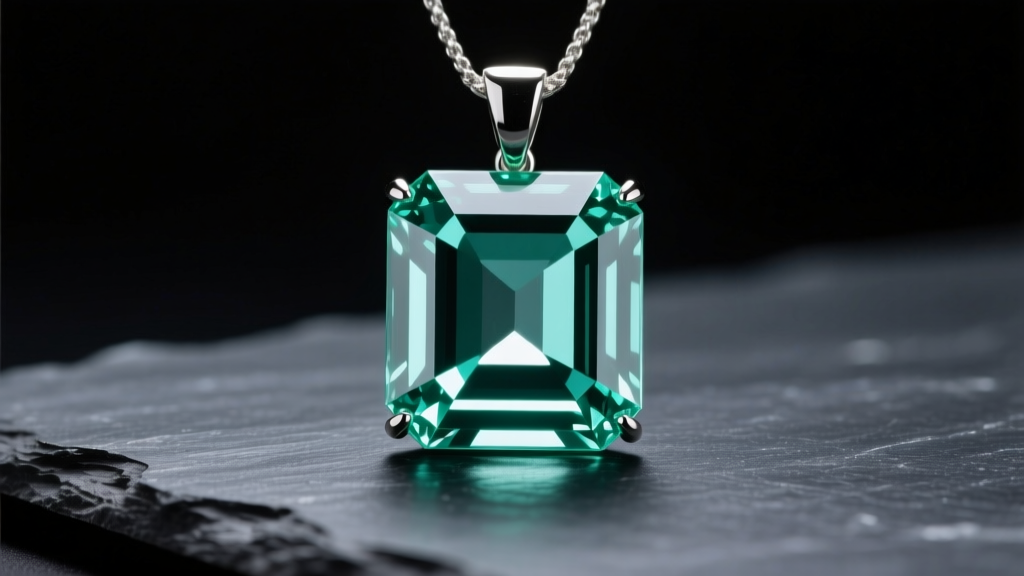
An emerald cut aquamarine necklace represents the pinnacle of serene elegance in fine jewelry. The step-cut faceting of the emerald shape creates a mesmerizing "hall of mirrors" effect, amplifying the icy blue hues of the aquamarine gemstone. However, the intersection of this specific cut and this specific gemstone introduces unique structural vulnerabilities and optical considerations. As we navigate the jewelry market in 2026, understanding the material properties of both the stone and its metallic housing is no longer optional—it is essential for ensuring longevity, maximizing brilliance, and protecting your investment.
This comprehensive guide dives deep into the material science, metallurgical pairings, and mechanical setting requirements necessary to build or select a flawless emerald cut aquamarine pendant.
The Gemological Reality of Step-Cut Beryl
To choose the right setting, we must first respect the physical properties of the stone. Aquamarine is a variety of the mineral beryl. According to the Gemological Institute of America (GIA), aquamarine ranks between 7.5 and 8 on the Mohs scale of hardness. While this makes it highly resistant to everyday scratching, hardness is only one metric of durability.
Toughness and Cleavage
Where aquamarine requires careful engineering is in its toughness (resistance to breaking and chipping). Beryl possesses indistinct basal cleavage, but it is inherently brittle. The emerald cut, characterized by its rectangular shape and truncated corners, was originally developed for emeralds (another beryl variety) specifically to reduce the risk of chipping at the stone's most vulnerable points: the sharp corners. Even with cropped corners, an emerald cut aquamarine is highly susceptible to thermal shock and blunt force trauma. The large, open table of the step cut also means that internal inclusions, liquid fractures, or stress points are easily visible and can compromise the stone's structural integrity if subjected to extreme prong pressure.
Metallurgical Pairings: Choosing the Right Housing
The metal you choose for your emerald cut aquamarine necklace dictates not only the aesthetic contrast but also the mechanical security of the gemstone. In 2026, jewelers are moving away from ultra-soft, high-karat golds for heavy step-cut pendants, favoring alloys that offer superior Vickers hardness and tensile strength.
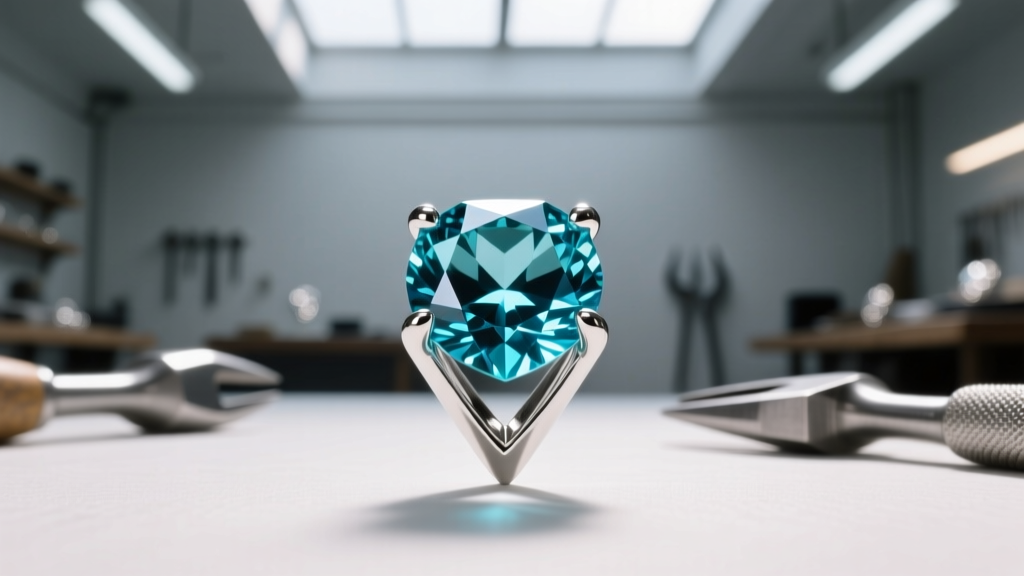
Platinum (Pt950/Pt900)
Platinum remains the undisputed champion for securing high-value, brittle gemstones. Unlike gold alloys, which lose microscopic layers of metal when scratched, platinum merely displaces. This malleability means that if a prong is struck, it will bend rather than snap or wear away completely over decades. With a Vickers hardness of roughly 125 HV, platinum provides a secure, long-lasting grip on the cropped corners of an aquamarine without requiring rhodium plating. Furthermore, platinum's naturally cool, white luster perfectly mirrors the icy blue tones of AAA-grade aquamarine without introducing competing color reflections.
18k and 14k White Gold
White gold is an alloy of pure yellow gold mixed with white metals like nickel, palladium, or silver, and plated with rhodium. 18k white gold (75% pure gold) offers a Vickers hardness of approximately 120-130 HV, while 14k white gold (58.3% pure gold) is slightly harder at around 140 HV due to the higher alloy content. While 14k offers marginally better scratch resistance, 18k provides a richer, denser feel. The primary drawback of white gold for an emerald cut aquamarine necklace is the rhodium plating; as the plating wears off over 12 to 24 months, the underlying yellowish-gray alloy can subtly alter the perceived color temperature of the aquamarine's lower pavilion facets.
14k Rose Gold
Rose gold derives its warm, pinkish hue from a high copper content. A 14k rose gold alloy boasts a Vickers hardness of roughly 145 HV, making it exceptionally durable. Aesthetically, the warm copper tones create a striking, high-contrast complementary color scheme against the cool blue of the aquamarine. This pairing has surged in popularity for bespoke, vintage-inspired pendant designs, though it is best suited for stones with a lighter, more pastel blue hue, as it can visually muddy the deep Santa Maria blues.
Material Comparison Matrix
| Metal Alloy | Vickers Hardness (HV) | Prong Durability | Maintenance Level | Average Setting Cost (1-2ct) |
|---|---|---|---|---|
| Platinum (Pt950) | ~125 | Exceptional (Bends, won't snap) | Low (Polishing only) | $800 - $1,500 |
| 18k White Gold | ~125 | Good (Requires rhodium) | High (Re-plating every 1-2 yrs) | $450 - $750 |
| 14k Rose Gold | ~145 | Very Good (High tensile strength) | Low | $350 - $600 |
| Sterling Silver (925) | ~60-70 | Poor (Prongs bend/wear quickly) | High (Tarnish removal) | $80 - $150 |
Expert Warning: Avoid sterling silver for any emerald cut aquamarine over 1.5 carats. Silver's low tensile strength means the prongs will inevitably loosen over time, risking the loss of a highly brittle and difficult-to-replace step-cut stone.
Critical Setting Mechanics for Step-Cut Stones
The geometry of the emerald cut demands specialized setting techniques. Standard round prongs are a catastrophic failure point for rectangular stones.
The Necessity of V-Prongs
The cropped corners of an emerald cut aquamarine are still the thinnest and most fragile edges of the gem. A standard rounded prong concentrates pressure on a single micro-point, which can easily induce a fracture or chip during the setting process or daily wear. V-prongs (also known as chevron prongs) are non-negotiable for the four corners of an emerald cut. A V-prong wraps around the corner, distributing the clamping force evenly across two adjacent facet edges, effectively shielding the point from impact.
Bezel and Half-Bezel Settings
For individuals with active lifestyles, a full bezel setting is the safest architectural choice. A bezel encircles the entire girdle of the aquamarine in a continuous ribbon of metal. While a full bezel will obscure roughly 10-15% of the stone's light return (slightly reducing the step-cut's flash), it completely eliminates the risk of corner chipping. A half-bezel setting offers a modern compromise, securing the stone on two opposite sides while leaving the other sides open for maximum light entry, though it requires precise calibration to prevent the stone from rocking.
Chain Gauge and Bail Engineering
An often-overlooked component of the emerald cut aquamarine necklace is the chain and bail system. The weight of a dense, rectangular beryl stone requires a chain with adequate tensile strength to prevent stretching or snapping.
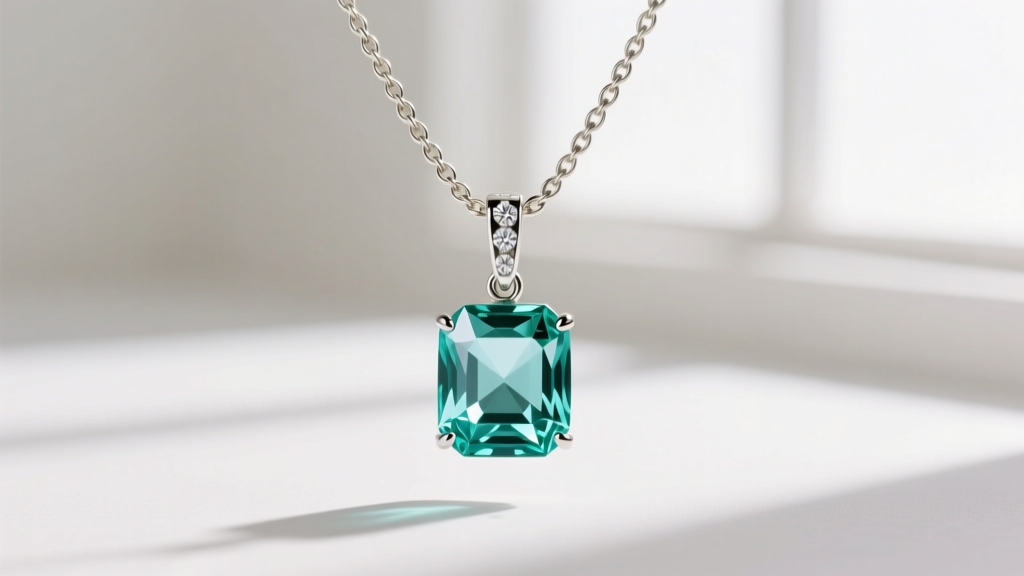
Optimal Chain Gauges
For a standard 1.5 to 3.0-carat emerald cut aquamarine pendant, the chain gauge should never be thinner than 1.0mm (approx. 18-gauge). A 1.2mm to 1.5mm chain provides the ideal visual weight and structural support. Box chains and wheat chains are highly recommended over standard cable chains, as their interlocking link structures distribute the pendant's pendulum-like swinging motion more evenly, reducing stress on the clasp and jump rings.
Bail Weight Distribution
The bail (the loop connecting the pendant to the chain) must be proportional to the stone. A heavy, solid-cast bail is required for stones over 2 carats to ensure the pendant hangs perfectly flat against the sternum. If the bail is too light or the loop is too large, the emerald cut stone will constantly flip upside down, requiring tedious adjustments and increasing the risk of the chain slipping through the bail during movement.
Long-Term Care and Maintenance Protocol
Because aquamarine is sensitive to thermal shock and the emerald cut highlights internal flaws, maintenance must be handled with precision.
- Never use ultrasonic cleaners: The high-frequency vibrations can easily shatter an aquamarine that contains microscopic internal liquid inclusions or stress fractures, which are common in natural beryl.
- Avoid steam cleaners: Sudden temperature changes (thermal shock) can cause the stone to crack internally.
- Manual cleaning only: Use a soft-bristled baby toothbrush, lukewarm water, and a mild, ammonia-free dish soap. Gently brush the pavilion (the back of the stone) where step-cut facets are notorious for trapping skin oils and lotions, which quickly dull the hall-of-mirrors effect.
- Annual prong checks: Have a jeweler inspect the V-prongs under 10x magnification every 12 months to ensure the metal has not lifted away from the stone's girdle.
By respecting the material properties of both the beryl gemstone and the precious metals used to house it, you ensure that your emerald cut aquamarine necklace remains a secure, brilliant, and timeless heirloom for decades to come.


