14k Pearl Necklace Troubleshooting: Repair and Care Guide
Learn how to troubleshoot common 14k pearl necklace issues. Expert repair tips for broken silk, dull luster, and clasp failures to restore jewelry.

The Anatomy of a 14k Pearl Necklace Failure
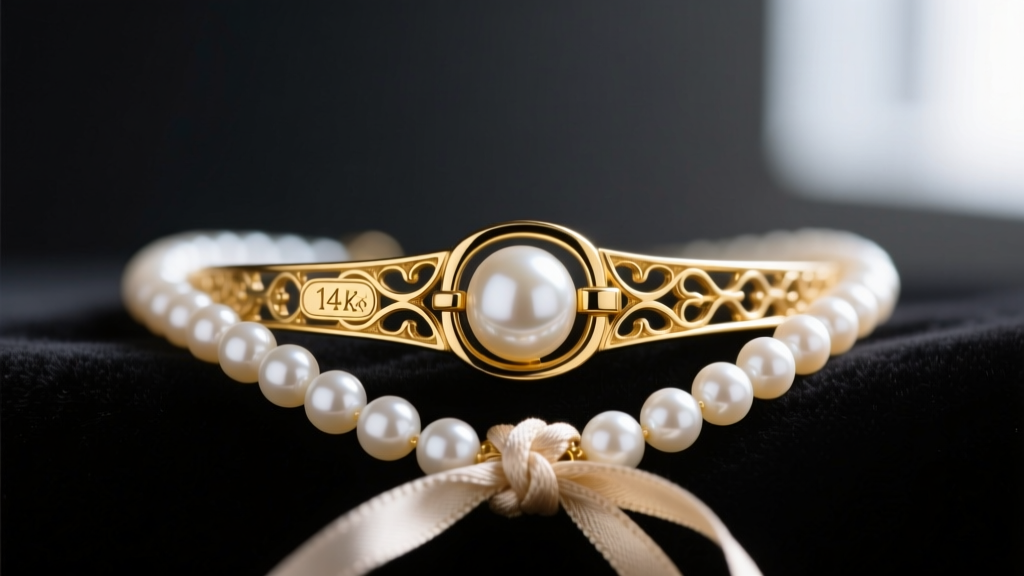
A high-quality 14k pearl necklace is a masterclass in material contrast. You are combining the organic, delicate nature of nacre (calcium carbonate) with the structural rigidity of a 58.5% pure gold alloy. When a 14k pearl necklace fails, the issue rarely stems from the pearls themselves shattering; instead, the failure points are almost always the silk thread, the knot integrity, or the mechanical tension of the gold clasp. As of 2026, the average cost of a premium Akoya or South Sea pearl strand ranges from $1,200 to over $8,000, making proper troubleshooting and maintenance a critical skill for jewelry owners. This guide provides a jeweler-level diagnostic approach to identifying, halting, and repairing the most common structural and cosmetic failures in pearl necklaces.
Diagnostic Chart: Identifying Your Necklace's Issue
Before attempting any DIY fixes, accurately diagnose the failure point. Use this troubleshooting matrix to determine the root cause and the appropriate professional intervention required.
| Symptom | Root Cause | Immediate Action | Estimated Repair Cost (2026) |
|---|---|---|---|
| Visible gaps between knots | Silk thread stretching from moisture and weight | Stop wearing immediately to prevent pearl-on-pearl abrasion | $4.00 - $8.00 per inch (Restringing) |
| Cloudy or chalky pearl luster | Acid etching from sweat, perfume, or cosmetics | Wipe with a damp microfiber cloth; do not scrub | Irreversible (Nacre cannot be polished) |
| Clasp fails to latch securely | Spring tension loss or debris in the catch mechanism | Clean with a soft brush; avoid forcing the lever | $65 - $140 (Clasp replacement) |
| Green/black marks on the neck | Copper oxidation in the 14k gold alloy reacting to skin pH | Clean the clasp area with a mild baking soda paste | $45 - $90 (Rhodium plating on white gold) |
Troubleshooting Thread Stretching and Knot Gaps
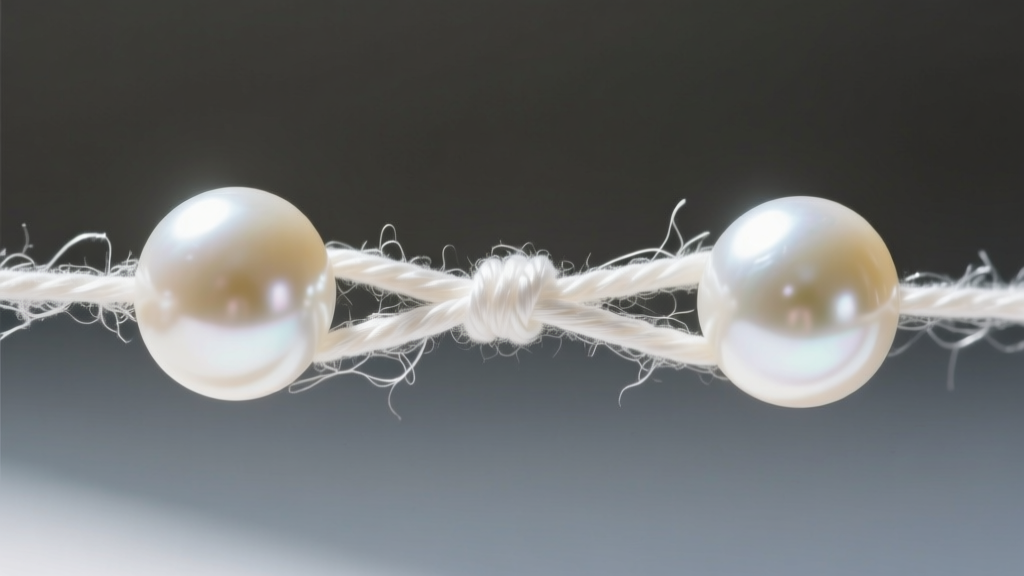
The most catastrophic failure mode for any knotted pearl necklace is the degradation of the silk thread. Authentic 14k pearl necklaces are strung on 100% silk thread, typically using Size E (0.30mm) for 6-7mm pearls or Size F (0.35mm) for 8-9mm pearls. Silk is a natural protein fiber that absorbs moisture from the air and oils from your skin. Over time, this absorption causes the fibers to swell and subsequently stretch under the continuous weight of the pearls.
The "Tug Test" for Silk Integrity
To troubleshoot potential thread failure, perform the "Tug Test." Hold the necklace taut between your hands and gently pull. If you see the silk thread visible between the knots and the pearls, or if the pearls slide even a millimeter against one another, the structural integrity is compromised. According to the Gemological Institute of America (GIA), pearls rubbing against each other without the buffer of a tight knot will quickly wear down the nacre around the drill hole, leading to permanent chipping. If your necklace fails this test, it requires professional restringing. A master stringer will use a French wire (also known as gimp)—a tiny coil of fine silver or gold wire—at the clasp connection to prevent the 14k gold from sawing through the silk over time.
Restoring Dull Nacre Without Damaging the 14k Gold
Pearl luster is created by the reflection and refraction of light through microscopic layers of aragonite crystals, held together by an organic protein called conchiolin. This structure gives pearls their unique glow but also makes them highly susceptible to chemical etching. With a Mohs hardness of only 2.5 to 3.0, nacre is easily damaged by the acidic pH of human sweat, citrus-based perfumes, and aerosol hairsprays.
Expert Warning: Never place a 14k pearl necklace in an ultrasonic cleaner. The high-frequency vibrations will not only shatter the delicate nacre layers but can also fracture the internal drill holes, causing the pearls to split entirely.
Safe Cleaning Protocol for Etched Pearls
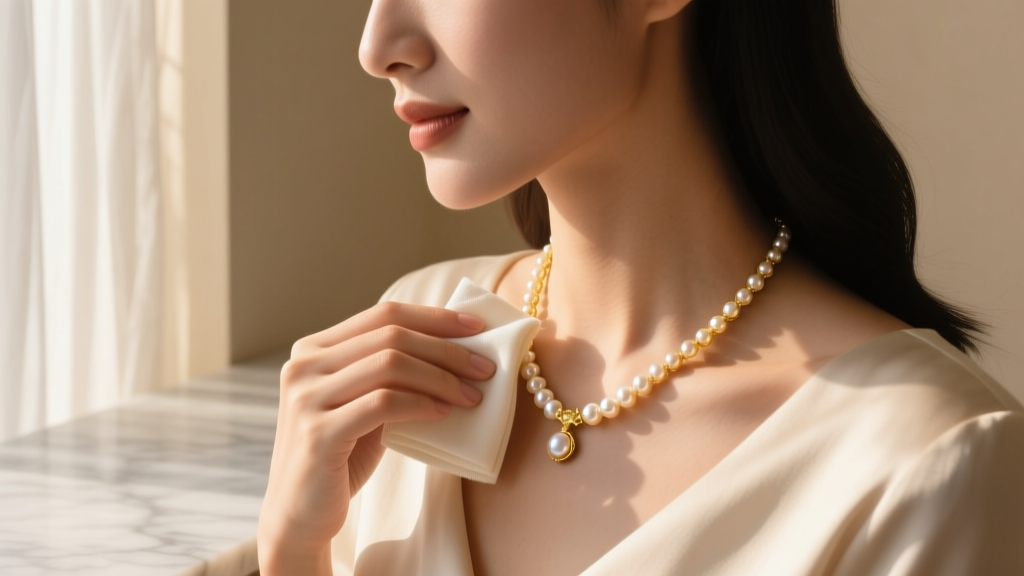
If your pearls have lost their luster due to surface oils, you must clean them without stripping the conchiolin. Mix two drops of phosphate-free, pH-neutral Castile soap into a bowl of distilled water. Dip a lint-free microfiber cloth into the solution, wring it out until it is only barely damp, and gently wipe each pearl individually. Avoid getting the silk knots wet, as trapped moisture will accelerate thread rot. After wiping, lay the necklace flat on a dry towel to air dry completely before storing. The American Gem Society (AGS) strongly advises against using commercial jewelry dips, as the ammonia and harsh solvents will permanently dull the pearl's orient and degrade the 14k gold's polished finish.
Fixing 14k Gold Clasp Malfunctions
The clasp on a 14k pearl necklace is usually a spring ring, a lobster claw, or a traditional fishhook (barrel) clasp. Because 14k gold is an alloy containing 41.5% other metals (like copper, silver, and zinc) to increase durability, it can still suffer from mechanical fatigue and chemical tarnishing.
- Spring Ring Tension Loss: If the tiny lever on your spring ring clasp feels sluggish or fails to snap shut, the internal steel spring may be compromised, or microscopic debris (like lotion or skin cells) is blocking the track. Use a clean, dry makeup brush to gently sweep the crevice. Do not use a needle, as you risk scratching the 14k gold housing.
- Fishhook Clasp Slippage: Barrel clasps rely on a tiny hook catching inside a groove. If the hook has been bent outward from repeated pulling, it will slip out of the groove. A jeweler can easily re-tension the hook using specialized nylon-jaw pliers to avoid marring the gold.
- White Gold Rhodium Wear: If your necklace features a 14k white gold clasp, the rhodium plating will eventually wear away near the friction points, revealing the slightly yellowish underlying alloy. This is not a defect but a maintenance requirement. A jeweler can re-plate the clasp in under 30 minutes without removing the pearls.
Preventative Maintenance Framework
Troubleshooting is only necessary when prevention fails. To maximize the lifespan of your 14k pearl necklace, adopt the "Last On, First Off" framework. Pearls should be the very last item you put on after applying cosmetics, perfumes, and styling products, and the first item you take off when you return home. Store the necklace flat in a soft chamois pouch—never hanging on a jewelry tree, as the constant downward pull of gravity will permanently stretch the silk thread within months. Furthermore, never store pearls in a sealed plastic bag or a safety deposit box without a moisture source; pearls require ambient humidity to prevent the conchiolin from drying out and cracking. By understanding the specific material vulnerabilities of both the organic nacre and the 14k gold alloy, you can ensure your necklace remains structurally sound and brilliantly lustrous for generations.


