14k Rose Gold Heart Necklace: Alloy Properties & Buying Guide
Discover the metallurgy, durability, and pricing of a 14k rose gold heart necklace. Compare copper alloys and learn to prevent skin discoloration.

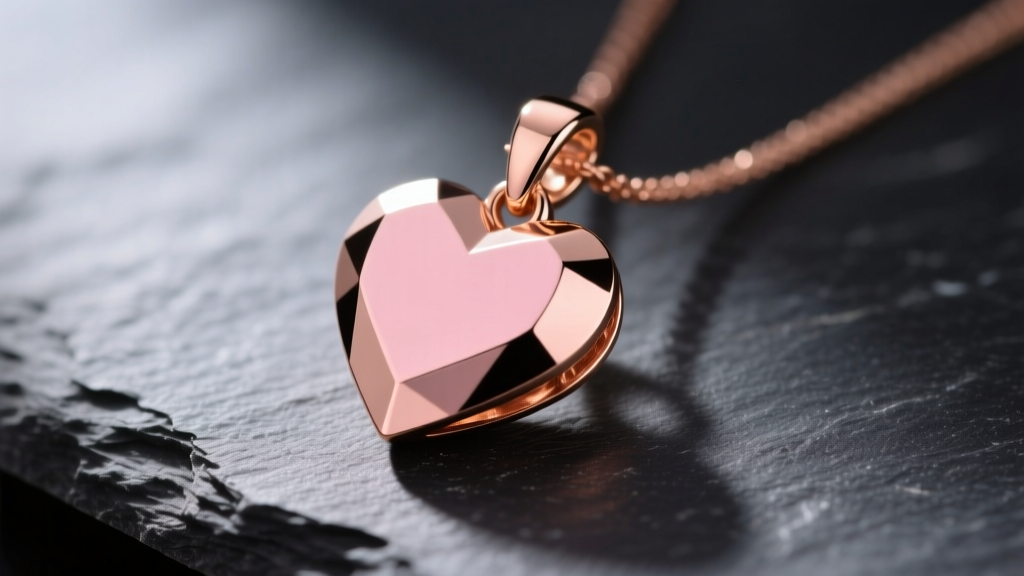
The Metallurgy of 14k Rose Gold: What You Are Actually Wearing
When shopping for a romantic or everyday staple, the 14k rose gold heart necklace remains a top contender in the fine jewelry market. However, beyond its warm, vintage-inspired blush, this specific alloy represents a fascinating intersection of chemistry and wearable engineering. To make an informed purchase, you must first understand what 14k rose gold actually is. Pure 24k gold is entirely too soft for daily wear, particularly for a pendant that may swing, snag, or endure friction against the collarbone. To solve this, metallurgists alloy pure gold with other metals to increase its tensile strength and alter its color.
In a standard 14k rose gold alloy, exactly 58.3% (or 58.5% in some European standards) of the metal is pure gold. The remaining 41.7% is a carefully calibrated mixture of copper, silver, and occasionally trace amounts of zinc. The copper is the star of the show here; it is responsible for the signature pinkish-red hue. A typical 14k rose gold formulation contains roughly 20% to 25% copper and 10% to 15% silver. The higher the copper content relative to silver, the deeper and more intense the 'rose' or 'red' color will appear. According to the Gemological Institute of America (GIA), this specific copper-to-gold ratio not only dictates the color but fundamentally changes the physical properties of the metal, making it significantly more durable than its yellow or white gold counterparts.
14k vs. 18k Rose Gold: Durability and Color Comparison
A common dilemma for buyers is choosing between 14k and 18k rose gold. While 18k gold contains more pure gold (75%), making it more expensive and hypoallergenic, it is inherently softer. The 14k variant, with its higher copper and silver content, boasts a higher rating on the Vickers Hardness (HV) scale. This makes 14k rose gold highly resistant to scratching, denting, and deformation—critical factors for a heart-shaped pendant that features delicate points and curves.
| Property | 14k Rose Gold | 18k Rose Gold | 10k Rose Gold |
|---|---|---|---|
| Pure Gold Content | 58.3% | 75.0% | 41.7% |
| Copper Content (Approx) | 20% - 25% | 15% - 20% | 30% - 35% |
| Vickers Hardness (HV) | ~140 HV | ~115 HV | ~160 HV |
| Color Depth | Warm, distinct pink-copper | Subtle, pale peach-pink | Deep, reddish-copper |
| Tarnish Resistance | Moderate | High | Low (prone to oxidation) |
| Relative Price Point | Mid-Range | Premium | Budget |
As illustrated above, the 14k option hits the 'sweet spot' for everyday jewelry. It offers a rich, visible pink tone that 18k often lacks, while providing the structural integrity necessary to survive years of daily wear without bending out of shape.
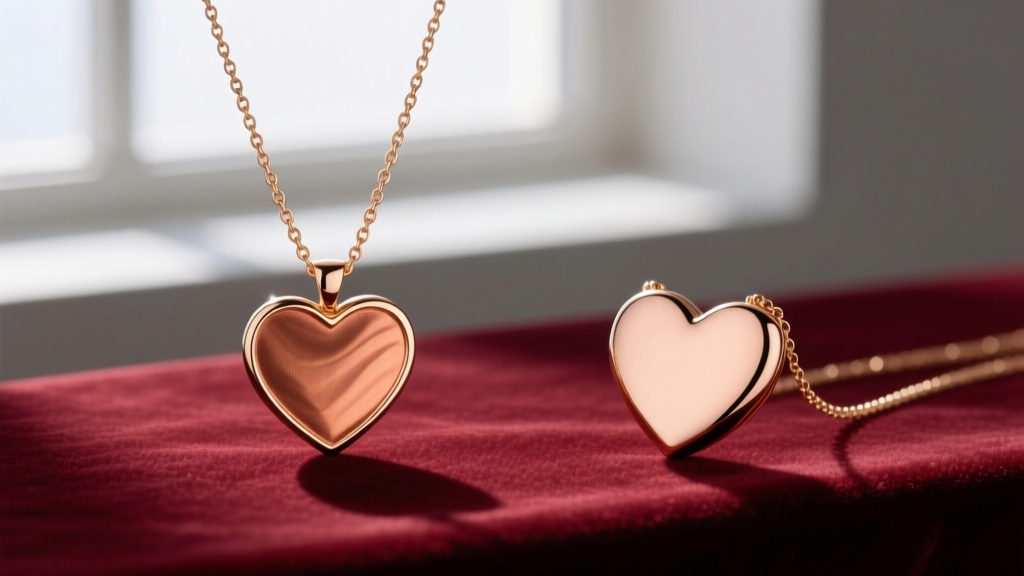
Structural Integrity: Why the Heart Shape Matters for Metal Stress
The geometry of a heart pendant introduces unique structural vulnerabilities that do not exist in simpler shapes like circles or ovals. A heart features a deep cleft at the top and a sharp point at the bottom. When crafted in 14k rose gold, the jeweler must account for stress concentration points, particularly where the bail (the loop that connects the pendant to the chain) attaches to the cleft.
Common Failure Points in Heart Pendants
- The Cleft Drill Hole: Many mass-market heart pendants are drilled directly through the top cleft to accommodate a jump ring. This removes metal from an already narrow area, creating a 'stress riser.' If the chain snags, the 14k gold can fracture or tear at this hole. A superior design utilizes a soldered V-bail or a hidden loop behind the cleft.
- The Bottom Point: The bottom tip of the heart is highly susceptible to impact. If the pendant is stamped from a thin sheet of gold (under 0.8mm thickness), the point can easily fold or dent if dropped on a hard surface. Look for pendants with a slightly rounded or reinforced bottom point.
- Chain Pairing Mismatches: A solid 14k rose gold heart pendant typically weighs between 1.5 and 3.5 grams. Pairing this with a delicate 0.5mm thread chain will result in chain stretch or breakage. Opt for a 0.9mm to 1.2mm box chain or rope chain to properly support the pendant's weight.
Pricing Breakdown: What Should a 14k Rose Gold Heart Necklace Cost?
Understanding the pricing architecture of fine jewelry prevents overpaying for brand names while ensuring you aren't buying hollow, low-quality pieces. The cost of a 14k rose gold heart necklace is primarily driven by the melt value of the gold, the manufacturing method, and the retail markup.
To calculate the baseline melt value, check the current spot price of gold. If pure gold is trading at $65 per gram, 14k gold (58.3% pure) has a raw material value of roughly $38 per gram. A standard, solid 2-gram heart pendant therefore contains about $76 worth of raw gold. From there, manufacturing costs (casting, polishing, soldering the bail) add roughly $20 to $40. Mass-market jewelers typically apply a 3x to 4x markup on the production cost, meaning a fair retail price for a high-quality, solid 2-gram 14k rose gold heart pendant should fall between $250 and $400. Luxury brands with heavy marketing overhead may charge $800 to $1,500 for the exact same metal weight. Always check the gram weight listed in the product specifications to determine if you are paying for the metal or the logo.
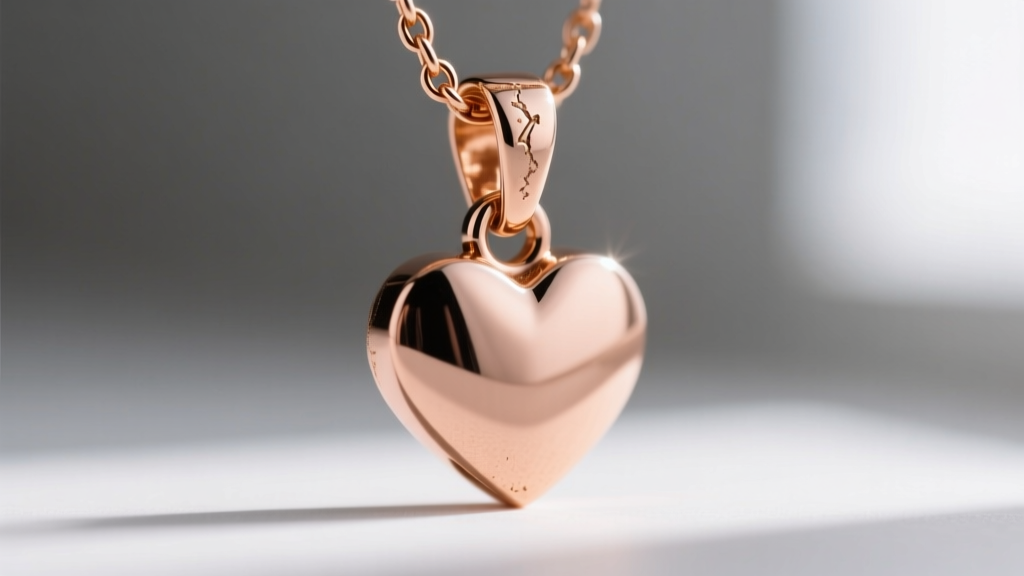
Care, Tarnish, and the 'Green Skin' Myth
Because 14k rose gold contains a significant amount of copper, it is subject to oxidation. When copper reacts with the chlorides, sulfides, and acids naturally present in human sweat, it can form copper sulfide or copper chloride on the surface of the metal. This is the scientific reality behind the infamous 'green skin' phenomenon. However, because 14k gold still contains a majority of pure, non-reactive gold, this tarnishing is usually superficial and easily managed.
Pro Tip: If you live in a humid climate or work out frequently while wearing your necklace, wipe the pendant down with a dry, lint-free microfiber cloth after wearing it. Removing the microscopic layer of sweat and sebum prevents the copper in the alloy from initiating the oxidation process.
To deep clean your 14k rose gold heart necklace, avoid harsh chemical dips or chlorine-based cleaners, which can permanently pit the copper molecules in the alloy. Instead, use a few drops of mild, phosphate-free dish soap in warm water. Gently agitate the pendant with a soft-bristled baby toothbrush, paying special attention to the back of the heart and the bail where skin oils accumulate. Rinse thoroughly with distilled water and pat dry. If your pendant features gemstone accents, such as pavé diamonds, an ultrasonic cleaner is generally safe for 14k gold, but avoid it if the heart is inlaid with porous stones like opals, pearls, or turquoise.
Final Verdict: Is 14k Rose Gold Right for Your Everyday Pendant?
The 14k rose gold heart necklace is an exceptional choice for buyers seeking a balance of romantic aesthetics, structural durability, and long-term value. Its higher copper content provides a richer, more visible pink hue than 18k alternatives, while the increased Vickers hardness ensures the delicate points and curves of the heart shape survive the rigors of daily wear. By paying attention to the bail construction, selecting an appropriately gauged chain, and understanding the baseline melt-value pricing, you can confidently invest in a piece that will maintain its structural integrity and warm luster for decades. For further reading on precious metal standards and hallmarking, the World Gold Council offers comprehensive guides on global karat regulations and alloy compositions.


