How to Clean and Restore a Vintage Blue Bird Necklace
Learn expert techniques to clean, maintain, and restore your blue bird necklace. Discover safe methods for enamel, turquoise, and gold vermeil.

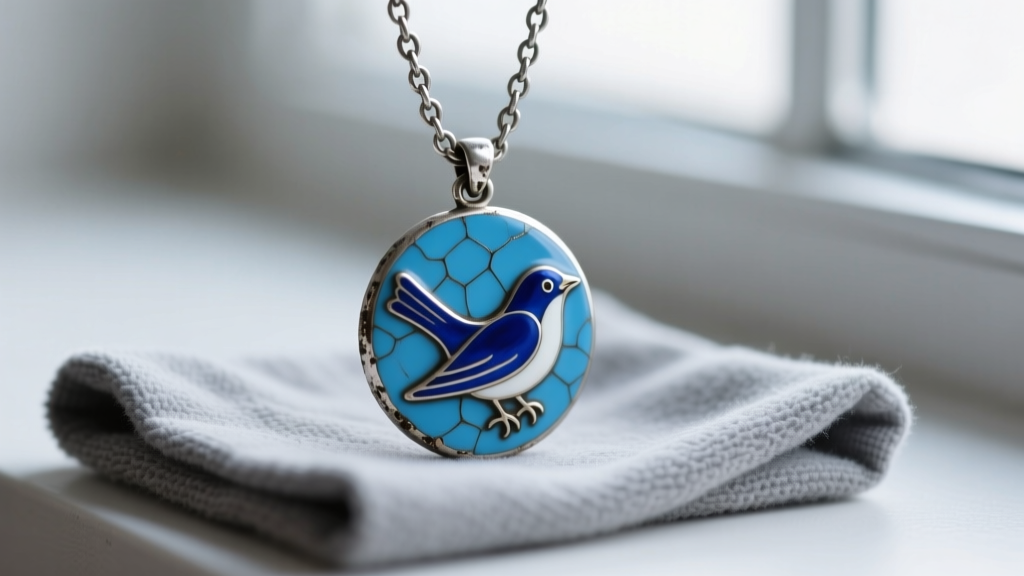
The blue bird necklace is an enduring motif in jewelry design, symbolizing happiness and freedom. Whether you possess a mid-century Trifari piece with hand-painted cold enamel, a modern artisan creation featuring vitreous enamel, or a southwestern design inlaid with natural turquoise, maintaining the structural and aesthetic integrity of these pieces requires specialized knowledge. Generic jewelry cleaning methods can easily destroy delicate inlays, strip gold vermeil, or shatter vintage glass enamel. In this comprehensive guide, we explore the material science behind your blue bird necklace and provide a meticulous, step-by-step protocol for cleaning, restoring, and storing your piece for generations to come.
Understanding Your Blue Bird Necklace Materials
Before applying any cleaning agent, you must accurately identify the materials comprising your pendant and chain. The term "blue bird" refers to the motif, but the execution varies wildly across different eras and makers. The cleaning protocol for a solid 18k gold and sapphire piece will fundamentally differ from that of a sterling silver and turquoise pendant.
Enamel vs. Gemstone Inlays
Many vintage blue bird necklaces utilize enamel to achieve vibrant, opaque blues. It is critical to distinguish between vitreous enamel and cold enamel. Vitreous enamel is essentially powdered glass fused to metal at temperatures exceeding 1400°F. It is highly durable, scratch-resistant, and chemically inert, but it is brittle and can shatter upon impact or suffer from "crazing" (micro-fractures) if exposed to sudden thermal shocks. Cold enamel, conversely, is an epoxy or polyester resin. It is much softer, prone to scratching, and will permanently yellow or cloud if exposed to harsh chemicals, alcohol, or prolonged UV light.
If your blue bird necklace features gemstone inlays instead of enamel, it likely utilizes turquoise or lapis lazuli. According to the Gemological Institute of America (GIA), turquoise is a porous copper aluminum phosphate with a Mohs hardness of just 5 to 6. It readily absorbs oils, lotions, and acidic cleaners, which can alter its color from a vibrant sky blue to a dull, muddy green. Lapis lazuli often contains calcite inclusions that will literally dissolve and pit if exposed to mildly acidic cleaning solutions.
Base Metals and Plating
The chain and pendant backing of a blue bird necklace are typically crafted from sterling silver, gold vermeil, or base metal alloys. Gold vermeil must feature a minimum of 2.5 microns of gold plating over a sterling silver base. Using abrasive polishing pastes or chemical silver dips on vermeil will strip the gold layer in seconds, exposing the silver beneath and ruining the piece's value.
The Step-by-Step Cleaning Protocol
When dealing with mixed-media jewelry like a blue bird necklace, you must always default to the most delicate material present. The following protocol is safe for vitreous enamel, gold vermeil, and sterling silver, but should be modified for porous gemstones.
What You Need
| Supply | Specification | Purpose |
|---|---|---|
| Distilled Water | pH 7, mineral-free | Prevents hard water spots and mineral deposits on enamel. |
| Mild Surfactant | Dawn Original (pH neutral) | Lifts sebum and environmental dirt without stripping plating. |
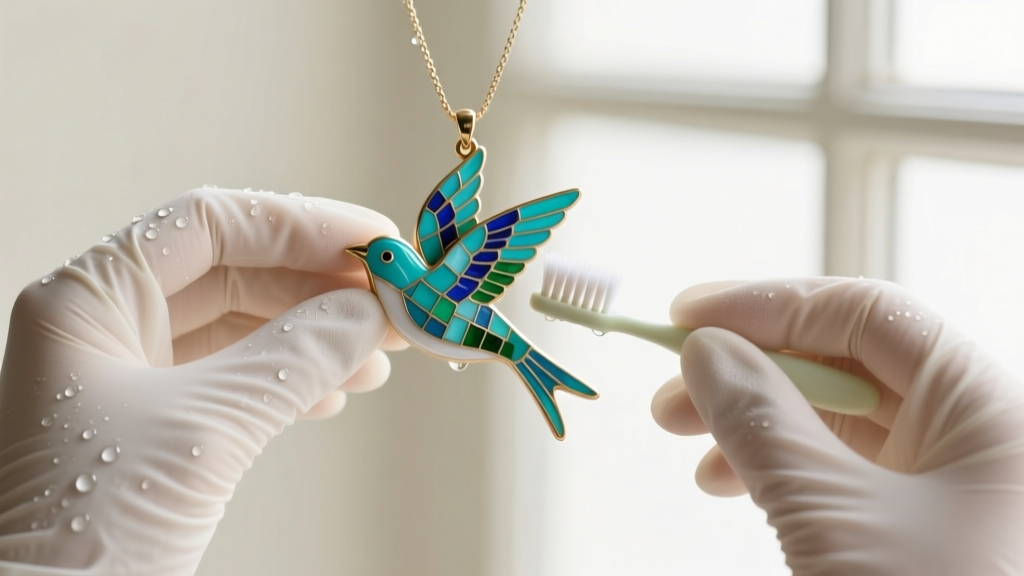
| Agitation Tool | Extra-soft baby toothbrush | Cleans crevices without scratching cold enamel or gold. |
| Drying Tool | Lint-free microfiber or compressed air | Prevents water spotting in prong settings and chain links. |
The Gentle Washing Technique
Begin by inspecting your necklace under a 10x jeweler's loupe. Look for lifting enamel, loose prongs, or cracked chain links. Submerging a piece with loose settings can cause trapped moisture to oxidize the underlying metal or dissolve vintage adhesives. If the piece passes inspection, mix two drops of mild dish soap into a bowl of lukewarm distilled water. Never use hot water, as thermal expansion can cause enamel to separate from the metal base.
Dip the extra-soft toothbrush into the solution and gently agitate the surface of the blue bird pendant, focusing on the crevices where dirt accumulates. Do not scrub aggressively. Rinse the piece briefly under a slow stream of lukewarm distilled water. Immediately pat dry with a microfiber cloth and use a can of compressed air to blow moisture out of the chain links and pendant bail. According to the Victoria and Albert Museum's conservation guidelines, ensuring jewelry is completely dry before storage is paramount to preventing localized corrosion.
Advanced Restoration for Damaged Pieces
Over decades of wear, a vintage blue bird necklace may sustain damage that goes beyond simple surface dirt. Addressing these issues requires specialized techniques to avoid further degradation.
Fixing Enamel Crazing and Minor Chips
If your vitreous enamel bird pendant exhibits crazing (a network of fine cracks), dirt will inevitably become trapped in the fissures, appearing as dark webbing. Do not attempt to bleach or use harsh chemicals to remove this, as it can degrade the metal backing. Instead, apply a micro-crystalline wax, such as Renaissance Wax, using a soft cotton swab. The wax will fill the micro-fractures, seal out moisture, and restore a uniform gloss. For cold enamel (resin) that has yellowed, there is no chemical reversal; however, a professional jeweler can carefully wet-sand the resin with 2000-grit sandpaper and polish it with a plastic-safe compound to restore clarity.
Re-polishing and Re-plating Gold Vermeil
If the gold vermeil on your necklace's chain or pendant backing has worn through to the sterling silver, polishing will not help. The piece must be professionally re-plated. A jeweler will first strip the remaining gold via reverse electrolysis, polish the silver base, and then electroplate a new layer of gold. Expect to pay between $45 and $85 for this service, depending on the complexity of the pendant's topography. Ensure the jeweler uses at least 2.5 microns of 18k or 22k gold to ensure longevity.
Long-Term Storage and Maintenance
Proper storage is the most effective form of preventative maintenance. Sterling silver tarnishes when exposed to sulfur compounds in the air, while porous stones and resins react poorly to fluctuating humidity.
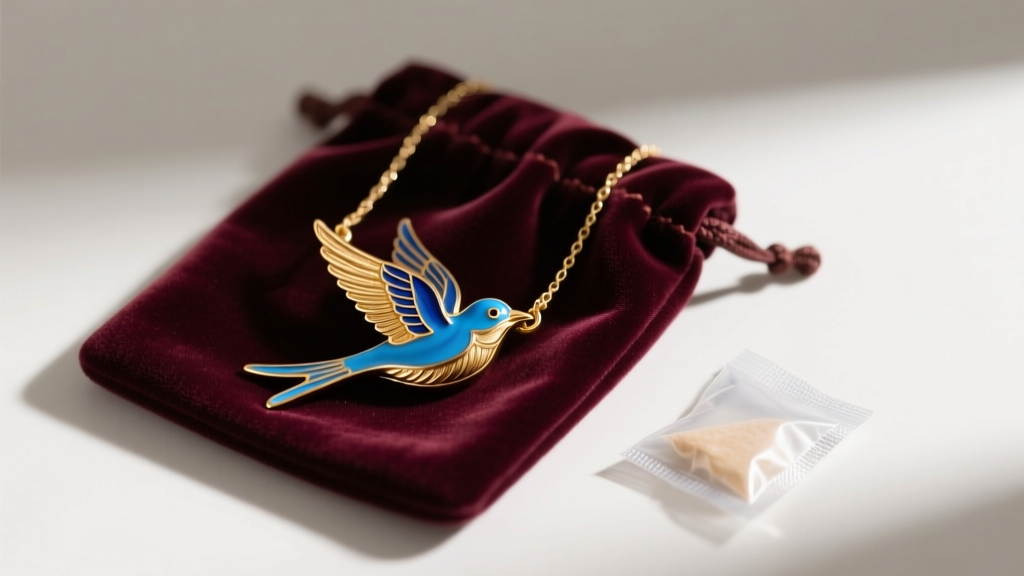
- Use Anti-Tarnish Textiles: Store your blue bird necklace in a Pacific Silvercloth pouch. These fabrics are embedded with microscopic silver particles that absorb sulfur and tarnish-causing gases before they reach your jewelry.
- Control Humidity: Include a small silica gel desiccant packet in your jewelry box to maintain a relative humidity below 45%. This prevents moisture from degrading vintage adhesives or causing base metal alloys to pit.
- Avoid PVC Plastics: Never store vintage jewelry in polyvinyl chloride (PVC) plastic bags. As PVC degrades, it off-gasses hydrochloric acid and sulfur, which will rapidly corrode silver and degrade cold enamel resins.
- Lay Flat or Hang Properly: Heavy pendants can stretch delicate vintage chains over time. Either lay the necklace completely flat in a velvet-lined tray or hang it on a padded, acid-free jewelry bust.
Common Mistakes to Avoid
To preserve the historical and monetary value of your blue bird necklace, strictly avoid the following common cleaning errors:
- Ultrasonic Cleaners: The 40 kHz cavitation bubbles generated by ultrasonic machines can easily shatter vitreous enamel, shake loose fragile gemstone inlays, and strip gold plating from vermeil.
- Commercial Silver Dips: Thiourea-based liquid silver cleaners are highly acidic. They will permanently etch turquoise, dissolve lapis calcite, and leave a dull, matte finish on polished enamel.
- Baking Soda Pastes: Baking soda has a Mohs hardness of 2.5, which is hard enough to leave permanent micro-scratches on cold enamel, resin, and high-polish gold finishes.
By understanding the specific material composition of your blue bird necklace and adhering to these meticulous care protocols, you ensure that its vibrant colors and intricate craftsmanship remain intact. Treat your jewelry not merely as an accessory, but as a wearable artifact requiring informed, conservative stewardship.


