16 Inch Chain Necklace Materials: Durability & Tarnish Guide
Discover the best metals for a 16 inch chain necklace. Compare durability, tarnish resistance, and pricing for silver, gold, titanium, and steel.

The Unique Stress Profile of a 16-Inch Necklace
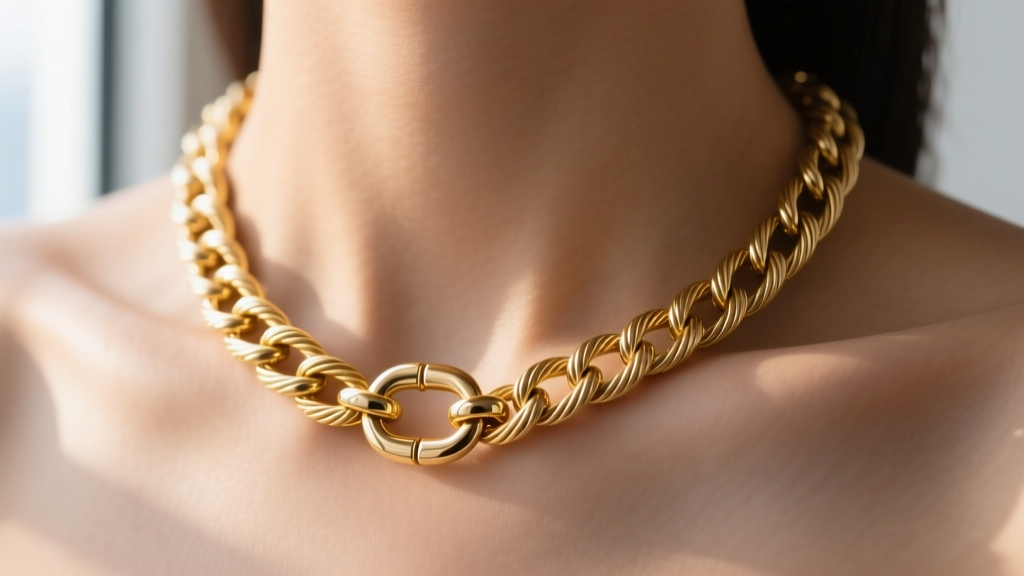
When selecting a 16 inch chain necklace, most buyers focus solely on aesthetics, overlooking the unique biomechanical and environmental stresses this specific length endures. Sitting precisely at the base of the neck or the hollow of the throat (often classified as a choker or short princess length), a 16-inch chain occupies the body's highest-friction jewelry zone. Unlike a 24-inch rope chain that rests against the sternum, a 16-inch chain is subjected to constant tensile stress from head rotation, continuous exposure to sebum and sweat from the neck's high density of apocrine glands, and frequent contact with cosmetic products like perfumes and lotions.
Because of this harsh micro-environment, the metallurgical properties of your chain dictate its lifespan. A metal that performs beautifully as a 20-inch pendant chain might rapidly degrade, snap, or cause contact dermatitis when worn tightly at 16 inches. Understanding material hardness, alloy composition, and corrosion resistance is critical for making an informed investment.
Material Breakdown: Pros, Cons, and Failure Modes
14k and 18k Solid Gold
Gold remains the benchmark for fine jewelry, but karat weight drastically alters its performance as a tight-fitting chain. Pure 24k gold is far too soft (Vickers hardness ~25 HV) and will stretch and snap under the tension of a 16-inch fit. According to the Gemological Institute of America (GIA), alloying gold with metals like copper, silver, and zinc increases its durability.
- 14k Gold (58.5% Gold): With a Vickers hardness of roughly 135-150 HV, 14k gold offers the optimal balance of rich color and tensile strength. It resists the micro-stretching that plagues higher-karat chains.
- 18k Gold (75% Gold): Softer (~110-125 HV) and more prone to link deformation. If you choose 18k for a 16-inch chain, opt for a thicker gauge (2.0mm+) and a robust link style like a curb or Figaro to prevent structural failure.
Sterling Silver (925) vs. Argentium
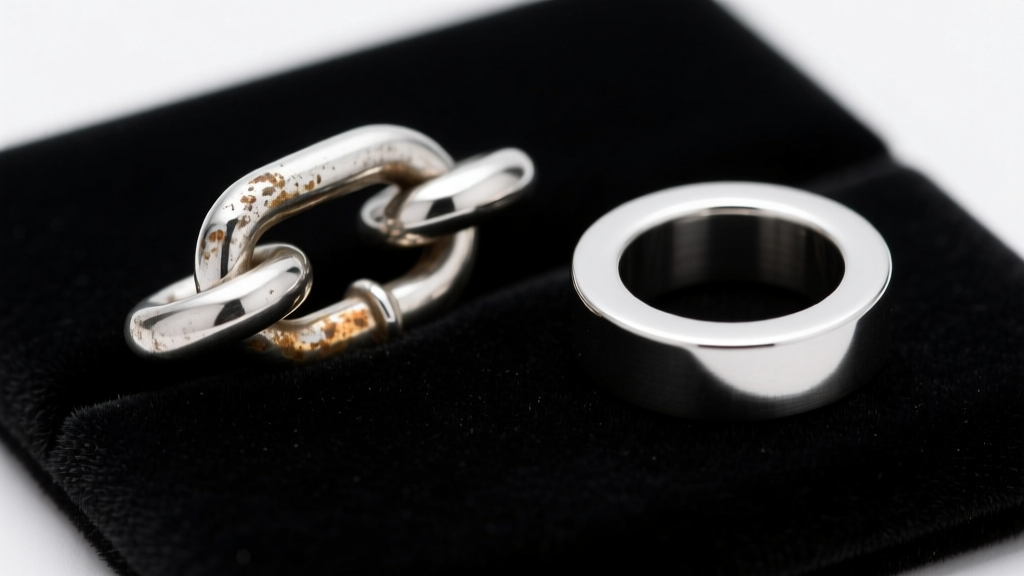
Standard 925 sterling silver contains 7.5% copper, which is the culprit behind its notorious vulnerability to tarnish. When copper reacts with hydrogen sulfide in the air and sulfur compounds in human sweat, it forms silver sulfide—a black, corrosive layer. For a 16-inch necklace sitting against sweaty skin, 925 silver requires frequent polishing.
The Argentium Upgrade: Argentium silver (typically 935 or 960 purity) replaces a portion of the copper with germanium. The Silver Institute notes that germanium forms a transparent, self-healing oxide layer on the surface, making Argentium up to seven times more tarnish-resistant than traditional sterling. For a low-maintenance 16-inch silver chain, Argentium is vastly superior.
Surgical Stainless Steel (316L)
Often marketed as "hypoallergenic," 316L surgical steel is an iron-based alloy containing chromium, nickel, and molybdenum. The "L" denotes low carbon, which prevents carbide precipitation and enhances corrosion resistance. While highly durable and virtually untarnishable, 316L still contains 8-10% nickel. In a 16-inch chain where the metal is trapped against warm, damp skin, individuals with severe nickel sensitivities may experience contact dermatitis over prolonged wear.
Grade 5 Titanium (Ti-6Al-4V)
For the ultimate combination of lightweight comfort and indestructible durability, aerospace-grade Grade 5 titanium is unmatched. It is 100% hypoallergenic, impervious to sweat, and boasts a tensile strength that dwarfs steel. The primary drawback is its extreme hardness; if a link breaks, standard jewelers cannot easily solder titanium, meaning the chain usually requires specialized laser welding or total replacement.
Comparative Data: Weight, Hardness, and Price
To visualize how these materials perform specifically in a standard 16 inch chain necklace (measured at a 2.0mm cable link width), review the matrix below. Pricing reflects average retail costs for unbranded, solid-link chains in 2026.
| Material | Vickers Hardness (HV) | Tarnish Resistance | Avg. Price (16" 2mm) | Hypoallergenic? |
|---|---|---|---|---|
| 14k Yellow Gold | 135 - 150 | Excellent | $350 - $550 | Yes (usually) |
| 18k Yellow Gold | 110 - 125 | Excellent | $600 - $900 | Yes |
| 925 Sterling Silver | 60 - 70 | Poor (Tarnishes) | $40 - $75 | No (Copper alloy) |
| Argentium 935 Silver | 65 - 80 | Excellent | $90 - $140 | Rarely |
| 316L Stainless Steel | 150 - 190 | Excellent | $15 - $35 | No (Contains Nickel) |
| Grade 5 Titanium | 330 - 350 | Flawless | $70 - $130 | Yes (100%) |
Gauge Thickness and Clasp Mechanics
Optimal Wire Gauges for 16-Inch Lengths
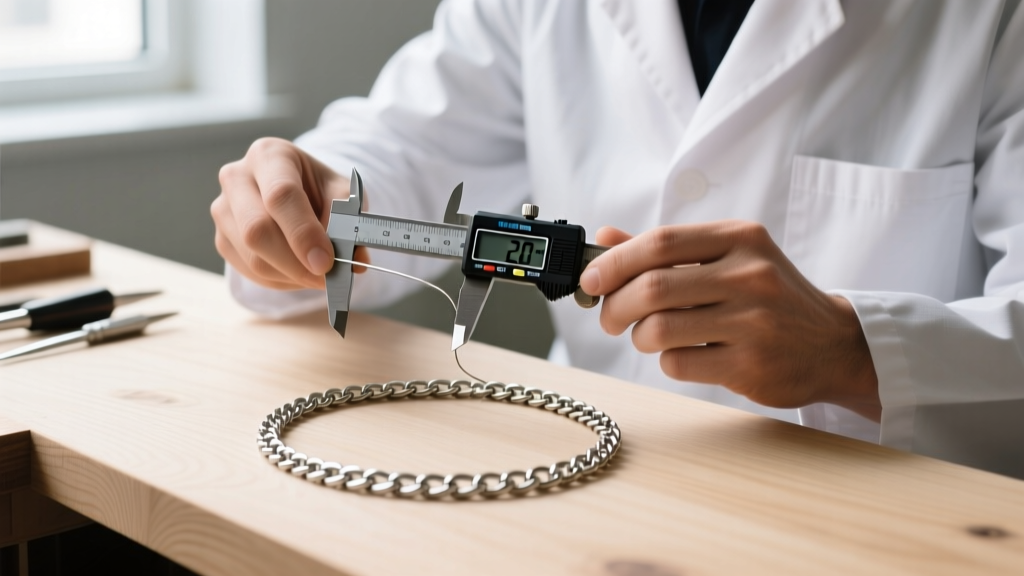
When jewelers discuss chain thickness, they refer to the overall width of the link, but the wire gauge (the actual thickness of the metal wire used to form the link) dictates structural integrity. Because a 16-inch chain experiences lateral pulling when the wearer turns their head, ultra-thin chains (under 1.0mm overall width) are highly prone to snapping.
For a standalone 16-inch chain, an overall width of 1.5mm to 2.5mm is the sweet spot. This provides enough visual presence on the collarbone without feeling like a restrictive collar. If you plan to hang a heavy pendant, you must scale up to a 3.0mm+ width and ensure the chain style can handle dynamic loads. Rolo and curb chains distribute weight more evenly across the links than delicate cable or box chains.
The Clasp: Your Chain's Weakest Link
The clasp is the most common point of failure on any necklace, but especially on a 16-inch chain where tension is highest. Never use a spring ring clasp on a 16-inch chain over 1.5mm thick. Spring rings rely on a microscopic internal steel spring that easily fatigues, corrodes from neck sweat, and fails to close completely over time. Instead, demand a lobster clasp. Lobster clasps utilize a solid metal lever mechanism that is far more resistant to lateral tension. For chains between 2.0mm and 4.0mm, a 7mm to 10mm solid gold or steel lobster clasp is mandatory for security.
Maintenance and Real-World Troubleshooting
Even the most durable metals require specific care when worn tightly against the skin. Here is how to troubleshoot common issues associated with 16-inch necklaces:
Expert Insight: If your sterling silver 16-inch chain is leaving a green or black smudge on your neck, it is not necessarily "fake" silver. It is a chemical reaction between the copper alloy in the 925 silver and the acidity (pH) of your sweat, combined with sulfur in your environment. Switching to Argentium silver or rhodium-plating your existing chain will permanently solve this issue.
- Ultrasonic Cleaning Warnings: While ultrasonic cleaners are excellent for removing sebum buildup from the tight crevices of a 16-inch rolo or box chain, never use them on oxidized (blackened) silver or gold-plated chains. The high-frequency vibrations will strip the intentional patina or the thin gold veneer.
- Perfume and Cosmetics: Always apply perfumes, hairsprays, and lotions before putting on your 16-inch chain. Alcohol and volatile organic compounds (VOCs) in cosmetics can degrade the polish of gold and accelerate the tarnishing of standard silver.
- Sleeping in Your Chain: A 16-inch chain should ideally be removed before sleep. The tossing and turning of sleep creates severe friction against cotton pillows, which acts as a mild abrasive, slowly dulling the high-polish finish of gold and platinum links over months of wear.
By matching the metallurgical properties of your chosen metal to the high-friction reality of the 16-inch length, you ensure your necklace remains a durable, comfortable, and brilliant staple in your jewelry wardrobe for decades. For further reading on precious metal standards and hallmarking, consult the London Assay Office Hallmarking Guide to verify the authenticity of your purchases.


