Maharaja of Patiala Necklace: A Material Analysis
Explore the metallurgical and gemological evolution of the Maharaja of Patiala necklace, comparing its 1928 platinum origins to modern replicas.

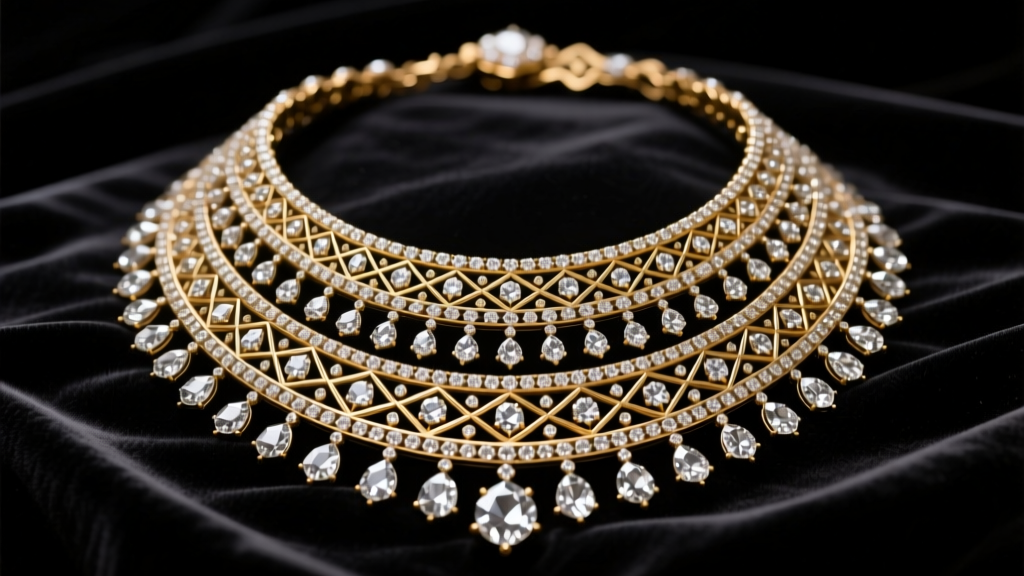
The maharaja of patiala necklace remains one of the most legendary and complex feats of high jewelry engineering in history. Commissioned in 1928 by Bhupinder Singh, the Maharaja of Patiala, and executed by Cartier, the original bib necklace contained nearly 3,000 diamonds and a multitude of Burmese rubies. However, beyond its staggering carat weight, the piece serves as a masterclass in early 20th-century metallurgy and gemological selection. Following its mysterious disappearance in the mid-20th century and Cartier’s ambitious 2002 reconstruction, the necklace offers a unique opportunity to compare historical material properties with modern synthetic substitutes.
The Genesis of a Masterpiece: 1928 Material Specifications
To understand the structural integrity of the original piece, one must examine the Cartier History Archives regarding Art Deco metallurgy. In the 1920s, the transition from yellow gold to white metals was in full swing, driven by the desire to make diamonds appear whiter and more brilliant.
Platinum vs. Early White Gold Alloys
Cartier utilized a 950 Platinum alloy (95% platinum, 5% iridium or ruthenium) for the primary articulated framework. From a materials science perspective, this was a critical decision. A 950 Pt/Ir alloy possesses a Vickers hardness of approximately 135 HV and an exceptional tensile strength. This allowed Cartier’s master jewelers to create incredibly fine, yet structurally rigid, millegrain edges and pavé settings that could support the immense weight of the centerpiece stones without warping.
Conversely, early 18k white gold (75% gold, alloyed with nickel or palladium) lacked the sheer rigidity required for a multi-tiered bib necklace of this scale. White gold is also prone to stress-fracture at the joints of articulated pieces and requires rhodium plating to achieve a bright white luster—a maintenance burden that platinum inherently avoids due to its naturally white, non-tarnishing surface.
Gemological Breakdown: The Original Stones
The optical performance of the original necklace was anchored by the De Beers diamond, a staggering 234.69-carat antique cushion brilliant. According to the GIA Diamond Quality Factors framework, this stone exhibited a pale golden-yellow hue, characteristic of Type IaB diamonds with high nitrogen aggregation. Its antique cut, featuring a smaller table and higher crown than modern brilliant cuts, was specifically chosen to maximize candlelight scintillation, which was highly prized in the 1920s.
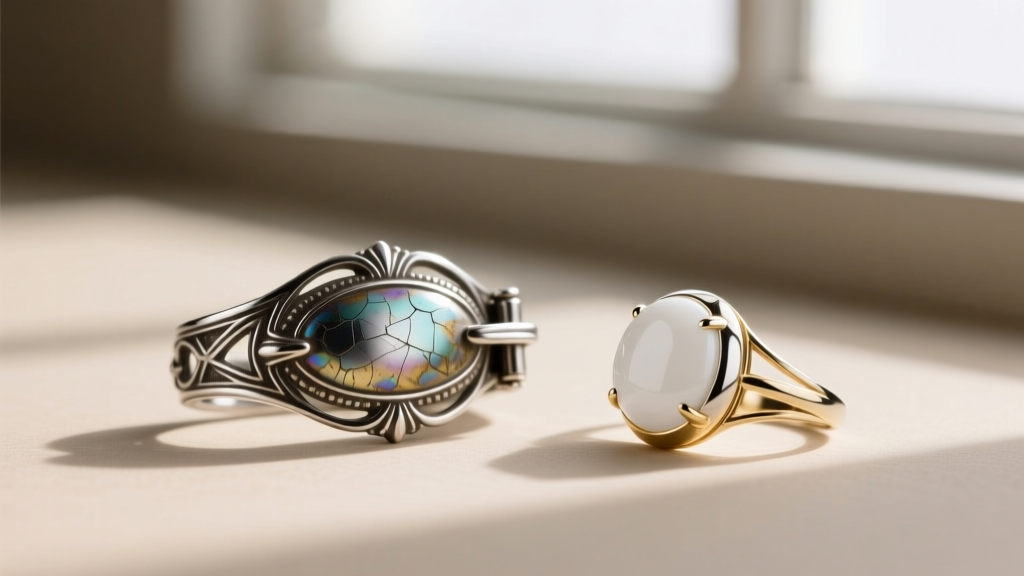
The secondary accent stones were natural Burmese rubies from the Mogok Valley. As detailed in the GIA Ruby Overview, these specific stones were selected for their 'pigeon’s blood' coloration—a highly saturated, medium-dark red. More importantly, these natural rubies possessed high chromium and low iron content, granting them a strong red fluorescence under ultraviolet light. This fluorescence caused the rubies to appear to glow from within, creating a striking visual contrast against the icy white platinum and yellow diamonds.
| Original Material | Mohs Hardness | Refractive Index (RI) | Specific Gravity |
|---|---|---|---|
| Natural Diamond (De Beers) | 10.0 | 2.417 | 3.52 |
| Burmese Ruby (Mogok) | 9.0 | 1.762 - 1.770 | 4.00 |
| 950 Platinum / Iridium | 4.5 (Metal) | N/A | 21.45 |
The Disappearance and the 2002 Reconstruction
When the original necklace vanished from the Patiala treasury and eventually resurfaced in fragments on the secondary market in the 1980s, the massive center stones were missing. In 2002, Cartier undertook a painstaking four-year project to reconstruct the necklace for their private collection. Because sourcing matching natural stones of that magnitude was impossible, Cartier turned to advanced synthetic and semi-precious alternatives.
Synthetic Substitutes: Zirconia and Quartz
To replicate the visual weight and color of the missing pale yellow diamonds, Cartier utilized smoky quartz. Smoky quartz (a variety of macrocrystalline silicon dioxide) achieves its brownish-gray hue through natural or artificial irradiation of aluminum impurities within the crystal lattice. While it provided the correct vintage color profile, its Refractive Index (1.54) and Mohs hardness (7.0) are vastly inferior to diamond, resulting in a noticeably softer luster and higher susceptibility to facet abrasion over time.
For the thousands of smaller melee diamonds, Cartier employed high-grade cubic zirconia (CZ). Stabilized with yttrium oxide, CZ offers a high RI of 2.150—close enough to diamond to fool the naked eye in small sizes. However, CZ is 1.7 times heavier than diamond (Specific Gravity ~5.80), which subtly altered the drape and kinetic movement of the reconstructed bib necklace compared to the 1928 original.
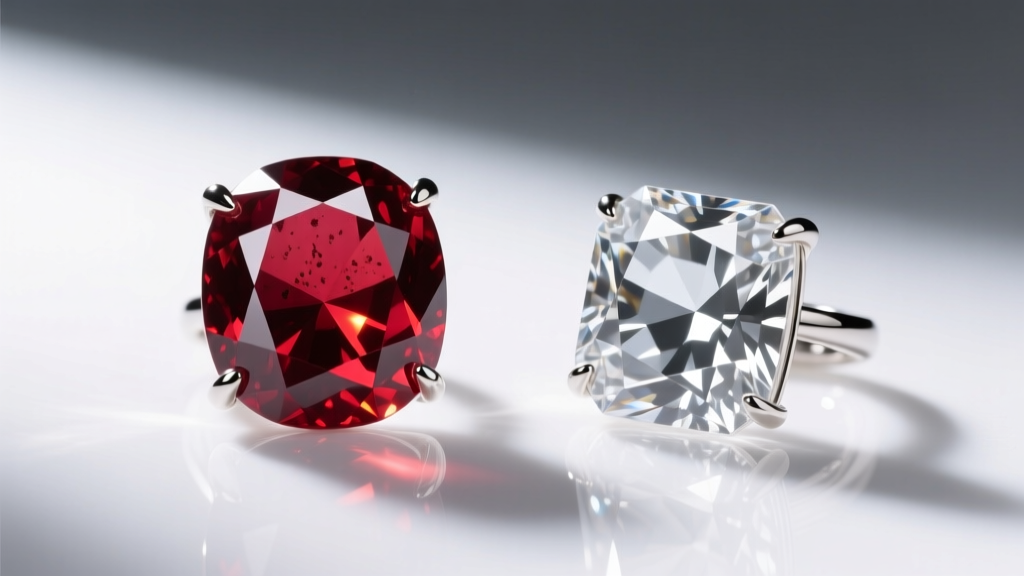
| 2002 Replica Material | Mohs Hardness | Refractive Index (RI) | Specific Gravity |
|---|---|---|---|
| Smoky Quartz (Center) | 7.0 | 1.544 - 1.553 | 2.65 |
| Cubic Zirconia (Melee) | 8.0 - 8.5 | 2.150 | 5.60 - 6.00 |
| Synthetic Ruby (Flux-Grown) | 9.0 | 1.762 - 1.770 | 4.00 |
The 2022 Reunion: Metallurgical Conservation
In a historic 2022 exhibition, the original 234.69-carat De Beers diamond was temporarily reunited with the 2002 replica necklace. This event highlighted a massive challenge in jewelry conservation: mounting a stone of this density onto a replica framework. The original 1928 platinum bezel and prong system was engineered specifically for the exact millimeter dimensions and girdle thickness of the De Beers diamond. Modern conservationists had to fabricate a custom, non-destructive transitional mount using aerospace-grade titanium and 18k white gold to bridge the historical stone to the replica's platinum articulation points without applying undue torque to the vintage metal.
Sourcing Modern Equivalents for High Jewelry Replication
For contemporary bespoke jewelers attempting to replicate historical masterpieces like the Patiala necklace in 2026, material selection has evolved significantly since the 2002 Cartier reconstruction. Today, relying on cubic zirconia for high-end replicas is considered obsolete due to its long-term clouding and facet wear.
"When replicating Art Deco masterpieces, modern jewelers must utilize CVD or HPHT lab-grown diamonds. Matching the exact refractive index of 2.417 is non-negotiable if the goal is to capture the authentic optical fire of the original 1920s design." — Master Gemologist Appraiser
- Framework: Stick to 950 Pt/Ruthenium. Ruthenium provides a slightly higher Vickers hardness (approx. 135-140 HV) than iridium, offering superior resistance to scratching in modern wearable replicas.
- Center Stones: Use Type IIa lab-grown diamonds for the white stones, and specifically request HPHT-grown stones with trace nitrogen to replicate the pale yellow tint of the original De Beers center stone.
- Accent Stones: Flux-grown synthetic rubies are preferable to Verneuil (flame-fusion) synthetics, as the flux process creates internal inclusions that closely mimic the silk and rutile needles found in natural Mogok rubies.
Conclusion
The maharaja of patiala necklace is far more than a display of wealth; it is a historical document of material science. By analyzing the shift from 1928 platinum and natural Burmese rubies to the 2002 smoky quartz and cubic zirconia reconstruction, we gain a profound understanding of how specific gravity, refractive indices, and metallurgical tensile strength dictate the drape, brilliance, and longevity of high jewelry. As lab-grown gemology continues to advance, future conservators and bespoke jewelers now possess the exact material equivalents required to honor Bhupinder Singh’s original, uncompromising vision.


