16 Inch Necklace vs 18 Inch: Maintenance and Cleaning Guide
Discover the unique care, cleaning, and maintenance differences in a 16 inch necklace vs 18 inch. Learn how placement affects wear and longevity.


The Anatomy of Wear: Why Length Dictates Maintenance
When jewelry enthusiasts debate a 16 inch necklace vs 18 inch, the conversation almost exclusively revolves around aesthetics, necklines, and personal style. However, as a domain expert in jewelry maintenance, I can tell you that the two most critical factors in a necklace's lifespan—friction and chemical exposure—are entirely dictated by its length. A 16-inch chain (often classified as a choker or collar) and an 18-inch chain (the classic princess length) rest on completely different anatomical zones. This means they encounter different environmental stressors, require distinct cleaning frequencies, and demand unique storage solutions to prevent structural failure.
Understanding the biomechanics of how these lengths interact with your body and clothing is the first step toward preserving your fine jewelry. According to the Gemological Institute of America (GIA), environmental contaminants like sebum, cosmetics, and perspiration are the leading causes of premature metal tarnishing and gemstone dulling. Because a 16-inch and 18-inch necklace sit at different elevations on the torso, their exposure to these contaminants varies drastically.
16-Inch Necklaces: High-Friction and Sweat Exposure
A 16-inch necklace rests snugly at the base of the neck or directly on the collarbone. This high-placement zone is a hotspot for physiological activity. The nape and sides of the neck contain a high density of eccrine sweat glands. Furthermore, this is the exact zone where hair products, perfumes, and body lotions are most frequently applied and subsequently transfer to the metal.
Cleaning Protocols for Choker and Collar Lengths
Because 16-inch necklaces are exposed to higher concentrations of acidic sweat and cosmetic chemicals, they require a more aggressive and frequent cleaning schedule than longer chains. If your 16-inch piece is a tightly woven design, such as a herringbone, wheat, or box chain, the microscopic gaps between the links act as magnets for dead skin cells and sebum.
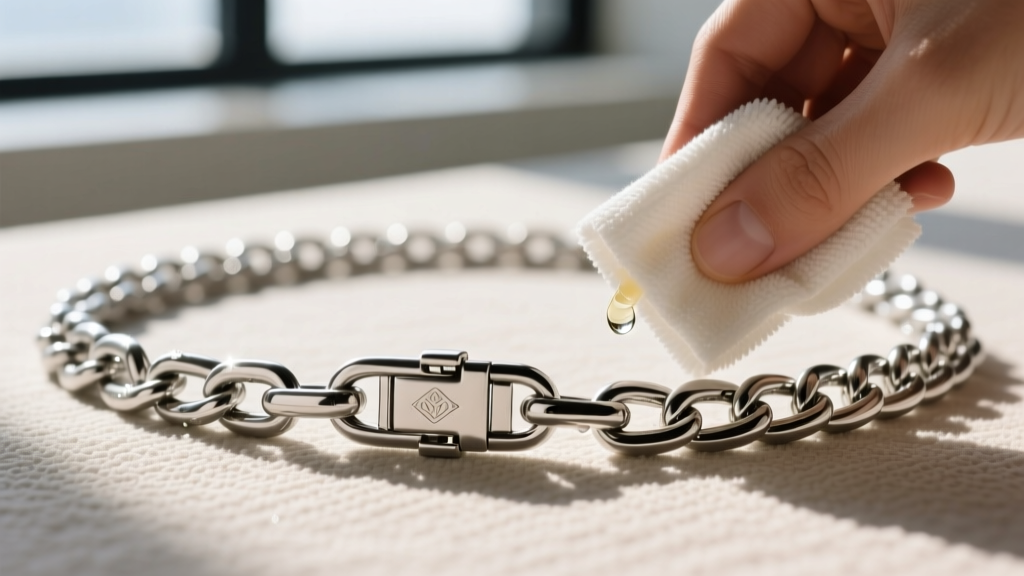
- The Soak Method: Mix a few drops of phosphate-free dish soap (like Dawn) into a bowl of lukewarm water. Submerge the 16-inch chain for exactly 5 to 10 minutes. Do not exceed this, as prolonged water exposure can weaken the silk or nylon threads used in some pearl or beaded 16-inch chokers.
- The Agitation Step: Use an extra-soft baby toothbrush to gently sweep along the links. Pay special attention to the clasp. A 16-inch necklace places significantly more lateral tension on a spring-ring clasp when you turn your head compared to an 18-inch chain. Dirt buildup inside the spring mechanism is the number one cause of clasp failure at this length.
- The Rinse and Dry: Rinse under a gentle stream of distilled water (tap water contains chlorine and hard minerals that can spot sterling silver). Pat dry with a lint-free microfiber cloth, never a paper towel, which can leave microscopic scratches on high-polish 18k gold.
18-Inch Necklaces: Pendant Impact and Clothing Friction
The 18-inch princess length is the most popular necklace size globally, designed to rest gracefully on the upper chest and sternum. While it escapes the heavy sweat zone of the neck, it introduces a completely different set of maintenance challenges: mechanical abrasion and impact damage.
Maintaining the Princess Length
An 18-inch necklace is constantly rubbing against clothing. If you wear a 14k or 18k white gold chain, the rhodium plating that gives it a bright, silvery finish will wear away much faster at the 18-inch mark due to the continuous friction against cotton, wool, and synthetic fabrics. Additionally, 18-inch necklaces frequently feature pendants. Because of the length, the pendant rests exactly at the level where your hands naturally gesture, where you hug people, and where you lean against desks or tables.
Expert Insight: The 'desk strike' is a recognized phenomenon in jewelry repair. An 18-inch pendant is perfectly positioned to scrape against the edge of a desk or a steering wheel, leading to scratched gemstone tables and bent prongs. Always inspect the prongs of an 18-inch pendant setting with a 10x jeweler's loupe every six months.
For cleaning an 18-inch chain with a pendant, ultrasonic cleaners operating at 40kHz are highly effective for removing debris from the chain links. However, the Jewelers of America strongly warns against placing pendants featuring porous gems (like opals, emeralds, or turquoise) or fracture-filled diamonds into an ultrasonic bath, as the high-frequency vibrations can shatter the stones or strip their treatments. Always detach the pendant from the 18-inch chain before ultrasonic cleaning, or clean the pendant separately with a damp cloth.
Wear & Tear Comparison: 16 Inch vs 18 Inch
To help you prioritize your jewelry maintenance routine, refer to the data table below outlining the specific vulnerabilities of each length.
| Maintenance Factor | 16-Inch Necklace (Choker/Collar) | 18-Inch Necklace (Princess) |
|---|---|---|
| Primary Stressor | Sweat, cosmetics, skin oils, perfume. | Clothing friction, pendant impact, desk strikes. |
| Cleaning Frequency | Every 1–2 weeks (if worn daily). | Every 3–4 weeks (if worn daily). |
| Common Failure Point | Clasp spring mechanism (due to neck tension). | Pendant bail and prong settings (due to impact). |
| Plating Wear | Minimal friction wear, but chemical tarnishing. | High friction wear (accelerates rhodium loss on white gold). |
| Recommended Tool | Soft baby toothbrush and mild degreasing soap. | Ultrasonic cleaner (chain only) and 10x jeweler's loupe. |
Storage Solutions: Preventing Tangles by Length
The physics of a chain dictate how it tangles, and the 16 inch necklace vs 18 inch debate extends into the jewelry box. The longer the chain, the higher the probability of it crossing over itself and forming complex knots when agitated in a drawer.
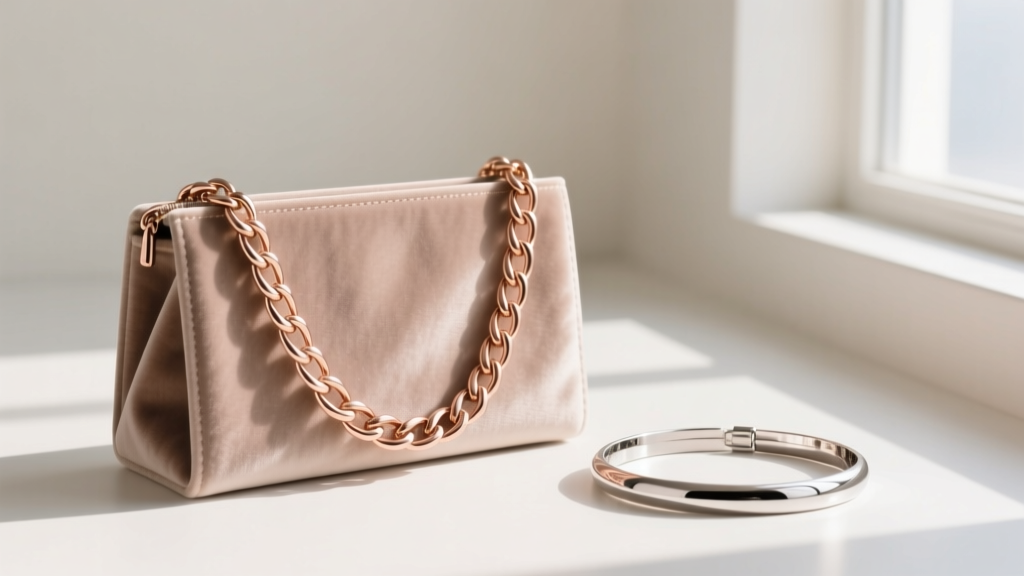
Storing the 16-Inch Chain
A 16-inch chain is short enough that it can be safely coiled into a 3-inch diameter circle and placed in a dedicated, fabric-lined compartment. To prevent the clasp from catching on the links, always fasten the clasp before coiling. For rigid 16-inch chokers (like solid silver or gold collars), never bend them; lay them perfectly flat in a wide drawer or hang them on a wide, padded velvet hanger to maintain their structural memory.
Storing the 18-Inch Chain
An 18-inch chain is in the 'danger zone' for tangling. It is too long to sit neatly in a small ring dish, but too short to drape heavily without looping. The absolute best storage method for an 18-inch necklace is vertical suspension. Use a jewelry armoire with individual hooks. Hang the chain, leaving the clasp unfastened so the chain hangs perfectly straight, allowing gravity to pull out any micro-kinks. If you must travel, thread the 18-inch chain through a plastic drinking straw and fasten the clasp. This rigid housing makes tangling physically impossible.
Material-Specific Considerations for Both Lengths
While length dictates the type of wear, the material dictates the reaction to that wear. Sterling silver (.925) is highly susceptible to the sulfur compounds found in human sweat. Therefore, a 16-inch sterling silver choker will tarnish significantly faster than an 18-inch sterling silver chain simply due to its proximity to the neck's sweat glands. To combat this, apply a thin layer of anti-tarnish wax or store the 16-inch piece with 3M anti-tarnish strips in an airtight ziplock bag when not in use.
Conversely, platinum and 18k yellow gold are highly resistant to chemical tarnishing but are softer metals. An 18-inch platinum chain resting against a zipper or rough denim will develop a patina of micro-scratches much faster than a 16-inch chain tucked safely under a collar. Understanding these material-length interactions is the hallmark of a true jewelry connoisseur.
Conclusion
Choosing between a 16 inch necklace vs 18 inch is not just a matter of matching your neckline; it is a commitment to a specific maintenance lifestyle. The 16-inch length demands vigilant, frequent chemical cleaning to combat sweat and cosmetics, while the 18-inch length requires mechanical protection, careful prong inspections, and specialized anti-tangle storage. By tailoring your care routine to the unique anatomical placement of your jewelry, you ensure that your chains remain brilliant, secure, and structurally sound for generations.


