The Anatomy of a Fine Cat Pendant Necklace: Metals, Settings & Chains
Discover the technical anatomy of a fine cat pendant necklace. Explore metal casting methods, gemstone eye settings, and optimal chain gauges.

The Metallurgy of Feline Silhouettes: Choosing the Right Alloy
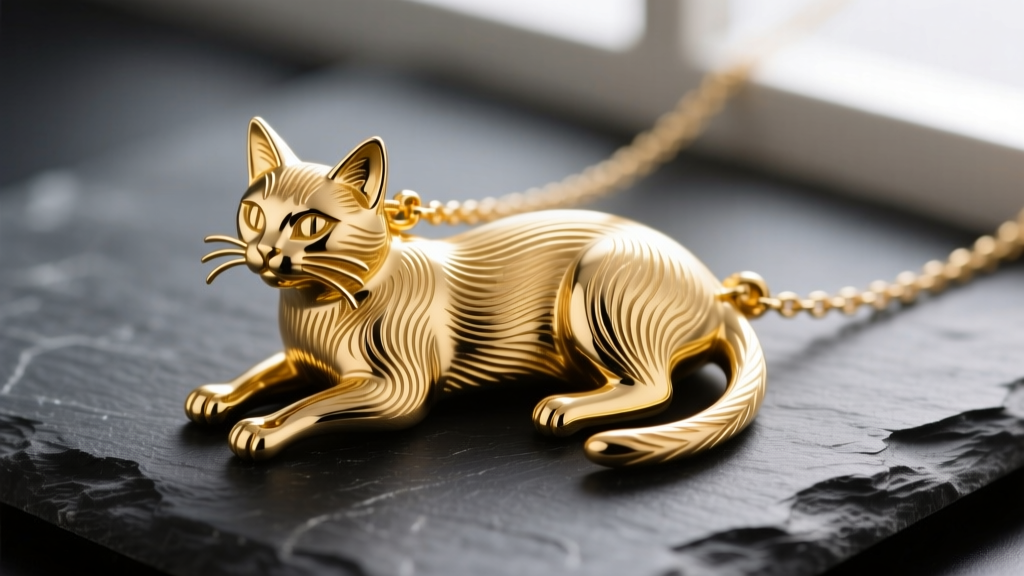
When engineering a high-quality cat pendant necklace, the foundational decision begins at the alloy level. Feline silhouettes are notoriously unforgiving; they feature delicate extremities—such as pointed ears, tapered tails, and slender legs—that are highly susceptible to deformation if the metal lacks adequate tensile strength and hardness. In 2026, master jewelers and CAD designers prioritize structural integrity without sacrificing the luster expected of fine jewelry.
For gold alloys, 14k gold (58.5% pure gold) remains the industry standard for intricate silhouette pendants. On the Vickers hardness scale (HV), standard 14k yellow gold registers between 120 and 140 HV, providing a rigid lattice that resists bending when the pendant is subjected to lateral stress. By contrast, 18k gold (75% pure gold) typically measures between 110 and 125 HV. While 18k offers a richer, deeper yellow hue, its softer nature makes the ears and tail of a cat pendant vulnerable to snapping or warping during daily wear.
For silver alternatives, standard 925 sterling silver (92.5% silver, 7.5% copper) is increasingly being bypassed in favor of Argentium 935 silver. By replacing a portion of the copper with germanium, Argentium creates a transparent, self-healing layer of germanium dioxide on the surface. This technical upgrade drastically reduces the tarnish rate, ensuring the intricate crevices of the cat's fur texture remain bright without requiring frequent, abrasive polishing that can degrade fine casting details over time.
Precision Casting Techniques: Lost-Wax vs. Die-Striking
The manufacturing method dictates the crispness of the pendant's micro-details. While mass-market fashion jewelry relies on die-striking—which compresses metal sheets under immense pressure but limits three-dimensional depth—fine cat pendants are almost exclusively produced via lost-wax investment casting.
The process begins with a high-resolution 3D CAD model, milled into a photopolymer resin or injected into a vulcanized rubber mold at 160°C. The wax model is sprued onto a central tree, invested in a calcium sulfate-based plaster, and subjected to a burnout cycle at 1350°F to vaporize the wax. Molten metal is then introduced via centrifugal force or vacuum induction. Vacuum casting is highly preferred for intricate feline designs, as it pulls the dense metal into the microscopic fur-texture grooves of the mold, eliminating porosity and air pockets that often plague the thinner extremities of the pendant.
Post-casting, the sprue mark (usually located discreetly at the base of the cat's body or near the tail) is laser-welded or carefully filed. The piece then undergoes tumbling with stainless steel shot to work-harden the surface and burnish the metal before final hand-polishing with rouge compounds.
Gemstone Integration: Engineering the 'Eyes'
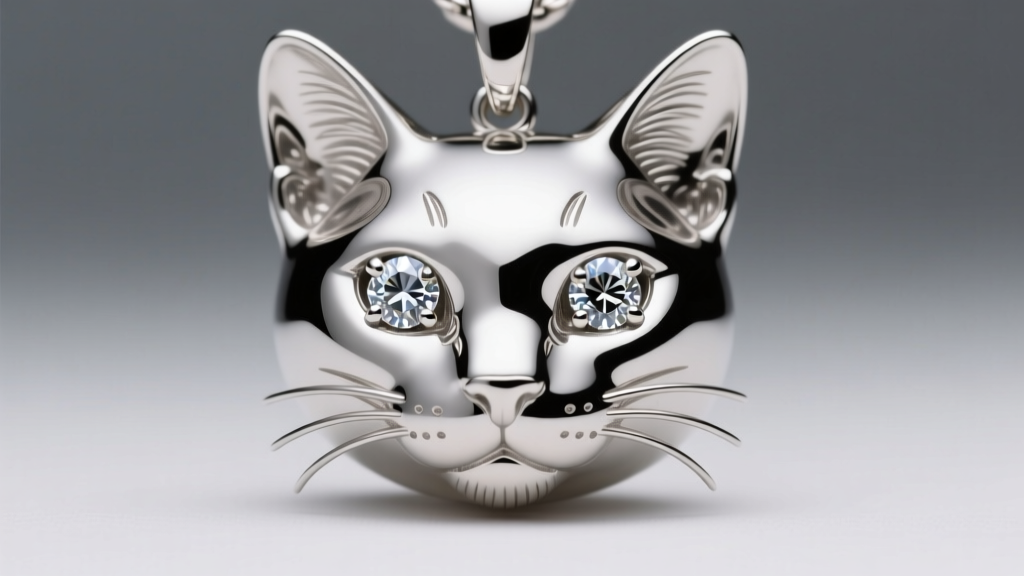
A defining characteristic of a premium cat pendant necklace is the integration of gemstones to represent the eyes. This requires precise lapidary work and micro-setting techniques. The most common choice is melee diamonds, typically ranging from 1.3mm to 1.7mm in diameter (0.01 to 0.02 carats each). According to the Gemological Institute of America (GIA), melee diamonds in this size bracket are categorized as either 'single cut' (17 or 18 facets) or 'full cut' (57 or 58 facets). For a pendant that catches ambient light dynamically as the wearer moves, full-cut melee diamonds (graded VS clarity and G-H color) are essential to maximize brilliance.
The setting style fundamentally alters both the security of the stones and the aesthetic of the feline face. Below is a technical comparison of the two primary setting methods used in modern feline jewelry:
| Setting Type | Technical Profile | Durability & Snag Factor | Aesthetic Impact |
|---|---|---|---|
| Bezel Setting | A continuous metal rim is burnished over the diamond's girdle. Requires precise seat cutting to avoid chipping the melee stone. | Exceptional. Zero snag risk. Ideal for active wearers or those who frequently wear knit fabrics. | Creates a sleek, modern, and slightly mysterious feline gaze. Obscures the diamond's girdle. |
| Micro-Prong Setting | Typically utilizes 3 or 4 microscopic prongs (often platinum or 14k white gold for rigidity) folded over the crown. | Moderate. Prongs can catch on lace or hair. Requires bi-annual microscopic inspection for prong wear. | Maximizes light return by exposing more of the diamond's pavilion. Yields a wider, more alert eye expression. |
For white gold pendants, the prong tips must be rhodium-plated to match the bright white finish of the alloy. However, because rhodium is merely a surface plating, the friction of daily wear will eventually wear it away, revealing the naturally yellowish tint of the underlying white gold alloy. Platinum is increasingly favored for the setting heads of fine pendants, as its natural white color and high density (21.45 g/cm³) ensure prongs remain secure and visually consistent indefinitely.
Bail Engineering and Chain Pairing
The bail—the loop that connects the pendant to the chain—is a critical structural component that is often overlooked in commercial jewelry design. For a silhouette cat pendant, a standard visible loop bail can disrupt the continuous line of the feline's back or head. To preserve the visual integrity of the design, expert jewelers employ hidden bails or integrated tube bails.
A hidden bail is soldered directly to the back of the pendant, allowing the chain to pass behind the piece. This creates a 'floating' illusion where the cat pendant appears to rest directly against the skin or fabric without visible hardware. The internal diameter of a hidden bail must be precisely calibrated to the chain gauge. A common engineering flaw in mass-produced jewelry is a bail aperture that is too narrow, causing excessive friction and premature wear on the chain links.
Optimal Chain Specifications for Silhouette Pendants
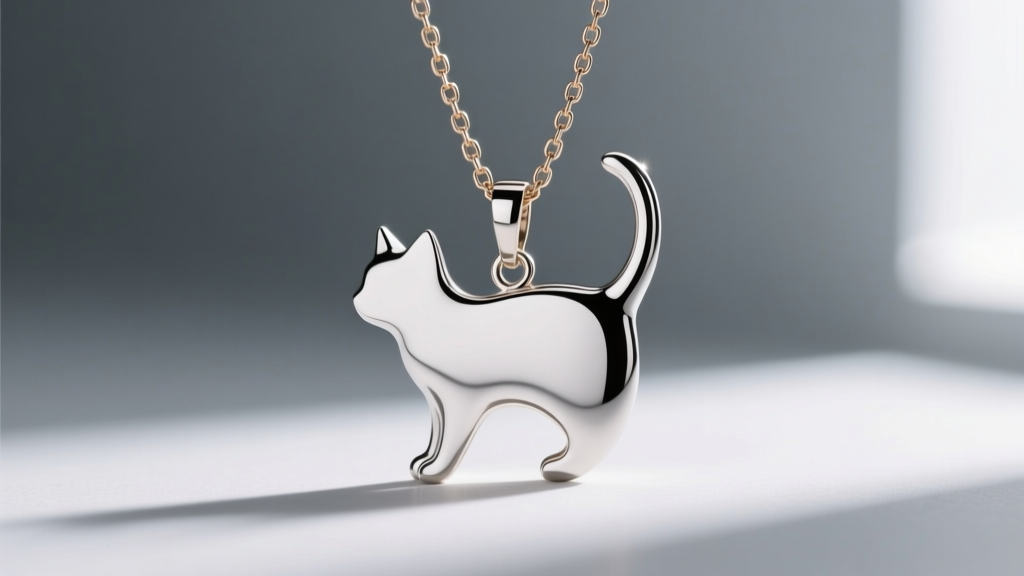
Pairing the correct chain with a cat pendant necklace requires balancing tensile strength with visual delicacy. The chain must support the pendant's weight (typically 2.5 to 5 grams) without overpowering the design. The Jewelers of America recommends matching chain gauges to pendant weights to prevent clasp failure and link distortion.
- 0.8mm to 1.0mm Box Chains: The optimal choice for pendants weighing under 4 grams. Box chains feature interlocking square links that provide excellent structural rigidity and a smooth surface that resists catching on the hidden bail. A 1.0mm 14k gold box chain boasts a tensile strength of roughly 12-15 lbs, more than sufficient for daily wear.
- 1.2mm Cable Chains: Featuring uniform oval links, cable chains offer a classic, traditional look. However, they are more prone to tangling than box chains. When using a cable chain, a 1.2mm gauge is recommended to ensure the links do not stretch at the solder points under the dynamic pendulum motion of the pendant.
- Clasp Mechanics: Avoid spring-ring clasps for fine pendants. The internal steel spring mechanism is prone to failure and corrosion. Instead, specify a teardrop lobster clasp (typically 5x9mm or 6x10mm). Lobster clasps feature a solid cast body and a heavy-duty internal spring, providing a secure, self-closing mechanism that withstands lateral pulling forces.
Maintenance, Wear, and Long-Term Troubleshooting
Even the most meticulously engineered cat pendant necklace requires structured maintenance to ensure longevity. The primary failure points in feline-themed jewelry are the extremities (ears and tails) and the gemstone settings.
Owners should inspect the pendant's prongs every 12 to 18 months using a 10x jeweler's loupe. If the pendant is worn daily, the metal at the top of the prongs can wear down by 0.1mm to 0.2mm annually due to friction against clothing. Once the prong head is flattened, the risk of losing a melee diamond eye increases exponentially. Retipping by a master jeweler—using a laser welder to add precise droplets of matching alloy without heating the surrounding gemstone—is a routine procedure that preserves the stone's security.
Furthermore, the intricate textures mimicking feline fur can trap sebum, lotions, and environmental dust, dulling the metal's reflectivity. Ultrasonic cleaners are generally safe for solid gold and platinum cat pendants without fracture-filled gemstones. However, if the pendant features enamel accents or porous stones like opals or turquoise for the eyes, ultrasonic cavitation can shatter the stones or crack the enamel. In such cases, a soft-bristled brush with a mild, phosphate-free dish soap and warm water remains the safest, most effective cleaning protocol.
Final Considerations for the Collector
Investing in a fine cat pendant necklace is an exercise in appreciating micro-engineering. From the Vickers hardness of the chosen alloy to the precise facet count of the melee diamonds, every technical specification influences the piece's durability and aesthetic resonance. By understanding the metallurgy, casting methodologies, and chain dynamics outlined above, collectors and enthusiasts can make highly informed decisions, ensuring their feline jewelry remains structurally sound and visually captivating for generations. For further reading on precious metal standards and hallmarking, the Rio Grande technical guides offer exhaustive data on jewelry manufacturing tolerances and alloy compositions.