How Do You Untangle a Necklace? The Ultimate Gifting & Care Guide
Discover how do you untangle a necklace safely, plus expert tips on gifting tangle-resistant chains for anniversaries, graduations, and milestones.

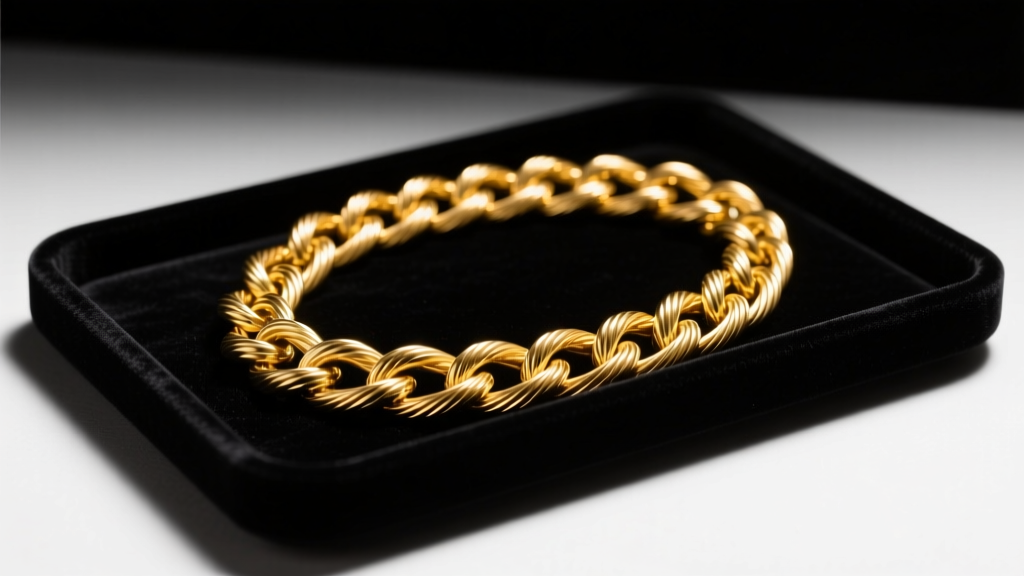
Gifting fine jewelry is a hallmark of major milestones, from 2026 graduation celebrations to milestone anniversaries. Yet, there is a universal dread that accompanies delicate chain necklaces: the inevitable jewelry box knot. When you present a loved one with a beautiful 0.9mm 18k gold pendant chain, you want their first experience to be one of joy, not frustration. As a gifter, understanding the mechanics of chain weaves, the metallurgy of delicate links, and the exact methodology of knot removal elevates your gift from a simple object to a masterclass in jewelry care.
If you or your gift recipient have ever stared at a clump of metal and asked, "how do you untangle a necklace without breaking it?" this comprehensive guide covers the physics of tangling, safe extraction techniques, and how to select and package occasion-matched chains that resist knotting in the first place.
The Anatomy of a Tangle: Why Delicate Gift Chains Knot
Not all chains are created equal. The propensity for a necklace to tangle is dictated by its gauge (thickness), weave pattern, and the environment in which it is stored. Chains in the 0.8mm to 1.2mm range are the most popular for delicate diamond and gemstone pendants, but they are also the most susceptible to friction-based knotting.
When a necklace is tossed into a drawer or a communal jewelry box, the links act like microscopic hooks. According to the Jewelers of America, static electricity and the natural oils from skin can increase the friction between links, causing them to bind together. Furthermore, highly flexible weaves like the herringbone or snake chain lay flat against the skin but behave like liquid metal in storage, easily folding in on themselves and creating complex, multi-layered knots.
Step-by-Step: How Do You Untangle a Necklace Without Breaking It?
When the inevitable happens, brute force is the enemy. Pulling on a knotted 14k or 18k gold chain induces work hardening, a metallurgical process where the metal becomes brittle at the stress point, leading to micro-fractures at the solder joints. Here is the professional jeweler's method for safe extraction.
1. Prepare the Workspace
Never attempt to untangle a chain while holding it in the air or resting it on a soft, fibrous surface like a towel. Fibers can catch in the links, and gravity will tighten the knot. Place the necklace on a hard, non-porous surface like a glass table or a ceramic plate under a bright, direct LED light.
2. Apply the Right Lubricant
Friction is keeping the knot bound. You must introduce a slip agent. However, the wrong agent can ruin the finish of specific metals or porous gemstones attached to the chain.
| Lubricant | Best For | Avoid Using On | Post-Cleaning Requirement |
|---|---|---|---|
| Baby Oil / Mineral Oil | High-polish Gold, Platinum | Pearls, Opals, Matte finishes | Warm water & mild dish soap |
| Talcum Powder / Cornstarch | Sterling Silver, Matte Gold | Diamond pavé settings (traps dust) | Soft bristle brush & ultrasonic |
| Glass Cleaner (Windex) | Platinum, White Gold | Porous stones (Turquoise, Emerald) | Microfiber cloth wipe down |
3. The Needle Extraction Technique
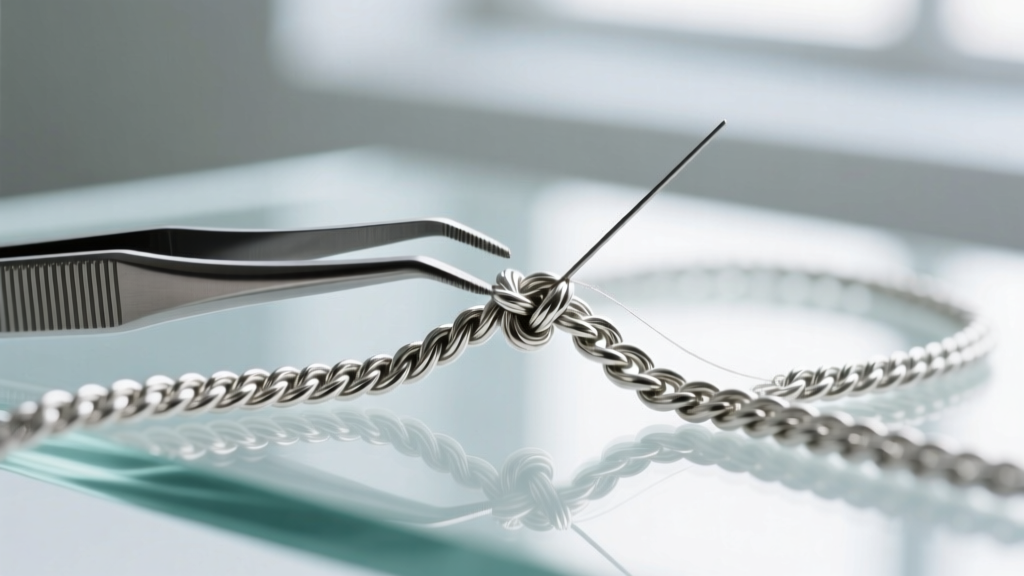
Put down your fingers. The pads of your fingers are too large and will only push the links tighter together. Instead, use two size-10 beading needles or smooth-tipped titanium tweezers. Insert the tips of the needles into the absolute center of the knot and gently push outward to create slack. Work from the inside out, loosening the outermost loops first.
4. The Final Cleanse
Once the chain is free, the lubricant must be removed. The Gemological Institute of America (GIA) recommends using a few drops of phosphate-free dish soap and lukewarm water to degrease the chain, followed by a thorough drying with a lint-free microfiber cloth to prevent water spots on high-polish metals.
Metallurgy Matters: Why Pulling a Knot Ruins the Gift
Understanding why you must be gentle requires a brief look into jewelry manufacturing. Delicate chains are typically soldered at the clasp and sometimes at intervals along the chain. Traditional torch soldering uses a lower-karat gold alloy to melt and bind the links. When you yank a knot, the stress concentrates exactly on these solder points.
In 2026, many high-end jewelers utilize laser welding for chain repairs and manufacturing, which offers a stronger, more localized bond. However, even laser-welded 18k gold will stretch and deform if subjected to the tensile force of a pulled knot. A stretched link compromises the structural integrity of the entire necklace, making it prone to snapping under the weight of a pendant later on.
Gifting Smart: Occasion-Matched Chains That Resist Tangling
The best way to deal with a tangled necklace is to gift one that refuses to tangle. When selecting a piece for a specific occasion, match the chain weave to the recipient's lifestyle.
- The Graduation Gift (Daily Wear): Opt for a Box Chain (1.2mm - 1.5mm). The geometric, square links interlock tightly and lay flat, making them virtually impossible to tangle. They are robust enough to hold a meaningful pendant and survive being tossed into a gym bag.
- The Anniversary Gift (Evening & Luxury): A Herringbone or Snake Chain offers unparalleled liquid-metal drape and high-light reflection. However, they are high-maintenance. Gift these with a specific warning: they must be hung vertically or stored perfectly flat. If a snake chain kinks, the damage is often permanent.
- The Milestone Birthday (Statement Pieces): Cuban Link or Curb Chains (2.0mm+) are heavily soldered and lay flat. Their weight and rigid structure make tangling a physical impossibility, making them ideal for recipients who travel frequently.
- The "First Fine Jewelry" Gift: A Cable Chain is classic but prone to knotting if under 1.0mm. If gifting a delicate cable chain, always pair it with a proper storage solution.
Proactive Packaging: The Anti-Tangle Presentation
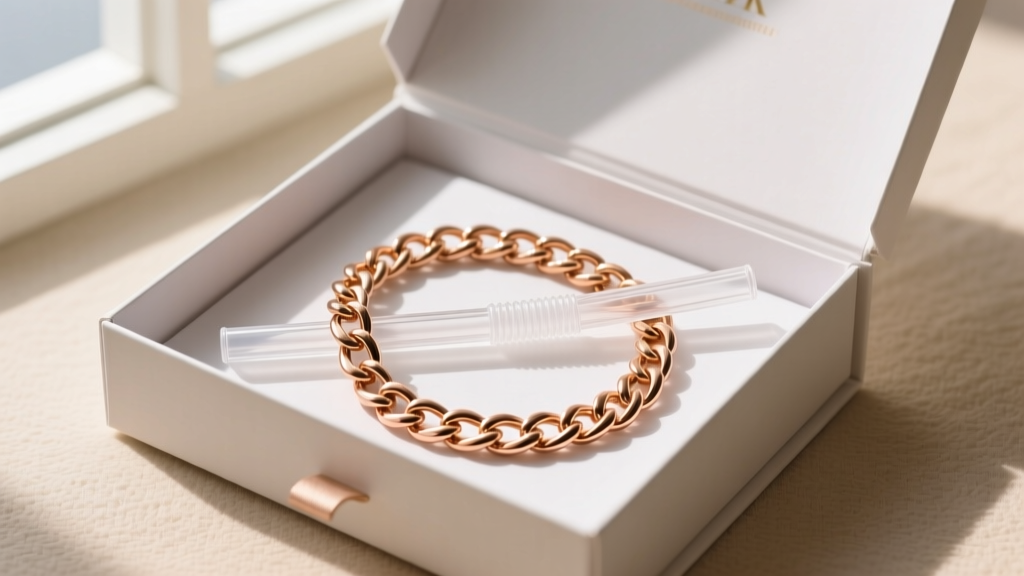
How you present the necklace is just as important as the piece itself. If you are handing over a delicate 0.9mm rope chain, employ the "Straw Method" before placing it in the gift box.
Unclasp the necklace, thread one end through a clean, rigid silicone or plastic jewelry straw (or a standard drinking straw cut to size), and re-clasp it. The rigid tube forces the chain to remain in a wide circle, completely neutralizing its ability to fold and knot. Alternatively, invest in a velvet-lined jewelry roll with individual, snap-down Velcro tabs that secure the clasp end of the necklace, keeping it taut during travel.
Conclusion: The Mark of a Thoughtful Gifter
Knowing how do you untangle a necklace is a vital rescue skill, but true jewelry expertise lies in prevention and education. By selecting the right chain weave for the recipient's lifestyle, understanding the metallurgical limits of delicate gold and silver, and utilizing smart packaging techniques, you ensure that your gift remains a source of joy rather than a frustrating puzzle. When you give the gift of fine jewelry, you are giving an heirloom—protect it accordingly.


