Copal Necklace Value Guide: Pricing, Fakes & Budget Tips
Discover the true value of a copal necklace. Learn pricing tiers, how to spot fakes, and assess budget resin jewelry like a gemological expert.

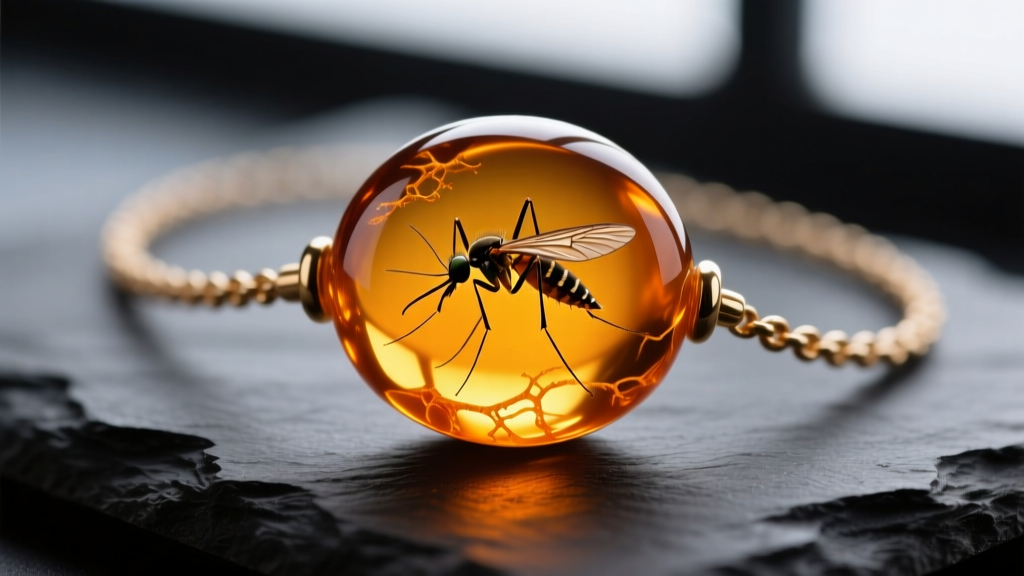
When shopping for organic gemstones on a budget, the copal necklace frequently appears as an alluring, affordable alternative to true amber. With its warm, honeyed hues and frequent botanical or insect inclusions, copal offers undeniable aesthetic appeal. However, the jewelry market is rife with misrepresentation, where immature sub-fossil resins are routinely marketed—and priced—as ancient amber. As a savvy buyer navigating the 2026 gemstone market, understanding the exact gemological profile, fair market value, and failure modes of copal is essential to protecting your wallet.
This comprehensive value assessment breaks down the true cost of copal, provides actionable testing frameworks, and equips you with the expertise to negotiate, verify, and maintain your resin jewelry.
The True Nature of Copal: Sub-Fossil Resin vs. True Amber
To assess value, we must first define the material. Copal is essentially "young amber." While true amber is a fully polymerized fossil resin that has undergone millions of years of geological pressure and heat, copal is a sub-fossil resin. According to the Gemological Institute of America (GIA), copal has not completed the cross-linking polymerization process that transforms tree sap into a stable fossil.
Copal typically ranges from a few hundred to roughly 100,000 years old, whereas true Baltic amber is 35 to 50 million years old. Because its molecular structure is incomplete, copal remains highly reactive to solvents, heat, and environmental stressors. Major deposits are found in Colombia, Madagascar, and New Zealand (where it is historically known as Kauri gum). While it shares a similar refractive index (~1.54) and specific gravity (~1.06) with amber, its internal instability is the primary driver of its lower market value.
Market Pricing: What Should a Copal Necklace Actually Cost?
The most common trap for budget buyers is paying amber prices for copal. Unscrupulous vendors frequently label copal as "young Baltic amber" or "Dominican amber" to inflate margins. Here is a realistic breakdown of wholesale and retail pricing tiers based on current market data.
Price Per Gram Matrix
| Material Classification | Average Age | Wholesale Price (Per Gram) | Retail Necklace Price (18-inch, 8mm beads) |
|---|---|---|---|
| Copal (Colombian/Madagascar) | 100 - 100,000 years | $0.10 - $0.50 | $15 - $45 |
| Baltic Amber (Standard) | ~44 Million years | $2.00 - $10.00 | $80 - $250 |
| Dominican Amber (Blue/Golden) | ~15-20 Million years | $15.00 - $100.00+ | $400 - $2,500+ |
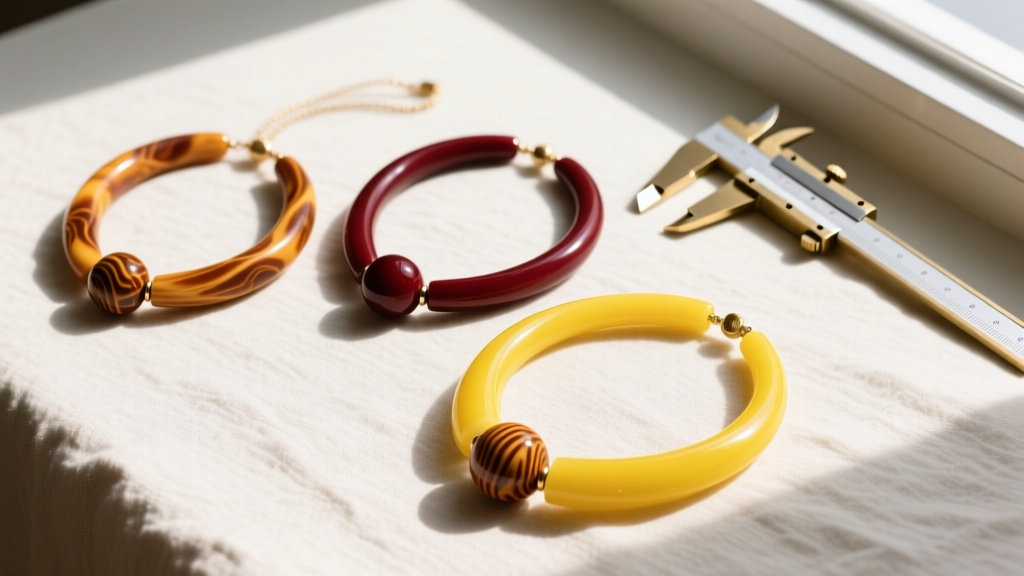
The Math Behind the Necklace: An 18-inch necklace made of standard 8mm round beads contains approximately 55 beads. Given that an 8mm copal bead weighs roughly 0.3 grams, the total resin weight is about 16.5 grams. At a premium retail rate of $1.50 per gram (accounting for cutting, polishing, and drilling), the material cost is under $25. If a vendor is asking $150 for a "highly included amber" necklace that weighs less than 20 grams, you are almost certainly looking at overpriced copal or pressed resin.
The Acetone & UV Tests: Verifying Your Budget Purchase
Because copal and amber share identical specific gravity, the popular "saltwater float test" is entirely useless for differentiation—both will float in saturated salt water and sink in fresh water. To accurately assess the value of your suspected copal necklace, you must rely on solubility and fluorescence testing.
1. The Acetone Solubility Test (The Gold Standard)
Copal's incomplete polymerization makes it soluble in organic solvents. True amber is highly resistant.
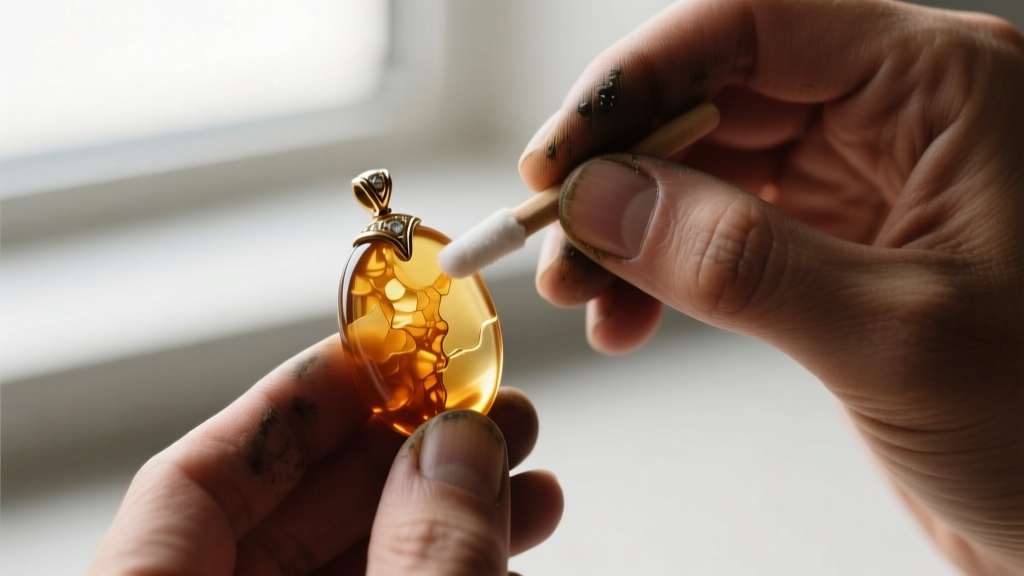
- The Procedure: Dip a cotton swab in 100% pure acetone (standard nail polish remover often contains oils and water, which skews results).
- The Application: Rub the swab firmly on an inconspicuous area of a bead for 3 to 5 seconds.
- The Result: If the surface becomes tacky, sticky, or leaves a residue on the cotton, it is copal. If the bead remains completely hard and unaffected, it is true amber.
2. Ultraviolet (UV) Fluorescence
Under a standard 365nm UV flashlight, true Baltic amber typically fluoresces a pale, milky blue or green. Copal, conversely, usually exhibits a chalky, bright white or muted yellowish-white fluorescence. While not definitive on its own due to variations in botanical origin, a stark white UV reaction combined with a tacky acetone test confirms a sub-fossil resin.
Durability & Failure Modes: The Hidden Cost of Cheap Resin
A lower upfront price often carries hidden long-term costs. Copal is significantly softer than amber, registering between 1.5 and 2.0 on the Mohs hardness scale (compared to amber's 2.0 to 2.5). This softness dictates specific failure modes that budget buyers must anticipate.
Crazing and Environmental Degradation
The most common failure mode in copal jewelry is "crazing"—the development of fine, spiderweb-like surface cracks. Because copal still contains volatile terpenes that slowly evaporate over time, the resin shrinks and fractures. Exposure to modern cosmetics, perfumes, hairsprays, and even the natural acidity of human sweat accelerates this evaporation.
Expert Maintenance Tip: Never wear a copal necklace while applying cosmetics or bathing. To slow the crazing process, store the necklace in a sealed, humidity-controlled environment or a soft velvet pouch away from direct sunlight and heat sources when not in use.
Stringing and Hardware Considerations
Due to its low melting point (approximately 150°C compared to amber's 200°C+), copal beads are highly susceptible to friction heat. Never use a high-speed motorized drill to enlarge a bead hole, and avoid wire-stringing. The friction of metal wire rubbing against the soft resin during wear will slowly carve out the drill holes, leading to bead fragmentation. Always insist on hand-knotted silk or high-quality nylon thread with individual knots between each bead to prevent internal abrasion and catastrophic strand failure.
Smart Shopping: How to Buy Copal Without Getting Scammed
Copal is a beautiful, historically significant material that deserves a place in a budget-conscious jewelry collection—provided you are paying copal prices. The Burke Museum's paleontology archives highlight the distinct biological differences in the inclusions found within these resins, which serves as a massive clue for smart shoppers.
The Inclusion Trap
Vendors often charge massive premiums for copal necklaces featuring perfectly preserved insects. However, you must look closely at the biology. True amber contains extinct species of insects and flora that have not existed for millions of years. Copal contains extant (modern) species. If you see a modern-looking mosquito, a contemporary species of ant, or a recognizable modern leaf inside the bead, it is almost certainly copal.
Watch for artificial inclusions: In the budget market, counterfeiters frequently drill a small hole into a piece of copal, insert a modern dead insect, and seal the hole with melted resin. Use a 10x jeweler's loupe to inspect the edges of the inclusion. If you see a faint circular seam, trapped air bubbles directly surrounding the insect, or a difference in the refractive index of the "plug," you are looking at a manufactured fake.
Final Verdict: Is a Copal Necklace Worth Your Budget?
A copal necklace represents excellent value if approached with transparency and realistic expectations. For $20 to $50, you can acquire a stunning, lightweight, and visually complex organic gemstone that mimics the look of ancient amber. It is an ideal choice for fashion-forward layering, bohemian styling, or as an accessible entry point into the world of organic inclusions.
However, it is a poor investment if you are seeking an heirloom-grade fossil or if you are being charged upwards of $100. By utilizing the acetone test, understanding the per-gram pricing matrix, and committing to proper silk-stringing and cosmetic-free maintenance, you can confidently navigate the resin market and secure a beautiful piece of Earth's botanical history without overpaying.


