The Ultimate Cross Necklace Mini Buying Guide: Metals & Sizing
Discover how to choose the perfect cross necklace mini. Our buying guide covers exact dimensions, durable metal grades, chain pairings, and pricing tiers.

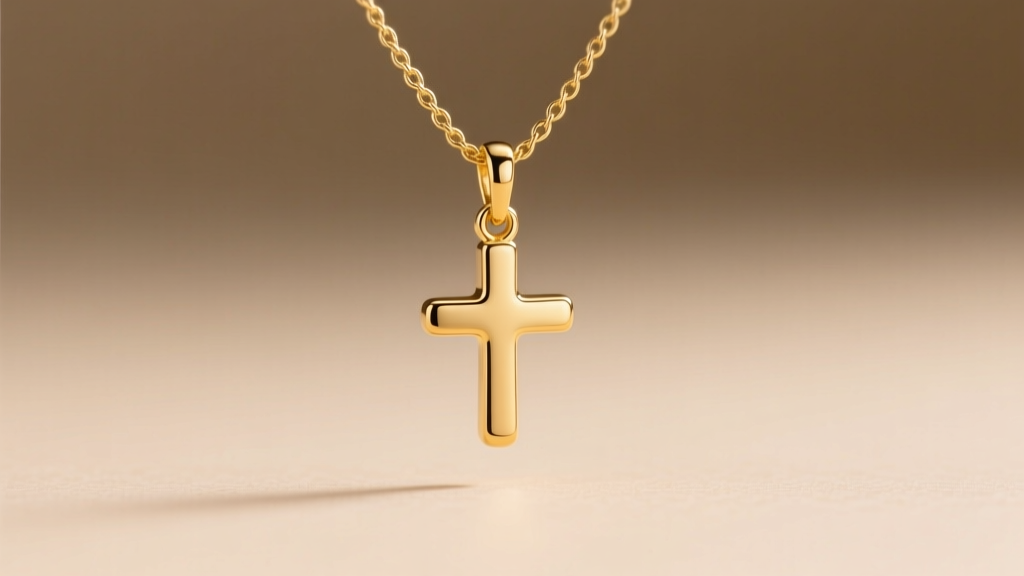
The shift toward micro-jewelry and personalized layering has cemented the mini cross pendant as an everyday staple. Unlike oversized statement pieces that dominate a neckline, a cross necklace mini offers subtle symbolism, effortless versatility, and a refined aesthetic that transitions seamlessly from casual daytime wear to formal evening layering. However, the smaller the pendant, the less room there is for manufacturing errors. A poorly proportioned bail or a weak chain clasp can quickly turn a delicate piece into a lost one.
This comprehensive buying guide cuts through the marketing fluff to provide exact specifications, metallurgical insights, and structural benchmarks you need to invest in a mini cross pendant that will last a lifetime.
Defining the 'Mini': Exact Dimensions and Visual Weight
Many retailers loosely use the term 'mini' to describe anything smaller than a standard 2-inch pendant. In the fine jewelry industry, true micro and mini pendants adhere to strict millimeter guidelines. Understanding these dimensions is critical for achieving the correct visual weight against your collarbone.
| Category | Height (mm) | Width (mm) | Best Use Case |
|---|---|---|---|
| Micro | 6mm - 8mm | 4mm - 6mm | Strict layering, barely visible, subtle skin accents |
| Mini (The Sweet Spot) | 9mm - 14mm | 7mm - 10mm | Standalone everyday wear, 2-piece layering stacks |
| Standard | 15mm - 25mm | 11mm - 18mm | Traditional standalone statement, outerwear layering |
For a true cross necklace mini, you should target the 10mm to 12mm height range. This size provides enough surface area for precise metalwork or micro-pave diamond settings while remaining unobtrusive enough to sit flush against the skin without flipping over constantly.
Metallurgy and Durability: What to Actually Buy
Because mini pendants are lightweight, the chain does most of the work. However, the metal alloy of the cross itself dictates its resistance to daily friction, sweat, and cosmetic chemicals. According to the Gemological Institute of America (GIA), understanding gold purity is essential for predicting a piece's hardness and wear resistance.
Solid 14k Gold: The Everyday Workhorse
Composed of 58.5% pure gold, 14k gold is the optimal choice for a mini cross worn 24/7. It boasts a Vickers hardness of approximately 130-150, making it highly resistant to scratching and bending. If your mini cross features tiny prongs holding micro-diamonds, 14k gold will hold those stones far more securely than higher-karat alternatives.
Solid 18k Gold: Rich Color, Softer Wear
At 75% pure gold, 18k offers a warmer, richer yellow hue but drops to a Vickers hardness of around 110-125. While beautiful, 18k gold is more prone to micro-scratches. More importantly, the bail (the loop connecting the cross to the chain) will experience accelerated friction wear if paired with a harsh chain type.
Vermeil vs. Flash Plating: The 2.5-Micron Rule
If you are shopping on a budget, avoid standard 'gold plated' brass or silver. Instead, look for heavy gold vermeil. The industry standard, as noted by Jewelers of America, requires vermeil to have a sterling silver base with a gold layer of at least 2.5 microns thick. Anything less will rub off at the bail within months of daily wear due to the constant metal-on-metal friction of the chain sliding through the loop.
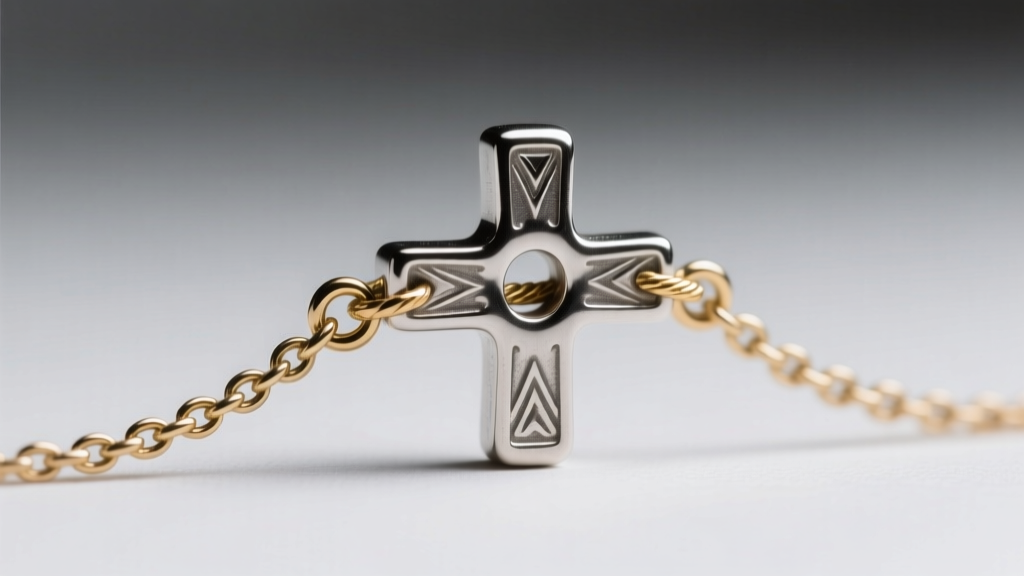
Chain Pairings and Bail Mechanics: The Hidden Failure Points
The most common point of failure in a cross necklace mini is not the pendant snapping, but the chain breaking or the clasp failing. Mini pendants require specific chain architectures to function correctly.
The Bail Friction Problem
A 10mm mini cross typically has a bail hole measuring just 1.5mm to 2.0mm in diameter. If you attempt to thread a 1.5mm box chain through this hole, it will either not fit or cause severe friction, eventually sawing through the bail. The Rule: Always pair a mini cross with a chain thickness between 0.9mm and 1.1mm. Delicate cable chains, 0.9mm rope chains, or 1.0mm wheat chains offer the best balance of tensile strength and bail compatibility.
Clasp Upgrades: Ditch the Spring Ring
Many manufacturers outfit delicate chains with 4mm spring ring clasps to save weight and cost. Spring rings have a high failure rate; the tiny internal spring frequently snaps or gets stuck open. Always inspect the clasp before purchasing. Demand a 5mm or 6mm lobster clasp, which features a solid cast lever mechanism that is vastly superior for securing lightweight, high-value pendants.
Pricing Tiers and Value Benchmarks
Understanding what you should pay prevents overpaying for branded markup or underpaying for hollow, fragile jewelry. Here is a realistic pricing framework for a high-quality mini cross pendant and chain set in the current market:
- Entry-Level (Heavy Vermeil / Sterling Silver): $45 - $95. Expect 2.5-micron vermeil over sterling silver. Great for trend-testing, but requires removal before showering.
- Mid-Tier (Solid 10k or 14k Gold): $130 - $350. The best value proposition. Solid gold will not tarnish, and the chain will withstand daily pulling and snagging.
- Premium (18k Gold / Platinum / Diamond Accented): $450 - $1,500+. This tier includes micro-pave diamond settings (typically 0.05 to 0.15 total carat weight) or solid platinum construction, which is virtually indestructible but carries a heavy premium.
Layering Frameworks: The 2-Inch Rule
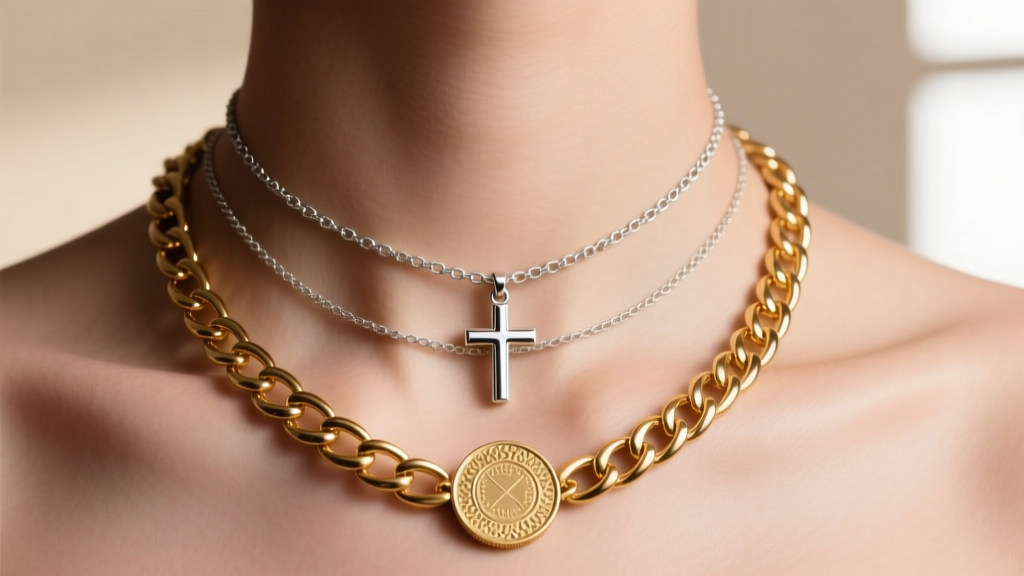
A mini cross truly shines when integrated into a curated necklace stack. To avoid a tangled, cluttered look, professional stylists rely on strict length differentials.
The golden rule of layering micro-pendants is the 2-inch minimum gap. If your mini cross sits at 16 inches, your secondary chain must be no shorter than 14 inches and no longer than 18 inches to maintain distinct visual tiers.
The Perfect 3-Piece Stack:
- 14-Inch Choker: A 1.2mm solid gold herringbone or snake chain that sits tight against the collarbone.
- 16-Inch Mini Cross: Your focal point, resting just above the sternum on a delicate 0.9mm cable chain.
- 18-Inch Texture Piece: A hammered gold coin pendant or a freshwater pearl strand to anchor the bottom of the stack and provide contrasting visual weight.
Final Verdict: What to Look For at the Counter
When evaluating a cross necklace mini, look past the initial sparkle. Check the interior of the bail for smooth finishing—rough edges will shred your chain over time. Verify the clasp is a lobster mechanism, and confirm the gold weight or vermeil micron thickness with the jeweler. By prioritizing structural integrity and precise millimeter proportions over fleeting trends, you will secure a micro-pendant that remains a permanent, cherished fixture in your daily jewelry rotation.


