Balenciaga Necklace Mens Guide: 2026 Materials & Authentication
Explore the technical construction, base metals, and authentication markers of every Balenciaga necklace mens design in our 2026 expert deep dive.

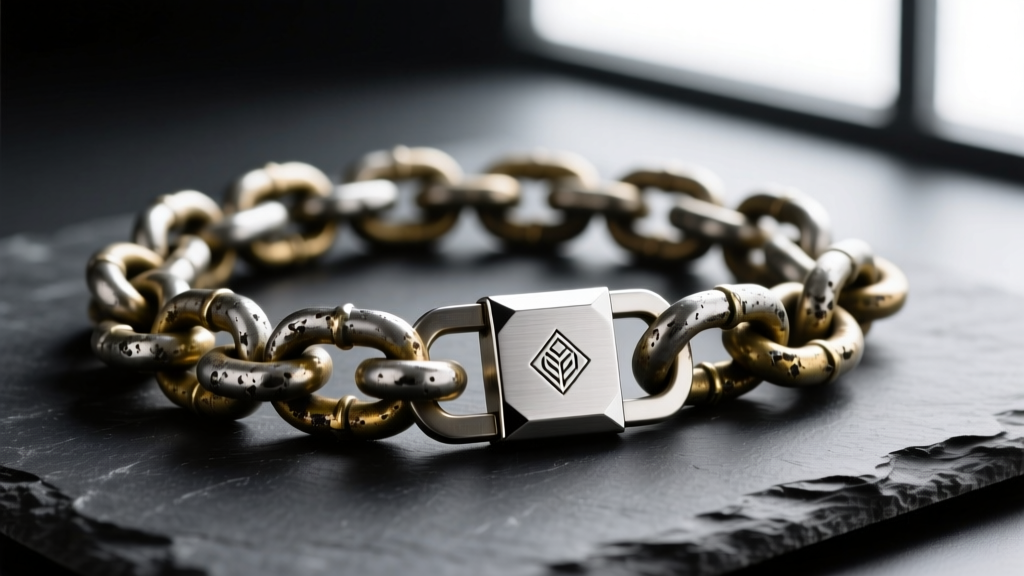
When evaluating the secondary market and retail landscape for high-end fashion jewelry, the balenciaga necklace mens category occupies a fascinating intersection of brutalist aesthetics and complex metallurgical engineering. Under the creative direction of Demna, Balenciaga has shifted away from traditional fine jewelry paradigms, opting instead for heavy, industrial, and subversive silhouettes. However, because these pieces are classified as fashion jewelry (bijouterie) rather than fine jewelry, understanding their exact material composition, structural failure points, and authentication markers is critical for collectors, resellers, and enthusiasts in 2026.
This expert deep dive bypasses the marketing fluff to examine the actual alloys, electroplating micron thicknesses, and manufacturing techniques that define Balenciaga’s men’s necklaces, pendants, and chokers.
The Metallurgy of High Fashion: Base Alloys and Plating
Unlike fine jewelers who cast in 18k gold or 925 sterling silver, Balenciaga’s men’s hardware relies on high-grade base metals chosen for their casting fluidity, weight, and tensile strength. The two primary alloys used in their heavy chain necklaces and pendants are:
- Lead-Free Brass (CuZn39Pb3): Used predominantly for chain links and structural clasp components. This specific brass alloy offers excellent machinability and a dense, heavy hand-feel that mimics precious metals. It provides a smooth substrate for electroplating.
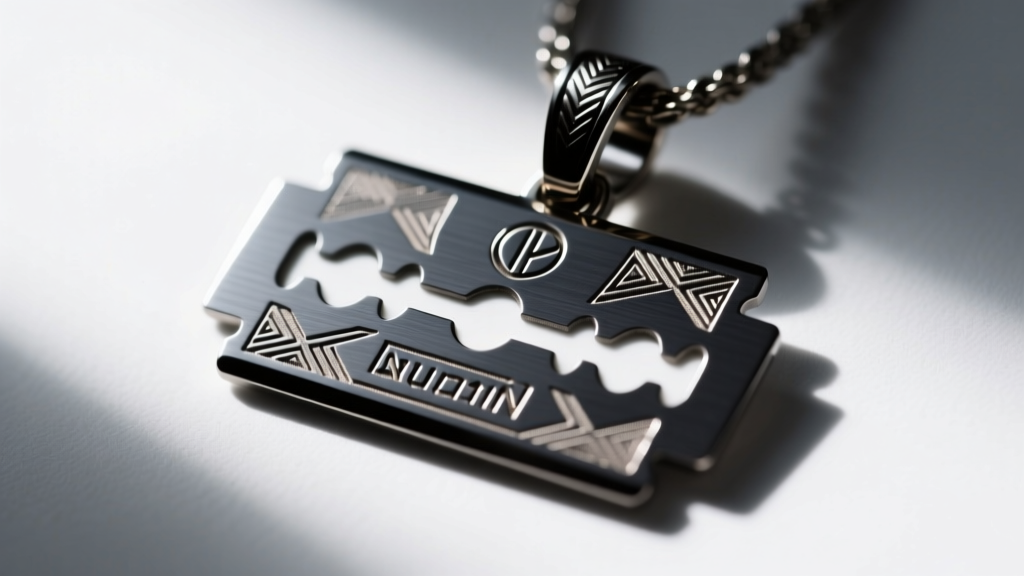
- Zamak 3 (Zinc Alloy): Composed of zinc, aluminum, magnesium, and copper, Zamak is utilized for complex, die-cast pendants (such as the signature safety pins, razor blades, and crocodile motifs). Zamak allows for sharp, intricate detailing that would be cost-prohibitive or structurally weak in stamped brass.
The signature "grunge" or oxidized aesthetic of a Balenciaga necklace mens design is achieved through electroplating and chemical patination. The base metals are typically plated with ruthenium or antique silver. Ruthenium, a platinum-group metal, is favored for its extreme hardness and dark, gunmetal-grey hue. The plating thickness generally ranges from 0.5 to 1.5 microns. While this provides a stunning initial finish, it is thin enough that friction against the collarbone or exposure to acidic sweat can cause galvanic corrosion, eventually exposing the brass or zinc substrate beneath.
Chain Link Engineering and Structural Integrity
The structural integrity of Balenciaga’s heavier curb and figaro chains is a frequent point of failure on the secondary market if the piece has been subjected to excessive tensile stress. The chains are typically machine-stamped and laser-welded.
Weak Points and Failure Modes
The most common failure mode in these heavy chains is not the link itself snapping, but the jump ring connecting the pendant to the chain, or the jump ring attaching the chain to the clasp. Because the chains are heavy (often exceeding 80 grams), the dynamic load placed on a standard 5mm jump ring during wear can cause it to pull apart if the laser weld was incomplete. When inspecting a vintage or pre-owned piece, always apply gentle lateral pressure to the jump rings to ensure the weld seams are fully fused.
Furthermore, the custom-branded lobster clasps used on their thicker chains feature an internal steel spring mechanism. Over time, if exposed to high humidity without proper drying, the internal steel spring can oxidize and seize, even if the external brass housing remains intact.
2026 Pricing Matrix & Material Breakdown
The retail pricing of Balenciaga's men's jewelry reflects brand positioning, design complexity, and the labor-intensive hand-oxidation processes applied to the plating. Below is a technical matrix of popular 2026 silhouettes.
| Silhouette / Model | Base Material | Plating / Finish | Approx. Weight | 2026 Retail Price (USD) |
|---|---|---|---|---|
| Heavy Curb Chain (Choker) | CuZn39Pb3 Brass | Ruthenium / Oxidized | 95g | $1,150 |
| Razor Blade Pendant | Zamak 3 Zinc Alloy | Antique Silver | 42g | $795 |
| Safety Pin Motif Chain | Brass & Steel | Palladium / Matte | 68g | $950 |
| Crocodile Vertebrae | Zamak 3 Zinc Alloy | Black Rhodium | 55g | $1,050 |
Authentication Deep Dive: Spotting Fakes Under a Loupe
The proliferation of high-tier counterfeits in the luxury streetwear space means that visual assessment is no longer sufficient. According to Vestiaire Collective's authentication standards, verifying fashion jewelry requires examining the manufacturing signatures that counterfeiters struggle to replicate due to tooling costs.
The Magnet Test Myth
Many amateur authenticators use a neodymium magnet to test if a chain is "real." This is fundamentally flawed for Balenciaga. Because the base metals (brass and Zamak) are entirely non-magnetic, a fake chain made of these exact same alloys will also pass the magnet test. Furthermore, a genuine piece containing an internal steel clasp spring will exhibit slight magnetic pull at the clasp. Relying on a magnet will lead to false negatives and false positives.
Casting Porosity vs. CNC Precision
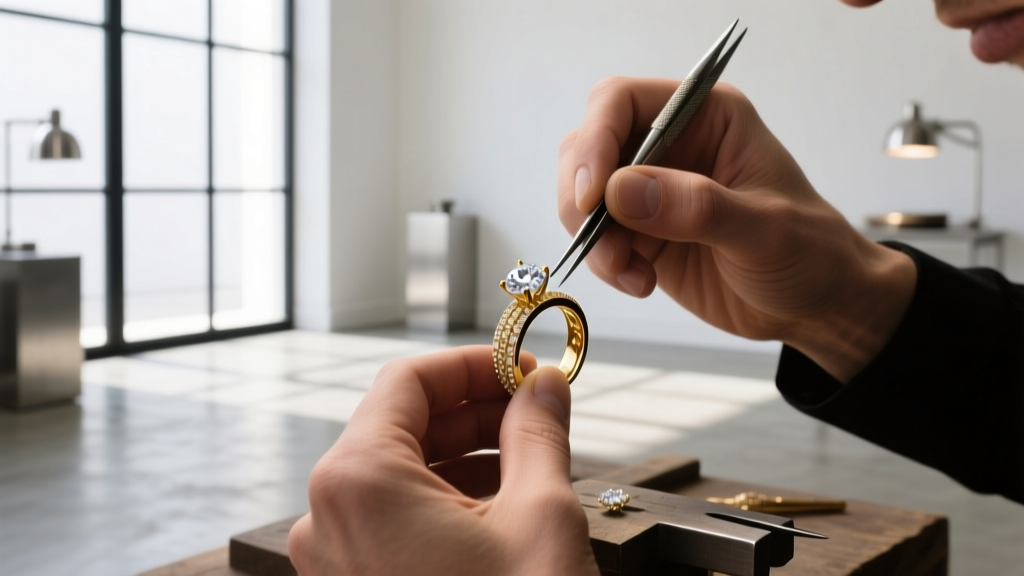
Genuine Balenciaga pendants are manufactured using high-pressure die casting or precision CNC machining, resulting in razor-sharp edges, perfectly flat planes, and zero surface porosity. Counterfeits are frequently produced using cheap silicone molds and centrifugal casting. Under a 10x jeweler's loupe, fake Zamak pendants will reveal micro-porosity—tiny pinprick bubbles on the surface, especially in the recessed areas of the logo engraving.
Hallmark Kerning and Laser Ablation
The "BALENCIAGA" hallmark is typically laser-engraved or deeply stamped. On authentic pieces, the sans-serif font features highly specific kerning (the spacing between letters), particularly between the 'N' and 'C', and the 'I' and 'A'. Fakes often use a generic bold font where the letters are either too cramped or perfectly monospaced. Additionally, authentic laser ablation leaves a clean, frosted micro-texture inside the engraving, whereas fakes often show thermal burn marks or sloppy acid-etching bleed.
Care & Maintenance: Preventing Galvanic Corrosion
Preserving the ruthenium or antique silver plating on a balenciaga necklace mens piece requires an understanding of galvanic corrosion. When the microscopic pores in the plating are exposed to the chlorides and lactic acid present in human sweat, a galvanic cell is formed between the plating and the brass/zinc substrate. This causes the base metal to oxidize rapidly, pushing through the plating and creating permanent green or black spots.
Actionable Maintenance Protocol
- Never Use Ultrasonic Cleaners: The high-frequency cavitation bubbles in ultrasonic jewelry cleaners will strip the 1.0-micron ruthenium plating right off the Zamak base, ruining the piece instantly.
- Neutralize Acids Post-Wear: If worn against bare skin, wipe the chain and pendant down with a microfiber cloth slightly dampened with distilled water and a pH-neutral soap to remove sweat salts.
- Avoid Silver Dips: Chemical silver dips contain thiourea and strong acids designed to strip tarnish from solid 925 silver. On plated fashion jewelry, these chemicals will react violently with the zinc alloy, causing immediate pitting and discoloration.
For deeper market context on how luxury houses are navigating the pricing of non-precious metals, Business of Fashion luxury market reports highlight a growing consumer acceptance of high-end bijouterie, provided the design language and structural weight justify the entry price. By understanding the exact metallurgy and engineering behind these pieces, collectors can confidently buy, sell, and maintain their investments in the secondary market.


