What Is a Pearl Necklace Mean? Symbolism & Gift Guide
Discover what a pearl necklace means and how to choose the perfect type, length, and grade for weddings, anniversaries, and milestone gifts.

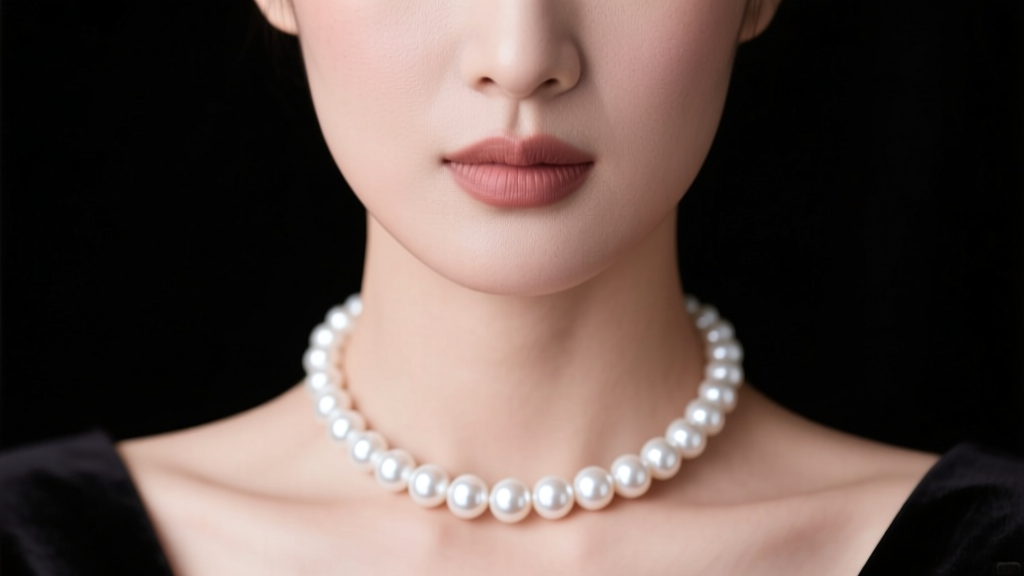
When you ask, "What is a pearl necklace mean to the person receiving it?" the answer goes far beyond simple adornment. For millennia, pearls have served as universal symbols of purity, wisdom, and enduring love. Unlike faceted gemstones that are cut and polished from rough earth, pearls are born complete, organic, and luminous, making them one of the most deeply symbolic gifts in the jewelry world. Whether you are shopping for a June birthstone, a milestone anniversary, or a graduation gift, understanding the nuanced meaning behind pearl necklaces—and the specific grades, types, and lengths available—is crucial for selecting a piece that truly resonates.
The Historical and Cultural Symbolism of Pearls
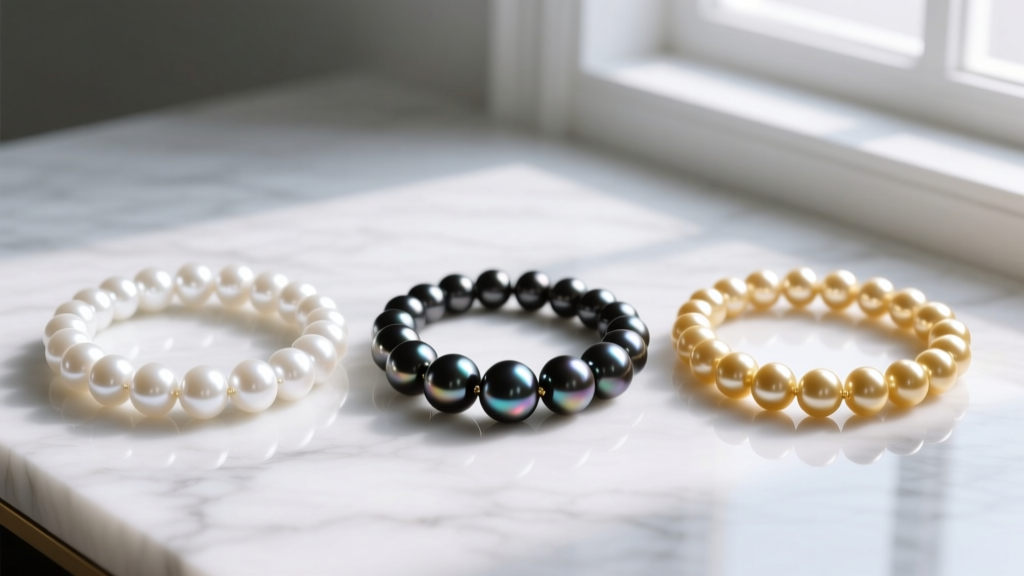
Historically, pearls were considered the tears of the gods in ancient Greek mythology and a symbol of the moon's magical power in ancient China. In Victorian England, seed pearls were heavily used in mourning jewelry to represent tears and innocence. Today, the meaning of a pearl necklace shifts subtly depending on its color and context. White pearls universally denote innocence, new beginnings, and purity, making them the undisputed queen of bridal jewelry. Conversely, dark Tahitian pearls symbolize mystery, independence, and wealth, while golden South Sea pearls are deeply tied to prosperity and success. Gifting a pearl necklace is fundamentally a gesture of offering something rare, timeless, and deeply personal.
Decoding Pearl Types: Which Speaks to Her?
To choose the right gift, you must understand the four primary categories of pearls available on the market. The origin of the pearl dictates its size, luster profile, and price point. According to the Gemological Institute of America (GIA), saltwater pearls generally command higher prices due to longer cultivation times and higher luster, while freshwater pearls offer incredible value and durability.
| Pearl Type | Average Size | Luster Profile | Price Range (Strand) | Best Gifting Occasion |
|---|---|---|---|---|
| Akoya (Saltwater) | 6.0mm - 9.0mm | Sharp, mirror-like | $800 - $4,500 | Weddings, 1st Anniversaries |
| Freshwater | 7.0mm - 12.0mm | Soft, satiny glow | $150 - $900 | Graduations, Birthdays |
| Tahitian (Saltwater) | 8.0mm - 14.0mm | Deep, metallic, peacock | $1,200 - $8,000+ | Milestone Birthdays, Promotions |
| South Sea (Saltwater) | 10.0mm - 15.0mm | Soft, luxurious, satiny | $3,000 - $20,000+ | 30th Anniversaries, Heirlooms |
For the traditionalist, a strand of Akoya pearls (often associated with luxury houses like Mikimoto) is the ultimate classic. For the modern, fashion-forward recipient, a baroque Freshwater or dark Tahitian strand offers a unique, avant-garde edge.
Length Matters: Matching the Necklace to the Occasion
The physical length of the necklace dramatically alters its formality and how it interacts with the wearer's wardrobe. When deciding what a pearl necklace means for a specific event, the length is your secret weapon.
The Choker (14 to 16 Inches)
Sitting snugly at the base of the neck, the choker is deeply tied to vintage elegance and high-collar Victorian fashion. It is best suited for women with longer, slender necks and pairs beautifully with V-neck or scoop-neck evening wear. It is a highly intimate, personal gift.
The Princess (17 to 19 Inches)
This is the industry standard—the most versatile and universally flattering length. A Princess-length strand rests just below the collarbone, making it the perfect choice for a bride on her wedding day or a professional woman wearing it to the office with a silk blouse. If you are unsure of her preference, the 18-inch Princess is the safest and most appreciated choice.
The Matinee (20 to 24 Inches)
Falling at the top of the bust, the Matinee length bridges the gap between professional and formal. It is an excellent gift for the corporate executive or the creative professional, as it adds a layer of sophistication to business suits and high-necked dresses without feeling overly formal.
The Opera (28 to 36 Inches)
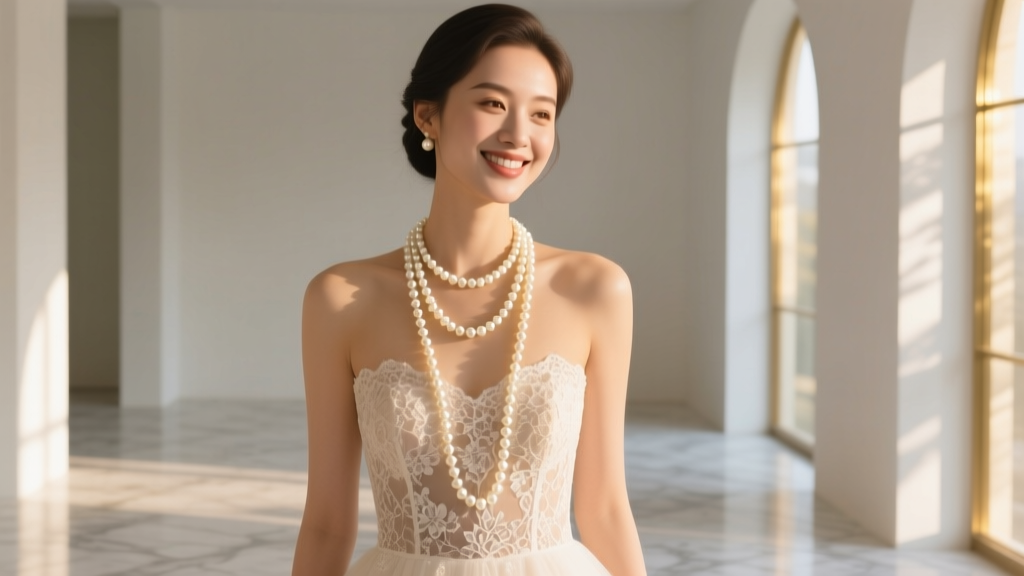
The Opera length is a statement of high drama and luxury. Falling below the bust line, it can be worn long as a single strand for black-tie events, or doubled over to create a layered choker effect. It is the ultimate gift for a major milestone, such as a 30th wedding anniversary.
The Ultimate Occasion Matching Guide
Understanding the specific cultural touchstones for pearl gifting will ensure your present carries maximum emotional weight.
- June Birthdays: Pearl is the official June birthstone. A delicate Freshwater pendant or a modern baroque pearl choker makes a thoughtful, personalized birthday gift.
- The 3rd and 30th Anniversaries: Pearls are the traditional gift for the 3rd anniversary and the modern/alternative gift for the 30th (with Diamond being traditional). For the 3rd, opt for a contemporary Freshwater design; for the 30th, invest in a high-grade South Sea or Akoya strand.
- Graduations: Symbolizing wisdom gained through experience, a classic 16-inch or 18-inch white pearl strand is a rite-of-passage gift for high school or college graduates entering the professional world.
- Weddings: Brides often wear pearls to symbolize purity and a happy marriage. Gifting a bride a high-luster Akoya strand or a pair of matching pearl drop earrings provides her with an heirloom she can eventually pass down to her own children.
Quality Factors: Looking Beyond the Surface
When evaluating a pearl necklace, the GIA Pearl Quality Factors dictate the value. You must examine five key metrics:
- Luster: The most critical factor. High-quality pearls should have a sharp, bright reflection on their surface. Dull, chalky pearls are of low grade.
- Surface Quality: Look for clean surfaces. While minor blemishes are natural and acceptable in baroque pearls, round strands should be mostly free of spots, pits, or cracks.
- Shape: Perfectly round pearls are the rarest and most valuable. However, symmetrical drops and unique baroque shapes are highly prized in artisan jewelry.
- Color and Overtone: Body color is the main hue, while the overtone is the translucent secondary color (like the pink overtone in white Akoyas or the peacock green in Tahitians).
- Nacre Thickness: Saltwater pearls are typically bead-nucleated, meaning a mother-of-pearl bead is coated in nacre. Ensure the nacre is thick enough so the bead doesn't show through. Freshwater pearls, conversely, are usually tissue-nucleated, meaning they are solid nacre all the way through, making them incredibly durable for daily wear.
Care and Maintenance for Longevity
Pearls are organic gems, rating only a 2.5 to 3.0 on the Mohs hardness scale. They are highly susceptible to acids, perfumes, and cosmetics. The golden rule of pearl gifting is teaching the recipient the "Last On, First Off" rule: pearls should be the last thing put on when dressing (after makeup and perfume have dried) and the first thing taken off at night. Never clean pearls in an ultrasonic cleaner, as the vibrations can shatter the nacre. Instead, wipe them gently with a damp microfiber cloth after wearing and store them flat in a soft pouch—never in a plastic bag, as the organic gems need a slight amount of moisture to prevent cracking over time.
Ultimately, asking "what is a pearl necklace mean" reveals a story of organic beauty, patience, and timeless elegance. By carefully selecting the right origin, length, and grade, you are not just giving a piece of jewelry; you are gifting a modern heirloom laden with profound symbolism.


