Metallurgy Guide: Choosing Your Fish Necklace Christian Symbol
Compare metals for your fish necklace Christian symbol. Discover the best materials for durability, skin sensitivity, and daily wear in this expert guide.

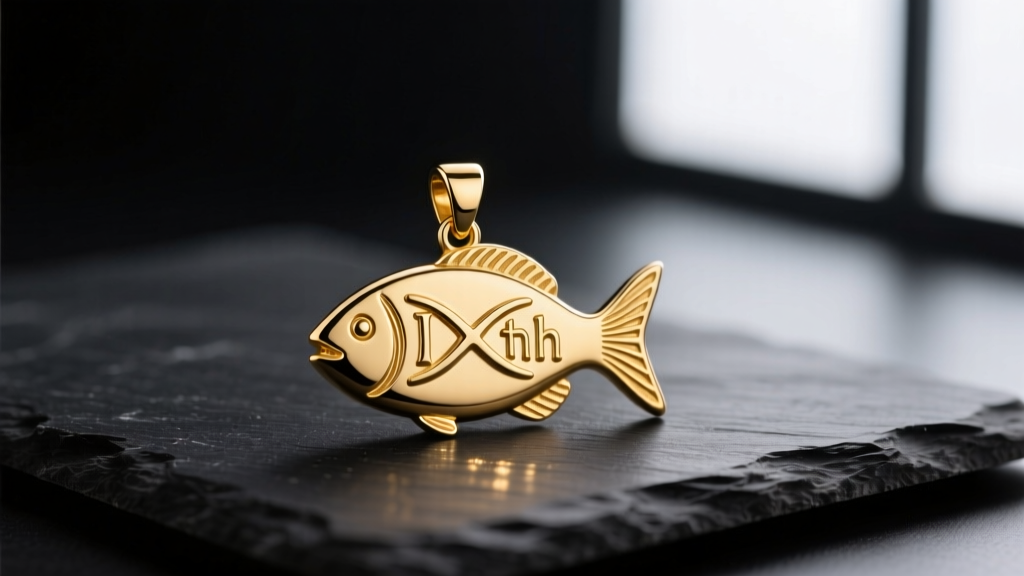
The Ichthys, or Christian fish symbol, has served as a profound declaration of faith since the early days of the church. According to Britannica, the Greek word for fish (ἰχθύς) was used as an acronym for 'Jesus Christ, Son of God, Savior.' Today, wearing a fish necklace Christian symbol is a deeply personal way to carry that history with you. However, because these pendants are typically worn daily—exposed to sweat, friction, and environmental elements—the metallurgy of your chosen piece is just as critical as its design.
In this comprehensive 2026 material guide, we move beyond generic jewelry advice to examine the exact alloy compositions, tensile strengths, and failure modes of the most common metals used for Christian fish pendants. Whether you are selecting a gift or upgrading your own daily wear, understanding these properties ensures your symbol of faith endures.
The Metallurgy of Faith: Why Material Matters for Daily Wear
A pendant resting against the sternum is subject to a unique micro-environment. It encounters sebum (skin oils), slightly acidic sweat (pH 4.5 to 7.0), and constant kinetic friction against clothing. Choosing the wrong metal can lead to contact dermatitis, rapid tarnishing, or structural failure at the bail (the loop connecting the pendant to the chain).
'The permanence of a symbol should be reflected in the resilience of its material. A daily-wear pendant requires a metal that resists both chemical degradation and mechanical deformation.'
Before diving into specific alloys, let us compare the baseline properties of the most popular jewelry metals used for religious pendants.
Comprehensive Metal Comparison Chart
| Metal / Alloy | Vickers Hardness (HV) | Tarnish Resistance | Hypoallergenic | Avg. Price Range (Pendant Only) |
|---|---|---|---|---|
| 14k Yellow Gold | 140 - 160 | Excellent | Mostly (depends on alloy) | $150 - $400 |
| 925 Sterling Silver | 60 - 70 | Poor (without plating) | No (contains Copper) | $30 - $80 |
| 316L Surgical Steel | 150 - 190 | Excellent | Mostly (contains trace Nickel) | $15 - $45 |
| Grade 23 Titanium | 330 - 350 | Flawless | 100% Implant Grade | $40 - $120 |
Deep Dive: Precious Metals (Gold & Silver)
14k vs. 18k Solid Gold
When investing in a gold fish necklace Christian symbol, the karat weight dictates both the color and the structural integrity. Pure 24k gold is far too soft (HV ~25) for daily wear and will easily warp or scratch. According to the Gemological Institute of America (GIA), 14k gold contains 58.5% pure gold, alloyed with metals like copper, silver, and zinc. This specific alloy mixture raises the Vickers hardness to approximately 150, making it highly resistant to the micro-abrasions caused by cotton and wool clothing.
While 18k gold (75% pure gold) offers a richer, deeper yellow hue, it is noticeably softer. If your daily routine involves manual labor, gym workouts, or frequent exposure to hard surfaces, an 18k gold Ichthys pendant will accumulate surface scratches much faster than its 14k counterpart. For white gold, ensure the piece is alloyed with palladium rather than nickel to prevent allergic contact dermatitis, a common issue with lower-quality white gold castings.
925 Sterling Silver & The Reality of Rhodium Plating
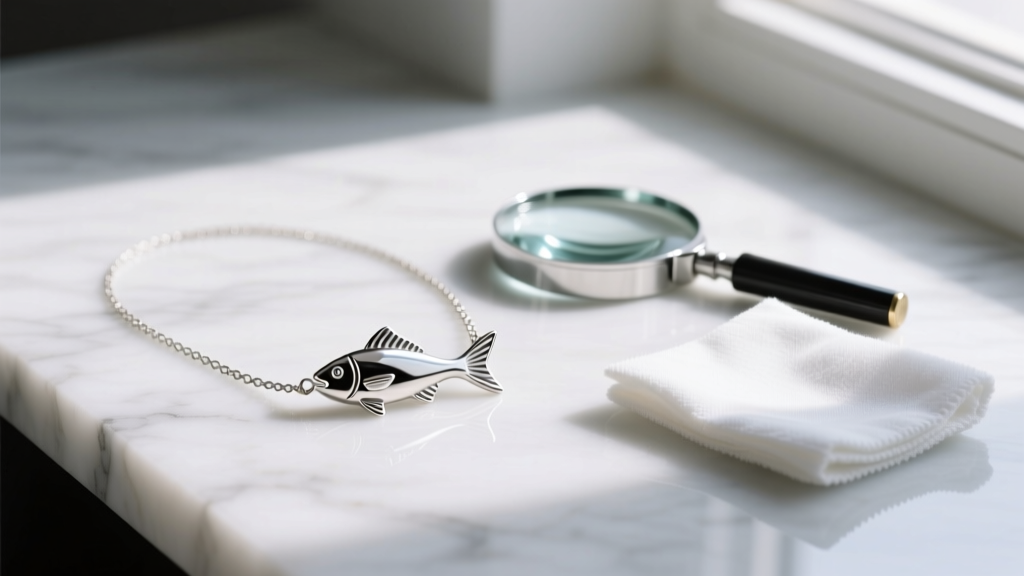
Sterling silver is an alloy of 92.5% pure silver and 7.5% copper. It is the copper content that provides the necessary tensile strength for casting intricate fish symbols, but it is also the copper that reacts with atmospheric sulfur to create silver sulfide (tarnish).
To combat this, modern jewelers apply a rhodium plating. When purchasing a silver pendant, inquire about the plating thickness. A standard commercial flash is merely 0.1 to 0.25 microns, which will wear through in a matter of months. High-end artisan pieces utilize a 0.75 to 1.0-micron rhodium layer, which can protect the underlying silver from tarnishing for 2 to 4 years of continuous wear before requiring professional re-plating.
The Modern Alternatives: Titanium & Surgical Steel
Grade 23 Titanium (Ti 6Al-4V ELI)
For those with severe metal sensitivities or those who lead highly active lifestyles, Grade 23 Titanium—also known as Extra Low Interstitial (ELI) titanium—is the undisputed champion. Originally developed for aerospace and medical implants, this alloy contains 6% aluminum and 4% vanadium. It is completely inert, meaning it will never react with your skin's chemistry, even when exposed to heavy perspiration or saltwater. Furthermore, its Vickers hardness of ~350 makes it virtually impervious to scratching from everyday objects. The trade-off is that titanium cannot be easily resized or soldered by a standard bench jeweler if the bail breaks, so purchasing a piece with a robust, laser-welded bail is essential.
316L Stainless Steel
Often marketed as 'surgical steel,' 316L is an austenitic chromium-nickel-molybdenum alloy. The 'L' denotes low carbon, which prevents carbide precipitation during the manufacturing process, ensuring maximum corrosion resistance. The addition of 2-3% molybdenum specifically protects against pitting corrosion from chlorides. This makes a 316L steel fish pendant an excellent, budget-friendly choice for swimmers or those living in humid, coastal environments. However, because it contains trace amounts of nickel (up to 12%), individuals with severe nickel allergies should opt for titanium instead.
Chain Selection: Matching the Pendant to the Cord
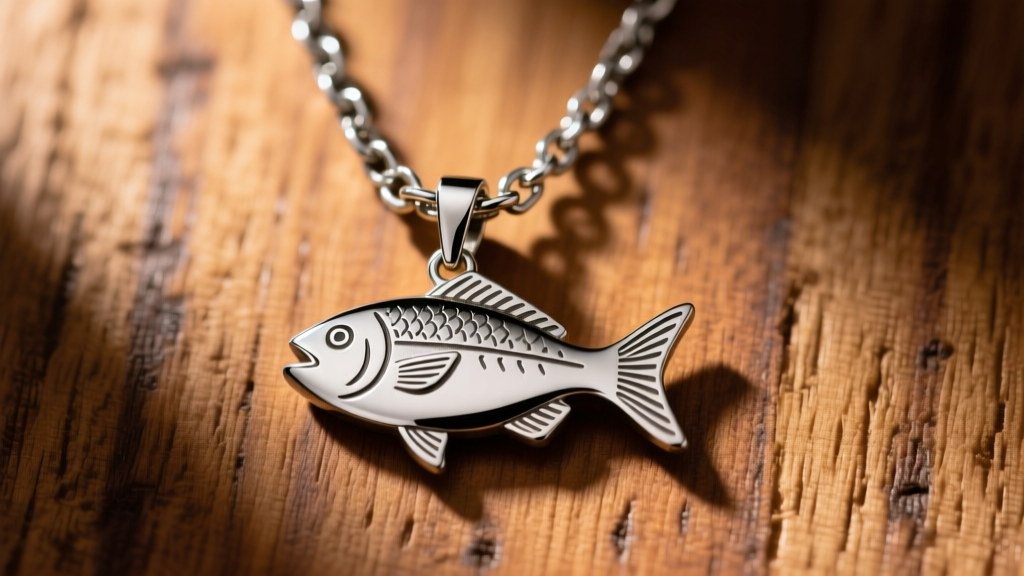
A common failure point in any necklace is not the pendant itself, but the chain and clasp. The structural integrity of the chain must match the weight and profile of the fish pendant.
- Box Chains: Constructed from interlocking square links, box chains distribute tensile stress evenly. They are highly resistant to the 'pull-apart' failure mode and are the best choice for heavier solid gold or steel pendants.
- Cable Chains: The traditional oval-link design. While classic, the single soldered joint on each oval link represents a potential weak point. If worn during sleep, the lateral torque can easily snap a thin cable chain.
- Rope Chains: Excellent for light to medium pendants, but the twisted links can trap skin oils and lotions, requiring more frequent ultrasonic cleaning to maintain their reflectivity.
The Clasp: Spring Ring vs. Lobster
Never pair a heavy pendant with a spring ring clasp. The internal tension spring in a spring ring is prone to fatigue, and the tiny lever can easily snap under the dynamic load of a swinging pendant. Always opt for a forged lobster clasp, which utilizes a solid, spring-loaded trigger mechanism that is vastly superior for securing pendants weighing over 5 grams.
Care, Maintenance, and Galvanic Corrosion
One of the most overlooked phenomena in jewelry care is galvanic corrosion. This occurs when two dissimilar metals (for example, a sterling silver chain and a stainless steel pendant) are in contact with each other in the presence of an electrolyte (like saltwater or sweat). The less noble metal (silver) will act as an anode and corrode rapidly at the point of contact.
To prevent this, always ensure your chain and pendant are made of the same base metal, or use an inert jump ring (like titanium or high-karat gold) to separate them. For routine maintenance, avoid harsh chemical dips. Instead, use a mild solution of warm water and a few drops of phosphate-free dish soap, agitating gently with a soft-bristled baby toothbrush to remove sebum buildup from the intricate engraving lines of the Ichthys symbol.
Final Thoughts on Material Selection
Selecting the right metal for your fish necklace Christian symbol is a balance of budget, lifestyle, and skin chemistry. For heirloom-quality pieces meant to be passed down, 14k solid gold remains the gold standard. For uncompromising durability and hypoallergenic properties, Grade 23 Titanium is a modern marvel. By understanding the metallurgical realities of your jewelry, you ensure that your outward expression of faith remains as resilient and enduring as the belief it represents.


