Tiny Butterfly Necklace Value: 2026 Cost & Quality Guide
Discover if a tiny butterfly necklace is worth the price. We break down material grades, chain gauges, and true value across all budget tiers.

The True Cost of the Tiny Butterfly Necklace Trend
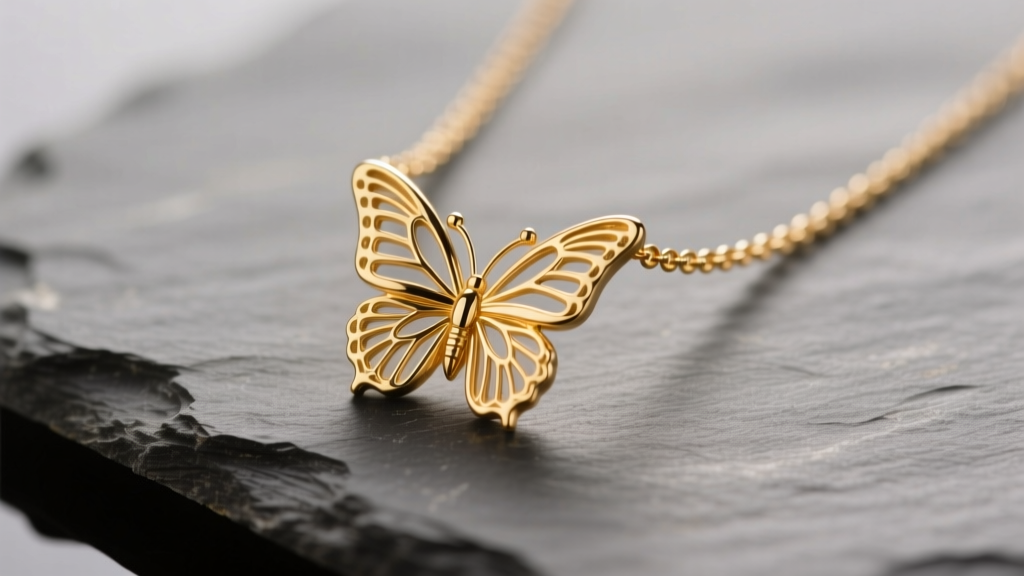
The tiny butterfly necklace has successfully transcended its Y2K revival origins to cement itself as a permanent fixture in the 2026 'ethereal minimalist' aesthetic. However, as the trend has matured, the market has become heavily saturated. Today, consumers are confronted with a massive pricing disparity: you can find a tiny butterfly necklace for $12 on fast-fashion applications, or pay upwards of $850 for a seemingly identical piece at a luxury boutique. This extreme variance begs a critical question for savvy jewelry buyers: what is the actual value proposition of this delicate accessory?
Assessing the budget and true value of a tiny butterfly necklace requires looking far beyond the pendant's visual appeal. It demands a forensic examination of metallurgy, chain mechanics, clasp durability, and manufacturing techniques. In this comprehensive value assessment, we dissect the anatomy of the tiny butterfly necklace to help you determine exactly what you are paying for, and more importantly, what you should avoid.
Material Breakdown: What Are You Actually Paying For?
The most significant driver of price variance in butterfly pendants is the base metal and the thickness of any applied plating. Understanding these tiers is the first step in evaluating budget versus longevity.
Base Metals and Flash Plating (The $15–$40 Trap)
At the lowest price point, butterfly necklaces are typically cast from brass or zinc alloys and coated in 'flash plating.' Flash plating involves an electrochemical bath that deposits a microscopic layer of gold—usually between 0.1 and 0.5 microns thick. While initially bright, this ultra-thin layer lacks the structural integrity to withstand the acidity of human skin, friction from clothing, or environmental humidity. Within three to six months of regular wear, the plating inevitably wears away, exposing the base metal. This leads to rapid tarnishing, the dreaded 'green skin' effect caused by copper oxidation, and ultimately, a ruined piece of jewelry. From a value perspective, the cost-per-wear of a $25 flash-plated necklace that lasts four months is significantly higher than investing in a durable alternative.
Gold Vermeil and Sterling Silver (The $50–$120 Sweet Spot)
For buyers seeking a balance between budget and quality, gold vermeil offers a compelling middle ground. However, the term 'vermeil' is heavily regulated. According to the Federal Trade Commission (FTC) Jewelry Guides, a piece can only be legally marketed as vermeil if it consists of a sterling silver (925) base coated with a minimum of 2.5 microns of gold (at least 10k fineness). This thick plating, when applied correctly, can last for years with proper care. When shopping in this tier, always demand proof of the micron thickness. Many brands deceptively market 'gold plated sterling silver' as vermeil, even if the plating is only 1.0 microns thick, which will wear through much faster.
Solid 14k and 18k Gold (The $250+ Investment)
Solid gold represents the apex of jewelry value. As noted by the Gemological Institute of America (GIA), 14k gold consists of 58.5% pure gold alloyed with metals like copper, silver, or zinc to enhance tensile strength and durability. A solid 14k tiny butterfly necklace will never tarnish, can be worn in the shower or ocean without degrading, and holds intrinsic scrap value. The premium you pay upfront (typically $250 to $600 depending on the chain weight and brand markup) is offset by a lifetime of wearability, making it the ultimate 'buy it for life' accessory.
Value Assessment Matrix: Price vs. Longevity
To visualize the return on investment (ROI) across different market tiers, we have calculated the estimated Cost Per Wear (CPW) based on an assumption of wearing the necklace three times a week. The data clearly illustrates how cheap upfront costs often mask poor long-term value.
| Market Tier | Material Composition | Avg Price Range | Expected Lifespan | Estimated Cost Per Wear |
|---|---|---|---|---|
| Fast Fashion | Brass / Flash Plating (0.3μm) | $15 - $35 | 3 - 6 Months | $0.65 |
| Demi-Fine (Vermeil) | 925 Silver / 2.5μm Gold | $65 - $120 | 2 - 4 Years | $0.22 |
| Fine Jewelry | Solid 14k Gold | $280 - $550 | Lifetime (50+ Years) | $0.04 |
Hidden Cost Factors: Chain Gauge and Clasp Mechanics
A common mistake consumers make when assessing the value of a tiny butterfly necklace is focusing entirely on the pendant while ignoring the chain. The chain is the structural backbone of the necklace, and its failure is the number one reason delicate jewelry is lost.
The Physics of Chain Gauges
A standard 10mm to 12mm solid gold butterfly pendant weighs between 1.0 and 1.8 grams. To cut costs, many manufacturers pair these pendants with ultra-thin 0.6mm or 0.7mm cable chains. While a 0.7mm chain might have a static tensile strength capable of holding 1.5 kilograms, jewelry is subjected to dynamic shear forces. If the pendant catches on a sweater or a seatbelt, the sudden lateral force will easily snap a 0.7mm link. For optimal value and security, the chain gauge should be proportional to the pendant's weight. We strongly recommend a minimum chain thickness of 0.9mm for lightweight hollow-cast butterflies, and a 1.2mm rolo or cable chain for solid, die-struck pendants.
Clasp and Jump Ring Integrity
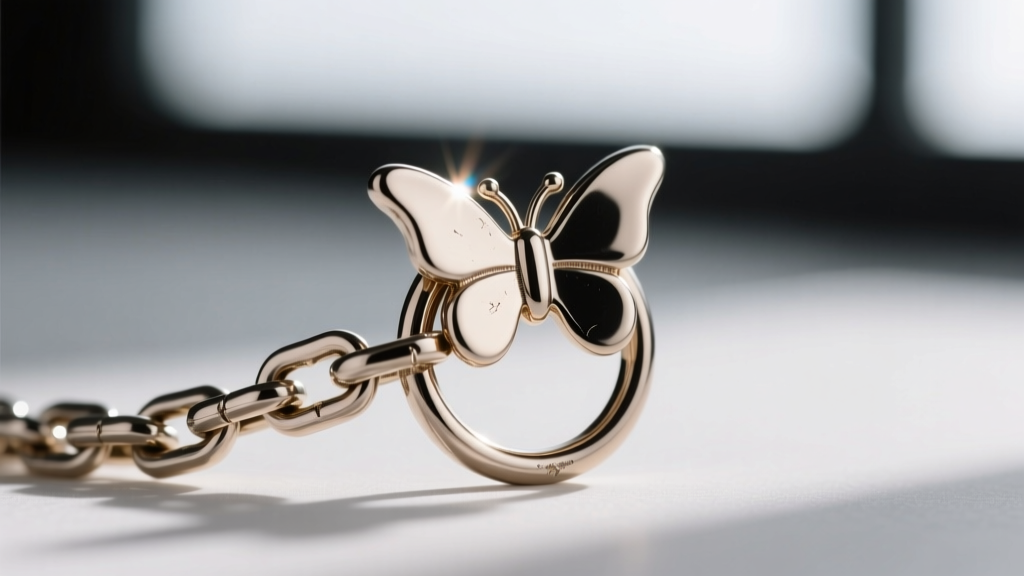
The clasp mechanism is another critical point of failure. Spring ring clasps, commonly found on necklaces under $80, rely on a tiny internal wire spring that frequently snaps or loses tension over time, causing the necklace to slip off unnoticed. A high-quality lobster clasp, while slightly more expensive to manufacture, offers a secure, locking closure. Furthermore, inspect the jump ring—the small circular link connecting the pendant to the chain. If the jump ring has a visible slit (an 'open' jump ring), it can easily be pried apart by a snag. A truly valuable piece will feature a soldered jump ring, where the seam has been fused shut with a laser or torch, eliminating the risk of the pendant slipping off.
How to Spot Overpriced 'Demi-Fine' Butterfly Pendants
The modern jewelry market is rife with marketing manipulation, where brands charge fine jewelry prices for demi-fine materials. To ensure your budget aligns with actual value, employ this three-point inspection checklist before purchasing:
- Demand Hallmarking: Genuine sterling silver must bear a '925' stamp, while solid gold will be stamped '14K', '18K', or '585'. If the brand claims the metal is 'gold dipped' or 'gold tone' but charges over $100, walk away.
- Check the Porosity: Examine high-resolution photos of the butterfly's wings. Cheap castings often exhibit 'porosity'—tiny microscopic pinholes or pitting on the metal surface caused by trapped gas during the casting process. High-value pieces are either die-struck (which compresses the metal for a flawless finish) or feature hand-polished, pore-free castings.
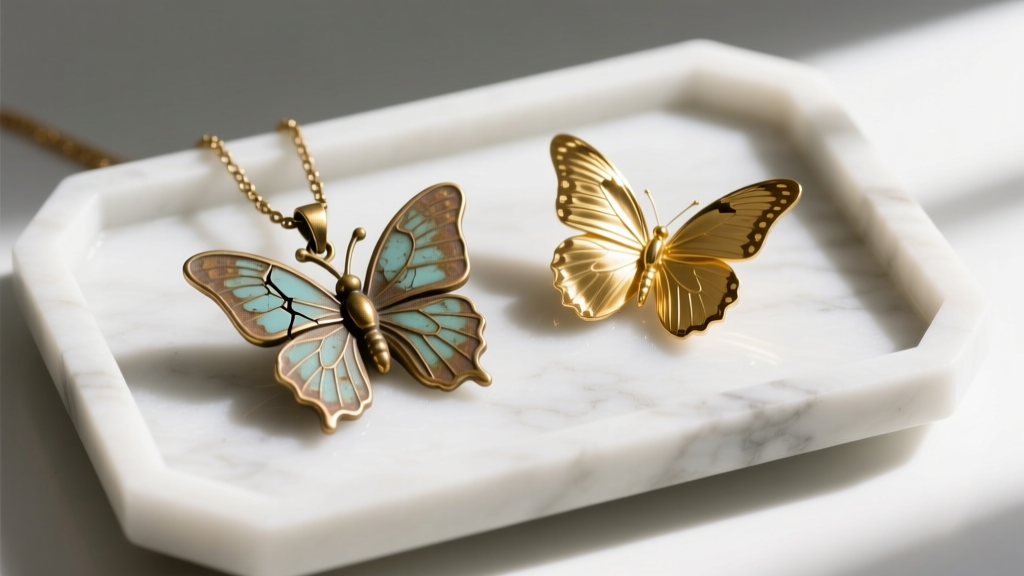
- Scrutinize the Enamel: Many tiny butterfly necklaces feature colored wings using cold enamel (epoxy resin) or vitreous enamel (fired glass). Cold enamel is prone to chipping and yellowing from UV exposure within a year. If you are paying a premium for colored wings, ensure the brand specifies 'fired vitreous enamel' or 'guilloché', which offers vastly superior longevity and light refraction.
'The true value of delicate jewelry is not determined by the weight of the gold, but by the precision of its engineering. A perfectly soldered jump ring and a proportionally gauged chain will save a lightweight pendant from an early grave in the back of a jewelry box.' — Master Jeweler & Appraisal Specialist
Final Verdict: Which Tier Offers the Best ROI?
If your budget is strictly under $50, the tiny butterfly necklace market offers poor long-term value. You are essentially renting the aesthetic for a single season before the flash plating degrades. In this bracket, you are better off saving your money or opting for un-plated surgical stainless steel, which, while not precious, will not tarnish or turn your skin green.
For the $75 to $120 range, high-quality gold vermeil (strictly 2.5+ microns over 925 silver) offers the best immediate aesthetic ROI, provided you commit to removing the necklace before showering, swimming, or exercising to preserve the plating.
However, the undisputed champion of value is the solid 14k gold tiny butterfly necklace in the $250 to $400 range. When paired with a structurally sound 1.0mm chain and a secure lobster clasp with a soldered jump ring, this piece transitions from a fleeting trend accessory to a permanent, worry-free staple in your daily wardrobe. By prioritizing metallurgical integrity and mechanical soundness over brand hype, you ensure that your delicate butterfly necklace remains a symbol of enduring style rather than a sunken cost.


