Twisted Necklace Gold Buying Guide: Karats & Styles
Discover how to choose the perfect twisted necklace gold chain. Learn about karat weights, twist pitches, clasp types, and 2026 pricing in our expert guide.

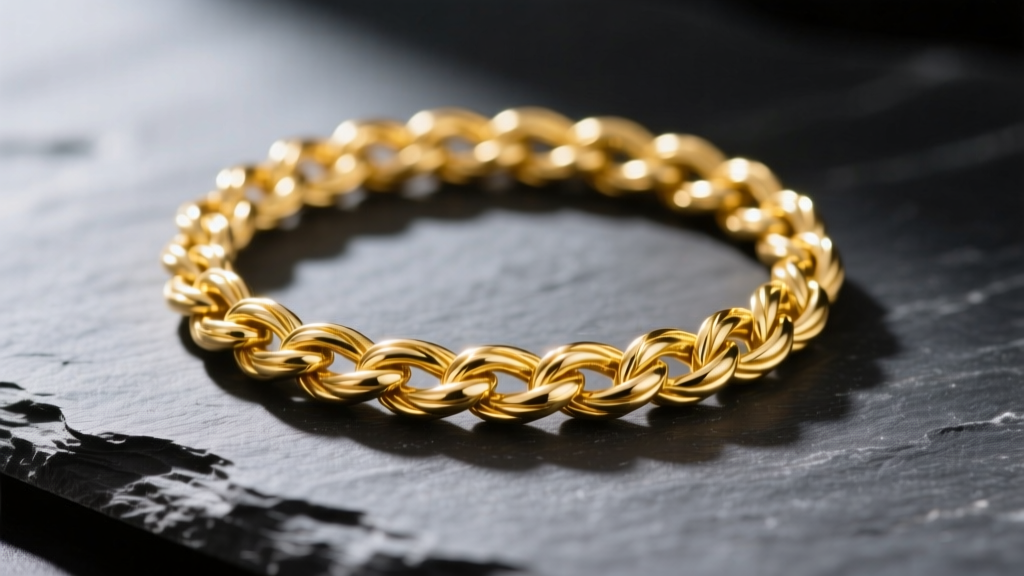
The Enduring Allure of the Twisted Gold Aesthetic
When it comes to foundational jewelry, few pieces command attention quite like a meticulously crafted twisted necklace gold chain. Unlike standard cable or curb chains that rely on flat surfaces for light reflection, twisted chains utilize complex geometric spirals to catch and refract light from every conceivable angle. In 2026, the demand for textured, high-sparkle gold chains has surged, driven by a renewed interest in vintage-inspired layering and standalone statement pieces. However, the intricate engineering that gives these chains their signature brilliance also introduces unique structural vulnerabilities. This comprehensive buying guide will decode the manufacturing nuances, alloy sciences, and mechanical failure points you must evaluate before investing in a twisted gold necklace.
Decoding the Twist: Rope, Cable, and French Weaves
The term 'twisted' is often used as a blanket descriptor, but true jewelry connoisseurs know that the specific weave dictates the chain's drape, durability, and light performance. Understanding these distinctions is critical when evaluating a twisted necklace gold piece.
The Classic Rope Chain
Rope chains are created by weaving two or more rows of metal links into a continuous spiral. The 'twist pitch'—measured in turns per inch (TPI)—determines the chain's character. A high TPI (tight twist) yields maximum sparkle and a stiff, liquid-like drape, but the microscopic gaps between links can trap skin oils and snag on fine knitwear. A low TPI (loose twist) offers a more relaxed, fluid drape but sacrifices some of the signature diamond-cut brilliance.
The Cable Twist
A cable twist begins as a standard oval-link cable chain that is subsequently fed through a twisting machine. This process compresses the links, creating a unified, spiraled cylinder. Cable twists are inherently more durable than rope chains because the individual links are fully soldered before the twisting process occurs, making them an excellent choice for everyday wearers who prioritize tensile strength over maximum faceting.
The French Rope (Wheat Chain)
Often confused with standard rope chains, the French rope (or wheat chain) features oval links that are woven in a single, continuous direction, resembling the braided stalks of wheat. This unidirectional twist creates a smooth, tubular profile that is exceptionally resistant to snagging. According to the World Gold Council, wheat chains are the preferred foundation for heavy pendants due to their superior structural integrity and smooth bail-gliding properties.

The Karat Conundrum: Alloy Science and Tensile Strength
Pure 24-karat gold is far too malleable to hold the complex geometry of a twisted chain; the links would warp under their own weight. Therefore, alloying metals like copper, silver, zinc, and palladium are introduced to increase tensile strength and 'memory' (the metal's ability to return to its original shape after stress). When selecting your twisted necklace gold chain, the karat weight will directly influence its longevity.
| Karat Weight | Gold Purity | Alloy Composition & Traits | Durability for Twists | Best Use Case |
|---|---|---|---|---|
| 10K Gold | 41.7% | High copper/zinc; very rigid, prone to tarnishing over time. | Excellent (High Tensile) | Budget-friendly, heavy daily wear chains. |
| 14K Gold | 58.5% | Balanced alloy; optimal mix of rich color and structural memory. | Very Good | The industry standard for durable, everyday twisted chains. |
| 18K Gold | 75.0% | Higher gold content; deeper yellow hue, softer, lower tensile memory. | Good (Requires Care) | Luxury statement pieces, occasional wear, high-sparkle ropes. |
| 22K Gold | 91.6% | Extremely soft; lacks the rigidity to maintain tight twist pitches. | Poor | Not recommended for complex twisted weaves. |
For a twisted necklace gold chain intended for daily wear, 14K remains the undisputed champion. The alloy matrix provides enough rigidity to prevent the spiral from stretching out of shape, a common failure mode in higher-karat ropes.
Solid vs. Hollow: The Electroforming Trap
One of the most critical decisions in the 2026 market is avoiding hollow twisted chains. Manufacturers often use electroforming or resin-core techniques to create thick, imposing rope chains that weigh a fraction of their solid counterparts. While the initial price point is alluring, hollow twisted chains are a structural liability. The thin gold shells are highly susceptible to denting from minor impacts, and once crushed, the intricate twist geometry cannot be repaired by a bench jeweler. Always verify that the product description explicitly states 'solid gold' and check the gram weight; a 5mm solid 14K rope chain should weigh approximately 18 to 22 grams per 18-inch length. If it weighs under 8 grams, it is undoubtedly hollow.
Clasp Mechanics and Bail Compatibility
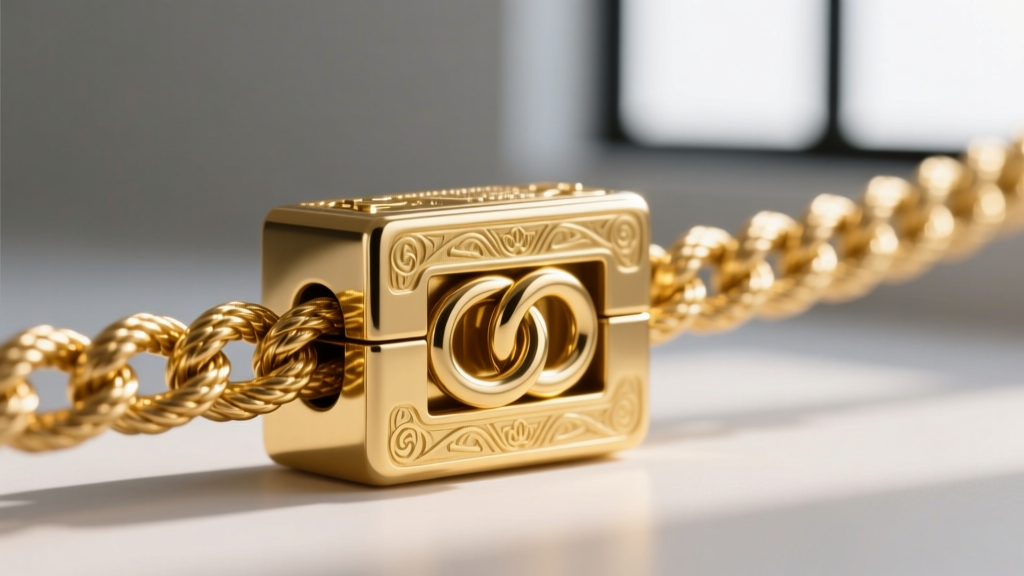
The clasp is the most frequent point of failure on any necklace, but the torsion stress exerted by a twisting chain accelerates clasp fatigue. Spring-ring clasps are entirely inadequate for twisted chains wider than 2.5mm, as the rotational torque of the chain will eventually warp the delicate internal spring mechanism.
- Lobster Claw (Up to 3.5mm): Acceptable for medium-weight twists, provided the jump ring connecting the clasp is soldered shut rather than merely pinched.
- Box Clasp with Tongue (4mm and above): The mandatory standard for heavy rope chains. The tongue slides into a boxed housing, distributing the chain's weight evenly. Always ensure the box clasp features a figure-eight safety wire on the side to prevent catastrophic loss if the primary tongue loosens.
When pairing a pendant with a twisted necklace gold chain, bail selection is equally crucial. Standard loop bails often struggle to glide over the textured ridges of a tight-twist rope chain, causing friction and premature wear on the bail's interior. Opt for 'Euro bails' or slide-pendants with wide, polished interior channels designed specifically for textured chains.
Troubleshooting: Kinks, Snags, and Stretching
Even the highest quality twisted necklace gold chain requires specific handling to avoid mechanical failure. The most dreaded issue is 'kinking.' Because rope chains rely on a continuous spiral tension, folding the chain sharply in half can cause the links to lock against one another, creating a permanent kink. Never attempt to forcefully pull a kink out; instead, lay the chain flat on a velvet pad and use two pairs of smooth-jawed nylon pliers to gently massage the spiral back into alignment. Furthermore, the Gemological Institute of America (GIA) notes that ultrasonic cleaners can be dangerous for twisted chains; the high-frequency vibrations can shake loose the microscopic laser welds that hold the intricate links together. Stick to warm water, mild dish soap, and a soft-bristled baby toothbrush for routine maintenance.
2026 Market Pricing and Sourcing Insights
Pricing for solid gold twisted chains is directly tethered to the daily spot price of gold, plus a manufacturing premium (the 'make'). Because rope and wheat chains require complex, multi-stage machine weaving and extensive diamond-cutting faceting, their make premium is typically 20% to 35% higher than standard curb or cable chains. In 2026, expect to pay between $800 and $1,200 for a high-quality, solid 14K 4mm rope chain at 18 inches. When sourcing, prioritize specialized chain manufacturers over generic mall jewelers, and always request a detailed invoice that specifies the exact gram weight, karat purity, and country of origin to ensure you are receiving a piece built to last a lifetime.


