The 16in Necklace Trend: 2026 Styling & Layering Guide
Discover why the 16in necklace dominates 2026 jewelry trends. Learn expert layering math, ideal chain gauges, clasp mechanics, and neckline pairings.

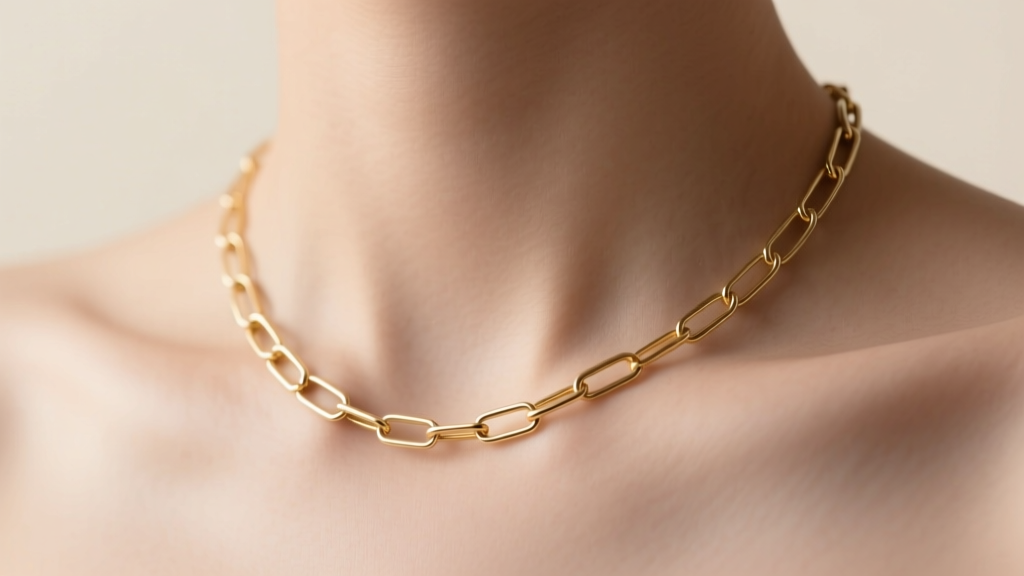
In the ever-evolving landscape of fine jewelry and fashion accessories, the 16in necklace has cemented itself as the undisputed anchor of the modern neckline. Neither a restrictive 14-inch choker nor a standard 18-inch princess chain, the 16-inch length occupies a highly specific anatomical sweet spot: it rests precisely on the clavicle, framing the collarbone without competing with the hollow of the throat. As we navigate the style landscape of 2026, the 16-inch length has transitioned from a mere alternative to the foundational baseline for both solo wear and complex layering architectures.
This comprehensive style and trend analysis breaks down the metallurgical realities, layering mathematics, and hardware mechanics that make the 16-inch necklace an essential component of any curated jewelry wardrobe. Whether you are sourcing 14k gold, 316L stainless steel, or platinum, understanding the physics and aesthetics of this exact length is critical for achieving a polished, intentional look.
The Anatomy of the 16in Necklace: Why This Length Dominates
To understand the dominance of the 16in necklace, we must first look at how it interacts with human anatomy. A standard 14-inch chain sits tightly against the base of the neck, often functioning as a traditional choker. An 18-inch chain drops below the collarbone, resting on the upper chest. The 16-inch length, however, bridges this gap. It highlights the clavicle—a naturally elegant bone structure—creating a horizontal line that visually broadens the shoulders and elongates the neck.
From a stylistic perspective, 2026 has seen a massive shift away from the overly long, bohemian layering trends of the early 2020s. According to market analyses cited by the American Gem Society, consumers are gravitating toward refined, structured minimalism. The 16-inch length perfectly satisfies this demand. It is long enough to slip over the head without unclasping (a crucial functional benefit for daily wear), yet short enough to remain visible above the neckline of most standard crew-neck and scoop-neck garments.
2026 Trend Report: Chain Profiles and Material Grades
The way a 16-inch chain catches the light is heavily dictated by its profile and the specific metal alloy used. In 2026, we are seeing a distinct bifurcation in trends: ultra-reflective, high-polish chains worn solo, and matte, textured chains used as bases for heavy pendants.
When selecting a 16in necklace, the metal grade dictates not just the color, but the tensile strength of the piece. For example, 18k yellow gold (75% pure gold) offers a rich, buttery hue but is relatively soft. A 16-inch 18k gold snake chain is highly prone to kinking due to the friction it experiences at the nape of the neck. Conversely, 14k gold (58.3% pure gold, alloyed with copper, silver, and zinc) provides superior structural integrity, making it the superior choice for chains that will bear the weight of pendants or endure the friction of daily layering. For budget-conscious buyers, 316L surgical stainless steel offers exceptional tarnish resistance and a high tensile yield, mimicking the cool tone of white gold or platinum.
Chain Profile Performance Matrix
| Chain Profile | Optimal Gauge (mm) | Best Pendant Weight | Durability & Kink Resistance |
|---|---|---|---|
| Paperclip | 1.5 - 2.5mm | Heavy (Coins, Signets) | High (Excellent structural rigidity) |
| Snake | 1.0 - 1.5mm | None (Wear Solo) | Low (Highly susceptible to permanent kinking) |
| Cable | 1.2 - 1.8mm | Light (Micro-Solitaires) | Medium-High (Classic, easy to repair) |
| Box | 1.5 - 2.0mm | Medium to Heavy | Very High (Interlocking square links resist pulling) |
| Rope | 2.0 - 3.0mm | Heavy (Gemstone Clusters) | High (Dense weaving hides minor wear) |
The Mathematics of Layering: Building Around a 16in Base
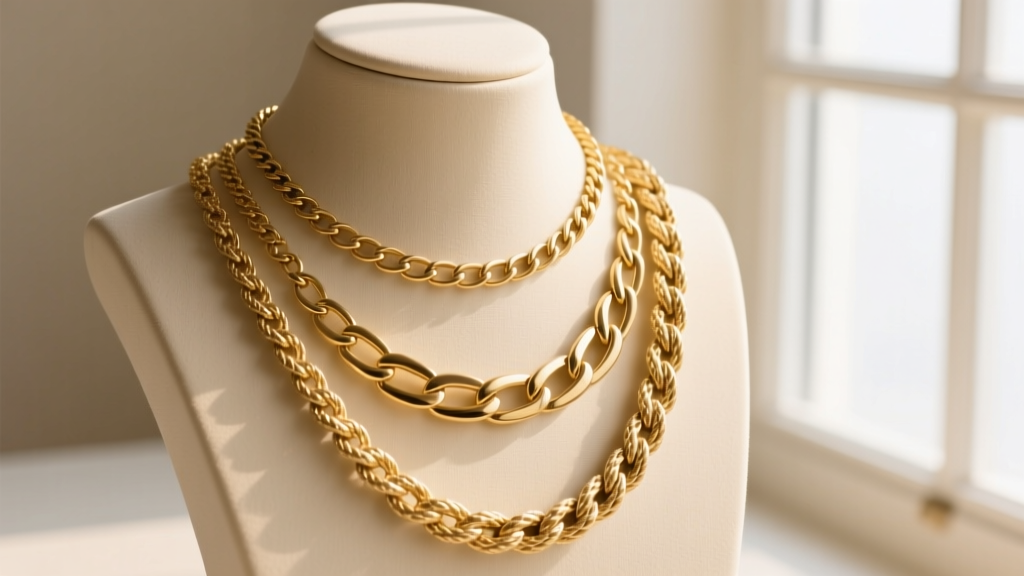
Layering is no longer about simply throwing multiple chains of varying lengths around your neck. In 2026, precision layering is the standard. When using a 16in necklace as your foundational anchor, you must calculate the 'drop distance' to prevent tangling—a common failure mode in multi-chain styling.
The golden rule of layering is the 2.5-inch minimum drop. If your base chain is 16 inches, your second chain must be at least 18.5 inches. Why? Because when a pendant is added to a chain, it effectively reduces the visual length of the necklace by the height of the pendant. A 16-inch chain with a 1-inch pendant drop now visually sits at 17 inches. If your secondary chain is 18 inches, the two will constantly tangle, causing friction, micro-abrasions on the metal, and eventual breakage.
The Ideal 2026 Layering Formula
- Layer 1 (The Anchor): 16-inch 14k Gold Paperclip Chain (1.5mm gauge). Worn bare to catch the light on the collarbone.
- Layer 2 (The Focal Point): 18.5-inch Cable Chain featuring a 7mm bezel-set sapphire solitaire. The 2.5-inch gap ensures the pendant rests in the hollow of the chest without striking the paperclip links.
- Layer 3 (The Depth): 22-inch Box Chain (2.0mm gauge) with a heavy vintage coin pendant. This draws the eye downward, elongating the torso.
By adhering to this mathematical spacing, you create distinct visual tiers. The GIA Gem Encyclopedia notes that proper spacing also prevents gemstone settings from scratching against adjacent metal links, preserving the polish and structural integrity of your investment pieces.
Neckline Pairings: Where the 16-Inch Length Shines
A 16in necklace is highly versatile, but it performs exceptionally well with specific garment necklines. Understanding these pairings elevates a look from accidental to intentional.
The V-Neck and Plunge
When wearing a V-neck, the 16-inch chain creates a horizontal boundary that prevents the deep plunge from looking overly severe. It acts as a visual 'stop' point. For deep V-necks, opt for a 16-inch chain with a micro-pendant (under 5mm) to draw the eye into the center of the 'V' without overwhelming the fabric.
The Crew Neck and Turtleneck
The 16-inch length is the ultimate antagonist to the high crew neck. Because it sits exactly at the base of the throat, it breaks up the expanse of fabric, adding a metallic flash right at the face. Over a fitted turtleneck, a 16-inch 3mm rope chain in yellow gold provides a striking, high-contrast vintage aesthetic that is heavily trending in late 2026 editorial fashion.
Off-The-Shoulder and Boat Neck
These necklines expose the clavicle entirely. Here, the 16-inch chain acts as a secondary collarbone. To avoid a cluttered look, choose an ultra-fine 16-inch chain (under 1.2mm gauge) or a simple velvet ribbon with a singular pearl drop. The goal is to accentuate the exposed skin, not cage it.
Sourcing and Hardware: The Mechanics of the Clasp
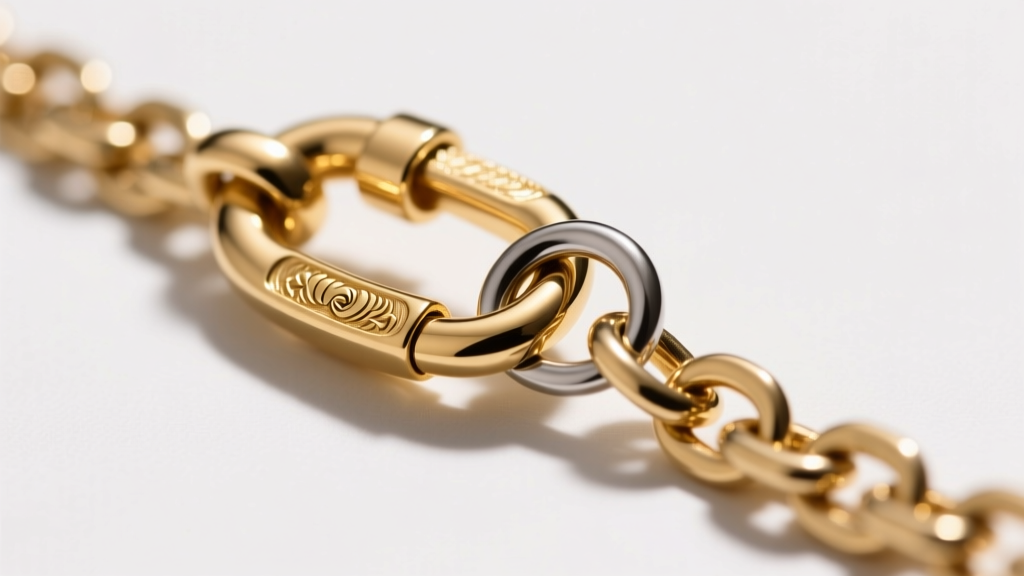
The most overlooked aspect of purchasing a 16in necklace is the hardware. Because a 16-inch chain sits tightly around the base of the neck, the clasp is located in a 'blind spot' at the nape. You cannot see it when fastening it, and your fingers have limited mobility in that position.
For chains under 18 inches, spring ring clasps are a functional failure. A standard 7mm or 9mm spring ring requires precise fingernail leverage to pull back the tiny spring mechanism—a frustrating task when reaching behind your neck. Instead, always source 16-inch necklaces equipped with a 10mm to 12mm lobster clasp. The lobster claw mechanism features a larger, ergonomic trigger that can easily be depressed with the pad of your thumb or index finger, even blind.
Furthermore, pay attention to the jump ring (the circular loop that the clasp hooks into). On a 16-inch chain, the jump ring must be soldered shut or be a heavy-gauge split ring (minimum 5mm diameter). The 16-inch length experiences high tensile stress when pulled over the head or caught on clothing. A thin, unsoldered 3mm jump ring will inevitably pull apart, resulting in the loss of the chain. When evaluating fine jewelry, always inspect the jump ring with a jeweler's loupe to ensure the seam is fully laser-welded.
Conclusion: Mastering the Clavicle Anchor
The 16in necklace is far more than a standard measurement; it is a highly engineered styling tool. By understanding the interplay between chain gauge, metal alloy tensile strength, and precise layering mathematics, you can transform a simple 16-inch chain into the cornerstone of your jewelry wardrobe. As 2026 trends continue to favor structured elegance and intentional minimalism, mastering the clavicle-grazing 16-inch length ensures your styling remains sharp, durable, and effortlessly sophisticated.


