Mastering the 18 Necklace Length: Drape, Fit, and Clasp Mechanics
Discover the technical nuances of the 18 necklace length. Expert insights on chain drape, clasp mechanics, pendant weight ratios, and neckline pairing.

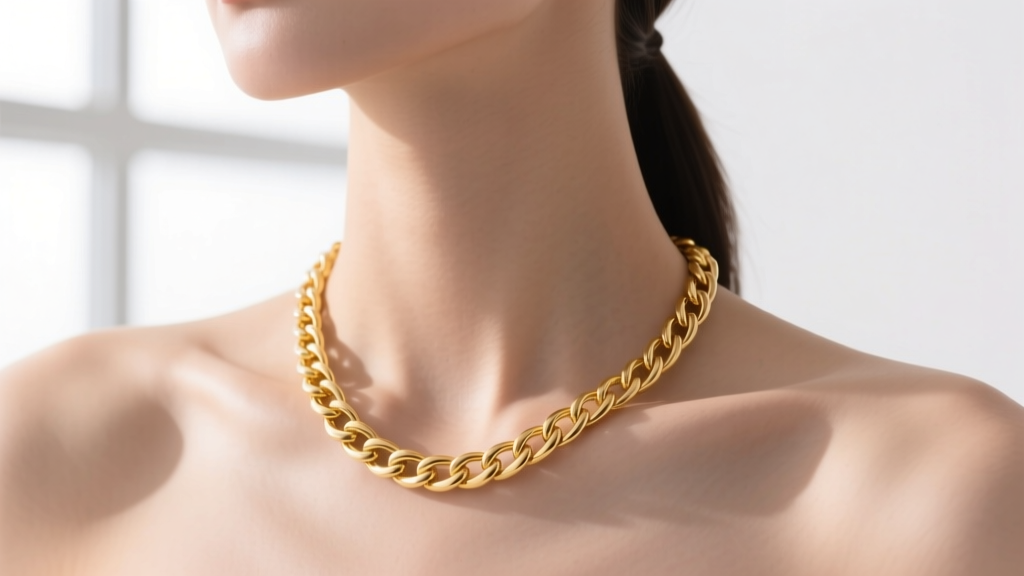
In the jewelry industry, the 18 necklace length is universally recognized as the "Princess" standard. Measuring exactly 18 inches (45.72 centimeters) from the clasp to the terminal jump ring, this specific dimension is engineered to rest precisely on the clavicle for the average adult female. However, treating the 18-inch length as a mere stylistic baseline ignores the complex physics, metallurgy, and biomechanics that dictate how a chain actually behaves when worn. As an expert deep dive into jewelry engineering, this guide moves beyond basic styling advice to explore the structural realities of the 18 necklace length, examining drape geometry, tension points, and long-term metal fatigue.
The Biomechanics of the 18-Inch Drop
The human neck is not a perfect cylinder; it is a complex, tapered structure governed by the cervical spine and the trapezius muscles. The average adult female neck circumference ranges between 13 and 14 inches. When you fasten an 18-inch chain, you are creating a 4-to-5-inch differential between the neck's circumference and the jewelry's total span. This specific mathematical ratio is what allows the 18 necklace length to clear the nape of the neck and settle into the suprasternal notch (the hollow at the base of the throat) without choking the wearer or sliding excessively toward the collarbone edges.
Chain Link Geometry and Fluidity
The physical drape of an 18-inch chain is heavily dictated by its link geometry. Not all 18-inch chains hang the same way:
- Cable Chains: Composed of uniform oval links, cable chains offer high fluidity. At 18 inches, a cable chain will conform closely to the curvature of the sternum, creating a soft, rounded "U" drape.
- Box Chains: Constructed from interlocking square links, box chains possess inherent structural rigidity. An 18-inch box chain will exhibit a "hinge" effect, often creating a sharper, more geometric "V" drop that resists bending against the collarbone.
- Rope Chains: The twisted helix of a rope chain provides moderate flexibility but high torsional resistance, meaning an 18-inch rope chain will lay flat against the skin without flipping over, a common failure mode of flat-curb designs.
Pendant Weight Ratios and Tension Points
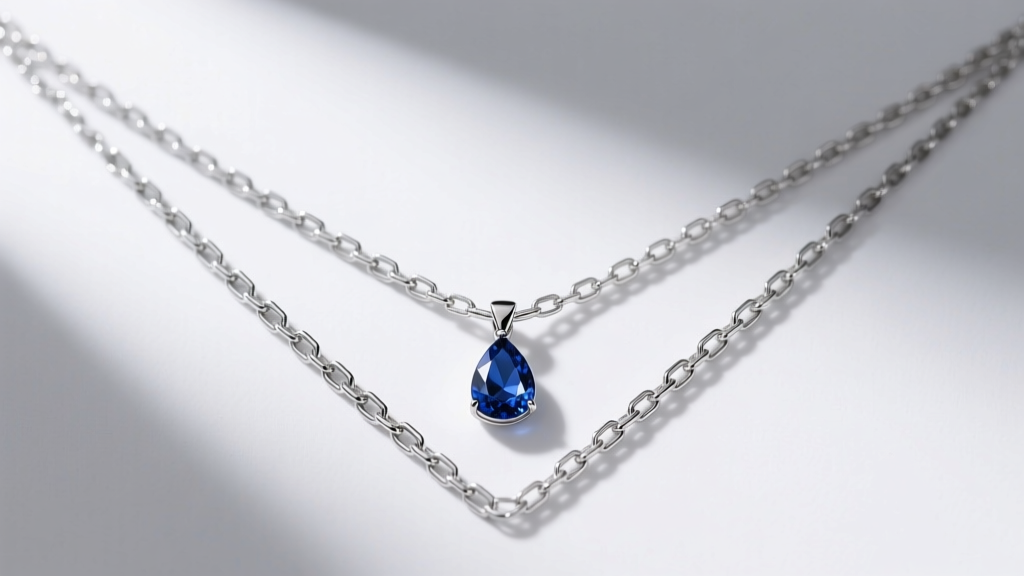
One of the most frequent engineering failures in necklace design occurs when the pendant mass overwhelms the chain's structural integrity. The 18 necklace length is particularly susceptible to the "Nape Pull" phenomenon. When a heavy pendant is attached to an 18-inch chain, the center of gravity shifts drastically forward.
"The golden rule of pendant-to-chain mass ratios dictates that a pendant should never exceed 2.5 times the total weight of the chain itself. Exceeding this threshold on an 18-inch span will cause the chain to ride up the back of the neck, effectively shortening the visual drop to 16 inches and causing severe friction at the nape." — JCK Industry Standards Report
If you are designing or purchasing an 18-inch chain intended to hold a 15-gram gemstone pendant, the chain itself must weigh at least 6 grams to maintain the true 18-inch clavicle drop. Failing to calculate this ratio results in a necklace that constantly requires adjustment and places undue stress on the terminal jump rings.
Calibrating the 18 Necklace Length to Garment Necklines
Styling an 18-inch chain requires precise calibration to the garment's neckline. Because the 18-inch drop terminates exactly at or slightly below the collarbone, its interaction with fabric seams is critical. Below is a technical calibration chart for pairing the 18 necklace length with standard apparel cuts.
| Garment Neckline | Typical Drop Measurement | Visual Interaction with 18" Chain | Recommended Chain Width |
|---|---|---|---|
| Crew Neck | 0 - 1 inches | Chain rests entirely on fabric; high contrast required. | 1.5mm - 2.5mm |
| Scoop Neck | 2 - 4 inches | Chain floats in the negative space; ideal for pendants. | 0.9mm - 1.2mm |
| V-Neck | 4 - 8 inches | Chain parallels the garment's V; creates layered depth. | 1.0mm - 1.5mm |
| Boatneck | Horizontal span | Chain breaks the horizontal line; adds verticality. | 1.2mm - 2.0mm |
For a comprehensive breakdown of how different lengths interact with various body types and garments, the Gem Society's necklace guide offers excellent foundational metrics that complement these technical pairings.
Clasp Engineering and Long-Term Metal Fatigue
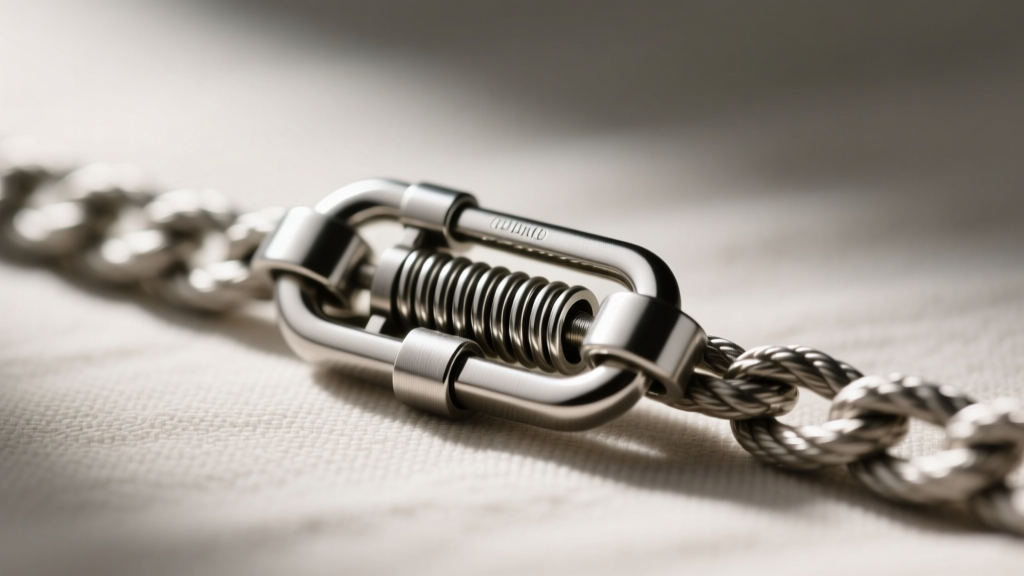
The clasp is the most vulnerable mechanical component of any necklace. At the 18-inch length, the leverage applied to the clasp during the act of putting on or taking off the jewelry is significant. The wearer's arms must reach behind the nape, creating a lateral pulling force that tests the clasp's internal spring mechanism.
Clasp Types and Tensile Strength
- Spring Ring Clasps: Standard on chains under 1.0mm. The internal coil spring is prone to work-hardening and snapping after 3 to 5 years of daily lateral stress.
- Lobster Clasps: The industry standard for 18-inch chains over 1.2mm. The lever mechanism provides superior tensile strength and resists accidental unhooking when caught on clothing fibers.
- Magnetic Clasps: While convenient, neodymium magnetic clasps on 18-inch chains can fail if the pendant weight exceeds the magnet's shear force rating, causing the necklace to drop unexpectedly.
Metallurgical Considerations for 18-Inch Chains
The material composition of an 18-inch chain directly impacts its drape, weight, and longevity. Because the 18-inch length wraps tightly around the nape and rests against the sternum, it is subject to constant friction, sweat exposure, and micro-abrasions.
925 Sterling Silver: Highly malleable but prone to work-hardening. An 18-inch sterling silver cable chain will naturally stretch by 0.25 to 0.5 inches over a decade of wear as the oval links slowly deform under the weight of a pendant. This stretching alters the intended clavicle drop, eventually requiring professional re-sizing.
14k and 18k Gold: Gold alloys offer superior resistance to link deformation. However, 18k gold (75% pure gold) is softer than 14k gold (58.3% pure gold). For an 18-inch chain meant to hold a heavy pendant, 14k gold is metallurgically superior due to the higher copper and zinc content, which increases the alloy's yield strength and prevents the terminal jump rings from pulling open.
Platinum (Pt950): Platinum is exceptionally dense. An 18-inch platinum chain will weigh nearly 60% more than an identically dimensioned 14k gold chain. This added mass fundamentally changes the drape, pulling the chain tauter against the neck and requiring a heavier, more robust lobster clasp to balance the overall center of gravity.
Conclusion: Precision in Every Millimeter
Mastering the 18 necklace length requires looking past its status as a jewelry staple and treating it as a precise engineering specification. By understanding the biomechanics of the clavicle drop, calculating accurate pendant-to-chain mass ratios, and selecting the appropriate link geometry and clasp mechanism, you can ensure that an 18-inch necklace performs flawlessly. Whether you are a designer drafting a new collection or a consumer investing in a fine jewelry piece, respecting the technical nuances of the 18-inch span is the key to achieving perfect drape, enduring structural integrity, and timeless elegance.


