Custom Pawprint Necklace Guide: Metals, Casting & Chain Pairing
Discover the technical details of crafting a custom pawprint necklace. Learn about metal grades, lost-wax casting, and ideal chain pairings.

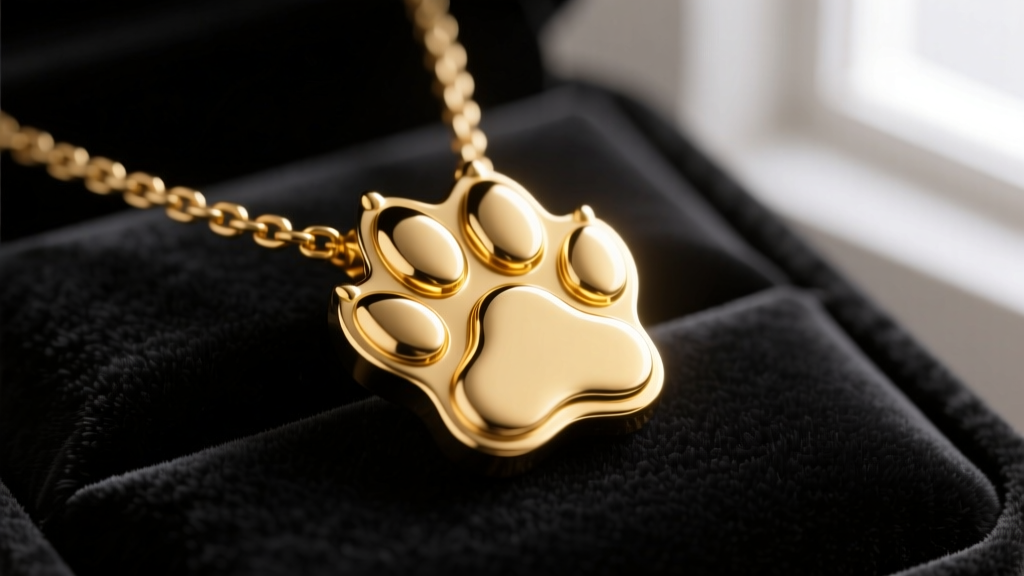
When it comes to companion and memorial jewelry, the pawprint necklace has transcended its status as a simple novelty item to become a highly specialized category of bespoke metallurgy and casting. While mass-market e-commerce platforms are flooded with generic, laser-etched paw silhouettes, a true custom pawprint necklace requires an intricate understanding of impression materials, lost-wax casting techniques, and structural chain engineering. Whether you are capturing the print of a 150-pound Mastiff or a 4-pound Chihuahua, the technical execution dictates whether the piece will last a lifetime or degrade within a year.
This expert deep dive explores the material science, casting methodologies, and load-bearing requirements necessary to commission or craft a high-end pawprint pendant that honors the subject with precision and durability.
The Anatomy of a High-Quality Impression
The foundation of any authentic pawprint necklace begins long before the metal is poured. The fidelity of the final piece is entirely dependent on the impression medium used to capture the animal's paw. There are two primary materials used in the industry:
- Alginate: A water-based, irreversible hydrocolloid commonly used for basic molds. While safe and inexpensive, alginate is prone to rapid moisture loss. If not cast immediately, the mold shrinks, distorting the micro-dermal ridges of the paw pads.
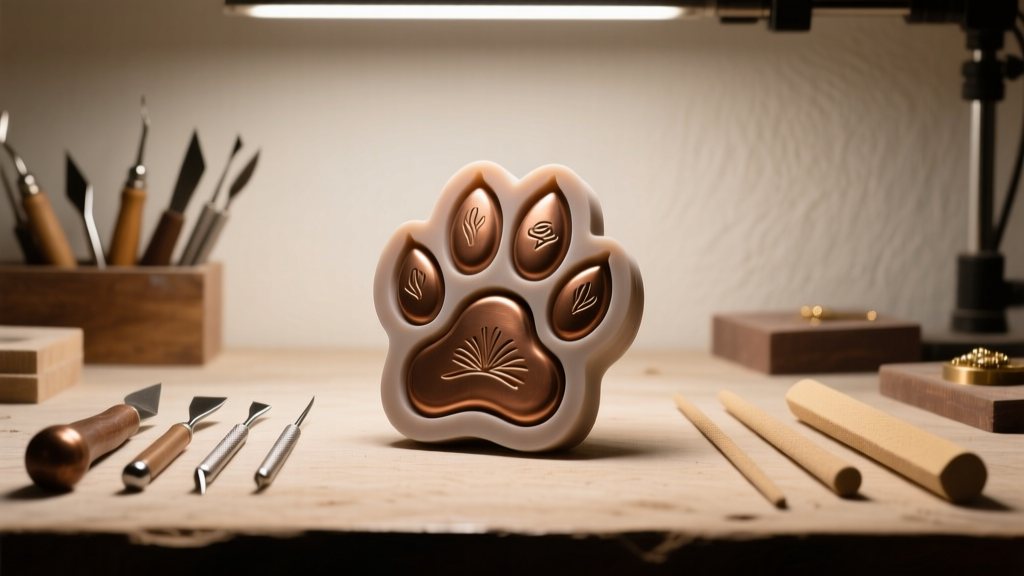
- Platinum-Cure Silicone: The gold standard for bespoke jewelry. This two-part elastomer captures details down to 10 microns, preserving the microscopic striations of the skin and the exact depth of the claw beds. Unlike alginate, platinum silicone is dimensionally stable indefinitely, allowing jewelers to create multiple wax positives from a single mold without degradation.
For a true heirloom piece, insist on platinum-cure silicone. The resulting wax positive will feature deep, sharp undercuts that translate into a highly tactile, three-dimensional metal casting.
Metallurgy & Material Grades: What Holds Up Over Time?
The choice of metal dictates not only the price but the structural integrity and wear resistance of the pendant. Pawprints feature deep recesses that can trap debris and moisture, making the metal's corrosion resistance a critical factor. According to the Gemological Institute of America (GIA), understanding alloy composition is vital for predicting how a piece will react to daily wear and environmental exposure.
| Metal Grade | Alloy Composition | Vickers Hardness (HV) | Tarnish / Patina Risk | Estimated Price Range |
|---|---|---|---|---|
| Sterling Silver (925) | 92.5% Silver, 7.5% Copper | 65 HV | High (Requires maintenance) | $90 - $180 |
| 14k Yellow Gold | 58.5% Gold, Silver/Copper mix | 135 HV | Very Low | $500 - $950 |
| Platinum (950) | 95% Platinum, 5% Ruthenium | 130 HV | Zero (Develops soft patina) | $1,400 - $2,800 |
| Jeweler's Bronze | 90% Copper, 10% Tin | 80 HV | High (Intentional patina) | $60 - $120 |
For clients seeking a balance of durability and affordability, 14k solid gold offers the best Vickers hardness to resist the scratching that inevitably occurs when a pendant swings against zippers and buttons. Sterling silver remains the most popular choice, but it requires a rhodium flash or a strict polishing regimen to prevent the copper alloy from oxidizing in the deep crevices of the toe pads.
Lost-Wax Casting vs. Deep Laser Engraving
There is a fundamental difference in how the pawprint is transferred to the metal. Understanding these two manufacturing processes will help you identify the quality of a piece before purchasing.
The Lost-Wax Casting Method
This is the traditional, high-end approach. A wax replica is created from the silicone mold, attached to a wax 'sprue' (a channel for metal flow), and encased in a plaster-like investment. The flask is placed in a kiln and heated to 1,350°F, melting the wax out completely. Molten metal is then forced into the cavity via vacuum or centrifugal casting. This method yields a fully three-dimensional pendant where the paw pads physically protrude from the base, offering a highly tactile experience.
Fiber Laser Engraving
Mass-produced pawprint necklaces typically utilize a 1064nm fiber laser to etch a 2D silhouette or a scanned image onto a flat metal blank. While modern lasers can achieve depths of up to 0.5mm, the result is essentially a topographical map rather than a true sculpture. The edges of the 'pads' will feel sharp to the touch, and the piece lacks the organic, rounded volume of a cast piece.
Expert Tip: If you are commissioning a piece from an existing ink-on-paper paw print rather than a physical mold, ask the jeweler if they use 3D photogrammetry to build a digital height map for CNC milling, rather than settling for flat laser engraving.
Chain Engineering: Gauges, Clasps, and Load-Bearing
A custom cast pawprint pendant—especially in solid gold or a large diameter for big breeds—can easily weigh between 12 and 25 grams. Pairing a heavy pendant with a delicate, hollow chain is a structural failure waiting to happen. Jewelers of America consistently emphasizes matching the chain's tensile strength to the pendant's mass.
Optimal Chain Styles for Heavy Pendants
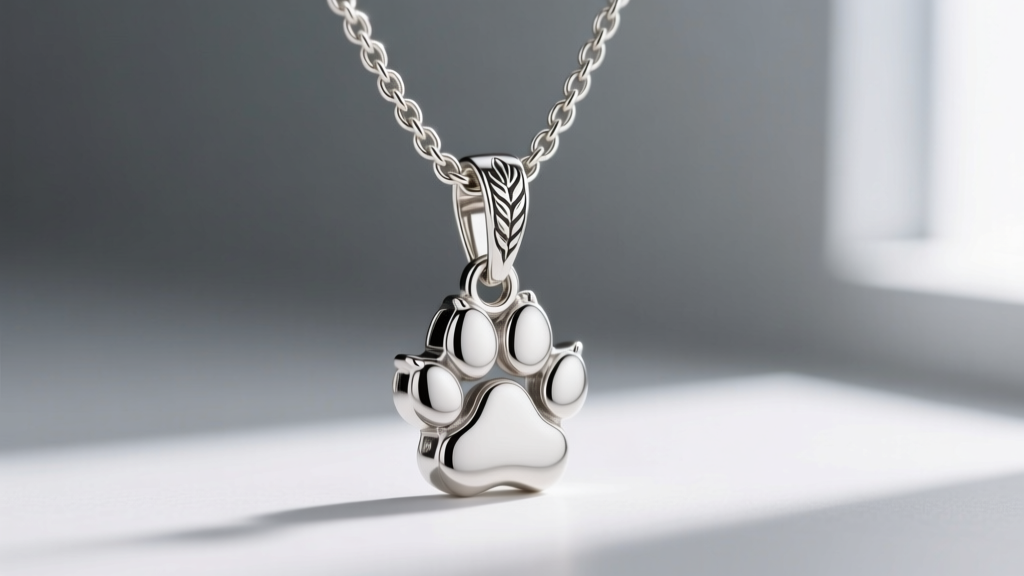
- Wheat (Spiga) Chain (1.2mm - 1.5mm): Composed of interlocking oval links woven in the same direction, wheat chains offer exceptional tensile strength and distribute weight evenly. They are highly resistant to kinking.
- Rope Chain (1.5mm - 2.0mm): Twisted links provide a heavy-duty backbone. Ensure the rope chain is solid-core, not hollow, to prevent crushing under the pendant's swing weight.
- Avoid: Curb chains under 2.5mm (which can pull chest hair) and delicate cable chains under 1.0mm, which will snap at the soldered jump ring under dynamic load.
Clasp Mechanics
Never use a standard spring-ring clasp for a custom cast pawprint necklace. The internal spring mechanism is prone to fatigue and failure under heavy loads. Always specify a solid cast lobster clasp with a heavy-duty tension spring, or a box clasp with a figure-eight safety latch for pieces exceeding 20 grams. Furthermore, the jump ring connecting the pendant to the chain must be soldered closed; an open jump ring will inevitably pull apart over time.
Care, Patina, and Long-Term Preservation
The deep recesses of a 3D pawprint casting present a unique maintenance challenge. Dirt, lotions, and dead skin cells accumulate in the valleys between the toe pads, leading to localized corrosion in silver and bronze pieces.
Ultrasonic Cleaners: While excellent for diamond rings, ultrasonic cleaners can force moisture deep into the microscopic pores of a raw bronze or oxidized silver casting, accelerating tarnish from the inside out. The Silver Institute recommends gentle, manual cleaning for highly textured silver jewelry.
The Proper Cleaning Protocol:
- Use a soft-bristled baby toothbrush and a few drops of pH-neutral dish soap in lukewarm water.
- Gently agitate the bristles in the deep crevices of the paw pads.
- Rinse thoroughly with distilled water to avoid hard water spot deposits.
- Dry immediately with a microfiber cloth, followed by a blast of compressed air to ensure no moisture remains trapped in the claw beds.
For sterling silver pawprint necklaces, store the piece in an airtight polyethylene bag with a 3M anti-tarnish strip. The strip will absorb ambient sulfur compounds, keeping the deep recesses of the silver bright without the need for abrasive polishing pastes that can wear down the fine dermal ridges over decades of use.
By prioritizing platinum-cure silicone molds, selecting the appropriate metal alloy for your lifestyle, and engineering the chain to handle the specific load-bearing requirements of the casting, a pawprint necklace transforms from a simple trinket into a structurally sound, multi-generational heirloom.


