18 Necklace Troubleshooting: Fix Fit, Tangles, and Clasps
Solve common 18 necklace problems. Learn how to fix fit issues, prevent chain tangling, upgrade weak clasps, and match pendant weights perfectly.

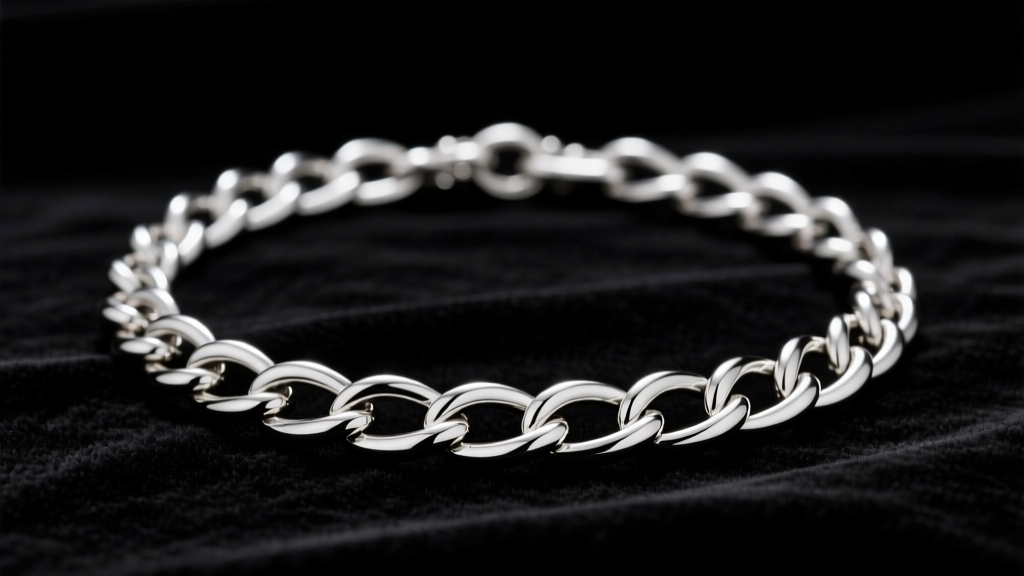
The 18-Inch Standard: Why It Fails on Certain Necklines
The 18-inch necklace is widely considered the industry standard for women's jewelry, designed to sit elegantly on the collarbone. However, treating this length as a universal solution leads to frequent aesthetic and functional failures. The average female neck circumference ranges from 13 to 14.5 inches. An 18-inch chain provides roughly 3.5 to 5 inches of drape, which works beautifully with V-necks and scoop necks. But when paired with crew necks, turtlenecks, or tailored button-downs, the 18 necklace often gets swallowed by the fabric or creates a visual clash at the hemline of the collar.
The Collarbone Conundrum and Anatomical Mismatches
Fit issues are rarely about the necklace itself and almost always about the wearer's proportions. For petite frames (under 5'3"), an 18-inch chain may sit closer to the base of the throat, mimicking a choker and feeling restrictive. Conversely, for individuals with a larger bust or a broader shoulder-to-neck ratio, the same 18 necklace can pull taut, riding up uncomfortably and placing undue stress on the clasp and jump rings.
The Fix: Do not force a standard 18-inch chain to work with every outfit. If you love the chain but need versatility, solder a 2-inch 14k gold-filled or sterling silver extender chain to the clasp end. This allows you to drop the necklace to 20 inches for high-neck winter wardrobes and retract it to 18 inches for summer tees. According to jewelry manufacturing guidelines from Rio Grande, using a 1.2mm cable extender chain ensures the addition is barely noticeable while providing crucial structural flexibility.
Solving the Tangled Chain Crisis
Nothing ruins the experience of wearing an 18 necklace faster than a chain that constantly knots itself or snags on hair. Tangling is not a matter of bad luck; it is a direct result of link geometry, friction coefficients, and the specific weave of the metal. When a necklace sits at 18 inches, it rests directly in the "friction zone" of the collarbone and upper chest, an area subjected to constant micro-movements from walking, typing, and turning your head.
Link Geometry and Friction
Chains with flat, interlocking links (like Herringbone or Omega) lay beautifully against the skin but have zero tolerance for bending. If an 18-inch Herringbone chain folds over on itself, it can permanently kink, destroying the structural integrity of the weave. On the other hand, Box chains are notorious for catching fine hair because their sharp, 90-degree inner angles act like tiny traps.
| Chain Type | Link Geometry | Tangle Risk | Hair Snag Risk | Kink Resistance |
|---|---|---|---|---|
| Cable / Rolo | Round, uniform loops | Low | Low | High |
| Box Chain | Square, interlocking | Medium | High | Medium |
| Herringbone | Flat, flush-mounted | High | Low | Very Low |
| Rope Chain | Twisted, spiral links | Very Low | Medium | High |
| Snake Chain | Tight, smooth bands | Low | High | Low |
The Fix: If your primary concern is tangling and daily wearability, swap your 18-inch box or snake chain for a Rope chain or a standard Cable chain. The twisted geometry of a rope chain naturally repels knots, while the simple circular loops of a cable chain slide past hair without catching. For existing chains that tangle, a microscopic application of jewelry-grade anti-tarnish wax can reduce surface friction, though upgrading the weave is the only permanent solution.
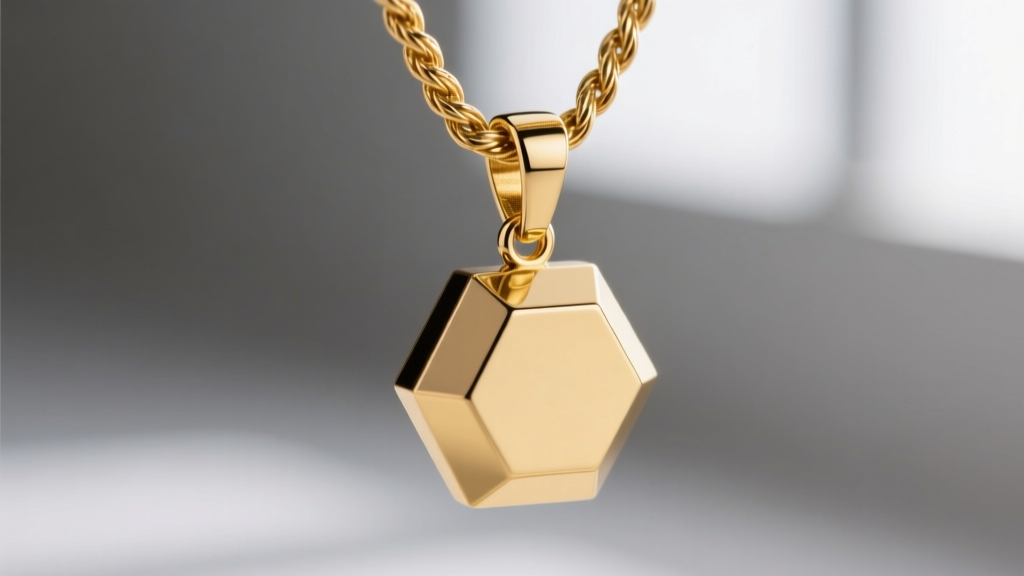
Pendant Weight Distribution & Chain Breakage
A frequent troubleshooting ticket in jewelry repair involves an 18 necklace snapping unexpectedly. This is almost always a failure of weight distribution rather than a defect in the metal. The 18-inch length creates a specific parabolic curve when worn. When a heavy pendant is attached, the gravitational pull concentrates entirely on the bottom center link and the two links adjacent to the clasp.
Gauge Thickness vs. Pendant Weight
Many mass-market 18-inch chains are manufactured at 0.8mm to 1.0mm thicknesses to keep precious metal costs down. A 1.0mm sterling silver cable chain has a tensile breaking point of roughly 3 to 4 pounds of sudden force. However, constant torque from a heavy pendant (e.g., a solid gold or gemstone piece weighing 10 grams or more) causes metal fatigue at the solder joints long before the breaking point is reached. According to metallurgical data referenced by the Gemological Institute of America (GIA), repetitive micro-stress on thin gold or silver links compromises the crystalline structure of the solder, leading to silent failures.
The Fix: Follow the 1:10 ratio rule. Your chain's breaking strength should comfortably exceed ten times the weight of the pendant. For a 15-gram pendant, you need a chain rated for at least 150 grams (approx. 0.3 lbs) of continuous static load, which generally requires a minimum gauge of 1.5mm for sterling silver or 14k gold. Additionally, ensure the pendant's bail (the loop it hangs from) is soldered shut. An open bail will slowly saw through the chain links via friction over a period of 6 to 12 months.
Clasp Malfunctions: Lobster, Spring Ring, and Magnetic
The clasp is the single most common point of mechanical failure on any 18 necklace. Because the 18-inch length rests near the base of the neck, the clasp is frequently subjected to the friction of hair, scarf wraps, and the physical act of reaching behind the neck to unfasten it.
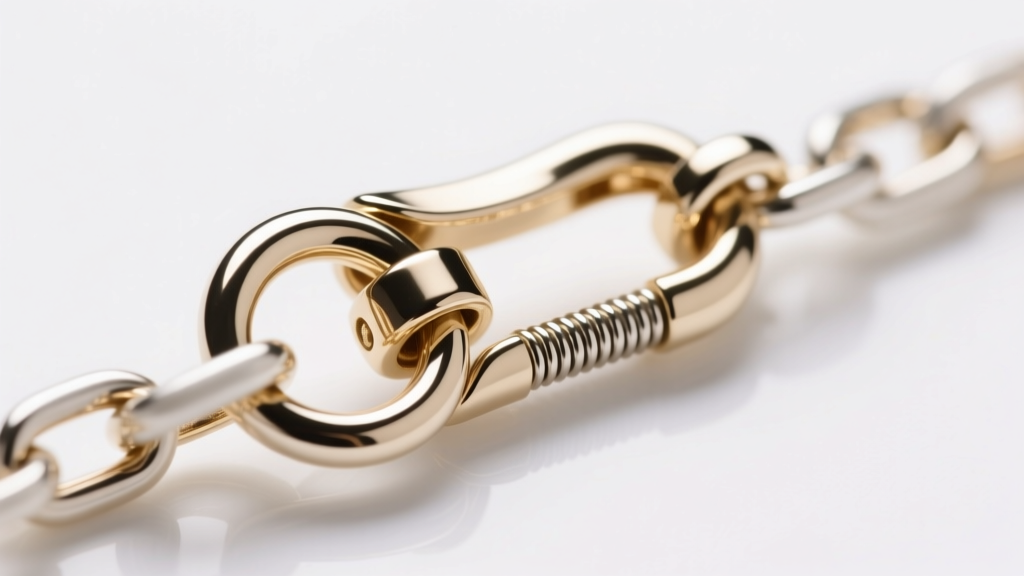
Upgrading to Secure Locking Mechanisms
Standard 5mm spring ring clasps are ubiquitous but deeply flawed for daily wear. The internal tension spring degrades after approximately 500 to 800 actuations, leading to a clasp that fails to snap shut completely. Furthermore, if the jump ring connecting the spring ring to the chain is not soldered shut, the torque of putting the necklace on will slowly pry the jump ring open, resulting in a lost necklace.
As noted by wholesale jewelry component experts at Halstead, upgrading to a properly sized lobster clasp drastically improves security. However, a lobster clasp requires adequate clearance to function. If you attach a 9mm lobster clasp to a 3mm jump ring, the clasp will bind and fail to close due to lateral torque.
The Fix: Upgrade your 18 necklace with a 9mm or 11mm lobster clasp, and ensure it is attached to a minimum 6mm soldered jump ring. The soldered jump ring prevents the ring from pulling apart under stress, while the larger diameter allows the lobster lever to operate smoothly without catching on the chain links. For those with limited dexterity who struggle with clasps behind the neck, consider retrofitting the chain with a high-grade neodymium magnetic clasp equipped with a secondary safety latch.
Final Troubleshooting Checklist
Before retiring a problematic 18 necklace or sending it to a jeweler, run through this diagnostic checklist to identify the exact point of failure:
- Check the Drape: Put the necklace on with your most common wardrobe staple. If it rides up or chokes, solder a 2-inch extender chain to the clasp end.
- Inspect the Bail: Look at the loop holding your pendant. If it is an open wire loop, take it to a jeweler to have it laser-soldered shut to prevent chain sawing.
- Test the Jump Rings: Gently pull the jump rings at both ends of the chain. If there is a visible gap and the ring is not soldered, replace it with a soldered ring immediately.
- Evaluate the Clasp: If using a spring ring smaller than 6mm, swap it for a 9mm lobster clasp to prevent accidental unfastening and spring fatigue.
- Analyze the Weave: If the chain tangles daily or pulls hair, the link geometry is incompatible with your lifestyle. Replace the chain with a rope or cable weave while keeping your original pendant.
By understanding the mechanical realities of chain weaves, clasp tolerances, and weight distribution, you can transform a frustrating, poorly behaved 18 necklace into a reliable, everyday staple that performs flawlessly for decades.


