Necklace Gold for Women 18k: Ultimate Care & Cleaning Guide
Discover expert tips to clean and maintain your 18k necklace gold for women. Learn safe solutions, polishing techniques, and storage hacks.

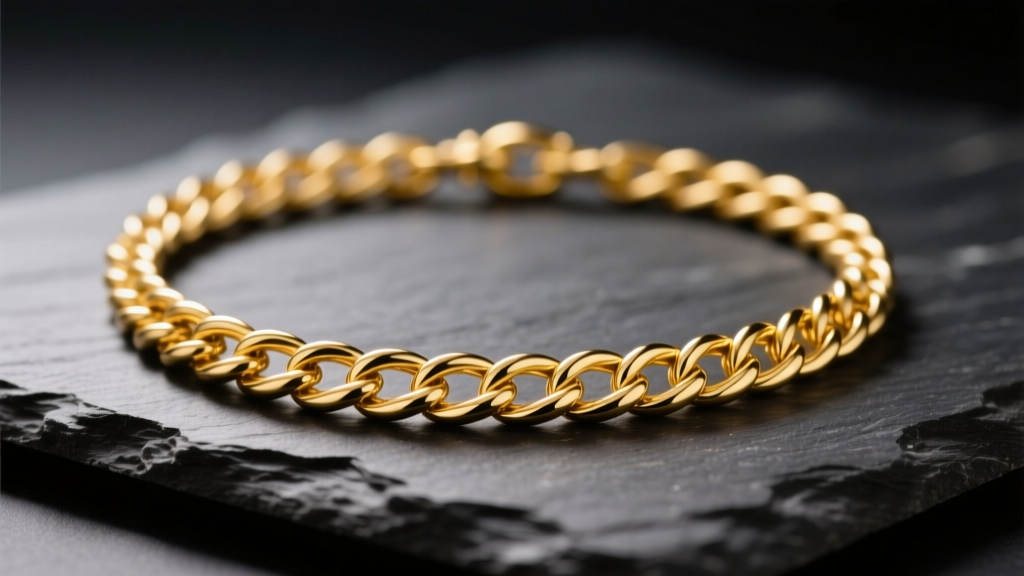
The Metallurgy of 18k Gold: Why It Needs Special Care
When investing in fine jewelry, a necklace gold for women 18k purity is a significant financial and emotional investment. To properly care for these pieces, you must first understand their metallurgical composition. 18k gold consists of 75% pure gold and 25% alloy metals (such as copper, silver, zinc, or palladium). Pure 24k gold is exceptionally soft, rating roughly 25 HV on the Vickers hardness scale. By alloying it to 18k, the hardness increases to approximately 125 HV for yellow gold, and slightly higher for white gold variants. While this makes the metal suitable for daily wear, it remains significantly softer than 14k gold (which averages 135-150 HV) and platinum.
This 25% alloy matrix is the Achilles' heel of your jewelry. According to the Gemological Institute of America (GIA), the specific alloy metals dictate how the necklace will react to environmental stressors. For instance, copper-heavy 18k rose gold is more prone to surface oxidation, while 18k white gold relies on a microscopic rhodium plating that can wear away, revealing the faintly yellowish natural alloy beneath. Understanding these nuances is the first step in preserving the luster and structural integrity of your chains and pendants.
Daily Wear Rules: Preventing Micro-Scratches and Chemical Damage
The most common cause of degradation in 18k gold necklaces is not physical impact, but chemical exposure. As of 2026, dermatological and jewelry conservation experts emphasize the dangers of everyday cosmetics and household chemicals. Chlorine is the ultimate enemy of gold alloys. When exposed to chlorinated pool water or harsh household bleach, the non-gold metals in the 18k alloy undergo a reaction that leads to stress corrosion cracking. This microscopic weakening can cause delicate chain links, particularly in box and serpentine chains, to snap under minimal tension.
The 'Last On, First Off' Protocol
- Perfumes and Lotions: Apply all cosmetics, hairsprays, and lotions at least 10 minutes before putting on your necklace. The alcohols and emulsifiers in these products can create a dull, filmy buildup on the gold surface, trapping dead skin cells and sebum in the chain links.
- Kitchen Hazards: Remove your necklace before handling acidic foods (like citrus or vinegar) or raw dough. Yeast and acids can lodge in the intricate crevices of a filigree pendant or rope chain, leading to localized tarnishing.
- Friction Awareness: 18k gold scratches easily. Avoid wearing your necklace during activities that involve repetitive friction against the collarbone, such as wearing rough wool sweaters or carrying heavy canvas tote bags with thick straps.
The Ultimate 18k Gold Cleaning Protocol (Step-by-Step)
Forget commercial 'dip' cleaners or abrasive toothpaste. Commercial dips often contain thiourea, a toxic chemical that strips the natural patina and can cause long-term porosity in the metal. Toothpaste contains hydrated silica, which has a Mohs hardness of around 6-7—more than hard enough to inflict permanent micro-scratches on 18k gold. Instead, rely on this conservation-grade cleaning method recommended by the Jewelers of America.
What You Need
- Distilled water (tap water contains chlorine and hard minerals that can leave spots)
- pH-neutral liquid dish soap (e.g., original blue Dawn, free of added moisturizers or citrus extracts)
- A baby-bristle toothbrush or a specialized jewelry cleaning brush with ultra-soft natural bristles
- Untreated, lint-free microfiber cloths
The Cleaning Process
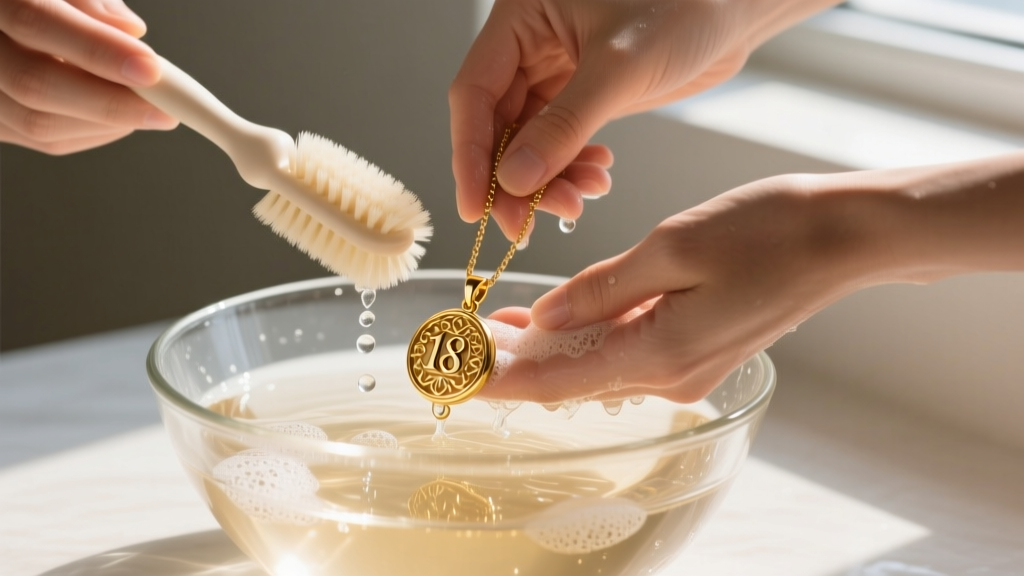
- Prepare the Solution: Mix 4 parts lukewarm distilled water with 1 part pH-neutral dish soap in a glass bowl. Avoid metal bowls, which can cause galvanic reactions if the gold touches the metal while wet.
- Soak: Submerge the necklace for exactly 5 to 10 minutes. This allows the surfactants in the soap to break down the lipid bonds of body oils and sebum trapped in the clasp and links.
- Agitate Gently: Using the baby-bristle brush, gently sweep along the chain links and the bail of the pendant. Always brush in the direction of the metal's grain or the chain's link pattern to avoid prying open delicate solder joints.
- Rinse: Rinse thoroughly under a gentle stream of lukewarm distilled water. Ensure the drain is securely plugged or use a mesh strainer to prevent catastrophic loss.
- Dry: Pat dry with a microfiber cloth. Do not rub aggressively. Allow the necklace to air-dry completely on a clean paper towel for 15 minutes before storing to ensure no moisture remains trapped in the clasp mechanism.
Troubleshooting Common 18k Gold Issues
Even with meticulous care, 18k gold necklaces can develop specific issues based on their environment and alloy composition. Use this diagnostic table to address common problems without causing further damage.
| Issue | Root Cause | Expert Solution |
|---|---|---|
| White or Grey Spots | Amalgamation with mercury (found in some older thermometers, fluorescent bulbs, or certain industrial cosmetics). | Do not attempt to polish this off. A professional jeweler must use a specialized torch technique to safely vaporize the mercury and restore the gold's color. |
| Stiff or Sticky Clasp | Accumulation of dead skin, lotion, and microscopic debris inside the spring-ring or lobster claw mechanism. | Apply a single drop of mineral oil to the clasp hinge using a toothpick. Work the lever back and forth, then clean the oil away with a mild soap solution. |
| Faint Reddish Tarnish | Oxidation of the copper alloy in 18k yellow or rose gold, accelerated by high humidity or acidic sweat. | Use a specialized, non-abrasive gold polishing cloth impregnated with mild jeweler's rouge. Wipe gently in one direction. Never use silver polish. |
| Chain Kinking / Tangling | Improper storage or wearing chains that are too fine (under 1.5mm) for heavy pendants. | Hang the necklace vertically to let gravity pull out minor kinks. For severe knots, lay flat on glass, apply a drop of baby oil, and use two fine sewing needles to gently tease the links apart. |
Professional Maintenance: When to See a Jeweler
While home cleaning is excellent for surface maintenance, professional servicing is non-negotiable for long-term preservation. You should take your 18k necklace to a certified bench jeweler once every 18 to 24 months.
Ultrasonic Cleaning Warnings: Many jewelers use ultrasonic cleaners, which operate at frequencies between 35kHz and 45kHz. While safe for plain 18k gold chains, this high-frequency cavitation can shatter porous gemstones (like opals, pearls, or emeralds) often found in vintage pendants. Furthermore, if your necklace features hollow 18k links (a popular technique to create voluminous chains with less gold weight), ultrasonic waves can cause the hollow chambers to collapse or dent. Always verify the construction and stone settings before consenting to an ultrasonic bath.
Steam Cleaning: High-pressure steam is excellent for blasting debris out of diamond settings, but the intense, localized heat can warp delicate 18k wirework or melt the solder on older, repaired chain links. Reserve steam cleaning for robust, solid-cast pendants.
Rhodium Replating: If you own an 18k white gold necklace, the rhodium flash will inevitably wear off at the friction points (near the clasp and the back of the neck). A jeweler will need to polish out the micro-scratches and electroplate a fresh layer of rhodium, typically costing between $45 and $90 depending on the chain's surface area.
Advanced Storage Solutions for 18k Chains and Pendants
How you store your necklace when it is not being worn is just as critical as how you clean it. 18k gold is highly susceptible to environmental humidity and airborne sulfur compounds, which accelerate the tarnishing of the copper and silver alloys.
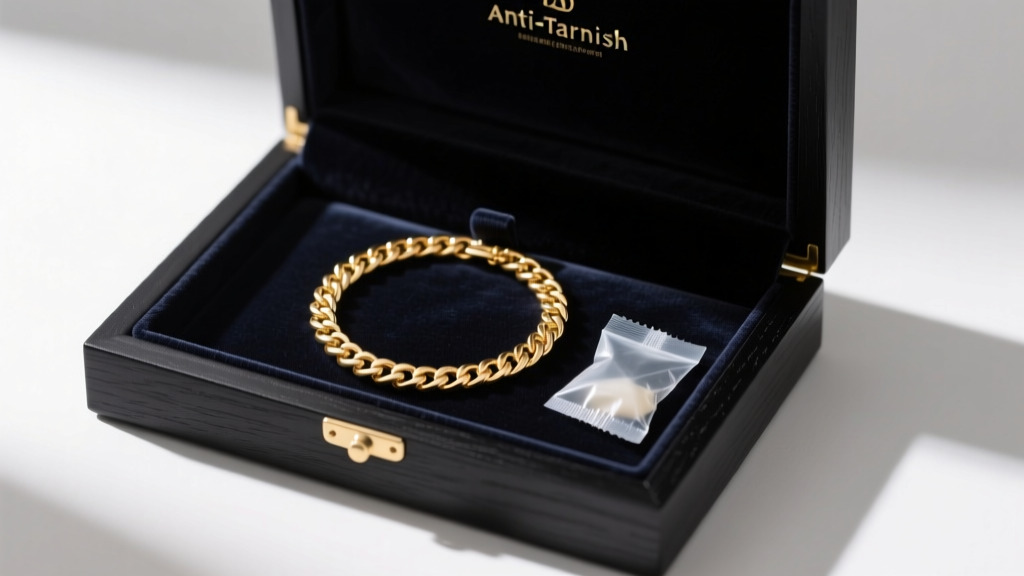
- Anti-Tarnish Technology: Store your necklace in a sealed environment lined with Pacific Silvercloth or treated flannel. These fabrics are embedded with microscopic silver particles that act as a sacrificial anode, absorbing sulfur and hydrogen sulfide from the air before they can reach your gold alloy.
- Moisture Control: Include a small, replaceable silica gel desiccant packet in your jewelry box or storage pouch to maintain a relative humidity level below 40%. High humidity acts as a catalyst for alloy oxidation.
- Isolation is Key: Never store multiple necklaces in the same compartment. 18k gold can easily be scratched by diamonds, sapphires, or even other gold chains rubbing together during transit. Use individual soft pouches or a jewelry box with dedicated, velvet-lined channels.
- The Straw Trick for Travel: When packing for travel, thread one end of your 18k chain through a clean plastic or paper straw and clasp it. This physical barrier prevents the chain from folding in on itself, completely eliminating the risk of micro-tangles and knotting in your luggage.
By treating your 18k gold jewelry not just as an accessory, but as a delicate metallurgical artifact, you ensure that its warmth, weight, and brilliance will endure for generations. Consistent, gentle care will always outperform aggressive, reactive cleaning.


