Styling the Idyllia Lilia Necklace: A Step-by-Step Guide
Master the art of layering and caring for your Idyllia Lilia necklace. Follow our step-by-step styling guide for necklines, metals, and maintenance.

The Anatomy of the Idyllia Lilia Necklace
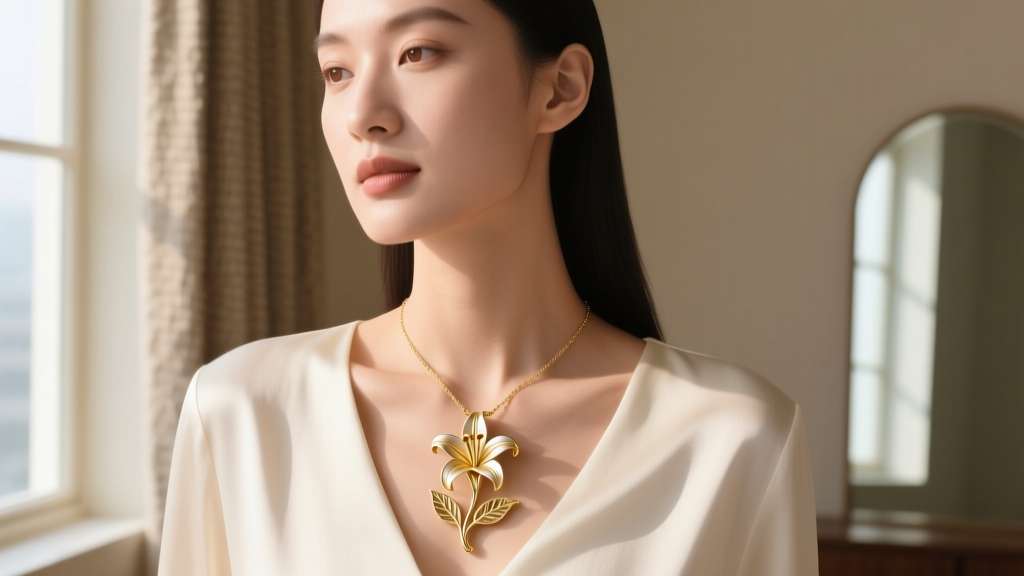
As botanical motifs continue to dominate the fine jewelry sector in 2026, the Idyllia Lilia necklace has emerged as a definitive staple for collectors and everyday wearers alike. Before diving into styling mechanics, it is crucial to understand the physical anatomy of this piece. The Lilia pendant typically features a sculpted lily motif cast in 18k gold vermeil over a sterling silver base. Unlike standard gold-plated jewelry that carries a mere 0.5-micron gold layer, high-quality vermeil requires a minimum of 2.5 microns, providing vastly superior tarnish resistance and longevity. The petals often incorporate guilloché enamel work, while the stamen may feature micro-pavé diamonds or a central sapphire, sitting at a Mohs hardness of 9. Understanding these material specifications is the first step in mastering how to wear and care for your necklace.
Step 1: Matching the Lilia Pendant to Your Neckline
The most common mistake wearers make with statement pendants is ignoring the geometric relationship between the chain drop and the garment's neckline. The Idyllia Lilia necklace is designed to sit flush against the skin, meaning its visual weight must be balanced by the negative space of your clothing.
V-Neck and Plunging Lines
For V-neck blouses, wrap dresses, or deep scoop necklines, the goal is to mirror the angle of the fabric. Adjust your Lilia necklace to a 16-inch or 18-inch drop. This ensures the lily pendant rests precisely in the center of the negative space, roughly two inches above the apex of the V-neck. If the chain is too long (20 inches or more), the pendant will compete with the hemline of the garment, creating visual clutter. Use the adjustable extender chain to lock the lobster clasp into the exact jump ring that achieves this 18-inch sweet spot.
Crew, Boat, and High Necks
High necklines require a contrasting approach. A crew neck or boat neck completely eliminates the upper-chest negative space. If you attempt to wear the Lilia pendant at a standard 16-inch length over a crew neck, the pendant will awkwardly rest on the fabric seam. Instead, extend the chain to 22 or 24 inches, allowing the lily motif to drop below the collarbone and rest against the solid color of the shirt. Alternatively, remove the pendant entirely and wear the Idyllia chain alone as a delicate 14-inch choker above the neckline, pairing it with separate, longer layered chains.
Step 2: The Art of Layering (With Metrics)
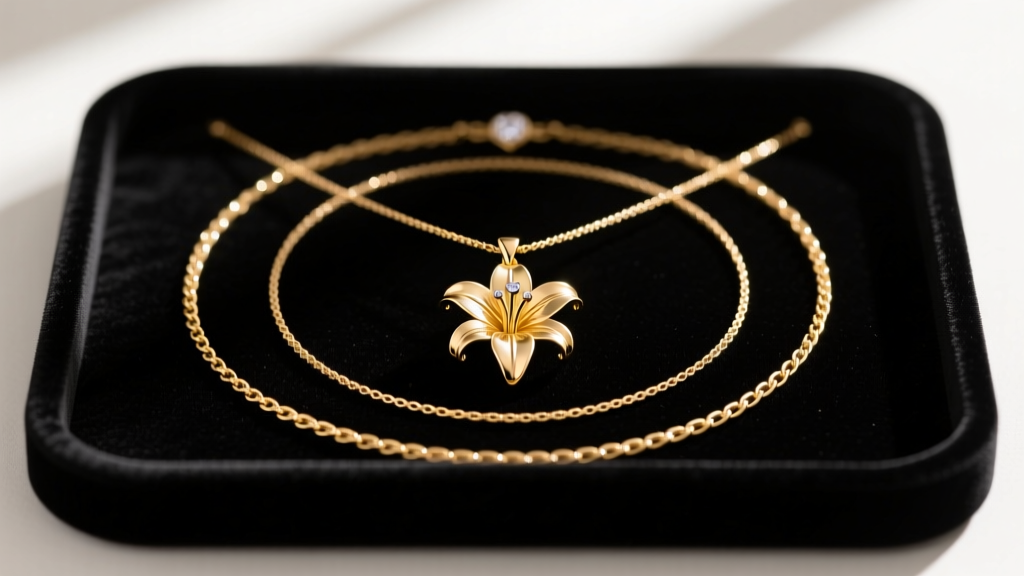
Layering is no longer about simply throwing multiple chains together; it requires precise mathematical spacing to prevent tangling and ensure each piece is visible. The golden rule of necklace stacking is the 2-inch gap rule. If your Idyllia Lilia necklace is set at 18 inches, your adjacent layers must be at least 2 inches shorter or longer to maintain structural integrity and visual clarity.
| Chain Position | Target Length | Recommended Chain Style | Purpose in the Stack |
|---|---|---|---|
| Base Layer (Top) | 14" - 15" | Herringbone or Snake | Anchors the stack near the collarbone; provides a sleek, reflective contrast to the pendant. |
| Focal Layer (Middle) | 17" - 18" | Cable Chain (Lilia) | Showcases the botanical pendant; serves as the visual center of gravity. |
| Outer Layer (Bottom) | 20" - 22" | Paperclip or Rope | Adds textural depth and elongates the torso; frames the central Lilia motif. |
"The secret to styling botanical pendants like the Lilia is treating them as the anchor of your stack, not an afterthought. Build your chain textures around the organic curves of the lily motif."
When layering, always ensure the clasp mechanisms are staggered. If all your lobster clasps are resting at the nape of your neck in the exact same spot, they will tangle and cause friction wear on the jump rings. Rotate the clasps slightly to the left or right side of your neck when putting them on.
Step 3: Metal and Gemstone Pairing Rules
The mixed-metal trend has fully matured in 2026, moving from an edgy exception to a standard styling practice. If your Idyllia Lilia necklace is crafted in warm 18k yellow gold vermeil, you can beautifully contrast it with white gold, platinum, or oxidized silver chains. The key to successful mixed-metal layering is to introduce a transitional piece that bridges the gap. For example, if stacking the yellow gold Lilia pendant with a white gold paperclip chain, introduce a third chain that features alternating yellow and white gold links, or a two-tone clasp, to tie the aesthetic together seamlessly.
Furthermore, consider the gemstone accents. If your specific Lilia edition features a pavé diamond center, it will reflect both warm and cool light, making it highly versatile. If it features a colored gemstone like a blue sapphire or green tsavorite, pull that color into your wardrobe or makeup palette to create a cohesive, intentional look rather than a coincidental one.
Step 4: Cleaning and Storing Your Lilia Piece
Because the Idyllia Lilia necklace relies on gold vermeil and potentially delicate guilloché enamel, standard jewelry cleaning methods can be highly destructive. Ultrasonic cleaners, which use high-frequency sound waves to dislodge dirt, will shatter enamel and loosen micro-pavé settings. Similarly, commercial silver dips contain harsh thiourea chemicals that will instantly strip the 2.5-micron gold layer off the sterling silver base. According to the Gemological Institute of America (GIA), gentle, manual cleaning is always the safest route for mixed-material jewelry.
Follow this exact step-by-step maintenance protocol to preserve your necklace:
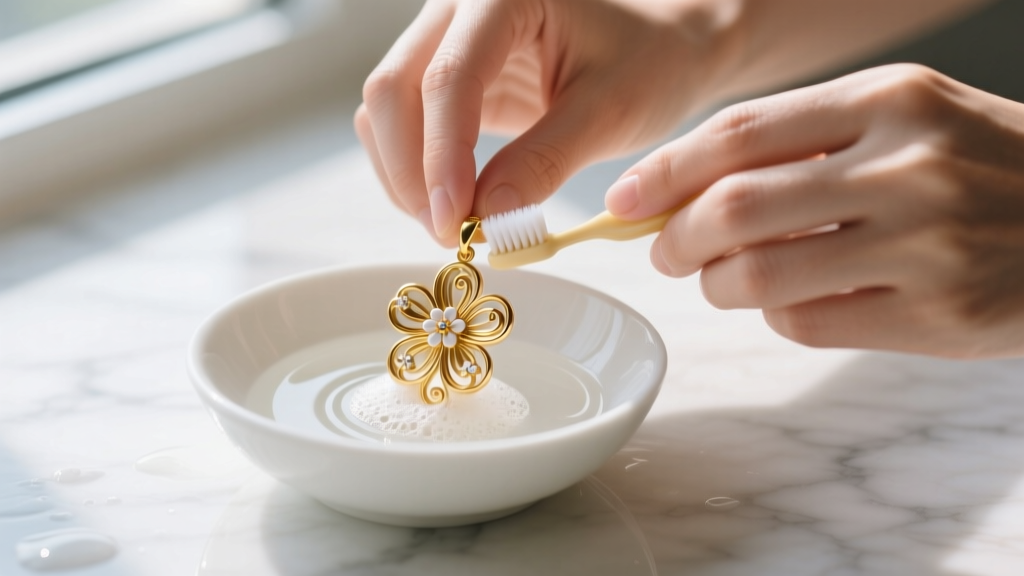
- The Soak: Mix three drops of mild, phosphate-free dish soap (like Dawn) into a bowl of lukewarm distilled water. Avoid hot water, which can cause thermal shock to gemstones or warp the enamel.
- The Agitation: Submerge the Lilia necklace for exactly 3 to 5 minutes. Do not exceed this time, as prolonged moisture exposure can weaken the adhesive used in pavé settings.
- The Brush: Using a brand-new, ultra-soft baby toothbrush, gently sweep the bristles across the front and back of the lily pendant. Pay special attention to the bail (the loop connecting the pendant to the chain), where skin oils and lotions accumulate.
- The Rinse: Rinse the necklace under a gentle stream of lukewarm water. Ensure the drain is securely plugged or use a mesh strainer to prevent accidental loss.
- The Dry: Pat the piece dry with a lint-free microfiber cloth. Never use paper towels or tissues, as their wood-pulp fibers can cause micro-scratches on the gold vermeil and gemstone facets.
For long-term storage, the Jewelers of America recommends keeping vermeil pieces in an airtight, anti-tarnish ziplock bag with a silica gel packet to control humidity. Never store the Lilia necklace loose in a jewelry box where the diamond or sapphire accents can scratch adjacent softer metals or pearls.
Final Thoughts on Necklace Styling
Mastering the Idyllia Lilia necklace is about respecting both its aesthetic design and its material science. By adhering to precise neckline geometry, utilizing the 2-inch layering rule, and committing to non-abrasive cleaning protocols, you ensure that this botanical masterpiece remains a cornerstone of your jewelry collection for years to come. Take the time to measure your chains, inspect your lobster clasps for spring tension, and wear your Lilia piece with the intentionality it deserves.


