The 1928 Rose Necklace: Antique vs. Reproduction Deep Dive
Discover the technical differences between an authentic 1928 Art Deco rose necklace and modern 1928 Jewelry brand reproductions.

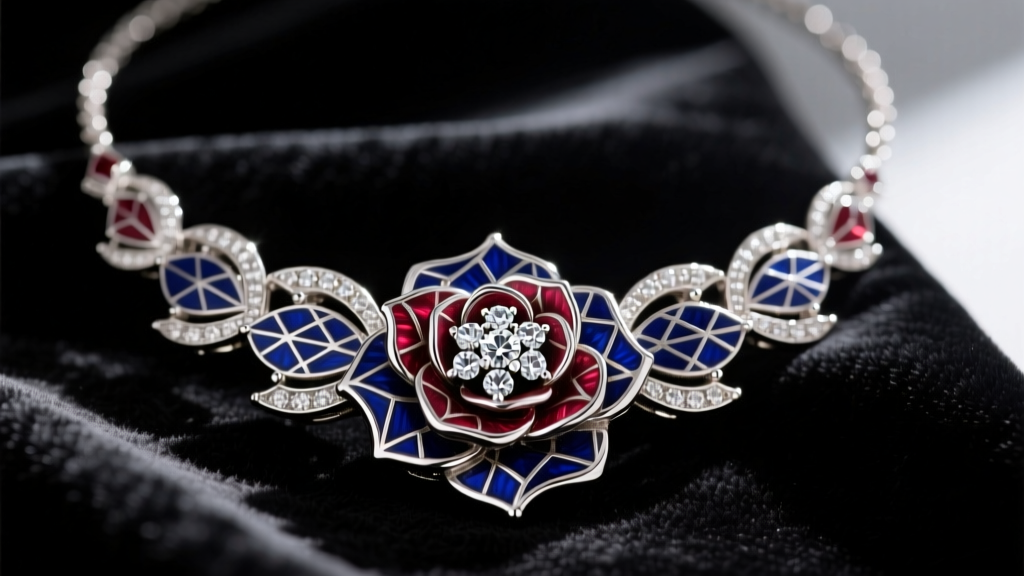
The Dual Identity of the 1928 Rose Necklace
When collectors, appraisers, and vintage stylists search for a 1928 rose necklace, they are typically navigating a fascinating bifurcation in the jewelry market. The term simultaneously refers to two entirely distinct categories: authentic Art Deco-era necklaces crafted in the year 1928 featuring rose motifs, and the modern reproduction pieces manufactured by the popular heritage-inspired brand, '1928 Jewelry.' While both celebrate the romanticism of the floral rose, their metallurgical compositions, gemological profiles, and manufacturing techniques are separated by nearly a century of technological evolution.
For the serious collector or the discerning buyer, understanding the technical deep dive into both categories is essential. Misidentifying a modern epoxy-enamel reproduction as a genuine 1920s vitreous enamel antique is a common and costly mistake. This guide deconstructs the anatomy, materials, and authentication markers of both iterations of the 1928 rose necklace.
Technical Breakdown: Genuine 1928 Art Deco Rose Necklaces
The year 1928 sat at the zenith of the Art Deco movement. Jewelry from this specific year transitioned away from the flowing, organic lines of the Edwardian era into the geometric, bold, and highly engineered aesthetics of Deco. However, the 'rose' motif remained a staple, often stylized into angular, carved, or heavily enameled geometric floral patterns.
Metallurgy and Die-Struck Construction
Authentic 1928 rose necklaces were predominantly crafted in platinum or 14k/18k white gold. The defining manufacturing technique of this era was die-striking. Jewelers used massive, multi-ton drop presses to force sheets of platinum into intricately engraved steel dies. This process compressed the metal's molecular structure, resulting in a lace-like filigree that was incredibly durable yet lightweight. If you examine a genuine 1928 rose pendant under a loupe, the edges of the metal will appear sharp, crisp, and slightly 'leached' or matte—a hallmark of die-struck platinum that modern casting cannot replicate.
Gemology: Old European Cut Diamonds
If the 1928 rose necklace features diamond accents, they will almost exclusively be Old European Cut (OEC) or transitional round brilliants. According to the Gemological Institute of America (GIA), OEC diamonds are characterized by high crowns, small table percentages, and large, open culets that are often visible to the naked eye as a dark 'hole' in the center of the stone. Modern reproductions will use standard round brilliants with laser-cut precision and pointed culets, immediately dating the piece to the late 20th or 21st century.
Enamel Techniques: Plique-à-Jour and Guilloché
High-end 1928 rose pendants frequently utilized advanced vitreous enamel techniques. Guilloché involved engine-turning the metal base with a rose-engine lathe to create a rippled, geometric pattern beneath translucent enamel, giving the rose petals a shimmering, three-dimensional depth. Plique-à-jour, a much rarer and more fragile technique, involved suspending translucent enamel within the rose's filigree framework without a metal backing, creating a stained-glass effect. Vitreous enamel is essentially fused glass, requiring firing at temperatures exceeding 1,400°F (760°C).
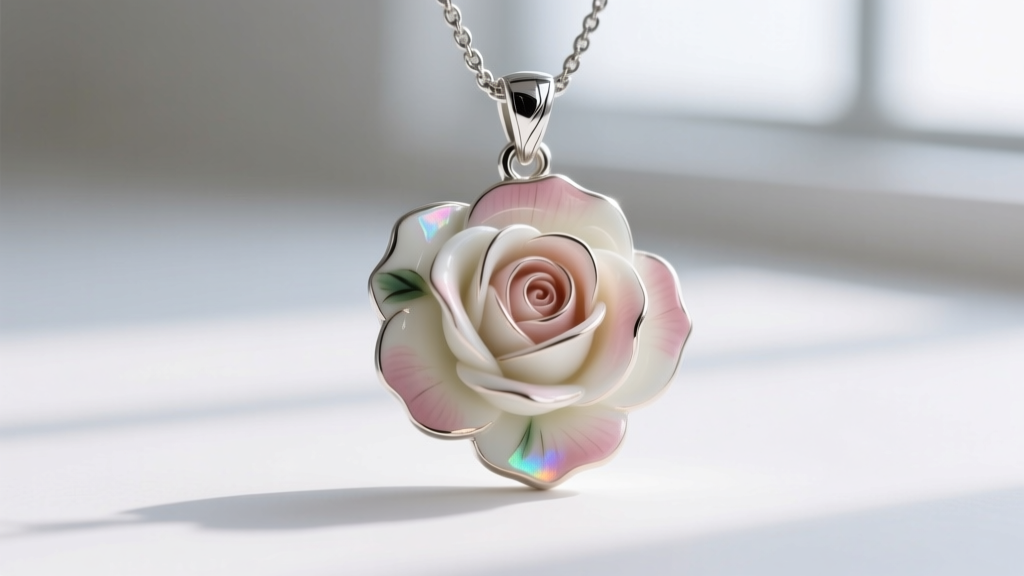
The Modern Reproduction: 1928 Jewelry Brand Analysis
The brand '1928 Jewelry' was founded to capture the nostalgia of the roaring twenties, offering accessible, vintage-inspired pieces. Their rose necklaces are highly sought after for theatrical costuming, vintage-themed weddings, and everyday romantic styling. However, their technical construction is firmly rooted in modern, cost-effective manufacturing.
Base Metals and Plating Thickness
Unlike the platinum and solid gold of the 1920s, modern 1928 Jewelry rose necklaces are typically cast from lead-free pewter, zinc alloys, or brass. The intricate lace-like appearance is achieved through centrifugal casting using silicone molds, rather than die-striking. Under magnification, cast metal will show microscopic porosity and slightly rounded, softer edges compared to the crisp die-struck antique. The silver or gold tone is achieved via electroplating, often measured in mere micro-inches, and is frequently treated with a chemical oxidizer (like liver of sulfur) to create an artificial 'antique' patina in the crevices of the rose petals.
Porcelain and Cold Enamel Application
Instead of firing glass at 1,400°F, modern reproductions utilize cold enamel (a two-part epoxy resin) or hand-painted porcelain cabochons. Cold enamel is applied with syringes or fine brushes and cured at room temperature or in low-heat UV ovens. While modern resins are highly durable and resistant to chipping, they lack the refractive index and glass-like luster of true vitreous enamel. Hand-painted porcelain roses, a signature of the 1928 Jewelry brand, are mass-produced decals or hand-finished transfers baked onto a ceramic base, offering beautiful detail but lacking the depth of engine-turned guilloché.
Comparative Data Table: Antique vs. Reproduction
When evaluating a 1928 rose necklace, use this technical matrix to determine its origin and market value.
| Feature | Authentic 1928 Antique | 1928 Jewelry Reproduction |
|---|---|---|
| Base Metal | Platinum, 14k/18k White Gold (Die-struck) | Pewter, Zinc Alloy, Brass (Cast) |
| Gemstones | Old European Cut, Mine Cut, Calibrated Coral | CZ, Glass, Modern Round Brilliant, Resin |
| Enamel Type | Vitreous (Fused Glass), Plique-à-Jour | Cold Enamel (Epoxy), Painted Porcelain |
| Patina | Natural oxidation, wear patterns over 90+ years | Chemical oxidation (Liver of Sulfur) applied |
| Market Value | $2,500 – $15,000+ | $30 – $85 |
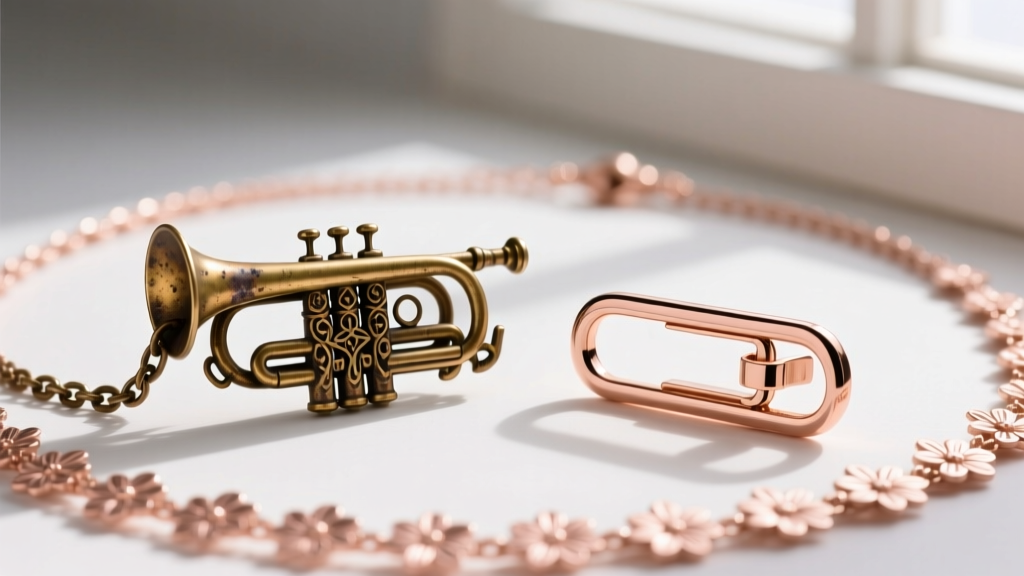
Authentication: Clasp and Chain Construction
One of the most reliable methods for authenticating a purported 1928 Art Deco rose necklace is examining the findings—specifically the clasp and chain links. As noted by antique jewelry historians at Lang Antiques, the findings on a piece often reveal its true age faster than the pendant itself.
- The Trombone Clasp: Many authentic European-made 1928 rose necklaces feature a trombone clasp, which operates by pushing a cylindrical tube into a catch and locking it with a small push-pin. If the necklace has a modern lobster clasp, it is either a reproduction or an antique that has been retrofitted (which diminishes its collector value).
- The Bolt Ring: If a circular spring ring is present, an authentic 1928 version will often have a small, folded-over tab used to pull the lever back, rather than the protruding, flat lever found on modern spring rings. Furthermore, early bolt rings often lack the internal steel spring tension of modern equivalents.
- Safety Chains: High-value 1928 platinum rose necklaces almost always feature a secondary safety chain—a delicate, fine-link chain connecting the two sides of the clasp to prevent loss if the primary mechanism fails. Modern reproductions rarely include functional safety chains due to manufacturing costs.
- Chain Links: Authentic 1920s chains were often assembled by hand or featured early machine-made links with visible solder seams. Modern reproduction chains are laser-welded or machine-linked with seamless, perfectly uniform rings.
Sourcing and Care Protocols
If you are acquiring a genuine 1928 antique rose necklace, always request a UV light examination. Vitreous enamel repairs, which are common in 90-year-old jewelry, will fluoresce brightly under ultraviolet light, revealing hidden damage that the naked eye cannot detect. Store antique enamel pieces in a climate-controlled environment; extreme temperature fluctuations can cause the glass enamel to crack or 'craze' away from the metal backing due to differing coefficients of thermal expansion.
For modern 1928 Jewelry reproductions, care is much simpler. Avoid exposing the cold enamel and porous pewter base to harsh chemicals, perfumes, or ultrasonic cleaners, which can strip the electroplated finish and degrade the epoxy resin. Clean gently with a damp microfiber cloth and store in an anti-tarnish bag to preserve the artificial antiquing.
Conclusion
Whether you are hunting for a museum-quality, die-struck platinum Art Deco masterpiece or a charming, accessible porcelain reproduction for a vintage-inspired ensemble, the 1928 rose necklace remains a captivating category. By understanding the profound technical differences in metallurgy, gemology, and clasp engineering, you can navigate the market with absolute confidence, ensuring you acquire exactly the era and quality you intend.


