Expert Care and Cleaning Tips for a Dried Flower Necklace
Learn how to clean, store, and maintain your dried flower necklace. Expert tips to prevent resin yellowing, moisture damage, and chain tarnish.

The Delicate Science of Botanical Jewelry
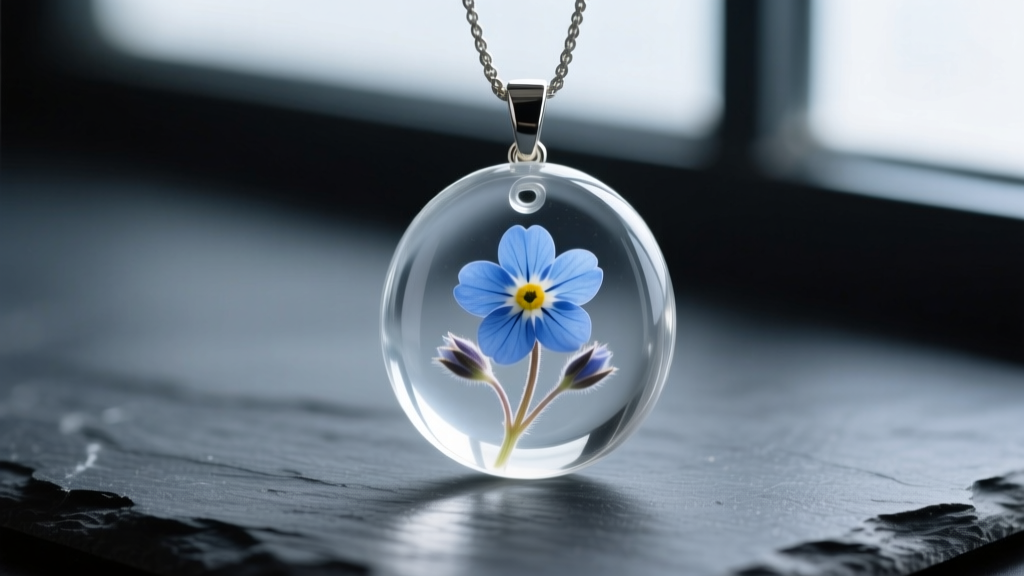
A dried flower necklace is more than just an accessory; it is a wearable piece of preserved nature. However, combining organic botanical materials with jewelry hardware creates a unique set of maintenance challenges. Whether your pendant features real petals suspended in crystal-clear epoxy or delicate blooms sealed inside a glass vial, improper care can lead to irreversible damage. As of 2026, while modern jewelry-grade resins feature advanced UV inhibitors and Hindered Amine Light Stabilizers (HALS), the organic matter inside remains inherently fragile. This comprehensive guide will teach you how to clean, store, and protect your botanical jewelry to ensure it lasts a lifetime.
Understanding Your Pendant's Encapsulation Method
Before applying any cleaning solution, you must identify how your flowers are encapsulated. The cleaning protocol for a resin-cast pendant differs vastly from that of a hollow glass vial.
Epoxy vs. UV Resin
High-quality botanical pendants are typically cast in two-part epoxy resin. Epoxy cures slowly over 24 to 48 hours, allowing deep pours and excellent bubble release. It offers superior clarity and structural integrity. Conversely, UV resin cures in minutes under a UV lamp and is usually applied in thin layers. UV resin is more prone to surface tackiness, micro-scratching, and rapid ambering if exposed to prolonged sunlight. Knowing your resin type dictates how aggressively you can polish the surface.
Glass Vial Pendants
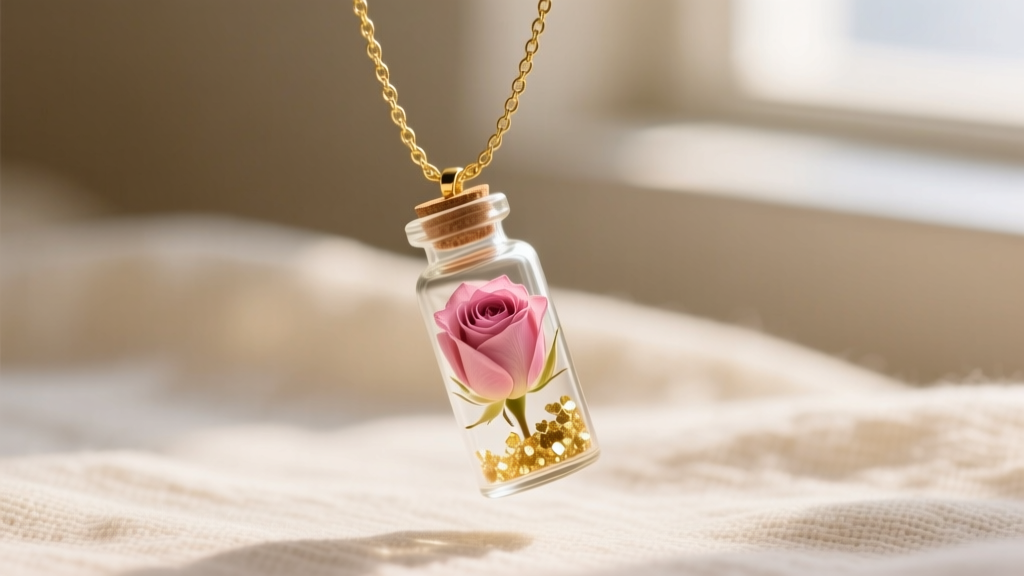
Some artisans use hollow glass vials with cork or metal screw-top seals. While glass is highly resistant to scratching and chemical damage, the primary vulnerability lies in the seal. If moisture breaches a compromised cork, the dried flowers inside will rapidly rehydrate, leading to mold and organic decay.
The Hidden Threat: Trapped Moisture and Organic Decay
The most common cause of internal petal browning is improper desiccation during the manufacturing process. For a dried flower necklace to remain pristine, the botanicals must be dried using silica gel to a moisture content of less than 5% before encapsulation. If a maker skips this step or uses pressed flowers that still hold ambient humidity, the trapped water will react with the resin over time, creating cloudy micro-bubbles or causing the petals to rot from the inside out.
While you cannot reverse internal moisture damage, you can prevent external humidity from accelerating it. Never wear your botanical pendant in high-humidity environments like saunas, hot tubs, or steam-filled bathrooms. Rapid temperature and humidity fluctuations cause the resin or glass to expand and contract at different rates than the organic matter inside, potentially leading to internal fracturing.
Step-by-Step Cleaning Protocol
Resin is essentially a hardened plastic, making it highly susceptible to chemical etching and micro-scratches. Glass is harder but can still suffer from seal degradation. Follow this strict cleaning regimen to safely remove skin oils, lotions, and environmental dust.
- The Dry Wipe: Always start by gently wiping the pendant with a clean, lint-free microfiber cloth. This removes abrasive dust particles that could scratch the resin during a wet wash.
- The Wet Wash: Mix a few drops of pH-neutral dish soap (like Dawn) into a bowl of distilled water. Tap water contains minerals that can leave hard water spots on the resin surface. Dip a soft cotton swab or microfiber cloth into the solution and gently roll it over the pendant.
- The Rinse: Quickly rinse the pendant under a gentle stream of cool distilled water. Do not soak the piece, especially if it features a glass vial with a cork seal or if the chain is attached.
- The Drying: Pat the pendant dry immediately with a fresh microfiber cloth. Allow it to air dry completely in a low-humidity room before storing.
Cleaning Agents to Avoid at All Costs
According to GIA's Care and Cleaning Guidelines, organic and synthetic jewelry materials require highly specific chemical environments. Never use the following on your dried flower necklace:
| Cleaning Agent | Effect on Resin Pendant | Effect on Glass Vial | Effect on Silver Chain |
|---|---|---|---|
| Isopropyl Alcohol | Causes micro-cracking, clouding, and surface degradation | Safe for glass, but degrades cork seals | Removes tarnish but strips natural patina |
| Acetone / Nail Polish Remover | Melts the surface instantly; causes irreversible damage | Safe for glass only | Safe for metal hardware |
| Ultrasonic Cleaners | High-frequency vibrations shatter delicate internal petals | Can loosen vial corks and shatter thin glass | Safe, but unnecessary for light tarnish |
| Liquid Silver Dip | Etches the resin, leaving a permanent cloudy white haze | Safe for glass | Instantly removes tarnish but is highly toxic to resin |
Preventing UV Yellowing in Resin Pendants
Resin yellowing is a photochemical reaction triggered by ultraviolet light exposure. Even the most expensive, museum-grade jewelry resins formulated with UV absorbers will eventually amber over years of direct sun exposure. To significantly delay this process, treat your dried flower necklace like a fine watercolor painting: keep it out of direct, harsh sunlight. Do not leave it resting on a car dashboard, near a south-facing window, or under intense halogen display lights. When not in use, store the pendant in a dark, opaque jewelry box.
Chain Maintenance: Keeping the Hardware Tarnish-Free
The chain of your dried flower necklace is typically crafted from 925 sterling silver, 14k gold-filled brass, or stainless steel. Sterling silver is highly prone to tarnishing due to its copper content reacting with sulfur in the air and on your skin. Gold-filled chains (which feature a thick outer layer of 14k gold mechanically bonded to a brass core) are much more resistant to tarnish but can still accumulate skin oils.
How to polish the chain without ruining the pendant:
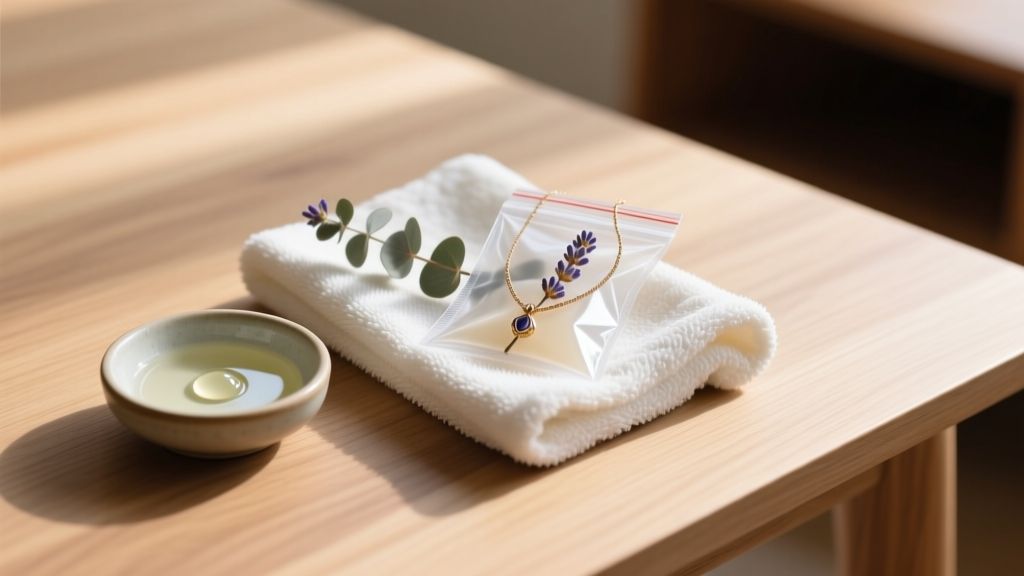
If your sterling silver chain has darkened, use a specialized polishing cloth, such as a Sunshine cloth, which is impregnated with micro-abrasives and anti-tarnish compounds. Critical Warning: You must shield the resin or glass pendant while polishing. The chemical compounds on the polishing cloth will smear onto the resin and cause a cloudy, difficult-to-remove film. Unclasp the chain, thread it through a small plastic baggie, and tie it off so only the chain is exposed, or carefully hold the pendant in one hand while pulling the chain through the cloth with the other. For more detailed metal care, refer to Rio Grande's Jewelry Care Guide.
Long-Term Storage and Display Best Practices
Proper storage is the cornerstone of botanical jewelry preservation. When you are not wearing your dried flower necklace, follow these E-E-A-T verified storage protocols:
- Use Anti-Tarnish Bags: Store the necklace in a specialized ziplock anti-tarnish bag. These bags are treated with compounds that absorb sulfur and other corrosive gases from the air.
- Include Silica Gel Packets: Drop a small, fresh silica gel desiccant packet into the storage bag. This creates a micro-climate with near-zero humidity, protecting both the metal chain from oxidation and the internal flowers from moisture ingress.
- Lay Flat or Hang Freely: Avoid tossing the necklace into a crowded jewelry box where heavier metal pieces can scratch the resin surface. If the chain is delicate (like a 0.9mm cable chain), hang it on a velvet-lined hook to prevent micro-kinks in the metal.
Final Thoughts on Botanical Preservation
Caring for a dried flower necklace requires a mindful approach that balances the needs of the metal hardware with the extreme fragility of the organic inclusions. By avoiding harsh chemicals, managing UV exposure, and controlling ambient humidity, you can preserve the vibrant colors and structural integrity of your wearable garden for decades to come.


