Infinity Cross Necklace Gold: 2026 Budget & Value Assessment
Evaluate the true cost of an infinity cross necklace gold piece. We break down karats, plating vs. solid, and pricing tiers for smart buyers.

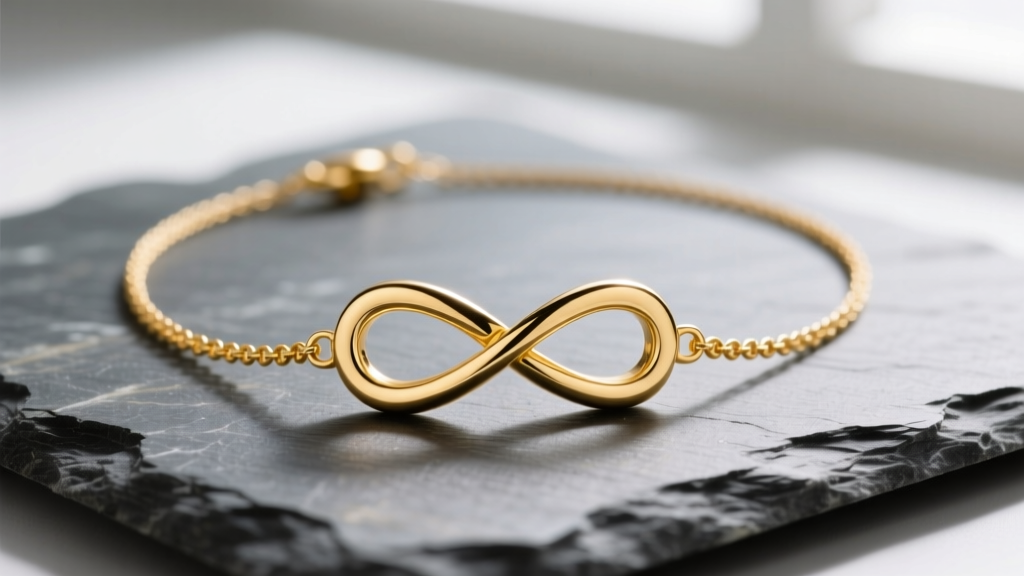
The intersection of faith and eternity makes the infinity cross a profoundly popular jewelry motif. However, when shopping for an infinity cross necklace gold piece, consumers are frequently met with a chaotic landscape of pricing. A quick search yields results ranging from $12 fast-fashion pendants to $850 fine jewelry investments. How do you determine what is actually worth your money?
In this 2026 value assessment, we strip away the marketing fluff and examine the metallurgical realities, structural engineering, and true market pricing of gold infinity cross pendants. Whether you are buying a gift or treating yourself, understanding the difference between heavy gold electroplate and solid 14k gold is the key to maximizing your jewelry budget.
The Structural Engineering of the Infinity Cross
Before assessing the gold content, we must address the physical design. The infinity cross features a figure-eight loop intersecting with a traditional crossbar. This creates a unique structural vulnerability: the central solder joint.
In budget-tier manufacturing, the infinity loop is simply glued or weakly spot-welded to the crossbar. Over time, the friction from daily wear and the tension of the chain pulling against the bail (the loop the chain threads through) will cause this joint to snap. High-value pieces utilize laser welding to fuse the intersection, creating a seamless bond that is as strong as the surrounding metal. When evaluating a piece in person or via high-resolution macro photography, look for a smooth, continuous transition at the intersection rather than a visible blob of solder or a microscopic gap.
Gold Purity Tiers: Plated, Vermeil, and Solid
The primary driver of cost is the gold content. The Federal Trade Commission (FTC Jewelry Guides) strictly regulates how gold can be marketed, yet confusing terminology still traps many buyers. Here is how the tiers break down for this specific pendant style.
Gold Plated (Brass or Copper Base)
These pendants feature a microscopic flash of gold (usually less than 0.5 microns) over a base metal. Because the infinity cross design has deep curves and crevices, the plating solution often pools unevenly during manufacturing, leading to premature tarnishing in the inner loops. Expect a lifespan of 3 to 9 months with daily wear.
Gold Vermeil (Sterling Silver Base)
Vermeil is a significant step up. By definition, it must feature a sterling silver base coated with a minimum of 2.5 microns of gold (usually 14k or 18k). The Gemological Institute of America (GIA) notes that proper vermeil offers excellent longevity, though the high-friction areas where the pendant rubs against the chest will eventually wear down to the silver base after 2 to 4 years of continuous use.
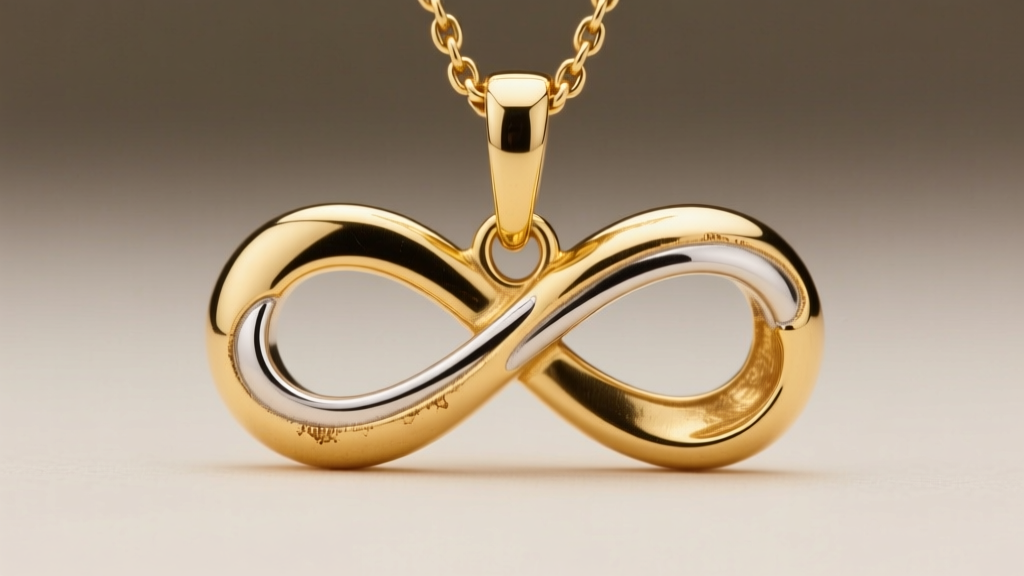
Solid Gold (10k, 14k, and 18k)
Solid gold pendants are cast or die-struck from a homogeneous gold alloy.
- 10k Gold (41.7% pure): The most durable and scratch-resistant option. It has a slightly paler yellow hue but is ideal for active lifestyles.
- 14k Gold (58.5% pure): The industry standard for fine jewelry. It offers the perfect balance of rich color, structural integrity, and resale value.
- 18k Gold (75.0% pure): Luxurious and deeply saturated in color, but noticeably softer. The infinity loops on an 18k pendant are more prone to micro-scratches and bending if snagged on clothing.
2026 Pricing Matrix: What Should You Actually Pay?
To help you benchmark your purchase, we have compiled a pricing matrix based on current 2026 precious metal markets and average retail markups for a standard 1-inch (25mm) infinity cross pendant weighing between 1.2 and 2.5 grams.
| Material Grade | Average Weight | Fair Retail Price Range | Expected Lifespan | Resale / Melt Value |
|---|---|---|---|---|
| Gold Plated (Brass) | 1.5g - 3.0g | $15 - $35 | 6 - 12 Months | $0 |
| Gold Vermeil (Silver) | 1.5g - 2.5g | $45 - $85 | 2 - 5 Years | $1 - $3 (Silver melt) |
| 10k Solid Gold | 1.2g - 1.8g | $110 - $160 | Lifetime | $45 - $65 |
| 14k Solid Gold | 1.4g - 2.2g | $180 - $290 | Lifetime | $80 - $120 |
| 18k Solid Gold | 1.6g - 2.5g | $350 - $550+ | Lifetime | $130 - $190 |
Note: Designer brands or pieces featuring pavé diamond accents will command a 200% to 400% premium over the baseline prices listed above.
Chain Selection: The Hidden Cost of Breakage
A common budgeting mistake is spending $250 on a beautiful solid 14k infinity cross pendant, only to thread it onto a flimsy 0.5mm chain. The pendant's weight and the dynamic movement of the infinity loops will quickly snap a weak chain, potentially leading to the loss of your investment.
For an infinity cross pendant weighing under 2 grams, a 0.9mm to 1.2mm cable chain or a 1.0mm box chain is structurally required. Box chains are particularly recommended for this pendant style because their geometric links resist kinking and distribute the pendant's weight evenly. Avoid snake chains entirely; their continuous tube design is notoriously prone to permanent kinking when bent around the curves of the infinity symbol during storage.

Decoding Deceptive Hallmarks and Stamps
When assessing value, the hallmark stamped on the bail or the back of the crossbar is your best defense against overpaying. However, not all stamps mean what consumers think they mean.
- 14K, 585, 18K, 750: These are legitimate stamps indicating solid gold purity.
- 14K HGE or 18K HGE: This stands for Heavy Gold Electroplate. Despite the "heavy" designation, this is still a plated item over a base metal. It holds no melt value and will eventually wear off. Do not pay solid gold prices for HGE.
- 14K GF: Gold Filled. This features a thick layer of 14k gold mechanically bonded to a brass core. While vastly superior to standard plating and capable of lasting decades, it is not solid gold and should be priced in the $40–$70 range.
Melt Value vs. Retail Markup
Value assessment requires understanding the gap between melt value and retail price. Gold jewelry carries a manufacturing markup that covers casting, polishing, laser-welding, and retail overhead. A fair retail markup for a standard, non-designer 14k gold pendant is typically 2.5x to 3.5x its raw melt value.
If a 1.5-gram 14k infinity cross has a raw gold melt value of roughly $85 (based on 2026 spot prices), a retail price of $210 to $250 is considered fair market value. If you encounter the exact same piece selling for $600 from a non-designer brand, you are paying an inflated marketing premium rather than intrinsic metallurgical value.
Final Verdict: Maximizing Your Investment
The best value proposition for an infinity cross necklace gold design lies in the 14k solid gold tier. It provides the structural integrity needed to support the complex solder joints of the infinity loops, offers a rich and traditional yellow gold color, and retains a respectable percentage of its intrinsic melt value.
If your budget is strictly under $60, opt for high-quality gold vermeil over sterling silver rather than gold-plated brass, ensuring the piece will survive years of wear without turning your skin green. Ultimately, by scrutinizing the solder joints, verifying the hallmark, and matching the pendant weight to a robust box chain, you can secure a meaningful, lifelong piece of jewelry without falling victim to inflated retail pricing.


