Mastering Women Necklace Length: Technical Fit & Proportion Guide
Discover the exact science of women necklace length. Learn anatomical mapping, drape physics, and proportional scaling for a flawless fit.

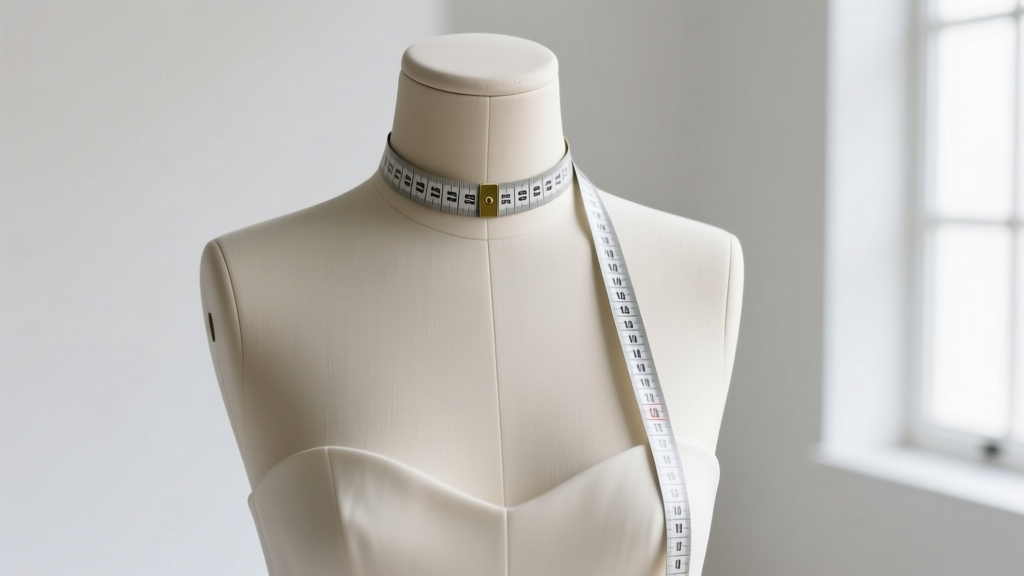
The jewelry industry often treats chain sizing as a simple matter of arbitrary numbers, but true sartorial elegance requires a technical understanding of anatomy, physics, and proportion. When evaluating women necklace length, relying on generic size charts leads to poor drape, clasp migration, and visual imbalance. As a domain expert in jewelry styling and structural design, I approach necklace fitting as an exercise in architectural geometry. This guide bypasses superficial advice to deliver a deep-dive technical framework for mapping chain drop to the human decolletage, accounting for pendant weight, gauge thickness, and individual body metrics.
The Anatomical Baseline: Mapping the Decolletage Zones
Standard necklace lengths (14, 16, 18, 20, and 24 inches) are not merely numbers; they correspond to specific skeletal landmarks on the cervical and thoracic spine. Understanding these anchor points is critical for predicting how a chain will interact with the body's natural contours.
- 14 Inches (35.5 cm) - The Cervical Base: Sits snugly at the C7-T1 vertebrae junction. This length requires precise neck circumference measurement. If the wearer's neck exceeds 13.5 inches, a 14-inch chain will cause choke-hazard tension and accelerate clasp wear.
- 16 Inches (40.5 cm) - The Clavicle Line: Rests directly on the collarbone. This is the most universally forgiving length, as the clavicle provides a natural structural shelf that prevents the chain from slipping into the suprasternal notch.
- 18 Inches (45.7 cm) - The Sternal Notch: Drops just below the collarbone, hovering at the upper sternum. This is the optimal anchor point for pendants weighing between 3 and 8 grams, allowing them to lay flat against the thoracic plane.
- 20 to 24 Inches (50.8 to 61 cm) - The Thoracic Drape: Bypasses the upper chest entirely, resting on the mid-to-lower sternum. These lengths require heavier chain gauges (minimum 2.5mm) to maintain a deliberate, structured drape rather than looking like an accidental misfit.
According to manufacturing and sizing guidelines from the Gemological Institute of America (GIA), factoring in the clasp allowance is vital. A standard 12mm lobster clasp adds nearly half an inch to the total visual drop, which can be the difference between a pendant resting elegantly on the bone or slipping awkwardly into a neckline crevice.
Sartorial Geometry: Matching Length to Neckline Architecture
The intersection of women necklace length and garment architecture dictates visual harmony. A chain must either perfectly parallel the neckline or deliberately intersect it at a mathematically pleasing angle. Below is a technical matrix for pairing chain drops with common neckline structures.
| Neckline Type | Optimal Chain Drop | Pendant Dimension Rule | Common Failure Mode |
|---|---|---|---|
| Crew Neck | 14' or 16' | Width > Height (e.g., bar or horizontal geometric) | Pendant gets swallowed by the fabric hem |
| V-Neck | 18' to 20' | Teardrop or Marquise (must mirror the V angle) | Chain crosses the V-line too high, breaking the vertical illusion |
| Boatneck | 20' to 24' | Heavy statement piece (15g+) to anchor the wide horizontal line | Delicate chains look lost against the wide shoulder expanse |
| Sweetheart | 16' (Choker style) | Solitaire gem (max 5mm) to avoid competing with the bodice | Pendant rests directly on the fabric seam, causing friction wear |
| Scoop Neck | 18' | Cluster or multi-stone pendant to fill the negative space | Chain perfectly overlaps the fabric hem, creating a messy double-line |

The Physics of Drape: Chain Gauge, Weight, and Tension
A necklace is not a static line; it is a suspended cable governed by the physics of a catenary curve. The 'effective drop' of a necklace changes dynamically based on the ratio of chain weight to pendant weight. Technical jewelers and suppliers like Rio Grande categorize chains by gram weight per inch, a metric crucial for predicting drape behavior.
Consider an 18-inch, 1.0mm cable chain weighing approximately 3.5 grams. If you attach a 12-gram gemstone pendant, the center of gravity shifts drastically downward. The pendant's mass will pull the flexible chain into a steep, narrow V-shape, effectively increasing the visual drop by 1.5 to 2 inches. Conversely, pairing that same 12-gram pendant with a rigid 4.0mm Franco chain (weighing roughly 28 grams) will maintain the chain's structural arch, keeping the pendant exactly at the 18-inch mark.
Expert Rule of Thumb: For every 5 grams of pendant weight added to a chain under 1.5mm in gauge, expect the effective visual drop to increase by 0.75 inches due to gravitational tension on the links.
To counteract this, always match the chain's tensile strength and mass to the pendant. A heavy medallion requires a high-mass chain not just for visual balance, but to prevent the premature elongation and micro-fracturing of delicate soldered links.
Proportional Scaling: Adjusting for Torso and Bust Metrics
Standardized women necklace length charts fail because they assume a uniform 34B bust and a 13-inch neck. In reality, torso depth and bust projection drastically alter how a chain wraps around the body. When a chain navigates a larger circumference, it is pulled tauter, riding higher on the chest wall.
The Bust Projection Matrix
Use this scaling framework to adjust baseline lengths for optimal visual placement:
- A to B Cup (Minimal Projection): Stick to standard baseline lengths. An 18-inch chain will drape exactly as measured on a flat surface.
- C to D Cup (Moderate Projection): Add 1 inch to your target drop. To achieve a true sternal-notch resting point, order a 19-inch chain.
- DD+ Cup (High Projection): Add 2 to 3 inches. A standard 18-inch chain will be pulled upward, resting awkwardly on the upper chest. A 20-inch or 22-inch chain is required to achieve the same visual endpoint.
Furthermore, neck circumference dictates choker sizing. If the wearer's neck measures 15 inches or more, standard 14-inch chokers will sit flush against the larynx. Custom sizing to 15.5 inches with an integrated 2-inch extender chain provides the necessary micro-adjustability for comfort and safe circulation.
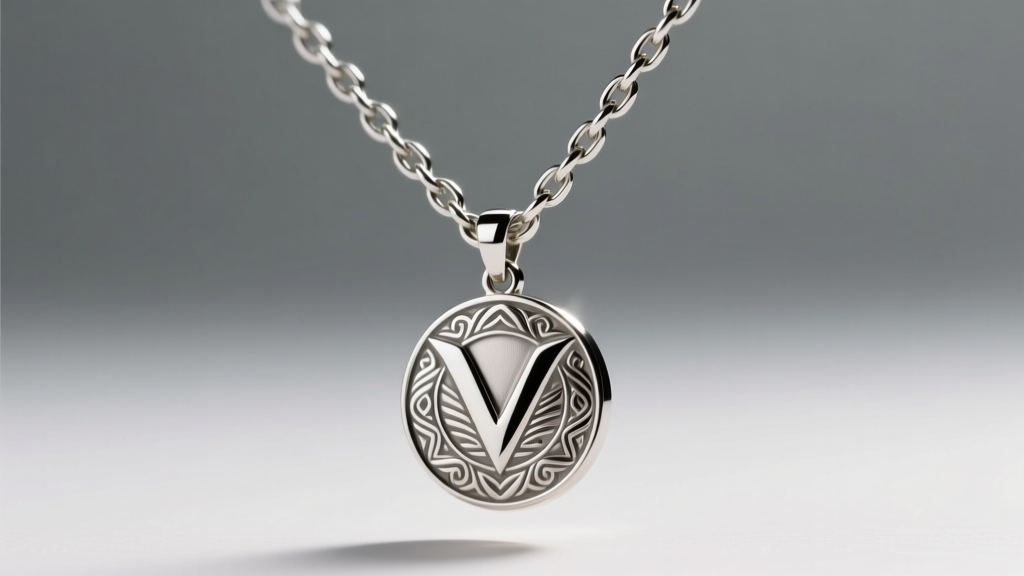
Troubleshooting Common Fit Failures
Even with precise measurements, mechanical failures can ruin the drape of a necklace. Here is how to diagnose and resolve the three most common technical issues:
1. Clasp Migration (The 'Creep' Effect)
The Problem: The clasp continuously slides from the back of the neck to the front, resting next to the pendant.
The Diagnosis: Asymmetrical weight distribution. The pendant is significantly heavier than the chain and clasp combined, causing the chain to act like a pulley system.
The Fix: Introduce a counterweight. Use a heavier, solid-cast clasp (such as a box clasp or a heavy magnetic barrel clasp) at the nape of the neck, or thread a discreet silicone o-ring stopper onto the chain 2 inches from the clasp to create friction against the skin.
2. Pendant Flipping
The Problem: The pendant constantly turns backward, showing the flat metal back instead of the gemstone.
The Diagnosis: The bail (the loop connecting the pendant to the chain) is too wide or lacks an internal silicone insert, allowing the pendant to rotate freely on the chain's horizontal axis.
The Fix: Swap the standard bail for a 'peg bail' or a 'pinch bail' that grips the pendant securely, or have a jeweler solder a small gold bead inside the bail to act as a physical track stopper.
3. Skin Pinching and Hair Snagging
The Problem: The chain pulls neck hair or pinches the skin at the nape.
The Diagnosis: The chain style features open, protruding links (like a standard cable or rope chain) that catch on fine vellus hair, or the links are too thin and rigid.
The Fix: Transition to a closed-surface chain profile. Snake chains, herringbone, or wheat chains feature smooth, interlocking surfaces that glide over the skin and hair without creating friction traps.
Conclusion
Mastering women necklace length requires moving beyond basic size charts and embracing the biomechanics of jewelry design. By calculating the catenary drape, adjusting for bust projection, and matching chain gauge to pendant mass, you transform a simple accessory into a perfectly engineered extension of the wearer's anatomy. Precision in measurement and material selection is the true hallmark of expert jewelry styling.


