How to Choose a Real 14k Gold Cross Necklace: A Beginner's Guide
Learn how to buy a real 14k gold cross necklace with our beginner guide. Discover hallmark secrets, chain pairings, and fair pricing metrics.


Whether you are purchasing your first piece of fine jewelry or looking for a meaningful gift, a real 14k gold cross necklace remains one of the most timeless and versatile investments you can make. However, the jewelry market is saturated with misleading terminology, deceptive plating, and inflated retail markups that can easily trap beginner buyers. Understanding the metallurgy, hallmarking laws, and structural mechanics of gold pendants is essential to making a confident purchase.
This comprehensive explainer breaks down exactly what to look for when shopping for a solid gold cross pendant, how to pair it with the correct chain, and how to calculate a fair price based on current gold markets.
Why 14k Gold is the Ultimate Sweet Spot for Pendants
Pure 24-karat gold is incredibly soft and malleable, making it entirely unsuitable for everyday jewelry that might catch on clothing or endure accidental impacts. To create durable jewelry, pure gold is alloyed with other metals like copper, silver, and zinc. A real 14k gold cross necklace contains exactly 58.5% pure gold and 41.5% alloy metals.
From a materials science perspective, 14k gold offers a superior Vickers hardness rating compared to higher karats. While 18k gold sits at roughly 125 HV (Vickers Hardness), 14k gold achieves approximately 140 HV. This increased structural integrity means that the delicate corners of a cross pendant, as well as the bail (the loop that connects the pendant to the chain), are significantly more resistant to bending, warping, and scratching over decades of daily wear.
Decoding Hallmarks: Verifying Authenticity
The most critical step in buying fine jewelry is verifying the metal purity stamps. According to the Federal Trade Commission (FTC) Jewelry Guides, any piece of gold jewelry stamped with a quality mark (like 14K) must also bear a registered trademark or maker's mark. This ensures accountability and traceability.
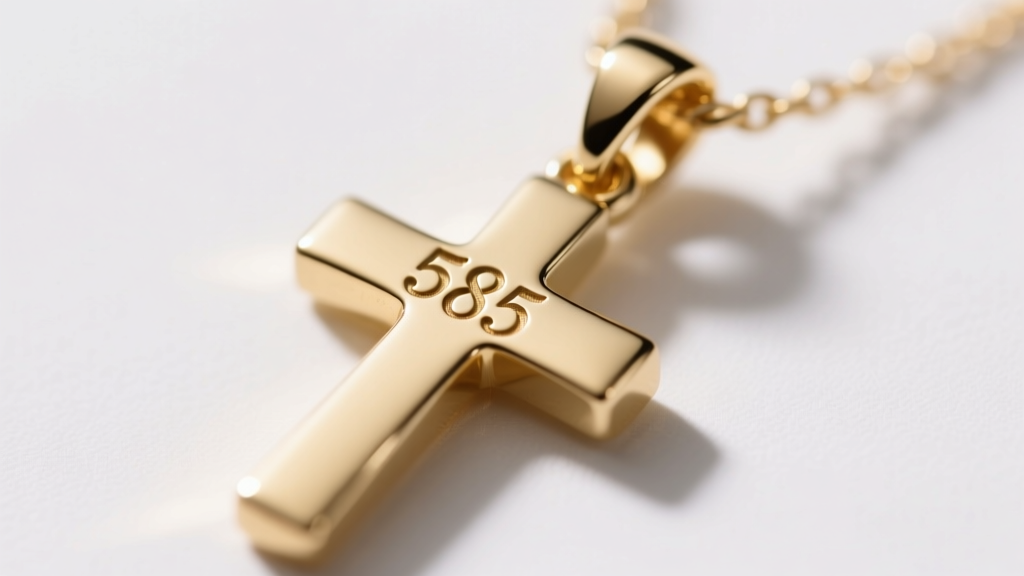
Common 14k Gold Stamps to Look For:
- 14K or 14KT: The standard North American marking indicating 14 parts gold out of 24.
- 585: The European millesimal fineness mark, indicating 585 parts per thousand of pure gold.
- Maker's Mark: Usually a small initials stamp, logo, or geometric shape located near the purity mark, identifying the manufacturing company.
Expert Warning: If you see a stamp that reads '14K HGE' (Heavy Gold Electroplate) or '14K GP' (Gold Plated), you are not looking at a solid gold piece. These are base metals coated with a microscopic layer of gold that will eventually wear away.
Pairing the Cross Pendant with the Right Chain
A common beginner mistake is buying a heavy cross pendant and threading it onto a flimsy chain, which inevitably leads to chain breakage and lost jewelry. The bail of your cross pendant dictates the maximum chain width you can use, while the weight of the pendant dictates the minimum chain gauge required for safety.
| Cross Style | Ideal Chain Type | Recommended Thickness | Best For |
|---|---|---|---|
| Classic Latin (Small) | Box Chain or Cable | 1.0mm - 1.5mm | Subtle, everyday layering |
| Ornate / Celtic Cross | Rope Chain | 2.0mm - 3.0mm | Statement pieces, heavier pendants |
| Sideways / Modern Cross | Curb Chain | 1.5mm - 2.5mm | Contemporary, streetwear aesthetics |
| Diamond-Accented Cross | Wheat (Spiga) Chain | 1.2mm - 1.8mm | Maximizing light reflection and sparkle |
When shopping, always check the internal millimeter dimension of the pendant's bail. If the bail opening is 3mm, you cannot use a 4mm rope chain. Furthermore, organizations like Jewelers of America recommend that the chain's weight should be at least 20% to 30% of the pendant's weight to prevent stress on the chain links.
The Pricing Matrix: What Should You Actually Pay?
Understanding how a real 14k gold cross necklace is priced will save you from predatory retail markups. The price of solid gold jewelry is derived from two main factors: the intrinsic melt value of the gold and the manufacturing labor (craftsmanship).
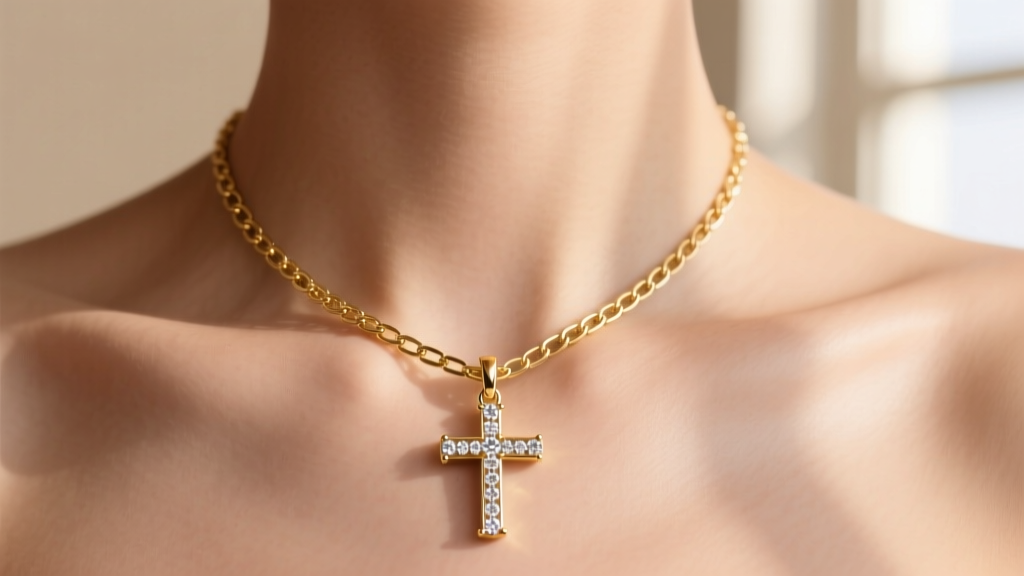
Calculating the Melt Value
To find the baseline gold value of a pendant, you need its exact gram weight. For example, if a solid 14k gold cross pendant weighs 3.5 grams, you calculate the pure gold content by multiplying the weight by 0.585 (the percentage of pure gold in 14k). This equals 2.04 grams of pure gold. You then multiply that by the current daily spot price of pure gold per gram.
While the raw gold value provides a baseline, retail pricing includes the cost of casting, polishing, quality control, and overhead. A fair retail multiplier for a standard, unbranded 14k gold cross pendant is typically 2.5x to 4x the melt value. If a basic 3-gram cross has a melt value of $130, a fair retail price sits between $325 and $520. Designer brands or pieces featuring natural diamonds will command significantly higher premiums based on brand equity and gemological grading.
Three Beginner Mistakes That Ruin Your Investment
Even well-intentioned buyers can make costly errors when navigating the jewelry market. Avoid these three common pitfalls:
- Falling for 'Hollow' or 'Electroformed' Gold: Some manufacturers use electroforming to create large, puffy cross pendants that are completely hollow inside. While they look impressive and cost less upfront, they dent easily and are virtually impossible to repair if crushed. Always ask the jeweler if the piece is 'solid cast' or 'die-struck'.
- Ignoring the Solder Points: Inspect the links of the chain you intend to buy. High-quality chains feature soldered links (where the tiny gap in each link is sealed with gold solder). Unsoldered chains, like some cheap cable variants, will easily pull apart when bearing the weight of a cross pendant.
- Buying White Gold Without Rhodium Maintenance: If you prefer a silver-colored real 14k gold cross necklace, remember that 14k white gold is naturally slightly yellowish. It is plated with rhodium to achieve a bright white finish. This plating wears off every 1 to 3 years and requires professional re-plating, adding to the long-term cost of ownership.
Expert Care Protocols for Everyday Wear
To ensure your cross necklace lasts a lifetime, you must protect it from chemical degradation. The most dangerous enemy of 14k gold is chlorine. Exposure to chlorinated pool water or harsh household cleaning agents can cause 'stress corrosion cracking' in the alloy metals, leading to microscopic fractures that eventually snap the bail or chain.
'Always remove your solid gold jewelry before entering a swimming pool or using bleach-based cleaners. The chemical reaction with the copper and zinc alloys in 14k gold can permanently weaken the metal's crystalline structure.' — Master Bench Jeweler
For routine maintenance, simply soak your necklace in a bowl of warm water with a few drops of mild, phosphate-free dish soap. Gently agitate the water, rinse thoroughly, and dry with a lint-free microfiber cloth. Avoid using abrasive toothpaste or baking soda, as these can create micro-scratches on the polished surface of your cross pendant.
Final Verdict
Investing in a real 14k gold cross necklace is a rewarding experience when approached with the right knowledge. By prioritizing solid cast construction, verifying the FTC-mandated maker's marks, correctly matching your pendant's bail to a structurally sound chain, and understanding the math behind retail pricing, you can confidently acquire a piece of fine jewelry that will endure for generations.


