The Ultimate Necklace Bikini Pairing Guide: Swimwear Jewelry
Discover how to choose the perfect necklace for your bikini. Learn about water-safe materials, neckline matching, and hardware that survives the beach.

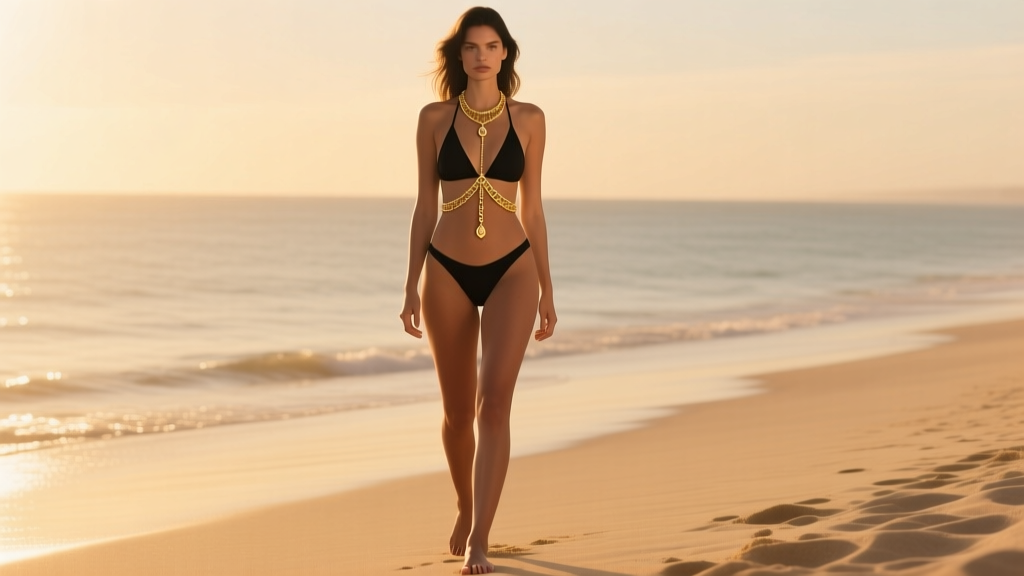
As resort wear trends evolve in 2026, the intersection of fine jewelry and swimwear has moved from a niche styling trick to a mainstream necessity. However, the harsh realities of the beach environment—saltwater, chlorinated pools, abrasive sand, and chemical sunscreens—create a hostile landscape for delicate metals and gemstones. When styling a necklace bikini combination, you are not just matching aesthetics; you are engaging in a balancing act of metallurgical survival and proportional styling.
This comprehensive buying guide breaks down the exact material grades, hardware mechanics, and neckline mappings you need to build a swim-safe jewelry capsule that elevates your beachwear without destroying your investment.
Defining the 'Necklace Bikini' Concept
In contemporary jewelry styling, the term 'necklace bikini' generally refers to two distinct concepts. The first is the strategic pairing of traditional necklaces and pendants with specific swimwear necklines to enhance the wearer's silhouette. The second refers to the rising trend of elaborate body-chain necklaces that drape across the torso, effectively functioning as a metallic bikini top or harness. Both approaches require a strict adherence to water-safe materials, but they demand entirely different structural considerations regarding gauge thickness, clasp security, and chain tension.
Material Science: Surviving Salt, Chlorine, and SPF
The most common mistake consumers make is assuming that 'gold' inherently means 'waterproof.' In reality, the alloy composition of your jewelry dictates its survival rate in aquatic environments. According to the Gemological Institute of America (GIA), exposure to harsh chemicals and salt can accelerate tarnishing and structural degradation in lower-karat alloys.
Furthermore, chemical sunscreens containing avobenzone and octocrylene can react with the copper and zinc alloys found in 10k and 14k gold, leading to rapid surface pitting and the dreaded 'green skin' effect. Gold vermeil (a thick layer of gold over sterling silver) is particularly vulnerable, as the porous nature of the silver core can trap moisture and SPF chemicals, causing the vermeil layer to blister and peel within a single beach season.
| Material Grade | Core Composition | Salt/Chlorine Resistance | SPF Chemical Resistance | Avg. Price Range |
|---|---|---|---|---|
| 316L Surgical Steel | Iron, Chromium, Molybdenum | Excellent (Marine Grade) | Excellent | $40 - $120 |
| Solid 18k Gold | 75% Gold, 25% Silver/Copper | Very Good | Good (Requires Rinsing) | $800 - $3,500+ |
| Solid 14k Gold | 58% Gold, 42% Alloy | Good | Fair (Prone to Tarnish) | $250 - $1,200 |
| Gold Vermeil | Sterling Silver base | Poor (Tarnishes Rapidly) | Poor (SPF strips plating) | $80 - $250 |
| Platinum | 95% Platinum | Flawless | Flawless | $2,000 - $10,000+ |
Expert Tip: If you are investing in a piece specifically for daily swimwear, 316L stainless steel offers the highest durability-to-price ratio, while solid 18k gold remains the premier choice for luxury, provided you rinse it immediately after swimming.
Neckline Mapping: Pairing Pendants with Bikini Cuts
A necklace should never compete with your swimwear; it should frame it. The geometry of your bikini top dictates the optimal chain length and pendant drop.
The Deep-V and Triangle Bikini
Triangle bikinis create a natural plunging neckline that begs for vertical elongation. The ideal pairing is a lariat necklace or a Y-chain measuring between 20 and 24 inches. The pendant should rest exactly two inches below the apex of the bikini's center tie. This draws the eye downward, elongating the torso. Avoid chokers here, as they visually 'chop' the neck and clash with the upward pull of the triangle ties.
The Halter and High-Neck Bikini
Halter necklines dominate the collarbone and upper chest area. Long pendants will tangle with the halter strings and look cluttered. Instead, opt for a 14-inch to 16-inch choker or a rigid metal collar. A 2mm to 3mm solid gold or steel herringbone chain sits flush against the skin, providing a sleek, modern contrast to the fabric of the halter without interfering with its structural ties.
The Bandeau and Scoop Neck
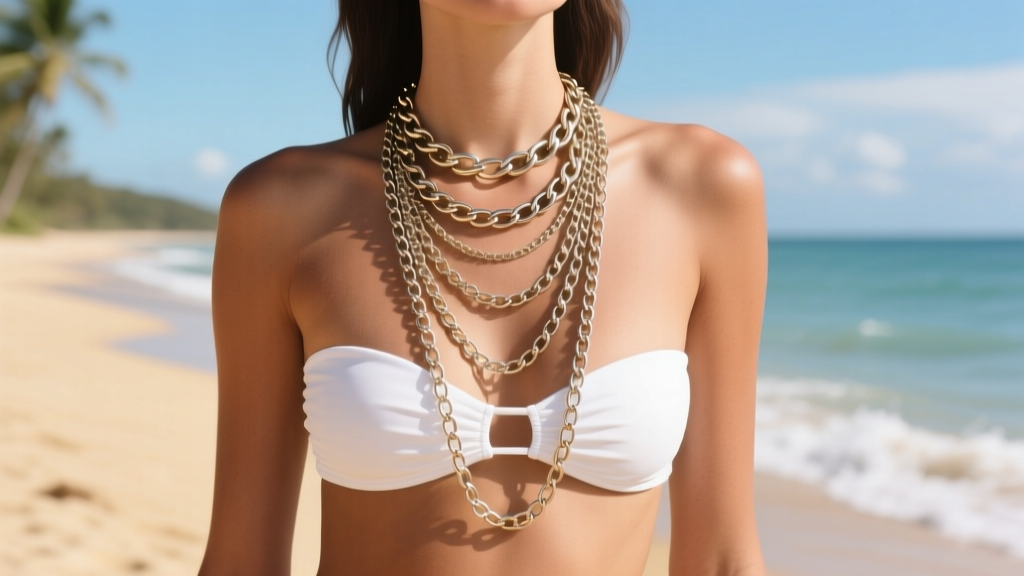
Strapless bandeau tops leave the entire décolletage exposed, offering a blank canvas for layering. This is where the 'necklace bikini' styling truly shines. Create a cascading effect using three chains of varying lengths: a 16-inch delicate cable chain, an 18-inch chain with a mid-sized geometric pendant, and a 22-inch heavy rope chain. This layered approach mimics the visual weight of a neckline, providing structure to a strapless silhouette.
Hardware Mechanics: The Hidden Sand Threat
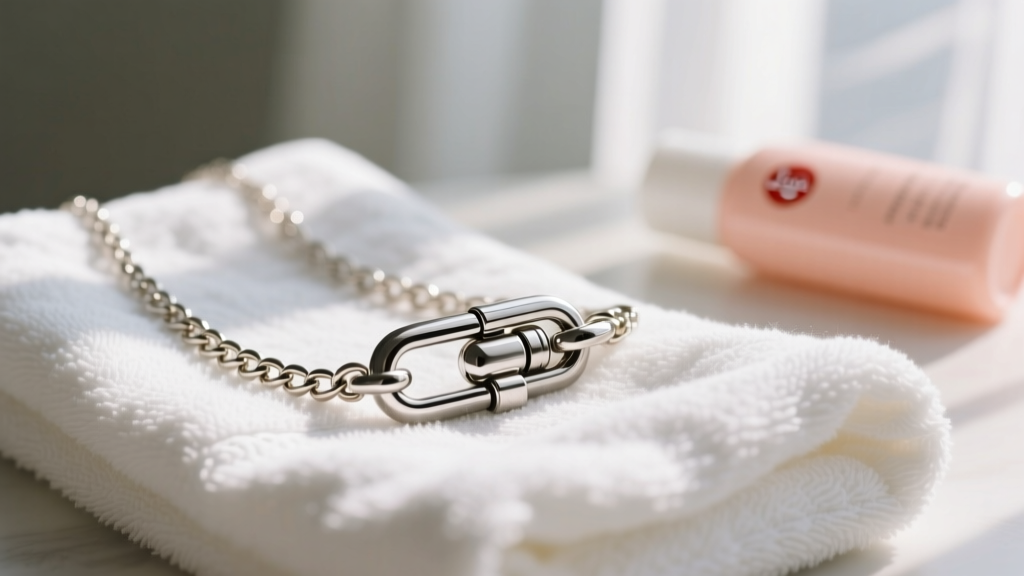
While water and chemicals degrade the metal, sand destroys the mechanics. Silica sand ranks at a 7 on the Mohs hardness scale, making it significantly harder than gold (2.5-3) and even steel (4-4.5). When microscopic sand grains infiltrate the tiny internal spring of a standard spring-ring clasp, they act like sandpaper, grinding down the tension mechanism until the clasp fails to close.
For any jewelry intended for beachwear, you must inspect the hardware before purchasing:
- Lobster Clasps: The superior choice. Their larger, enclosed lever mechanism is less susceptible to sand jamming, and they offer a higher tensile strength rating.
- Magnetic Clasps with Silicone Seals: An emerging trend in 2026 swim-jewelry, these feature internal neodymium magnets sealed behind waterproof silicone gaskets, completely blocking sand ingress.
- Infinity/Continuous Loops: Necklaces that slip over the head with no clasp eliminate the hardware failure point entirely, making them the safest option for active beach sports.
The Body Chain Crossover
When the term 'necklace bikini' refers to body chains worn over or instead of traditional swimwear, the structural requirements change drastically. A body chain must support its own weight across the torso without stretching or snapping.
Look for chains crafted from 1.5mm to 2.5mm gauge cable or figaro links. Anything thinner than 1.2mm will inevitably stretch and deform when subjected to the friction of moving against the skin and swimwear fabrics. Furthermore, ensure the body chain features adjustable extender chains at the back. A proper fit should allow you to slide two fingers comfortably between the chain and your ribcage; any tighter, and the chain will restrict breathing and dig into the skin when lying on a lounge chair.
Post-Beach Protocol: Cleaning and Storage
Even the most resilient marine-grade metals require proper aftercare. The Jewelers of America emphasizes that allowing salt and sweat to dry on jewelry accelerates microscopic corrosion. Implement this three-step post-beach protocol to ensure longevity:
- The Freshwater Flush: Immediately after leaving the beach or pool, rinse your necklace under lukewarm, fresh tap water. Do not use hot water, as thermal shock can fracture certain gemstone inclusions (like opals or emeralds) often found in pendant settings.
- The Surfactant Cleanse: Once a week, use a drop of mild, phosphate-free dish soap and a soft-bristled baby toothbrush to gently agitate the links. This removes the invisible film of SPF lotion and sebum that builds up between the chain links.
- The Microfiber Dry: Never air-dry your swimwear jewelry. Hard water spots and trapped moisture lead to oxidation. Pat the piece completely dry with a lint-free microfiber cloth before storing it in an anti-tarnish pouch.
True luxury in beachwear jewelry isn't just about the initial shine; it's about the piece's ability to withstand the elements while maintaining its structural integrity and aesthetic grace season after season.
Final Verdict: Building a Swim-Safe Capsule
Mastering the necklace bikini pairing requires abandoning the notion that all jewelry is created equal. By prioritizing 316L surgical steel or solid 18k gold, upgrading to sand-proof lobster clasps, and mapping your chain lengths to the specific geometry of your swimwear, you can confidently transition from the ocean to the boardwalk without compromising your style or your investment. As you curate your 2026 vacation wardrobe, let material science and proportional styling guide your purchases, ensuring your jewelry remains as resilient as it is radiant.


