Buying Guide: Choosing the Ideal 20 Inch Necklace with Pendant
Discover how to choose the perfect 20 inch necklace with pendant. Learn about chain gauges, bail sizes, and metal grades in our expert guide.


Why the 20-Inch Drop is the Ultimate Pendant Canvas
When curating a versatile jewelry wardrobe, the 20 inch necklace with pendant occupies a highly strategic position. Unlike the 16-inch choker or the 18-inch princess length that sits tightly against the collarbone, a 20-inch drop falls gracefully on the upper chest, right at the neckline of most standard garments. This specific length bridges the gap between casual daywear and elegant evening layering, providing enough negative space to allow a pendant to swing freely without catching on the collar seam.
However, selecting the right combination requires more than just picking a pretty charm. The structural integrity of the chain, the metallurgy of the findings, and the physical proportions of the pendant bail all dictate whether your necklace will drape beautifully or become a tangled, frustrating mess. In this comprehensive buying guide, we break down the exact specifications you need to look for when investing in a 20 inch necklace with pendant in 2026.
Matching Chain Styles to Pendant Weights
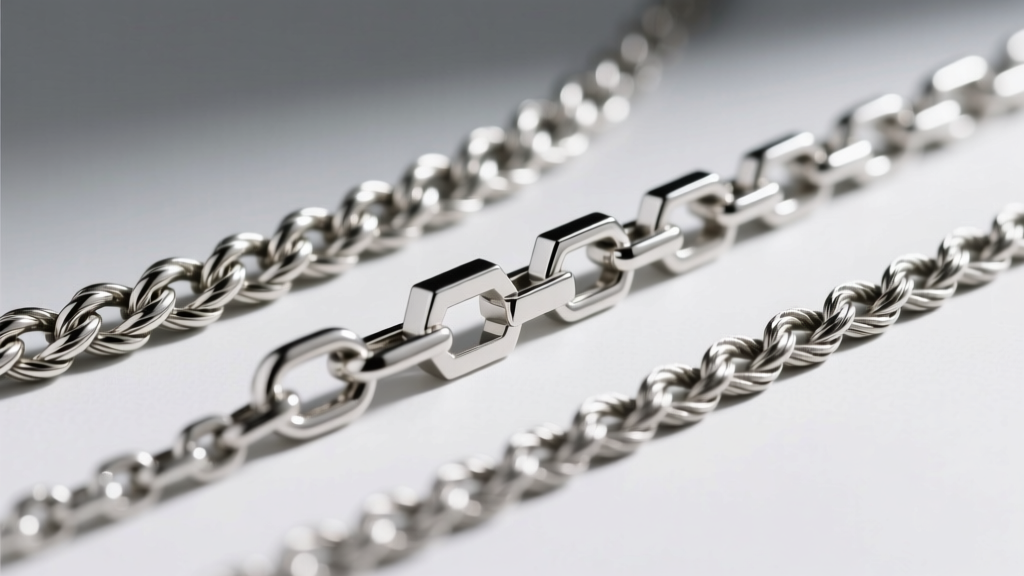
The most common failure point in pendant necklaces is a mismatched chain-to-weight ratio. A heavy gemstone or solid metal pendant will quickly stretch, kink, or snap a delicate chain. To ensure longevity, you must evaluate the chain's gauge (thickness) and its structural weave. According to manufacturing standards highlighted by Jewelers of America, the tensile strength of a chain is directly correlated to its link geometry and metal volume.
| Chain Style | Ideal Gauge (mm) | Max Pendant Weight | Durability & Drape Profile |
|---|---|---|---|
| Wheat Chain | 16g (1.3mm) | 30+ grams | Exceptional tensile strength; woven links resist kinking and grip the pendant bail securely. |
| Box Chain | 18g (1.0mm) | 15 grams | Geometric and sleek, but prone to permanent kinking if bent under heavy pendant stress. |
| Rope Chain | 14g (1.6mm) | 40+ grams | Highly reflective and incredibly strong, though the twisted links can snag on fine hair. |
| Cable Chain | 20g (0.8mm) | 8 grams | Classic and lightweight; strictly reserved for small, hollow, or delicate gemstone charms. |
Metallurgy and Hardware: What to Inspect
The longevity of your 20 inch necklace with pendant relies heavily on the purity of the metal and the quality of the clasp mechanism. As of 2026, informed buyers are moving away from thin flash-plated brass and demanding transparent metallurgical standards.
Decoding Metal Grades
- Solid 14k or 18k Gold: The gold standard for heirloom pieces. 14k (58.5% gold) offers superior scratch resistance for daily-wear chains, while 18k (75% gold) provides a richer, warmer hue ideal for high-end pendants.
- 925 Sterling Silver: An excellent, affordable choice, but it requires maintenance. Look for chains that are rhodium-plated to delay the natural oxidation and tarnishing process.
- Gold Vermeil: Unlike standard gold plating, true vermeil must feature a sterling silver base. Industry experts and the Gemological Institute of America (GIA) note that high-quality vermeil should have a gold thickness of at least 2.5 microns to withstand the friction caused by a sliding pendant.
Clasp Mechanics
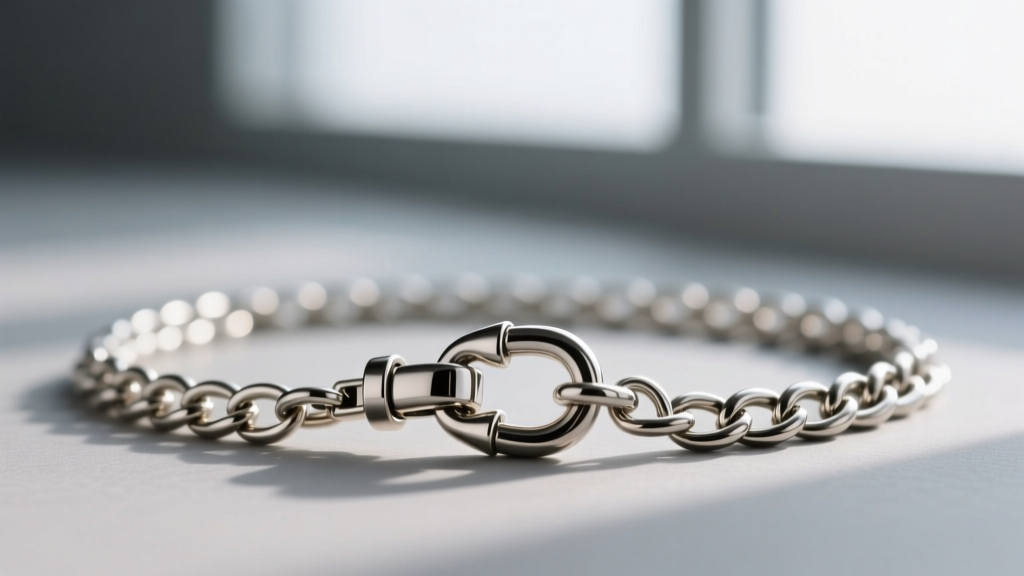
Never pair a heavy pendant with a spring ring clasp. The thin wire and internal spring mechanism are prone to failure and are difficult to operate with one hand. Always insist on a lobster claw clasp for pendants exceeding 10 grams. For chains thicker than 3mm, a sturdy bolt ring or a hidden box clasp with a figure-eight safety latch is mandatory.
The Bail-to-Chain Clearance Rule
An often-overlooked aspect of buying a 20 inch necklace with pendant is the clearance between the chain's width and the pendant's bail (the loop that attaches the charm to the chain). If the clearance is too tight, the pendant will not lay flat against your chest; it will stick out awkwardly and cause premature wear on the chain links.
The Golden Rule of Proportion: The inner diameter of the pendant bail must be at least 0.5mm to 1.0mm larger than the outer width of the chain. For example, if you are using a 1.5mm wheat chain, the bail's inner opening should be no smaller than 2.0mm to allow the pendant to swing freely and drape naturally.
Neckline Pairing Matrix for 20-Inch Drops
The 20-inch length is remarkably adaptable, but its visual impact changes drastically depending on the garment underneath. Here is how to style your pendant across common necklines:
- The Crew Neck T-Shirt: The 20-inch chain will rest exactly one to two inches below the ribbed collar. This creates a clean, framed look that draws the eye downward, perfect for medium-sized geometric or gemstone pendants.
- The V-Neck or Wrap Dress: The pendant will naturally follow the geometric lines of the V-neck, elongating the torso and neck. Opt for teardrop or marquise-shaped pendants to accentuate this vertical illusion.
- The Button-Down Shirt: For a professional environment, wear the 20-inch necklace inside the collar, resting against the skin with the top two buttons undone. For a relaxed, layered aesthetic, wear it outside the collar over the fabric, paired with a longer 24-inch matte chain.
Troubleshooting Common 20-Inch Pendant Issues
Even with the perfect chain and pendant, physical mechanics can sometimes cause annoyance. Here is how to troubleshoot the most common issues reported by jewelry wearers.
Issue 1: The "Pendulum Flip"
The Problem: The pendant constantly flips backward, hiding the front design against your skin. This happens when the pendant's center of gravity is located behind the chain's axis, or when the chain is too polished and slippery (common with box and snake chains).
The Fix: Switch to a woven chain like wheat or rope, which provides natural micro-friction. Alternatively, a jeweler can insert a tiny, transparent silicone o-ring inside the bail to act as a grip stopper, or add a microscopic counterweight to the bottom back of the pendant setting.
Issue 2: Chain Tangling and Knotting
The Problem: A 20-inch chain is long enough to loop over itself, and if the links are micro-sized (under 1mm), they will easily catch on body hair, knitwear, or the pendant bail itself.
The Fix: Avoid micro-link chains for 20-inch lengths. Stick to chains with a minimum width of 1.2mm. If you prefer a delicate look, opt for a satellite chain (which features intermittent solid beads or larger links) to break up the tension points that lead to knotting.
Issue 3: Bail Wear and Tear
The Problem: Over time, the constant friction of a hard metal chain sawing against a softer metal bail (such as a 14k gold chain on a 22k gold or silver pendant) will wear a hole through the bail.
The Fix: Ensure the bail is fitted with a hardened steel or platinum jump ring insert. If buying vintage or handmade jewelry, have a bench jeweler solder a tiny platinum loop inside the bail to act as a sacrificial wear layer, preserving the integrity of the pendant.
Final Checklist Before You Buy
Before finalizing your purchase of a 20 inch necklace with pendant, run through this quick diagnostic checklist:
- Does the chain gauge support the exact gram weight of the pendant?
- Is the bail inner diameter at least 0.5mm wider than the chain?
- Is the clasp a secure lobster claw or heavy-duty bolt ring?
- Is the metal grade clearly hallmarked (e.g., 925, 14k, 585) and verified?
- Does the 20-inch drop complement your most frequently worn necklines?
By prioritizing structural harmony and high-quality metallurgy over fleeting fast-fashion trends, your 20-inch pendant necklace will remain a secure, elegant, and flawless staple in your collection for decades to come.


