2026 Pearl Beads Necklace Trends: Modern Styling & Sizing Guide
Discover 2026 pearl beads necklace trends, from baroque mixed-metal layering to precise millimeter sizing guides and luster grading for modern styling.

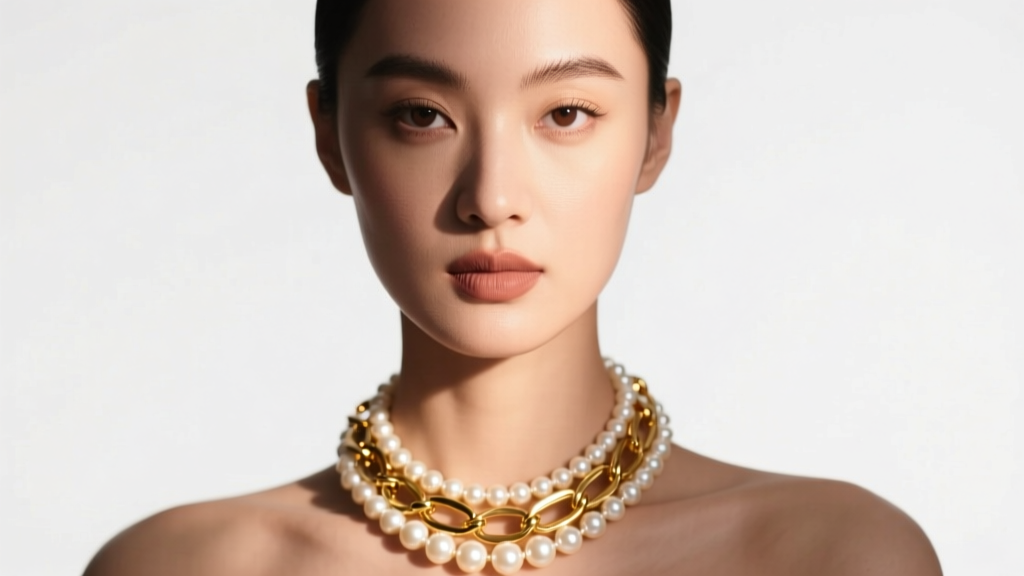
The 2026 Shift: Deconstructing the Classic Strand
The pearl beads necklace has long been tethered to conservative, mid-century aesthetics, but 2026 marks a definitive rupture from tradition. Today's style radar tracks a massive pivot toward asymmetry, mixed-material hardware, and hyper-specific millimeter sizing. Designers are no longer relying on uniform, perfectly matched strands. Instead, the modern pearl beads necklace integrates baroque shapes, metallic Edison freshwater pearls, and strategic gold or platinum chain stations. This evolution reflects a broader demand for organic luxury—pieces that feel deeply personal and structurally complex rather than mass-produced and predictable. Whether you are investing in a heritage piece or styling a contemporary station necklace, understanding the precise metrics of pearl jewelry is essential for navigating the current market.
Millimeter Matters: Sizing Guide for Pearl Beads
In 2026, the diameter of the pearl bead dictates not just the price, but the entire styling framework of the necklace. The industry has moved away from vague terms like "medium" or "large," relying instead on exact millimeter (mm) measurements. A mere 1.5mm difference drastically alters the visual weight and drape of the necklace against the collarbone. Below is the definitive sizing matrix for contemporary pearl strands and how they interact with modern necklines.
| Pearl Size (mm) | Style Classification | Optimal Neckline Pairing | 2026 Trend Status |
|---|---|---|---|
| 3.0 - 5.0mm | Seed / Baby Pearl | Deep V-Neck, Layering Base | High (Y2K Revival) |
| 6.0 - 7.5mm | Classic Everyday | Crewneck, Button-Down | Stable |
| 8.0 - 9.5mm | Statement / Bold | Scoop Neck, Strapless | Rising (Power Dressing) |
| 10.0 - 14.0mm | Edison / South Sea | Off-Shoulder, Architectural | Peak (High Fashion) |
For those building a layered look, the 3.0 to 5.0mm seed pearls act as a textured base layer, sitting flush against the skin. Conversely, the 8.0mm and above categories demand negative space around the neck to prevent the beads from overwhelming the wearer's frame.

Luster, Nacre, and Origin: What 2026 Buyers Demand
While size dictates the silhouette, luster dictates the value. According to the GIA Pearl Description System, luster is the most critical value factor in any pearl beads necklace. In 2026, consumers are highly educated on the difference between a chalky, low-nacre bead and a gem-grade pearl with a mirror-like finish.
The Rise of Hanadama and Edison Pearls
The traditional Akoya pearl remains a benchmark for sharp, mirror-like luster, specifically those certified as Hanadama by the Pearl Science Laboratory of Japan. A true Hanadama Akoya bead possesses an aurora effect—a subtle, banded color interference visible under diffused lighting. However, the 2026 market has seen an explosion in high-grade nucleated freshwater pearls, commonly known as Edison pearls. Grown in China using bead-nucleation techniques similar to saltwater oysters, Edison pearls in the 11-14mm range offer metallic, mirror-like lusters in natural shades of peacock, bronze, and violet, often at a fraction of the cost of South Sea alternatives.
When evaluating the quality factors of pearls, always inspect the drill holes. A clean, sharp drill hole with no flaking indicates thick, healthy nacre. Chalky rings around the drill hole are a primary indicator of premature harvesting and thin nacre, which will eventually peel and degrade.
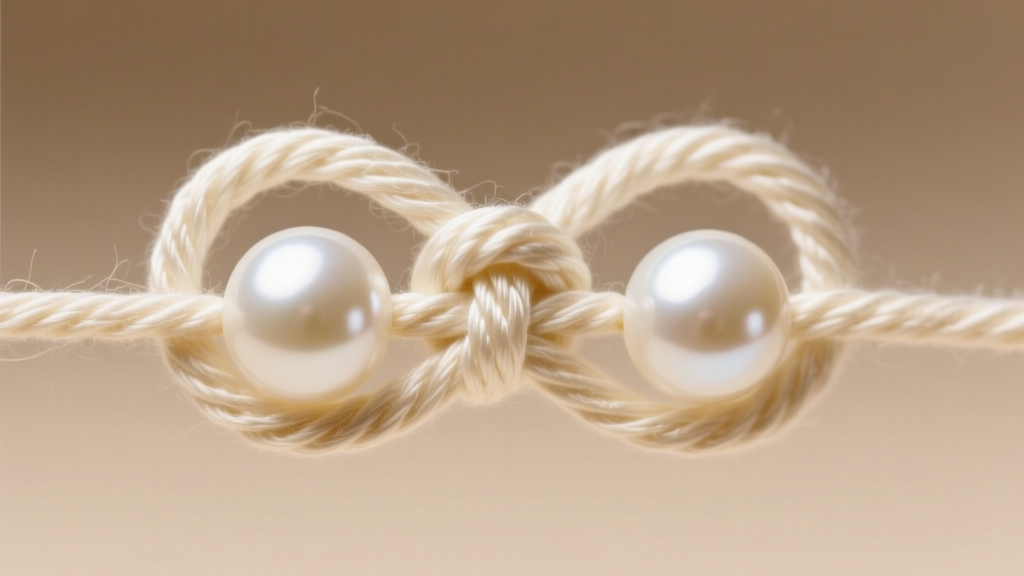
Construction Details: Knotting and Thread Tension
A luxury pearl beads necklace is only as durable as its internal architecture. The method of stringing and knotting is a hallmark of fine jewelry versus costume imitations. In 2026, master stringers utilize specific tension techniques to ensure the beads do not gap over time.
- Traditional Silk Thread (Size E or F): The historical standard. Silk drapes beautifully and conforms to the neck's curve. However, it is susceptible to stretching and moisture damage, requiring re-stringing every 3 to 5 years depending on wear frequency.
- Beaderlon or Synthetic Blends: A modern nylon-polyester blend that mimics the drape of silk but offers zero stretch and high moisture resistance. Many contemporary designers prefer Beaderlon for heavy Edison or South Sea pearl strands to prevent catastrophic thread failure.
- The French Knot Technique: Unlike standard overhand knots, the French knot (or wire-knot) uses a fine piece of French wire (bullion) to protect the silk where it passes through the metal clasp. This prevents the metal from sawing through the thread over time, a critical detail often skipped in mass-market jewelry.
Styling Frameworks: Necklines and Asymmetry
The styling rules of the past decade have been entirely rewritten. The matched, 18-inch princess strand is now viewed as a vintage archival piece rather than an everyday staple. The 2026 approach to styling a pearl beads necklace relies on intentional disruption.
"We are seeing a massive shift toward 'hardware integration.' A pure strand of pearls feels incomplete to the modern consumer without the interruption of a textured gold chain link, a geometric clasp worn at the front, or an asymmetrical drop. It is about breaking the perfection of the sphere." — Senior Jewelry Editor, Vogue Business
The Asymmetrical Station Method: Instead of a continuous strand, opt for a necklace where pearl beads are grouped in clusters of three, separated by 2 inches of 14k or 18k gold cable chain. This reduces the overall weight of the necklace, allows for a more fluid drape, and bridges the gap between classic pearl aesthetics and modern chain layering.
The Clasp-Forward Trend: Ornate, gem-set ball clasps or oversized geometric box clasps are no longer hidden at the nape of the neck. In 2026, the clasp is designed to sit directly over the sternum, acting as a pendant and focal point, effectively turning a standard pearl strand into a statement lariat.
Investment and Pricing Tiers
Understanding the pricing matrix is crucial for buyers looking to acquire a pearl beads necklace that holds its structural and material integrity. Prices in 2026 reflect both the rarity of high-luster saltwater harvests and the premium placed on expert hand-knotting.
Entry-Level (AAA Grade Freshwater): Ranging from $150 to $450. These strands feature near-round shapes with good luster, typically strung on synthetic threads. They offer excellent durability and modern styling potential for everyday wear.
Mid-Tier (Hanadama Akoya): Ranging from $1,200 to $3,800. This tier guarantees mirror-like luster, thick nacre, and meticulous hand-knotting with silk and French wire. The beads will be perfectly round with minimal surface blemishes, representing the gold standard for classic pearl jewelry.
High Jewelry (Tahitian & South Sea): Starting at $4,500 and scaling past $15,000. These strands feature massive beads (12mm to 16mm) with exotic natural colors like peacock green, silver-blue, and deep gold. Due to the immense weight of these beads, they require specialized heavy-duty stringing techniques and reinforced clasps to ensure longevity.
For comprehensive guidance on maintaining these investments, refer to the GIA's pearl care guidelines, which emphasize avoiding ultrasonic cleaners and storing pearls away from harder gemstones to prevent surface scratching. By prioritizing exact millimeter sizing, verified luster grades, and superior knotting techniques, you can confidently navigate the 2026 pearl market and acquire pieces that balance historical elegance with cutting-edge design.


