The 22in Necklace: Technical Drape, Gauge, and Pendant Pairing
Master the 22in necklace with our technical guide on chain gauges, weight distribution, drape metrics, and pendant bail sizing for perfect styling.


The Biomechanics of the 22in Necklace Drape
When discussing chain lengths, the 22in necklace occupies a highly specific, often misunderstood spatial zone. It sits precisely between the standard 18-inch princess length and the 24-to-30-inch opera or rope lengths. Technically speaking, a 22-inch chain is designed to rest on the upper sternum or mid-chest, creating a parabolic drape that frames the torso rather than the collarbone. However, the exact termination point of a 22in necklace is heavily dictated by the wearer's biomechanics—specifically, torso length and shoulder slope.
For an individual with an average torso-to-height ratio (approximately 52% of total height), a 22-inch chain will rest roughly 4.5 to 5.5 inches below the clavicle notch. On a petite frame (under 5'3"), that same 22in necklace will drop closer to the solar plexus, mimicking an opera-length drape. Conversely, on a taller individual (over 6'0"), the chain may sit just below the base of the neck, functioning almost like a long matinee piece. Understanding this variance is critical for jewelers and stylists when recommending pendant weights and chain widths.
Drape Termination Matrix by Height
| Wearer Height | Torso Ratio | 22in Necklace Drape Location | Optimal Pendant Weight |
|---|---|---|---|
| Under 5'3" (Petite) | Short Torso | Solar Plexus / Upper Abdomen | Light (Under 5g) |
| 5'4" - 5'8" (Average) | Proportional | Mid-Sternum / Upper Chest | Medium (5g - 15g) |
| 5'9" - 6'1" (Tall) | Long Torso | Base of Neck / Upper Clavicle | Heavy (15g+) |
| Over 6'1" (Extra Tall) | Extended Torso | Collarbone Hollow | Heavy / Statement (20g+) |
Chain Gauge, Weight, and Tensile Strength
The physical dimensions of a 22in necklace directly impact its structural integrity and wearability. Because the chain is longer, the total gram weight increases exponentially with gauge thickness. A 1.0mm wide cable chain at 22 inches might weigh a negligible 4.5 grams. However, a 4.0mm Cuban link chain at the same length can easily exceed 65 grams. This weight introduces tensile stress on the lower links and the clasp mechanism.
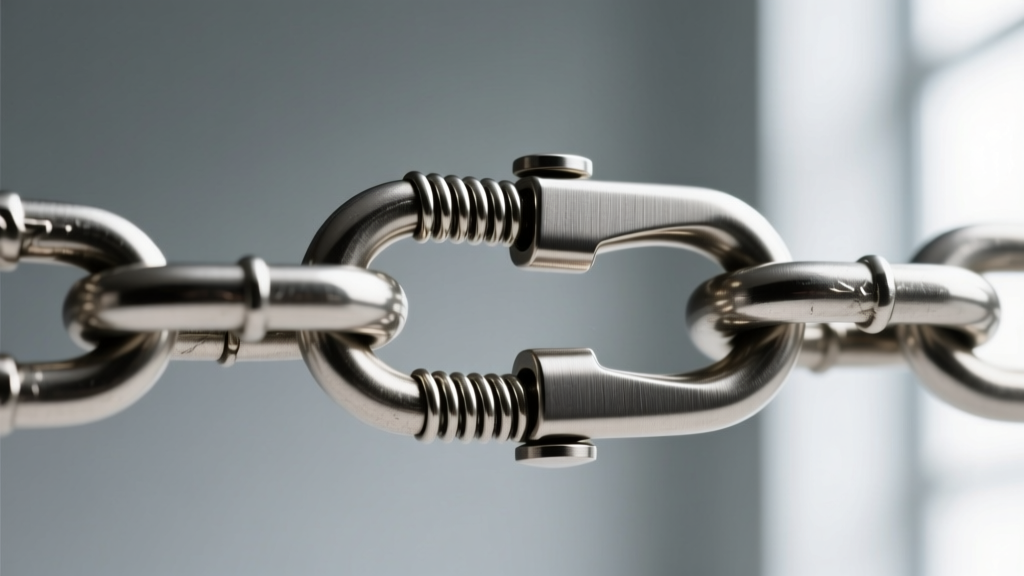
According to technical manufacturing guidelines from Rio Grande's chain-making and soldering resources, the weakest point of any extended chain is the soldered jump ring connecting the chain to the clasp. For a 22in necklace weighing over 20 grams, standard 4mm spring-ring clasps are mechanically insufficient and will eventually deform under the pendulum-like swing of the chain. Experts recommend upgrading to a minimum 12mm lobster clasp or a magnetic neodymium clasp with a safety catch for any 22-inch chain exceeding a 2.5mm gauge.
Weight Distribution and Link Deformation
At 22 inches, the chain forms a wider arc, meaning the lateral forces applied to the side links (near the clavicle) are higher than on an 18-inch chain. If the alloy is too soft—such as high-karat 22k or 24k gold—the side links can slowly stretch into oval shapes over time. To mitigate this, metallurgists recommend 14k or 18k gold alloys, which incorporate copper and silver to increase the Vickers hardness (HV) of the metal, ensuring the links retain their geometric integrity despite the extended leverage of a 22-inch drop.
Pendant Bail Sizing and Kinematics
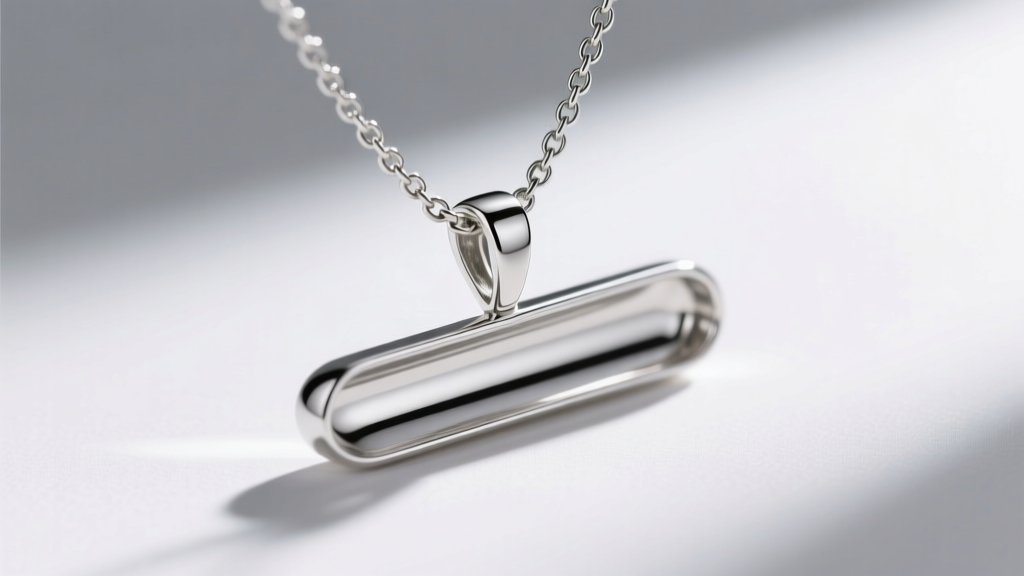
Pairing a pendant with a 22in necklace requires a deep understanding of kinematics—specifically, how the pendant moves along the chain's parabolic curve. Because the 22-inch length rests on the chest, it is subject to more friction and movement from breathing and walking than a shorter choker. This creates a "pendulum effect," where the pendant slides laterally across the lower curve of the chain.
To prevent the pendant from constantly flipping upside down or catching on the chain links, the bail (the loop that connects the pendant to the chain) must be precisely sized. The golden rule of bail engineering is that the Inner Diameter (ID) of the bail must be at least 1.5 times the Outer Width (OW) of the chain. For example, if you are threading a 3.0mm box chain, the pendant bail must have an inner clearance of at least 4.5mm. Furthermore, slide bails with integrated Teflon or ceramic inner linings are highly recommended for 22in necklaces, as they reduce friction and allow the pendant to glide smoothly back to the center nadir of the chain.
Metallurgy and High-Friction Wear at the Sternum
The termination point of a 22in necklace places the metal and pendant directly against the sternum, an area prone to high friction from clothing, seatbelts, and perspiration. This environment accelerates tarnishing and micro-abrasions. When selecting materials for a daily-wear 22in necklace, understanding modern metallurgical standards is vital.
- 316L Surgical Stainless Steel: Highly recommended for heavy, thick-gauge 22in chains. It boasts exceptional tensile strength and contains molybdenum, which prevents pitting corrosion from human sweat. It is practically indestructible at this length.
- Sterling Silver (Rhodium Plated): Bare sterling silver will oxidize rapidly at the sternum due to sulfur compounds in sweat and the friction against cotton or wool shirts. A 2026 standard for high-end silver chains involves a 0.5-micron rhodium flash plate over a nickel-free palladium barrier, ensuring the 22in necklace remains untarnished for years.
- 14k vs. 18k Gold: As noted by the Gemological Institute of America (GIA), 14k gold (58.5% pure gold) offers superior scratch resistance compared to 18k gold (75% pure gold). For a 22in necklace that will rub against shirt buttons and zippers, 14k gold will maintain its polished finish significantly longer.
For a comprehensive breakdown of alloy compositions and their wear-resistance properties, jewelers frequently consult Stuller's metallurgy and metals guide, which details the exact tensile strengths of various karat weights and platinum group metals.
Neckline Compatibility and Styling Matrix
The 22in necklace is a versatile tool in a stylist's arsenal, but its success depends entirely on the geometry of the garment's neckline. Because the chain creates a distinct "V" or "U" shape on the chest, it must either parallel or intentionally contrast the clothing lines.
Pro Stylist Tip: Never pair a 22in necklace with a high, tight crew neck unless the chain is exceptionally thick (over 5mm) and worn as a bold, streetwear-inspired statement piece over the fabric. For fine chains, the 22-inch length will visually clash with the collar's seam.
Optimal Garment Pairings
- The V-Neck Sweater: The ideal pairing. The 22in necklace should run parallel to the V-neck's plunge, terminating roughly one inch above the garment's lowest point. This creates a harmonious, elongating visual effect.
- The Unbuttoned Oxford Shirt: Worn beneath an unbuttoned dress shirt (with two or three buttons undone), a 2mm to 3mm 22in chain provides a sophisticated flash of metal that draws the eye vertically without overwhelming the collar.
- The Scoop Neck Blouse: A 22in necklace will sit slightly below the standard scoop neck line, resting on bare skin. This is highly effective for showcasing a solitary, medium-sized gemstone pendant, allowing the stone to catch the light without competing with fabric patterns.
- The Turtleneck: Generally avoid pairing fine 22in chains with turtlenecks. The fabric's bulk will push the chain outward, causing the pendant to flip and the chain to tangle. If necessary, use a heavy, rigid 22in collar or torque necklace instead of a flexible link chain.
Final Considerations for the 22-Inch Drop
Mastering the 22in necklace requires moving beyond simple aesthetic preferences and embracing the physics of jewelry design. By carefully calculating the wearer's torso proportions, selecting a chain gauge that balances visual weight with tensile strength, and engineering the pendant bail for frictionless kinematics, you elevate a simple accessory into a perfectly calibrated piece of wearable art. Whether you are sourcing a heavy 316L steel Cuban link for everyday durability or a delicate 18k gold rope chain for evening wear, respecting the technical parameters of the 22-inch drop guarantees both longevity and impeccable style.


