Is a Vintage Pearl Collar Necklace Worth the Investment?
Discover how to evaluate a vintage pearl collar necklace. Learn pricing tiers, nacre grading, hidden restringing costs, and investment value.

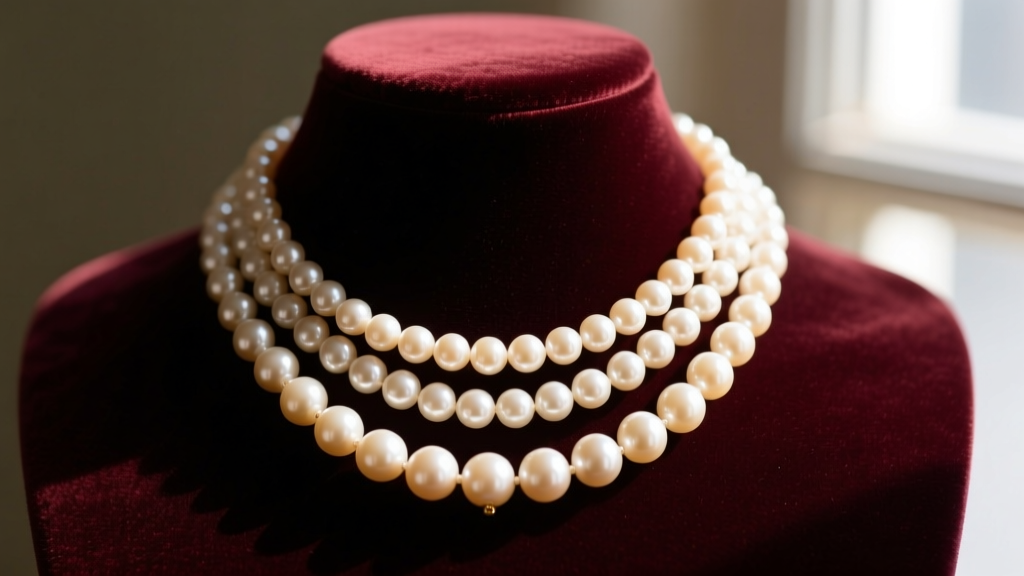
The Allure and Economics of the Vintage Pearl Collar Necklace
When evaluating estate jewelry, few pieces command the immediate presence of a vintage pearl collar necklace. Sitting snugly at the base of the throat—typically measuring between 14 and 16 inches—collars were the epitome of mid-century elegance and Victorian revivalism. As we navigate the 2026 estate jewelry market, buyers are increasingly drawn to these pieces not just for their aesthetic gravity, but as tangible alternative assets. However, the secondary market is saturated with overpriced, degraded, or misidentified strands. Assessing the true budget and value of a vintage collar requires looking far beyond the surface luster.
Unlike standard princess-length strands (18 inches), collars require a higher volume of matched pearls, especially in multi-strand iterations. This inherent scarcity of matched, high-quality vintage material dictates their baseline value. But how do you separate a genuine heirloom investment from a degraded strand that will cost more to restore than it is worth? This guide breaks down the exact metrics, material grades, and hidden costs you must evaluate before purchasing.
Decoding Pearl Varietals and Nacre Thickness
The foundation of any pearl's value lies in its nacre—the crystalline substance secreted by the mollusk. According to the Gemological Institute of America (GIA), nacre thickness directly impacts both the durability and the optical depth of the pearl. When assessing a vintage piece, identifying the varietal and its era is critical.
Vintage Akoya (1950s–1980s)
Akoya pearls are the most common in high-end vintage collars. However, cultivation techniques in the mid-20th century often prioritized speed over quality, resulting in thinner nacre (sometimes under 0.3mm). A collar from this era with thin nacre will exhibit a chalky, dull appearance and is prone to peeling. You should only pay a premium for vintage Akoya collars that exhibit the sharp, mirror-like luster indicative of nacre thickness exceeding 0.6mm, often seen in certified Hanadama-grade pieces.
Early Cultured and Natural Pearls (1920s–1940s)
Collars from the Art Deco and Retro periods often feature natural saltwater pearls or early, slow-grown cultured pearls. These possess incredibly thick nacre and a deep, glowing orient. While they may lack the perfect spherical uniformity of modern pearls, their historical provenance and nacre integrity make them highly valuable to serious collectors.
Vintage Freshwater
Older freshwater pearls (often called "rice crispies" due to their irregular shapes) are generally less valuable. Unless the collar is a signed designer piece, vintage freshwater collars should be treated as fashion jewelry rather than fine investment assets, capping their reasonable market value at under $300.

Market Pricing and Budget Tiers
To accurately assess value, you must categorize the necklace into its appropriate market tier. The following table outlines what you should expect to pay in the current estate market, factoring in condition and material quality.
| Tier | Price Range | Pearl Type & Quality | Hardware & Condition |
|---|---|---|---|
| Entry-Level | $150 – $400 | Freshwater or thin-nacre Akoya; visible blemishes, low luster. | Gold-filled or base metal clasps; silk is likely stretched or frayed. |
| Mid-Range | $450 – $1,200 | Good quality Akoya; strong luster, minor surface spotting, well-matched. | 14k gold barrel or fishhook clasp; requires immediate restringing. |
| High-End | $1,500 – $4,000+ | Pristine Akoya or South Sea; thick nacre, mirror luster, flawless matching. | 18k gold or gem-set box clasp with safety; recently restrung on silk. |
| Collector/Signed | $5,000 – $20,000+ | Exceptional natural or top-tier cultured pearls with documented provenance. | Signed by Mikimoto, Cartier, or Tiffany; original, pristine hardware. |
Hardware, Silk, and Hidden Restoration Costs
A major failure mode in budget assessment is ignoring the hardware and stringing. A vintage pearl collar necklace carries significant weight, particularly if it features three to five strands. The clasp must be engineered to handle this tension.
- The Clasp Mechanism: Multi-strand collars should feature a sturdy box clasp or a multi-loop fishhook clasp. Crucially, they must have a figure-eight safety catch. If the safety wire is snapped or missing, the risk of catastrophic failure is high, and you must negotiate the price down by at least $150 to account for a jeweler's repair.
- Stringing and Knotting: Authentic vintage collars are strung on silk with individual knots between each pearl to prevent total loss if the strand breaks. Over decades, silk stretches, rots, and absorbs skin oils. If the pearls slide freely between the knots, or if the silk appears dark and brittle, the piece requires immediate restringing.
Budget Warning: Restringing a multi-strand collar is labor-intensive. Jewelers typically charge $25 to $45 per strand. For a five-strand collar with 200+ pearls, expect to pay between $150 and $300 just for restoration. Always subtract this impending cost from the seller's asking price.
Authentication and Red Flags
When evaluating a vintage pearl collar necklace in person or via high-resolution estate photos, look for these specific red flags that instantly destroy value:
1. The Chalky Band (Nacre Loss)
Inspect the drill holes closely. If you see a distinct line where a chalky, dull white substance meets a shiny outer layer, the pearl has been bead-nucleated and the nacre is peeling away. This is irreversible and renders the piece virtually worthless as an investment.
2. The Tooth Test
Gently rub a pearl against the biting edge of your front tooth. Authentic nacre feels slightly gritty or sandy, like fine sandpaper. If it feels perfectly smooth like glass or plastic, you are looking at vintage Majorica (coated glass) or plastic imitations. While vintage Majorica has a small niche market, it should never be priced as genuine cultured pearl.
3. Clasp Hallmarks
Check the tongue of the box clasp for stamps. A "14K" or "750" stamp indicates solid gold. However, be wary of "1/20 12K GF" or "EP" (electroplated). A high-value pearl collar should never be finished with gold-plated base metal hardware; this is a primary indicator of a mid-century imitation or a heavily modified piece.
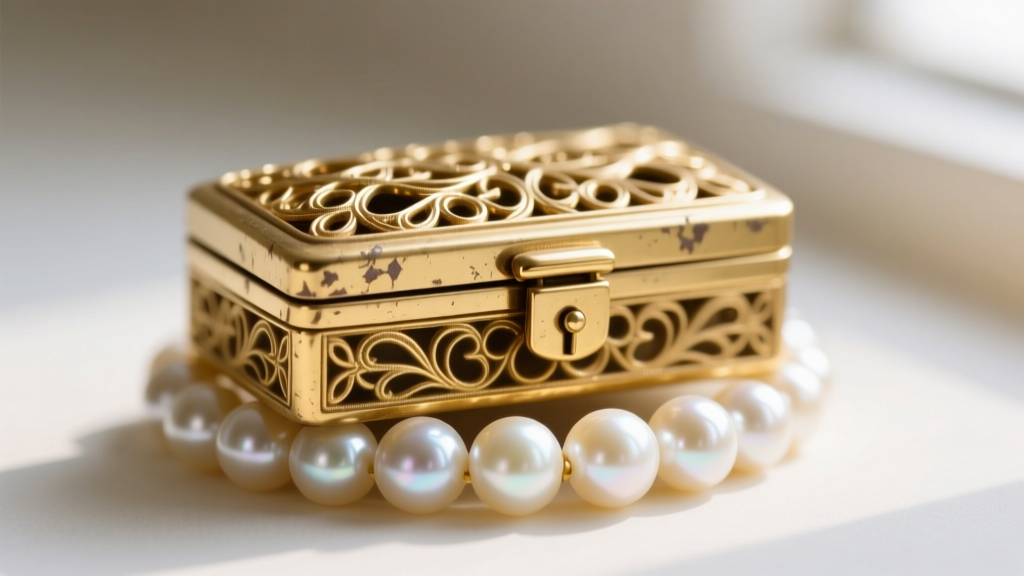
Provenance and Maker's Marks
In the upper echelons of the market, provenance dictates the premium. A vintage pearl collar necklace bearing the Mikimoto trademark (the famous 'M' inside an oyster shell on the clasp) guarantees a baseline of exceptional nacre quality and precise color matching. Similarly, mid-century collars from Cartier or Tiffany & Co. carry a brand multiplier that can increase the base material value by 200% to 400%. If a seller claims a piece is signed but cannot provide high-resolution macro photography of the clasp hallmark or original receipt, treat it as an unsigned estate piece and budget accordingly.
Final Verdict: Maximizing Your Investment
A vintage pearl collar necklace is a phenomenal investment, provided you approach the transaction with a restorer's eye rather than just a consumer's eye. The true value lies in the nacre thickness, the precision of the matching, and the structural integrity of the silk and gold hardware. By factoring in the inevitable $150+ restringing costs and rigorously testing for nacre degradation, you can confidently negotiate fair market prices and secure a timeless, high-value asset that will outlast passing jewelry trends. For further guidance on estate jewelry appraisals, consult the resources provided by Jewelers of America to find certified appraisers in your region.


