24k Gold Angel Necklace: Material Properties & Wear Guide
Discover if a 24k gold angel necklace is right for you. We compare pure gold's softness against 18k and 14k alloys for intricate pendant wear.

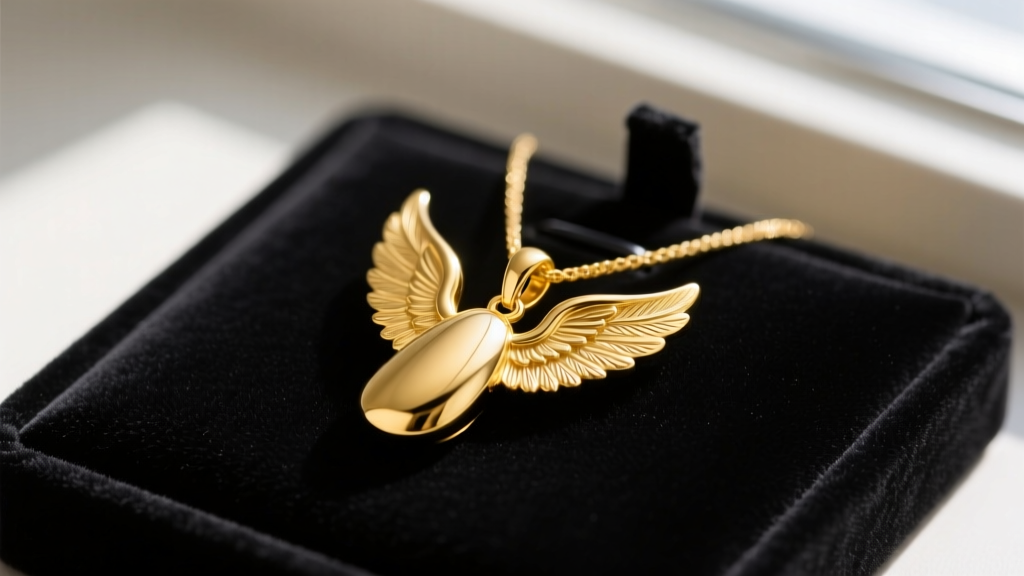
The Allure and Reality of 99.9% Pure Gold
When shopping for a meaningful piece of spiritual or sentimental jewelry, a 24k gold angel necklace often stands out as the ultimate symbol of purity, protection, and divine connection. In many cultures, particularly across East Asia and the Middle East, pure gold is the only acceptable metal for religious and spiritual talismans. The rich, buttery, almost orange-yellow hue of 99.9% pure gold is unmistakable and carries an intrinsic investment value that lower-karat alloys simply cannot match.
However, translating the delicate, intricate features of an angel—such as feathered wings, a flowing robe, and a fragile halo—into pure 24k gold presents a significant metallurgical challenge. Pure gold is notoriously soft. According to the Gemological Institute of America (GIA), the addition of alloy metals like copper, silver, and zinc is what gives jewelry its structural integrity. When you remove those alloys to achieve 24k purity, you are left with a metal that behaves more like stiff clay than hardened steel. Understanding the material properties of 24k gold is essential before investing in an angel pendant meant for daily wear.
The Hardness Scale: Why Angel Wings Bend
To understand why a 24k gold angel necklace requires special care, we must look at the Vickers Hardness (HV) scale, which measures a metal's resistance to permanent indentation and scratching. The difference in hardness between pure gold and standard jewelry alloys is staggering.
| Gold Purity | Karat | Vickers Hardness (HV) | Suitability for Intricate Pendants |
|---|---|---|---|
| 99.9% Pure | 24k | 25 - 30 HV | Poor (Requires thick, rounded casting) |
| 75.0% Pure | 18k | 120 - 130 HV | Good (Holds moderate detail well) |
| 58.3% Pure | 14k | 140 - 150 HV | Excellent (Ideal for sharp filigree) |
| 41.7% Pure | 10k | 160 - 170 HV | Superior (Highly durable, less luster) |
As the table illustrates, 14k gold is roughly five times harder than 24k gold. If an angel pendant features sharp, protruding wing tips or a delicate, raised halo stamped in 24k gold, those features will bend, warp, or flatten within weeks of being worn under clothing. The friction from a simple cotton t-shirt, combined with the occasional bump against a doorway or desk, is enough to permanently deform pure gold.
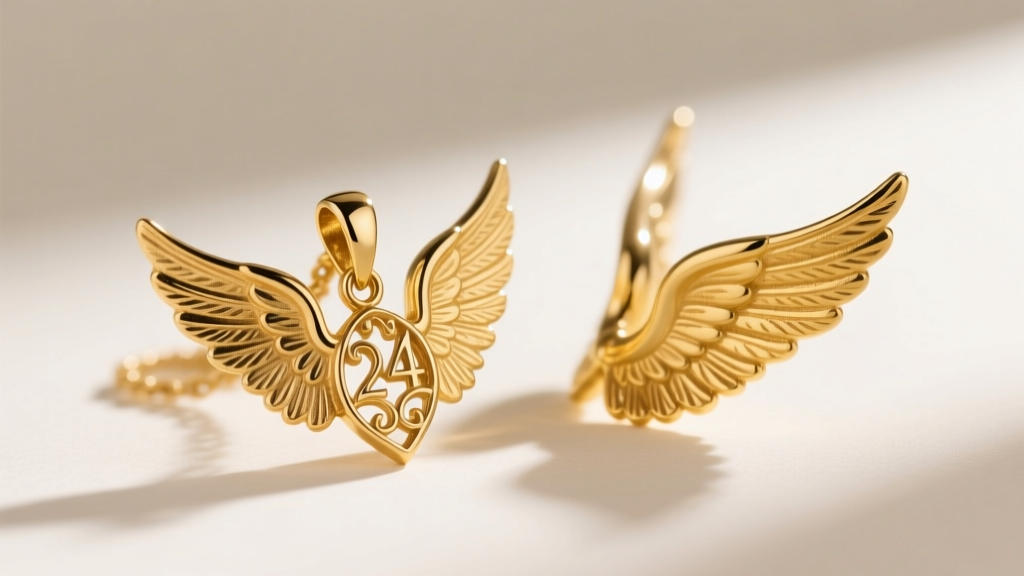
Design Compromises: How Jewelers Engineer 24k Pendants
Because of the extreme malleability of pure gold, master jewelers must adapt their design and manufacturing techniques when crafting a 24k gold angel necklace. If you are examining a high-quality pure gold angel pendant, you will notice specific engineering choices designed to mitigate the metal's softness.
Thick Casting and Rounded Edges
Intricate filigree and sharp, undercut angles are impossible in 24k gold. Instead, jewelers use lost-wax casting to create angel pendants with thicker dimensions. A well-made 24k angel wing will have a minimum thickness of 1.5mm to 2.0mm at the base, tapering to no less than 1.0mm at the tips. Furthermore, all edges are heavily polished and rounded. Sharp corners act as stress concentrators and will easily snap or fold; rounded edges distribute kinetic energy and resist deformation.
Protective Bezels and Resin Encasement
To preserve the intricate facial features and delicate wing feathers of an angel pendant, some high-end jewelers encase the 24k gold relief in a protective layer of clear, jewelry-grade cold enamel or resin. Alternatively, the 24k gold angel may be set inside a rigid 18k or 14k gold bezel frame. The harder outer frame takes the brunt of daily impacts, shielding the softer pure gold center from scratches and bends.
The Chain Problem: Friction Wear and Bail Destruction
One of the most overlooked aspects of buying a 24k gold angel necklace is the interaction between the pendant's bail (the loop the chain passes through) and the chain itself. This is where many owners experience catastrophic failure.
The Saw Effect: If you thread a harder metal chain (like 14k or 18k gold) through a softer 24k gold bail, the chain acts like a microscopic file. Over months of daily wear, the friction will literally saw through the pure gold bail, causing you to lose your pendant.
To prevent this, you have two options. First, you can purchase a 24k gold chain, such as a smooth snake chain or a tightly woven box chain, ensuring that the hardness of the chain matches the hardness of the bail. Second, and more commonly, expert jewelers will line the inside of the 24k pendant's bail with a hidden sleeve of stainless steel or 14k gold. This reinforced insert bears the friction of the chain, protecting the pure gold exterior from wearing through.
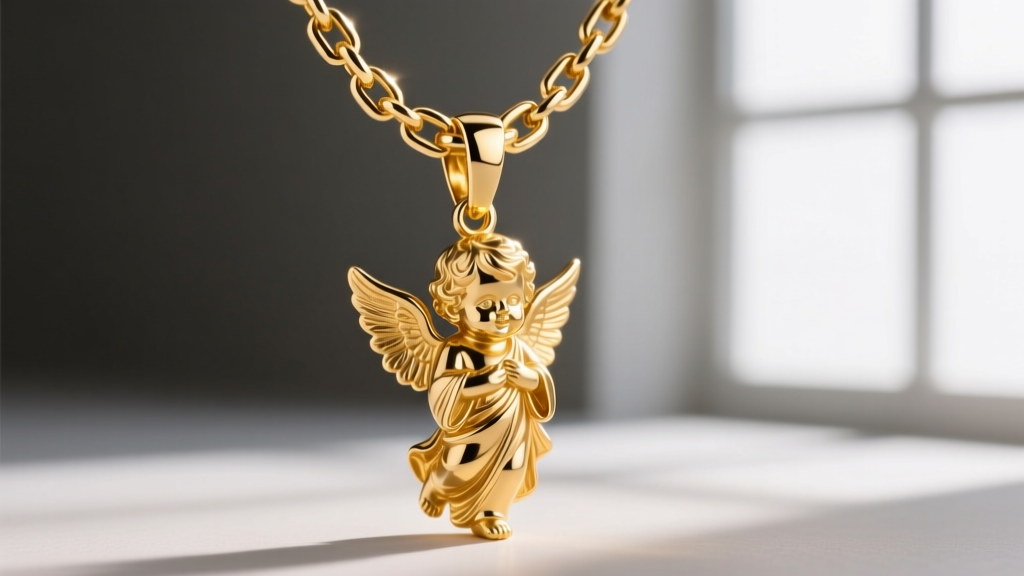
Hallmarks, Authenticity, and Avoiding Fakes
Because 24k gold commands a premium price, the market is flooded with gold-plated or gold-filled angel pendants masquerading as solid pure gold. When evaluating a piece, you must look beyond the color and scrutinize the hallmarks.
- The '999' Stamp: Genuine 24k gold is almost always stamped with '999' or '9999', indicating 99.9% or 99.99% purity. A stamp reading '24k' alone is less common in modern international jewelry and should be verified.
- Assayer and Maker Marks: Reputable brands, particularly major Asian jewelers like Chow Tai Fook or Lao Feng Xiang, include distinct maker's marks alongside the purity stamp. These are often laser-engraved in microscopic text on the back of the angel's wing or the base of the pendant.
- Specific Gravity Testing: If you are buying a vintage or unbranded 24k gold angel necklace, ask the jeweler to perform a specific gravity test. Pure gold has a specific gravity of 19.32. Heavy gold-plated items over tungsten or silver cores will fail this non-destructive test.
Pricing and Investment Value
Unlike 14k or 18k jewelry, where the craftsmanship and brand markup often eclipse the intrinsic metal value, a 24k gold angel necklace is priced much closer to the daily spot price of gold. According to data tracked by the World Gold Council, pure gold jewelry is often treated as a liquid asset.
Expect to pay the current melt value of the gold's weight, plus a craftsmanship premium ranging from 15% to 40%. For example, if the spot price of gold is $80 per gram, a solid 6-gram 24k angel pendant contains $480 worth of raw gold. With a 30% maker's markup for the intricate casting and polishing, the retail price would be approximately $624. Be highly suspicious of '24k' angel necklaces selling for $50 to $100; these are invariably gold-plated brass or stainless steel.
Material Alternatives for Intricate Angel Pendants
If your heart is set on an angel necklace with razor-sharp wing details, micro-pave diamond halos, and delicate facial features, 24k gold is the wrong material. For high-definition intricacy, you should pivot to the following alternatives:
- 18k Yellow Gold (75% Pure): Offers a rich, warm yellow color that closely mimics 24k but possesses four times the hardness. It is the luxury standard for detailed religious pendants in Western markets.
- 14k Yellow Gold (58.3% Pure): The ultimate choice for everyday durability. It will not bend, warp, or scratch easily, making it ideal for active individuals who want to wear their guardian angel pendant 24/7.
- Platinum or White Gold: If you prefer a modern, celestial aesthetic, platinum offers supreme density and durability, allowing for the thinnest, most delicate angel wing filigree without the risk of structural failure.
Final Verdict: Heirloom vs. Everyday Wear
A 24k gold angel necklace is a beautiful, culturally significant, and financially sound purchase, but it must be treated as a modern heirloom rather than everyday armor. Its buttery luster and spiritual purity are unmatched, but the laws of metallurgy dictate that it will show the story of its wear through softened edges and minor warps. If you choose 24k, opt for a thick, rounded casting, ensure the bail is reinforced, and pair it with a smooth, pure gold chain. If you demand crisp, lifelong detail, step down to 18k gold, and let the alloy do the work of preserving your guardian angel's wings.


