Beginner Guide to Buying a Real Vintage Pearl Necklace
Learn how to identify, authenticate, and buy a real vintage pearl necklace. Expert tips on nacre, luster, drill holes, and pricing for beginners.

Introduction to Vintage Pearl Jewelry
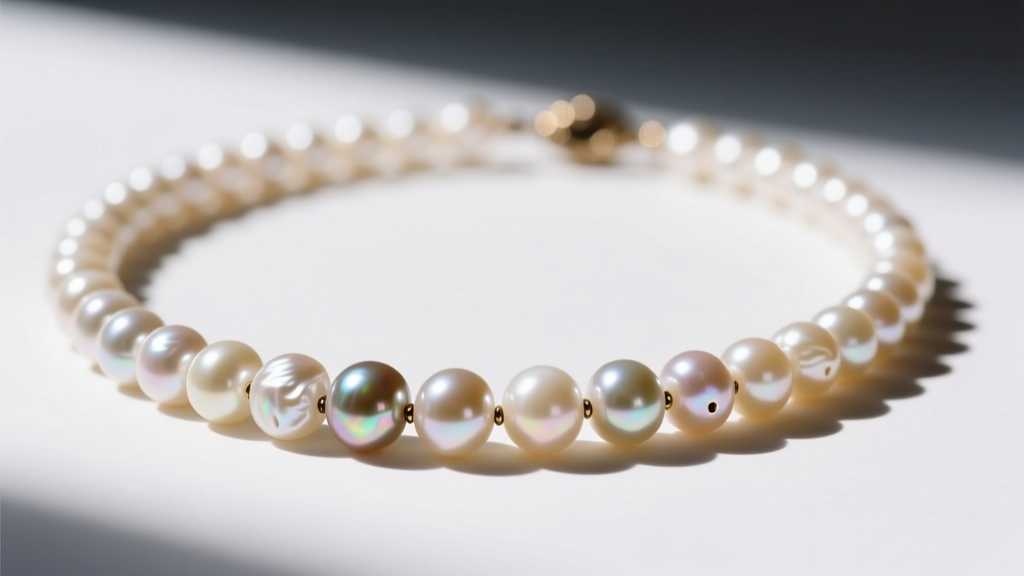
The allure of a real vintage pearl necklace transcends fleeting fashion trends. Unlike modern, mass-produced jewelry, vintage pearls carry a rich history, exceptional craftsmanship, and a distinct depth of luster that is increasingly difficult to find in today's market. For beginners stepping into the estate jewelry space, the terminology and authentication processes can feel overwhelming. What separates a genuine mid-century treasure from a coated glass imitation? How do you evaluate the quality of the stringing? This comprehensive guide will equip you with the exact gemological frameworks needed to confidently identify, authenticate, and purchase a real vintage pearl necklace.
The 2026 Market for Estate Pearls
As we navigate the 2026 estate jewelry market, the demand for authentic vintage pearls has surged, driven by a collective desire for sustainable, slow-fashion accessories and the enduring 'old money' aesthetic. However, this popularity has also flooded online marketplaces with misleading listings. According to the GIA Pearl Buying Guide, the term 'vintage' generally applies to pieces that are between 20 and 100 years old, encompassing eras from the Roaring Twenties to the late 1990s. Pieces older than 100 years are classified as 'antique.' Understanding the specific characteristics of these bygone eras is your first line of defense against overpaying for modern replicas artificially aged to look vintage.
The Nacre Advantage: Why Older is Often Better
The most critical factor in evaluating any pearl is its nacre—the crystalline substance secreted by the mollusk. When shopping for a real vintage pearl necklace, particularly those featuring Japanese Akoya pearls from the 1950s through the 1980s, you are often looking at superior nacre quality compared to modern commercial equivalents.
Cultivation Time and Nacre Thickness
Modern commercial Akoya pearls are frequently harvested after just 6 to 8 months in the water, yielding a thin nacre layer of 0.2mm to 0.3mm. Over time, this thin nacre can wear away, revealing the dull shell bead nucleus beneath. In contrast, vintage Akoya pearls were typically cultured for 18 to 24 months. This extended cultivation resulted in nacre thicknesses of 0.5mm to over 1.0mm. This substantial nacre depth is what gives vintage strands their deep, mirror-like luster and subtle 'orient' (the iridescent overtone that dances across the surface). When examining a vintage strand, look for a sharp, high-contrast reflection of light sources on the pearl's surface—a hallmark of thick, high-quality nacre.

Authentication: The Tooth Test and Loupe Inspection
Before you hand over your credit card, you must verify that the pearls are genuine. Fakes have evolved from simple plastic beads to sophisticated 'shell pearls' made from ground oyster shells and coated with synthetic guanine. Here is how to definitively test them.
The Tooth Test
Gently rub the pearl against the biting edge of your front tooth. A real pearl will feel distinctly gritty or sandy, similar to fine sandpaper. This friction is caused by the microscopic, overlapping aragonite platelets that make up the nacre. A fake pearl, regardless of how expensive it looks, will feel perfectly smooth and glassy. Note: Always ask the seller's permission before performing this test on estate jewelry in a physical store.
Drill Hole Inspection with a 10x Loupe
According to the Gemological Institute of America (GIA), examining the drill hole is one of the most reliable ways to spot a fake. Using a standard 10x jeweler's loupe, inspect the area where the string enters the pearl:
- Real Pearls: The edges of the drill hole will be sharp, crisp, and form a clean 90-degree angle. The nacre will look solid and uniform all the way to the center.
- Fake Pearls: The edges will often appear rounded or bulging. You may also see chipping, flaking, or peeling of the artificial coating around the hole, revealing a glass or plastic core underneath.
Decoding Eras, Types, and Pricing
Not all vintage pearls command the same price. The value is heavily dictated by the era of origin, the type of pearl, and the overall condition of the strand. Below is a structured breakdown to help you benchmark pricing in the current market.
| Era | Common Pearl Type | Nacre Quality | Est. Price Range (16-inch Strand) |
|---|---|---|---|
| 1920s-1930s (Art Deco) | Natural or Early Cultured Akoya | Very Thick / Natural | $2,500 - $10,000+ |
| 1950s-1960s (Mid-Century) | High-Grade Cultured Akoya | Thick (0.5mm+) | $800 - $3,500 |
| 1970s-1980s | Akoya & Early Freshwater | Medium-Thick | $400 - $1,500 |
| 1990s | Freshwater (Rice/Potato shapes) | Solid Nacre (No bead) | $150 - $600 |
Evaluating Clasps and Stringing Materials
A real vintage pearl necklace of high value is defined just as much by its construction as by the pearls themselves. High-end vintage strands were treated as luxury investments, and the stringing reflects this.
Silk Knotting and French Wire
Authentic vintage strands are almost exclusively strung on pure silk thread. Crucially, there should be a hand-tied knot between every single pearl. This prevents pearl-on-pearl abrasion (which can wear down the nacre over decades) and ensures that if the strand snaps, you only lose one pearl. Additionally, look for 'French wire' (also known as gimp)—a microscopic coiled metal spring placed over the silk right before it enters the clasp. This protects the delicate silk from fraying against the sharp edges of the metal clasp.
Clasp Hallmarks and Mechanisms
The clasp on a genuine vintage piece will typically be crafted from solid 14k or 18k gold, or occasionally platinum for the highest-end Art Deco pieces. Look for a 'box clasp' that features a figure-eight safety catch—a secondary wire loop that snaps over a small peg to prevent loss if the primary box mechanism fails. Use your loupe to search for hallmarks such as '14K', '18K', '585', or '750'. If the clasp is unmarked, base metal, or features a cheap lobster claw (which was not widely used on fine pearls until the late 1990s), proceed with extreme caution.
Where to Buy and Red Flags to Avoid
When sourcing a real vintage pearl necklace, prioritize reputable estate jewelers, established auction houses, and specialized online vintage dealers who provide high-resolution macro photography of the drill holes and clasps. Avoid listings that use stock photos or heavily filtered images that artificially enhance the pearl's luster.
Major Red Flags:
- Perfect Uniformity: Vintage cultured pearls were hand-matched. While high-end strands are very uniform, they will still have microscopic variations in size and overtone. A strand that looks mathematically perfect and plasticky is likely a modern synthetic.
- No Knots: If a purported 1950s luxury pearl strand is strung on unknotted wire or nylon, it has either been poorly restrung by an amateur, or it is a low-end costume piece.
- Yellowing Silk: While aged silk is normal, heavily soiled or stretched silk means the necklace requires immediate professional restringing. Factor the cost of restringing (typically $5 to $10 per inch of silk knotting) into your negotiation.
Final Thoughts
Acquiring a real vintage pearl necklace is an exercise in patience and observation. By focusing on the thickness of the nacre, the crispness of the drill holes, and the quality of the silk knotting and gold clasps, you can confidently navigate the estate market. These timeless pieces are not just beautiful accessories; they are wearable artifacts of gemological history that, when chosen correctly, will retain their elegance and value for generations to come.