The Ultimate Guide to Choosing a Colorful Seashell Necklace
Discover how to choose, style, and care for a colorful seashell necklace. Learn about authentic vs. resin shells, stringing materials, and neckline pairings.

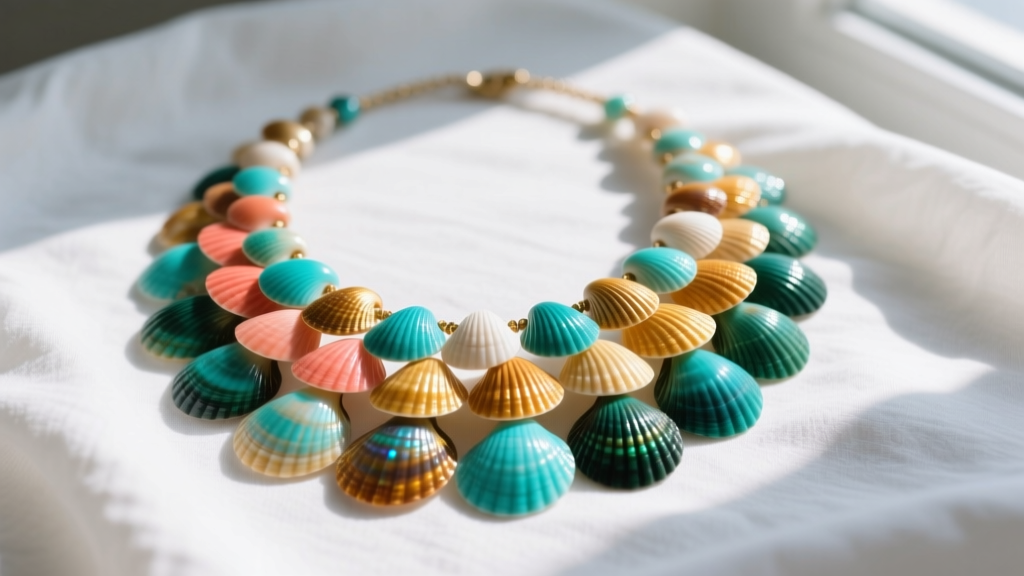
The Resurgence of Shell Jewelry: Beyond the Souvenir Shop
When most people hear the term 'shell jewelry,' they immediately picture childhood beach vacations and brittle, poorly strung souvenirs. However, the modern colorful seashell necklace has evolved into a sophisticated staple of contemporary warm-weather wardrobes and bohemian-chic layering. High-end artisans and contemporary jewelry brands are now utilizing advanced dyeing techniques, premium hardware, and ethically sourced organic materials to elevate the humble seashell into a statement piece.
For beginners navigating this vibrant market, the primary challenge lies in distinguishing between mass-produced, low-durability tourist trinkets and meticulously crafted jewelry designed to last. This guide breaks down the exact material grades, stringing mechanics, and styling frameworks you need to know before investing in your next colorful seashell necklace.
Material Breakdown: Authentic vs. Enamel vs. Resin
Not all colorful shells are created equal. The base material and the method used to apply color will dictate the necklace's weight, drape, and longevity. According to the GIA Gem Encyclopedia, organic gem materials like shells require specific structural integrity to hold polish and dye without degrading.
| Material Type | Base Composition | Color Application | Durability & Fading | Average Price Range |
|---|---|---|---|---|
| Dyed Puka Shell | Natural cone shell (Conus miliaris) | Penetrating reactive dyes | High; color is locked into the porous calcium carbonate | $45 - $120 |
| Dyed Mother of Pearl | Nacreous inner layer of oysters/abalone | Surface coating or shallow dye bath | Medium; prone to scratching which reveals white base | $60 - $150 |
| Enamel over Brass | Casted brass shaped like shells | Vitreous enamel or cold epoxy | High; impervious to water, but enamel can chip if dropped | $80 - $250 |
| Epoxy Resin | Synthetic polymer molded into shells | Pigment mixed directly into resin | Low; yellows under UV exposure, lightweight and cheap | $15 - $35 |
The Dye Test: How to Spot Surface Paint
If you are buying an authentic dyed puka or cowrie shell, inspect the drill holes. High-quality manufacturers use penetrating reactive dyes that color the shell all the way through. If you see a stark white ring inside the bead hole, the manufacturer used a cheap surface paint or spray. This surface paint will inevitably rub off against your skin or clothing within a few weeks of wear.
Stringing & Hardware: The Hidden Failure Points
The most common reason a colorful seashell necklace breaks has nothing to do with the shells themselves; it is a failure of the stringing material. Shells are essentially calcium carbonate with microscopic crystalline structures. When drilled, the inside of the hole is often jagged and sharp, acting like a tiny saw blade against the cord.
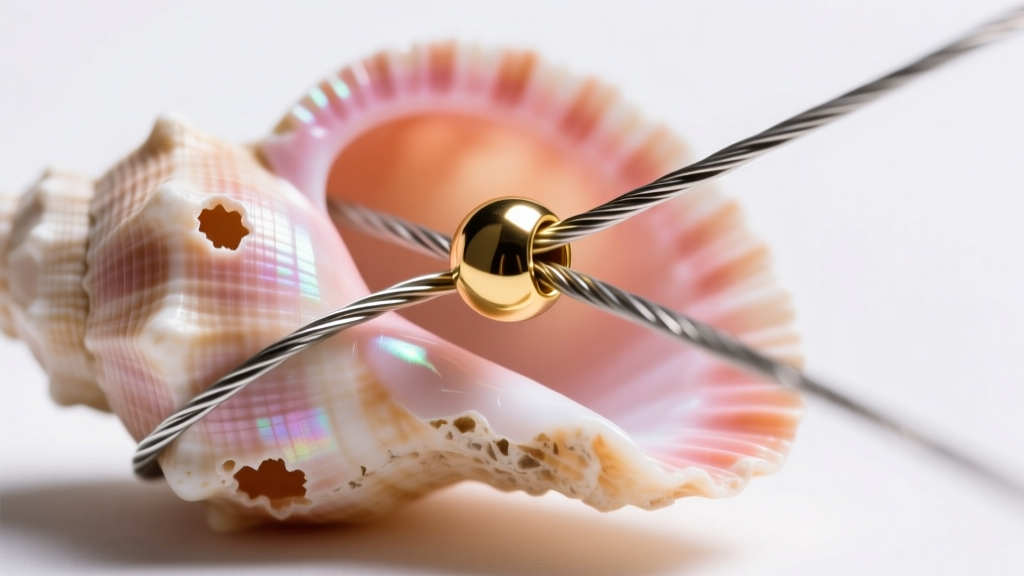
Cord Types and Tensile Strength
- Griffin Silk Thread: Excellent for pearls, but terrible for natural shells. The sharp edges of a shell's drill hole will fray and snap silk thread within months. Avoid silk-strung shell necklaces.
- Waxed Polyester Cord (1mm - 1.5mm): The industry standard for artisan puka necklaces. The wax coating fills the microscopic gaps in the polyester braid, preventing the shell edges from cutting into the core fibers. It also allows for secure macramé sliding knots.
- Soft Flex Wire (0.019" or 0.024" diameter): A multi-strand stainless steel wire coated in nylon. This is the gold standard for heavy, rigid shell necklaces (like large conch or mother of pearl slabs). It is completely bite-proof against jagged drill holes.
Clasp Mechanics
For necklaces strung on waxed cord, look for adjustable sliding macramé closures finished with small metal or shell end-beads. If the necklace uses a metal clasp, ensure the jump rings are soldered (closed with a tiny weld) rather than simply pinched shut. Pinched jump rings will easily pull apart under the weight of heavy, colorful shells.
Styling Framework: Necklines and Layering
A colorful seashell necklace is inherently casual, but its visual weight requires strategic pairing with your wardrobe's necklines to avoid looking cluttered.
Optimal Neckline Pairings
- The Crisp Button-Down: Leave the top two or three buttons undone to create a deep V-shape. A 16-inch to 18-inch colorful puka necklace resting on the bare collarbone provides a striking contrast against structured cotton or linen.
- The Scoop Neck Tee: Opt for a longer, 20-inch to 24-inch shell pendant or single large cowrie shell on a delicate chain. This elongates the torso and prevents the shells from competing with the shirt's hemline.
- The Square Neck: Square necklines create a harsh horizontal line. Soften this by layering a delicate 14k gold-filled chain (15 inches) with a slightly longer colorful seashell necklace (17 inches) to draw the eye downward.
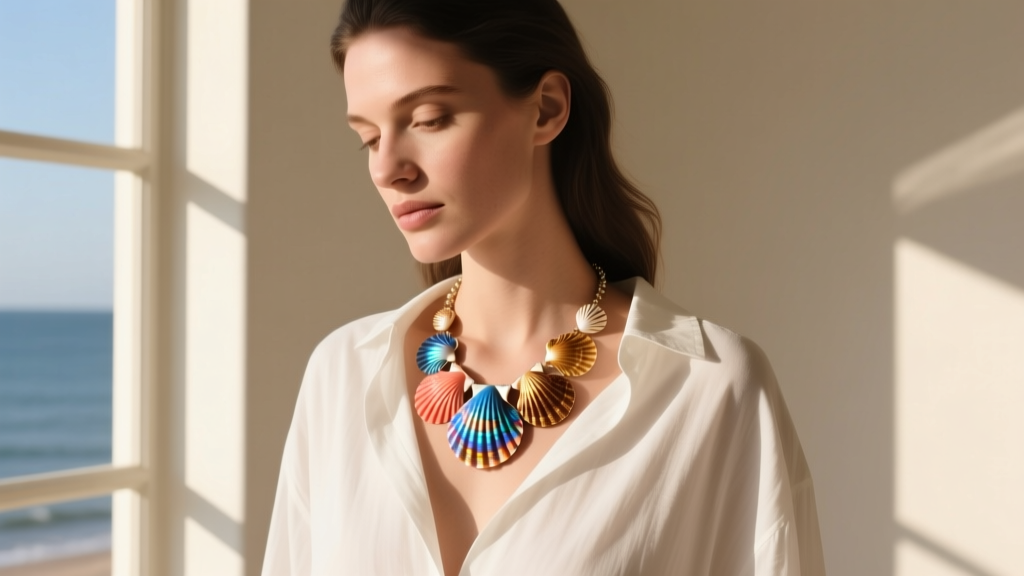
The Art of Mixed-Metal Layering
Shells are organic and matte (unless highly polished). They pair exceptionally well with textured metals. Try layering your colorful shell strand with a 14k gold-filled paperclip chain or a hammered silver pendant. The contrast between the organic, dyed calcium carbonate and the refined, reflective metal creates a sophisticated, curated aesthetic that elevates the shells beyond 'beachwear.'
Care & Maintenance: Preventing Fading and Degradation
Organic materials are highly reactive to their environment. To ensure your colorful seashell necklace maintains its vibrancy and structural integrity, you must adhere to a strict care regimen. The Federal Trade Commission's Jewelry Guides note that organic gems require specialized care to prevent environmental degradation.
Expert Rule of Thumb: 'Last on, first off.' Your seashell necklace should be the final item you put on after applying sunscreen, perfume, and hairspray, and the very first item you remove before showering or swimming.
The Enemies of Colored Shells
- UV Radiation: Prolonged exposure to direct sunlight will bleach reactive dyes over time. Store your necklace in a closed jewelry box or a dark drawstring pouch, never on a sunlit vanity tray.
- Chlorine and Saltwater: While shells come from the ocean, the dyes and the stringing materials do not tolerate salt or chlorine. Saltwater crystallizes inside the drill holes, expanding and causing micro-fractures in the shell. Chlorine will instantly strip surface paints and corrode brass hardware.
- Chemical Sunscreens: Avobenzone and octocrylene, common chemical UV filters in sunscreens, can react with the calcium carbonate and the dyes, causing a cloudy, irreversible film on the shell's surface. If you must wear sunscreen, apply it and wait 20 minutes for it to absorb before putting on your necklace.
Where to Buy: Navigating the Market
When shopping for a colorful seashell necklace, bypass generic fast-fashion retailers. Their inventory is almost exclusively composed of surface-painted resin or low-grade shells strung on fragile cotton threads. Instead, seek out specialized artisan jewelers on platforms like Etsy who explicitly state their use of 'penetrating dyes' and 'Soft Flex wire' or 'waxed polyester.' For higher budgets, contemporary brands like Chan Luu or Gorjana often integrate ethically sourced, high-quality dyed shells into their seasonal collections, offering reliable hardware and consistent craftsmanship. By prioritizing material integrity and stringing mechanics over mere aesthetics, you will secure a vibrant, durable piece that transcends seasonal trends.


