Dalmatian Jasper Necklace Buying Guide: Spotting Fakes & Quality
Discover how to choose an authentic dalmatian jasper necklace. Learn to spot fakes, evaluate stone quality, and pick the perfect metal setting.

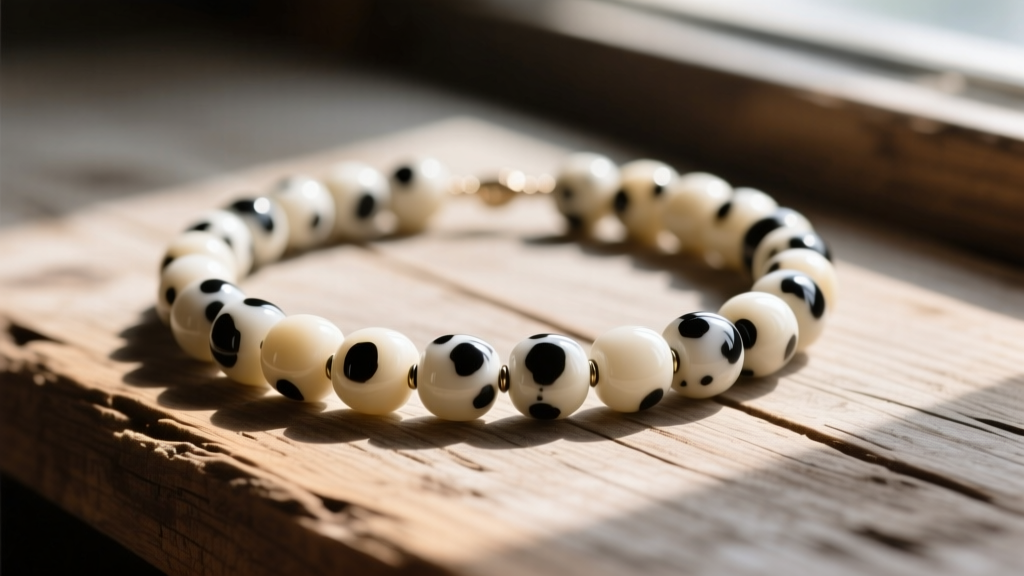
The dalmatian jasper necklace has surged in popularity, prized for its playful yet grounding aesthetic. With its cream-colored base and striking black speckles, it offers a unique alternative to traditional solid-color gemstones. However, as demand has risen, so has the market saturation of dyed imitations and poorly constructed beaded strands. Whether you are looking for a simple beaded choker or a statement wire-wrapped pendant, knowing how to evaluate the stone's authenticity, structural integrity, and craftsmanship is essential.
The Mineralogy: Why 'Jasper' is a Misnomer
To buy intelligently, you must first understand what you are actually purchasing. Despite its commercial name, dalmatian jasper is not a true jasper. True jasper is a microcrystalline variety of quartz. Dalmatian stone, conversely, is an aphanitic igneous rock (often classified as a felsite or rhyolite) composed primarily of feldspar and quartz.
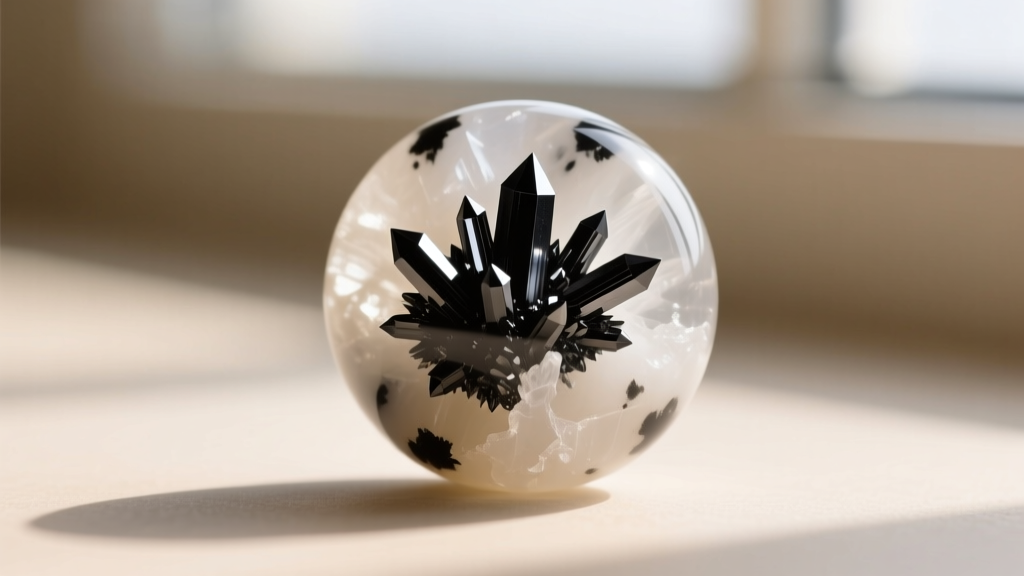
The signature black spots are not random pigment dumps; they are distinct crystal inclusions of arfvedsonite, a sodium-iron amphibole mineral. This geological distinction is crucial for buyers because it dictates the stone's durability. With a Mohs hardness rating of 6.5 to 7, a genuine dalmatian stone necklace is highly durable for daily wear, but the varying densities between the feldspar matrix and the arfvedsonite inclusions can create microscopic fault lines if the stone is subjected to hard impacts.
Authenticity Tests: Spotting Dyed Howlite and Glass
The most common counterfeit in the dalmatian jasper necklace market is dyed howlite or dyed marble. Because howlite is highly porous, manufacturers can easily inject black dyes to mimic arfvedsonite spots. Here is how to separate the genuine igneous rock from the fakes:
- Examine the Spot Edges: Genuine arfvedsonite inclusions have sharp, irregular, and sometimes feathery edges where the crystal grew into the host rock. Dyed howlite will show soft, blurred, or web-like edges where the dye bled into the stone's natural pores.
- The Acetone Test: If you are buying from a vendor who allows testing, a cotton swab dipped in nail polish remover (acetone) rubbed vigorously on a black spot will lift the dye from a fake, leaving a black smudge on the cotton. Genuine arfvedsonite will not transfer color.
- Weight and Temperature: Glass imitations feel unnaturally smooth and warm to the touch much faster than genuine stone. True dalmatian jasper has a dense, heavy hand-feel and remains cool against the skin for a longer period.
Bead Sizing and Stringing Materials: A Structural Guide
A major failure point in beaded gemstone jewelry is the stringing material. Stone beads are heavy, and their drilled holes often have sharp, unpolosed edges that act like tiny saws against the cord. When evaluating a dalmatian jasper bead necklace, pay strict attention to the sizing and the stringing medium.
Weight vs. Stringing Tensile Strength
An 8mm bead strand weighs approximately 45 grams, while a chunky 12mm bead strand can exceed 110 grams. Many mass-produced necklaces use cheap elastic cord to save on manufacturing costs. Elastic degrades with exposure to skin oils, UV light, and the friction of the bead holes, inevitably leading to a snapped necklace and lost stones.
What to look for: High-quality necklaces will be strung on 49-strand micro-wire (typically 0.018" to 0.024" in thickness) made of stainless steel. The ends should be finished with sterling silver or gold-filled crimp beads, secured with a crimp cover, and protected by a wire guardian (a small metal horseshoe finding) where the wire loops through the clasp. If a heavy 10mm or 12mm dalmatian jasper necklace is strung on elastic, walk away.
Grading Matrix: Evaluating the Spots
Unlike diamonds, there is no universally standardized gemological grading system for dalmatian jasper. However, reputable lapidaries and high-end jewelers sort the material into three distinct tiers based on the contrast, distribution, and base color of the stone.
| Grade | Base Matrix Color | Spot Distribution & Contrast | Common Use Case |
|---|---|---|---|
| Grade A (Commercial) | Muddy grey or yellowish-white | Faint, sparse, or clustered spots; low contrast | Mass-market beaded strands, craft beads |
| Grade AA (Jewelry) | Opaque cream or pale ivory | Evenly distributed spots; sharp black contrast | Premium beaded necklaces, cabochon pendants |
| Grade AAA (Collector) | Bright, pure white/pinkish-white | Dense, distinct spots with occasional amber inclusions | High-end wire-wrapped pendants, designer pieces |
Metal Pairings and Pendant Settings
When opting for a dalmatian jasper pendant necklace rather than a beaded strand, the metal setting plays a massive role in the overall aesthetic and longevity of the piece. Because the stone features an earthy, neutral palette, it pairs exceptionally well with specific metals.
Oxidized Sterling Silver: This is the premier choice for dalmatian stone. The darkened crevices of oxidized silver perfectly echo the black arfvedsonite spots, creating a cohesive, vintage-inspired look. Ensure the silver is stamped '925' to guarantee authenticity.
Copper and Brass: For a bohemian or rustic aesthetic, uncoated copper or solid brass bezels complement the warm, creamy undertones of the stone. Be aware that copper will develop a natural patina over time, which many wearers desire, but it requires occasional polishing with a mild acid like lemon juice and salt.
Avoid Gold Plating over Base Metals: Cheap gold-plated brass settings will eventually wear through, exposing the base metal which can react with skin acidity and turn your neck green. If you prefer gold, insist on heavy gold vermeil (at least 2.5 microns of gold over sterling silver) or solid 14k gold-filled settings.

Pricing Tiers in the Current Market
Understanding the pricing landscape prevents you from overpaying for commercial-grade material or falling for 'too good to be true' scams. Based on current market data for authentic, well-crafted pieces, here is what you should expect to pay:
- Commercial Beaded Strands (Grade A, 6mm-8mm, elastic or basic wire): $15 to $35. These are widely available and suitable for casual, everyday wear.
- Premium Beaded Strands (Grade AA, 8mm-10mm, 49-strand wire, sterling clasps): $45 to $85. This is the sweet spot for quality and durability.
- Artisan Pendants (Grade AA/AAA, hand-cut cabochon, sterling silver bezel or wire-wrap): $60 to $150. You are paying for the lapidary work, the custom setting, and the high-grade stone selection.
- Fine Jewelry Integration (Solid 14k gold settings, custom faceting or inlay): $250 to $600+. Rare, but produced by independent metalsmiths who treat dalmatian stone as a premium gem.
Care, Cleansing, and Maintenance
While a Mohs hardness of 6.5 to 7 makes your necklace resistant to everyday scratches, the differing hardness levels between the quartz/feldspar matrix and the amphibole inclusions mean the stone can be vulnerable to thermal shock and harsh chemicals.
Never place a dalmatian jasper necklace in an ultrasonic cleaner. The high-frequency vibrations can exploit microscopic fault lines between the inclusions and the host rock, causing the bead or cabochon to fracture. Similarly, avoid steam cleaners. For routine cleaning, follow the GIA's gemstone care guidelines for opaque stones: use a soft-bristled brush, warm water, and a mild, non-detergent soap. Dry thoroughly with a microfiber cloth before storing. To prevent the arfvedsonite spots from looking dull over time, you can occasionally buff the stone with a tiny drop of mineral oil to restore its natural luster and deepen the contrast of the black spots.


