The Anatomy of a 3 Diamond Pendant Necklace: Expert Guide
Master the technical details of a 3 diamond pendant necklace. Explore carat distribution, setting types, chain pairings, and exact pricing tiers.

The Architecture of the Trilogy Pendant
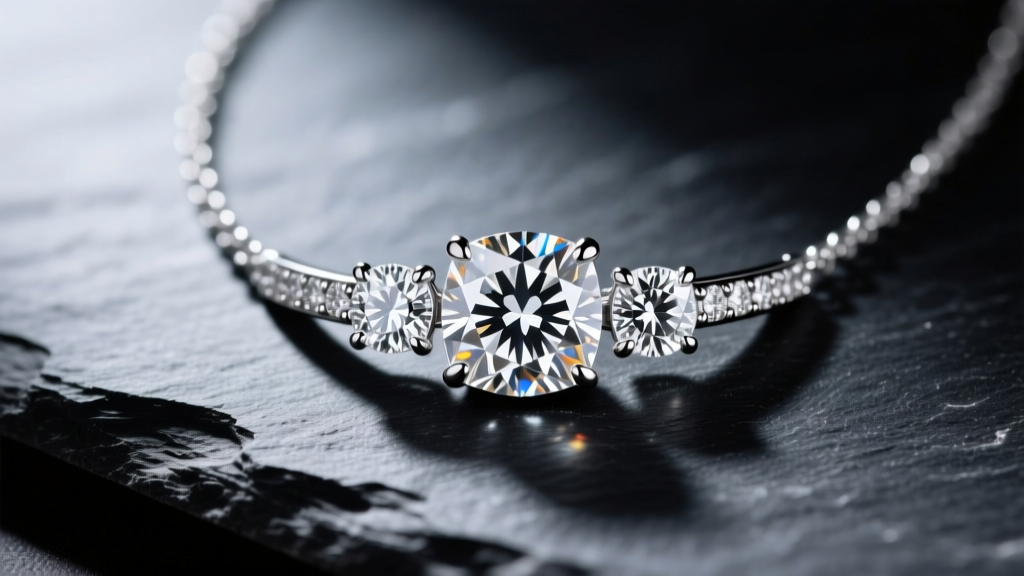
A 3 diamond pendant necklace—often referred to as a trilogy or three-stone pendant—is a masterclass in balanced proportions and light performance. Unlike diamond studs that sit flush against the ear, or engagement rings that endure heavy lateral impacts, a pendant faces a unique set of physical and optical challenges. It hangs suspended, subject to constant kinetic movement, flipping, and friction against clothing. From an expert perspective, evaluating a three-stone pendant requires looking far beyond the basic 4Cs. You must analyze the carat distribution ratio, the center of gravity dictated by the bail design, and the structural integrity of the setting baskets. In this deep dive, we deconstruct the exact technical specifications that separate a poorly constructed pendant from a lifelong heirloom.
Carat Weight Distribution: The Visual Ratios
The total carat weight (TCW) of a 3 diamond pendant necklace tells only half the story. The distribution of that weight across the three stones dictates the piece's visual footprint and price point. The industry standard for a graduated trilogy is the 50/25/25 ratio. In a 1.00 CTW pendant, this translates to a 0.50-carat center stone (approximately 5.1mm in diameter) flanked by two 0.25-carat side stones (approximately 4.0mm each). This creates a natural, tapering aesthetic that draws the eye toward the sternum.
Alternatively, an equal-weight distribution (e.g., three 0.33-carat stones, each measuring roughly 4.4mm) offers a modern, geometric look but requires a heavier, more rigid setting to keep the stones aligned. When reviewing grading reports, always verify the exact millimeter measurements. A poorly cut 0.50-carat diamond might have a spread of only 4.8mm, making the entire 3 diamond pendant necklace look significantly smaller than its TCW suggests.
Setting Mechanics and Kinetic Security
Because pendants swing and occasionally flip upside down, the setting must secure the stones without creating snag points. The choice between prong, bezel, and channel settings drastically alters both the security and the light return of the diamonds.
Independent Baskets vs. Shared Prongs
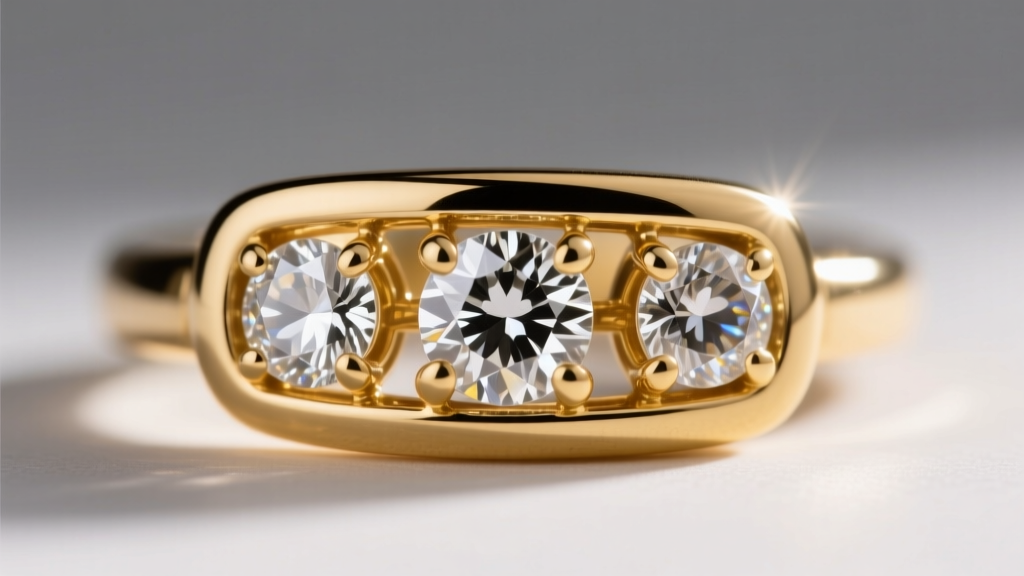
Many mass-market 3 diamond pendant necklaces utilize shared prongs (where one prong secures the edges of two adjacent stones) to maximize diamond visibility and minimize metal weight. However, this is a structural vulnerability. If a shared prong catches on a knit sweater and bends back, two stones are immediately at risk of falling out. For daily wear, independent basket settings are mandatory. Each diamond should sit in its own four-prong or six-prong basket, soldered to a unified horizontal gallery wire. This ensures that an impact to one side of the pendant does not compromise the structural integrity of the adjacent stones.
The Bezel Alternative
For active lifestyles or medical professionals who cannot wear pronged jewelry, a full bezel setting is the optimal choice. A 14k or 18k gold bezel rim completely encircles the diamond's girdle. While a bezel setting reduces the visible surface area of the diamond by roughly 8-10%, it completely eliminates snagging and protects the girdle from chipping—a common failure mode in prong-set pendants that frequently strike hard surfaces.
The Physics of the Hang: Bail Design and Chain Pairing
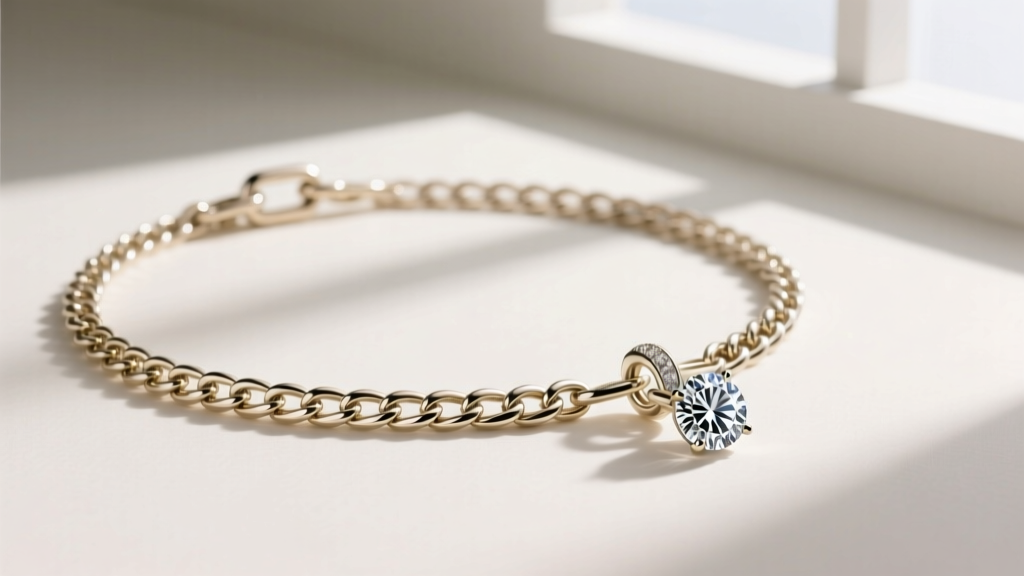
The most overlooked component of a 3 diamond pendant necklace is the bail—the loop that connects the pendant to the chain. The bail determines the pendant's center of gravity. A poorly designed bail will cause the pendant to perpetually flip upside down, showing the wearer the back of the setting baskets rather than the diamonds.
Expert Insight: Avoid standard soldered jump rings on heavy trilogy pendants. Instead, look for an integrated hidden bail or a tapered V-bail that is cast directly into the gallery of the center stone's basket. This lowers the center of gravity and forces the pendant to lay flat against the collarbone.
Chain Gauge and Clasp Matrix
A 1.50 CTW pendant in 18k gold typically weighs between 2.5 and 3.5 grams. Pairing this with a delicate 0.5mm cable chain is a recipe for a broken necklace. The chain must possess a tensile strength that exceeds the pendant's weight while remaining flexible enough to drape elegantly. According to metallurgical standards for jewelry, the chain's break strength should be at least four times the weight of the pendant.
| Chain Style | Recommended Gauge (mm) | Max Pendant Weight | Best Clasp Type |
|---|---|---|---|
| Box Chain | 0.9mm - 1.1mm | Up to 4.0 grams | Solid Lobster |
| Wheat (Spiga) Chain | 0.8mm - 1.0mm | Up to 5.0 grams | Solid Lobster |
| Cable Chain | 1.2mm - 1.5mm | Up to 3.0 grams | Spring Ring (Heavy Duty) |
| Rope Chain (Hollow) | 1.5mm+ | Not Recommended | N/A (Prone to crushing) |
Always ensure the clasp is a solid lobster claw rather than a standard spring ring, which features a weak internal tension spring that degrades over time. Furthermore, the jump ring connecting the clasp to the chain should be laser-soldered shut to prevent the chain from slipping through the gap.
Prioritizing the 4Cs for Pendant Viewing Distances
Diamond grading must be contextualized by how the jewelry is worn. A 3 diamond pendant necklace rests on the sternum, typically 12 to 18 inches away from the observer's eye. This distance fundamentally changes which of the 4Cs (Cut, Color, Clarity, Carat) hold actual value. For a comprehensive breakdown of diamond grading fundamentals, refer to the Gemological Institute of America (GIA) guidelines.
- Cut (The Priority): Because the pendant is viewed from a distance, light return (brilliance and scintillation) is the only optical property that registers. Insist on Excellent or Ideal cut grades. A poorly cut diamond will look like a dull piece of glass from 15 inches away, regardless of its color or clarity.
- Color (The Compromise): In white gold or platinum settings, G or H color diamonds appear completely colorless at pendant viewing distances. Paying a premium for D or E color in a pendant yields zero visible return on investment.
- Clarity (The Savings): Inclusions that are visible under 10x magnification are entirely invisible to the naked eye at a distance of one foot. VS2 or even eye-clean SI1 clarity grades are the smartest technical choices for a trilogy pendant, allowing you to reallocate budget toward a higher total carat weight.
2026 Market Pricing: Natural vs. Lab-Grown
The pricing landscape for diamond jewelry has shifted dramatically. When purchasing a 3 diamond pendant necklace, understanding the current market premiums for natural stones versus the value proposition of lab-grown diamonds is critical. According to Federal Trade Commission (FTC) jewelry guides, sellers must clearly disclose the origin of the stones. Lab-grown diamonds possess the exact same chemical and optical properties as mined diamonds but are priced at a fraction of the cost, allowing buyers to achieve a 2.00 CTW footprint for the price of a 0.50 CTW natural stone.
| Total Carat Weight (TCW) | Natural Diamond Pricing (G/VS2) | Lab-Grown Pricing (G/VS2) | Best Value Proposition |
|---|---|---|---|
| 0.50 CTW (Graduated) | $1,200 - $1,800 | $400 - $650 | Natural (Entry-level heirloom) |
| 1.00 CTW (Graduated) | $3,500 - $5,200 | $800 - $1,300 | Lab-Grown (Maximum visual impact) |
| 2.00 CTW (Graduated) | $11,000 - $16,000 | $1,800 - $2,800 | Lab-Grown (Luxury footprint) |
Final Verification Checklist Before Purchase
Before finalizing your acquisition of a 3 diamond pendant necklace, run through this technical checklist to ensure you are buying a structurally sound and optically optimized piece:
- Verify Independent Baskets: Confirm that each of the three stones has its own dedicated prongs, avoiding shared-prong vulnerabilities.
- Check the Bail Integration: Ensure the bail is integrated or reinforced to prevent the pendant from constantly flipping backward.
- Match Chain Tensile Strength: Weigh the pendant and ensure the chosen chain gauge (preferably a 1.0mm box or wheat chain) can support at least four times that weight.
- Demand Proper Certification: For natural diamonds over 0.30ct per stone, require GIA or AGS reports. For lab-grown, IGI or GCAL reports are the industry standard.
By prioritizing structural engineering and optical physics over superficial grading metrics, you secure a trilogy pendant that not only dazzles from across the room but withstands the physical demands of daily wear for decades.


