What Is a Hand Necklace? Hamsa & Skeletal Buying Guide
Discover what a hand necklace is, from symbolic Hamsa pendants to gothic anatomical designs. Expert buying guide on materials, sizing, and care.

Defining the Hand Necklace: Symbolism Meets Anatomy
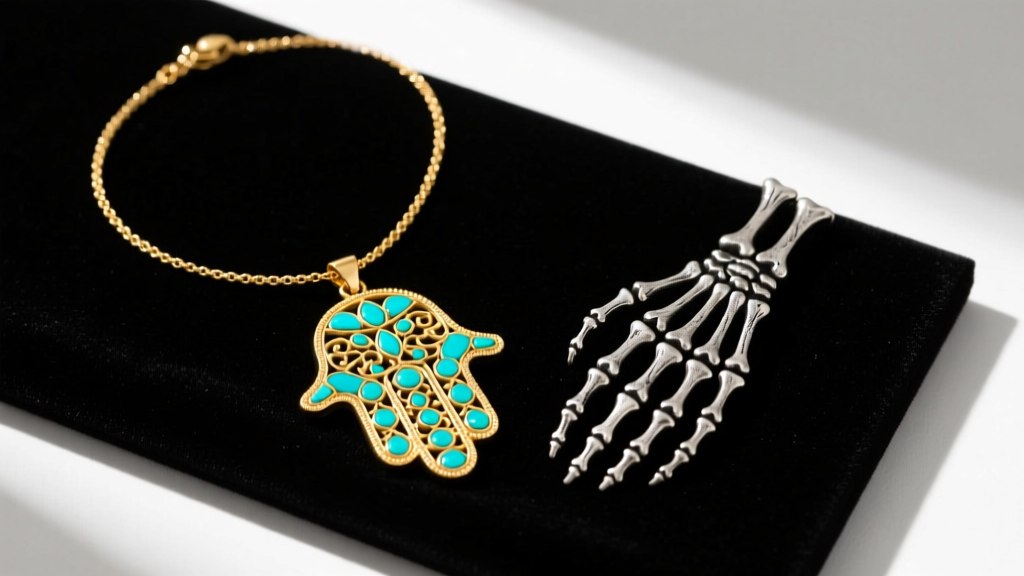
When jewelry enthusiasts and collectors ask, "what is a hand necklace?", the answer spans thousands of years of human history and crosses into modern avant-garde design. At its core, a hand necklace is a pendant necklace where the primary motif is a human hand. However, in the contemporary jewelry market, this category is sharply divided into two distinct styles: the ancient, protective Hamsa hand (also known as the Hand of Fatima or Hand of Miriam) and the modern, macabre anatomical or skeletal hand.
Understanding what a hand necklace is requires looking at the intent behind the piece. The Hamsa is an amuletic talisman designed to ward off the evil eye and invite abundance, heavily featuring gemstone inlays and intricate enamel work. Conversely, the anatomical hand necklace is a triumph of metallurgical craftsmanship, often featuring articulated phalanges and darkened patinas to highlight biomechanical realism. This comprehensive buying guide will break down exactly what to look for when investing in either style, from metal grades to structural failure points.
The Hamsa Hand: Cultural Heritage and Gemstone Inlays
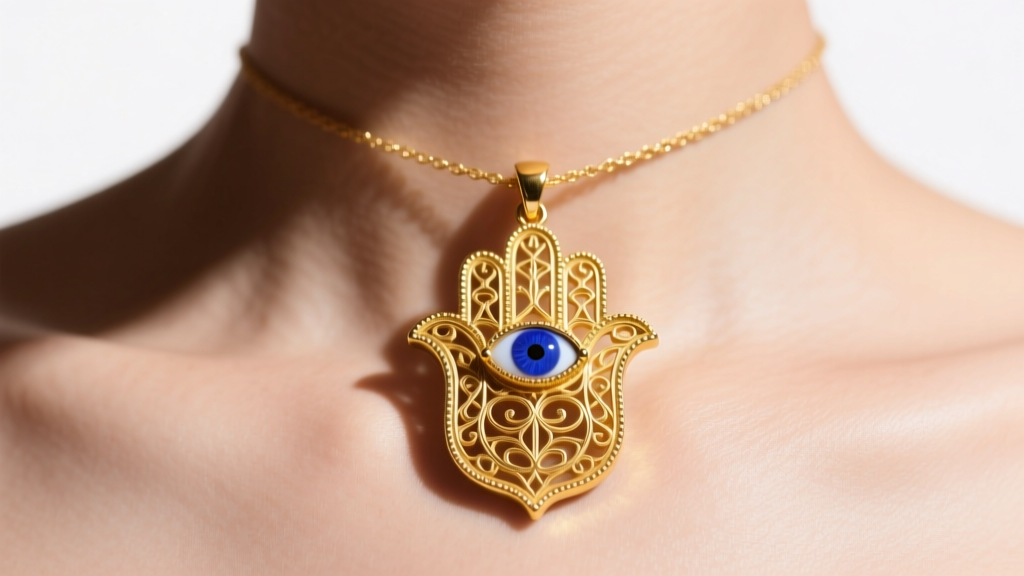
The Hamsa hand is an open right hand, universally recognized across Middle Eastern and North African cultures as a sign of protection. When shopping for a Hamsa hand necklace, the orientation of the hand dictates its specific symbolic function:
- Fingers Pointing Up: The traditional orientation for warding off negative energy, the evil eye, and hexes.
- Fingers Pointing Down: An orientation associated with inviting abundance, fertility, and answered prayers into the wearer's life.
Integrating the Evil Eye (Nazar)
Many Hamsa pendants feature a central eye motif in the palm. According to cultural historians and gemological experts, the most authentic and visually striking evil eye inlays utilize lapis lazuli or turquoise. However, buyers must be aware of the GIA Gem Encyclopedia guidelines regarding these stones. Turquoise sits at a 5 to 6 on the Mohs hardness scale, making it highly porous and susceptible to scratching, chemical damage from perfumes, and color alteration from skin oils. If you are buying a turquoise-inlaid Hamsa, ensure the stone is stabilized (treated with a clear resin) for daily wear, or opt for a bezel-set lapis lazuli, which offers slightly better durability and a richer, deeper blue.
The Anatomical Hand: Gothic Artistry and Articulation
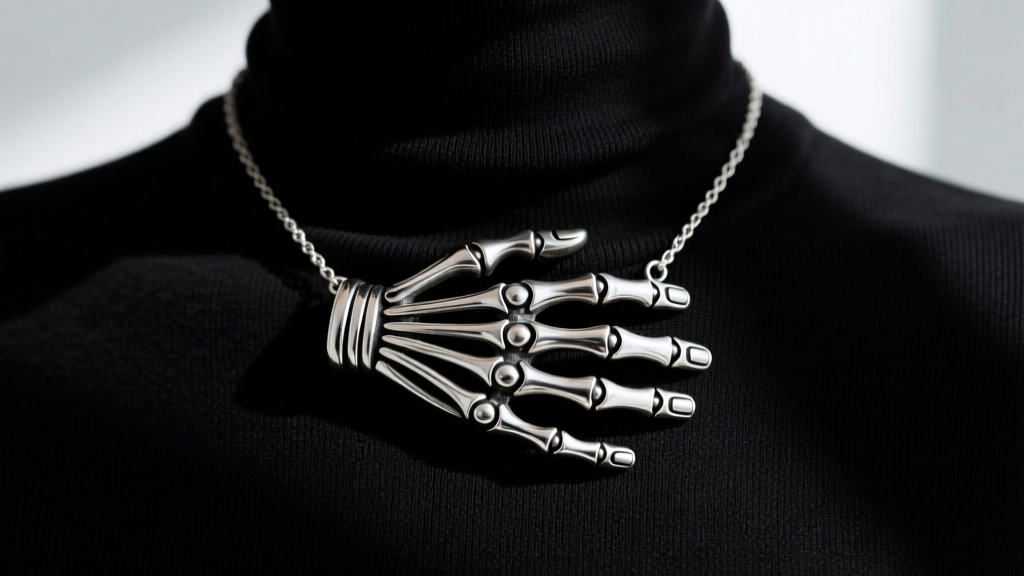
On the other end of the spectrum is the anatomical hand necklace, a staple in gothic, punk, and contemporary artisan jewelry. What is a hand necklace in this context? It is a miniature sculpture of the human skeletal or muscular system, worn as a statement piece. The hallmark of a high-quality anatomical hand pendant is articulation.
Lost-Wax Casting and Micro-Jump Rings
Cheap, mass-produced skeleton hands are cast as a single, solid, rigid piece. Expert artisans, however, use the lost-wax casting method to create individual bone segments (phalanges, metacarpals, and carpals). These segments are then assembled using micro-jump rings or tiny rivets, allowing the skeletal fingers to move and drape naturally over the wearer's chest. When inspecting an articulated hand necklace, check the gauge of the jump rings. They should be no thicker than 20-gauge (0.8mm) to maintain visual realism, but they must be soldered or tightly closed to prevent the fingers from detaching during wear.
Material Grades: What to Look For
Whether you are buying a symbolic Hamsa or a skeletal pendant, the base metal dictates the longevity, skin safety, and price of the necklace. According to standards outlined by Jewelers of America, always look for proper quality stamps.
| Metal Grade | Stamp / Hallmark | Durability & Characteristics | Best For |
|---|---|---|---|
| Sterling Silver | 925 | 92.5% pure silver, 7.5% copper. Prone to oxidation/tarnish but easily polished. Excellent for darkened patinas on skeleton hands. | Everyday wear, intricate oxidized designs. |
| 14k Solid Gold | 14k or 585 | 58.5% pure gold. Highly durable, resistant to tarnish, hypoallergenic. Ideal for prong-set gemstones in Hamsa designs. | Luxury investment, sensitive skin, heirloom pieces. |
| Gold Vermeil | 925 with gold plating | Sterling silver base with a thick layer (min 2.5 microns) of 10k+ gold. Will eventually wear down to silver at high-friction points. | Budget-conscious buyers wanting a gold aesthetic. |
| Surgical Stainless Steel | 316L | Extremely hard, untarnishable, but difficult to cast with fine detail. Often used for rigid, non-articulated skeleton hands. | Water exposure, ultra-low maintenance. |
Chain Pairing and Length Framework
A hand pendant is typically vertically oriented and visually heavy. Pairing it with the wrong chain will result in the pendant flipping backward or the chain breaking under the dynamic weight. Avoid delicate chains like the standard 1mm cable or thin snake chains. Instead, utilize this framework:
- 16-18 Inches (Collarbone): Best paired with a 2.5mm to 3.5mm Figaro or curb chain. Keeps the Hamsa or skeleton hand resting in the hollow of the throat, maximizing visibility.
- 20-24 Inches (Chest): Ideal for heavier, articulated anatomical hands. A 2mm to 3mm Rope chain provides the necessary tensile strength and complements the twisted, organic look of bone structures.
- Clasp Selection: Always opt for a lobster clasp over a spring-ring clasp. The weight of a solid metal hand pendant will easily pull a spring ring open, leading to loss.
Pricing Tiers and Craftsmanship Expectations
Understanding the market tiers will help you identify whether a hand necklace is priced fairly based on its craftsmanship and materials.
Fashion Tier ($30 - $90)
Expect gold-plated brass or hollow-cast sterling silver. Hamsa designs in this tier often use cold enamel (epoxy resin) rather than fired vitreous enamel. Skeletal hands will be rigid and lack articulation. The bail (the loop connecting the pendant to the chain) is often cast directly onto the piece, which is a structural weak point.
Bridge / Artisan Tier ($150 - $450)
This is the sweet spot for quality. You will find solid 925 sterling silver with hand-applied liver of sulfur patinas to highlight the crevices of anatomical hands. Hamsa pendants will feature genuine, bezel-set semi-precious stones and vitreous (kiln-fired) enamel. Articulation via micro-jump rings becomes standard here.
Fine Jewelry Tier ($800 - $3,000+)
Crafted in solid 14k or 18k gold. Hamsa designs will feature pavé-set diamonds, high-grade turquoise, or custom-cut sapphires. The finishing is done entirely by hand under magnification, ensuring no sharp edges on the skeletal joints or Hamsa fingertips.
Common Failure Modes and Maintenance
To ensure your hand necklace lasts a lifetime, you must anticipate how the piece will degrade over time and perform preventative maintenance.
- Bail Friction and Wear: The bail of a hand pendant experiences constant friction against the chain. If the bail is a thin, unlined loop of silver or gold, it will eventually wear through, dropping the pendant. Solution: Have a jeweler install a hard-wearing platinum or stainless steel jump ring inside the bail to act as a sacrificial buffer.
- Enamel Chipping (Hamsa): Vitreous enamel is essentially glass fused to metal. Dropping the necklace on a tile floor can cause micro-fractures or outright chipping. Solution: Store the necklace in a padded, individual jewelry box, never tossed loosely into a bag.
- Joint Seizing (Anatomical Hands): The micro-jump rings connecting the finger bones can accumulate dead skin cells, lotion, and dust, causing the articulation to seize up. Solution: Once a month, soak the pendant (if it contains no porous gemstones) in a mild solution of warm water and dish soap, gently agitating the joints with a soft-bristled baby toothbrush to dislodge debris.
Final Verdict: Choosing Your Hand Motif
Ultimately, what a hand necklace represents is deeply personal. If you seek a talisman rich in ancient history, cultural protection, and vibrant gemstone color, a well-crafted Hamsa hand in 14k gold or oxidized silver is an unparalleled choice. If your style leans toward the avant-garde, the gothic, or the anatomically fascinating, an articulated skeleton hand pendant serves as a masterclass in wearable micro-sculpture. By prioritizing proper metal hallmarks, secure chain pairings, and an understanding of gemstone hardness, you can confidently invest in a hand necklace that is as durable as it is meaningful.


