2026 Gift Guide: Choosing a 3 Stone Diamond Necklace
Discover the perfect 3 stone diamond necklace for every milestone. Our 2026 gift guide covers carat weights, settings, and occasion matching.

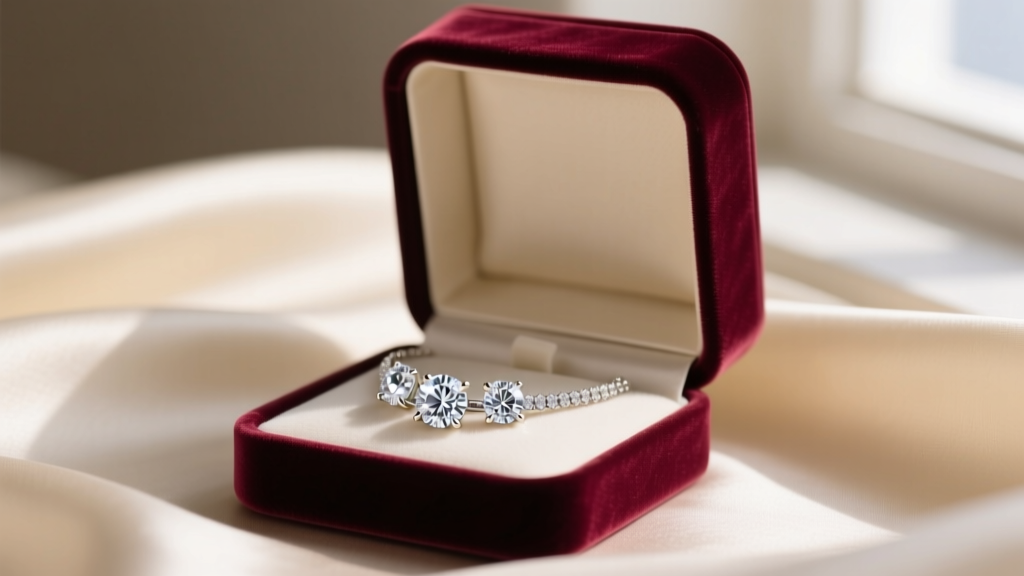
When it comes to milestone gifting, few pieces of jewelry carry the emotional weight and visual brilliance of a 3 stone diamond necklace. Often referred to as a "trilogy" or "past, present, and future" pendant, this design is a masterclass in symbolic jewelry. As we navigate the 2026 gifting season, the demand for versatile, high-impact diamond pendants has surged, driven by a preference for pieces that transition seamlessly from everyday wear to formal evening occasions. Whether you are celebrating a landmark anniversary, welcoming a new family member, or marking a major career milestone, understanding the technical nuances of trilogy pendants is essential for making a purchase that will be cherished for generations.
The Symbolism and Anatomy of the Trilogy Pendant
The traditional three-stone design represents a couple's shared past, present, and future. However, in modern gifting, the symbolism has expanded. It frequently represents the bond between a parent and two children, the three pillars of a strong relationship (friendship, love, and fidelity), or a personal mantra of mind, body, and spirit. Anatomically, a high-quality trilogy pendant consists of three diamonds set in a continuous line. The stones are typically held by a shared basket or individual prong settings, suspended from a bail that allows the pendant to glide smoothly along the chain. The precision of the setting is critical; if the stones are not leveled perfectly, the pendant will tilt and fail to catch the light optimally.
Occasion Matching: When to Gift a Three-Stone Pendant
Push Presents and Growing Families
One of the most popular use cases for the 3 stone diamond necklace in recent years is the "push present" or a celebration of a growing family. When gifting to represent a family of three (e.g., two parents and one child, or one parent and two children), an equal-weight configuration is highly recommended. In this setup, all three diamonds are the exact same carat weight, symbolizing equality and the unbreakable bond of the family unit. A total carat weight (CTW) of 0.75 to 1.00 carats is ideal for daily wear, offering substantial sparkle without overwhelming a busy parent's lifestyle.
Major Anniversaries and Milestones
For anniversaries—particularly the 3rd, 10th, or 30th—the classic graduated setting is the standard. Here, the center stone is noticeably larger than the two side stones, drawing the eye to the present moment while honoring the past and future. Graduated settings generally look more formal and are often paired with larger total carat weights (1.50 CTW and above), making them perfect for milestone birthdays or significant wedding anniversaries where the gift is meant to be a statement piece.
Technical Buying Guide: Carat, Cut, and Setting
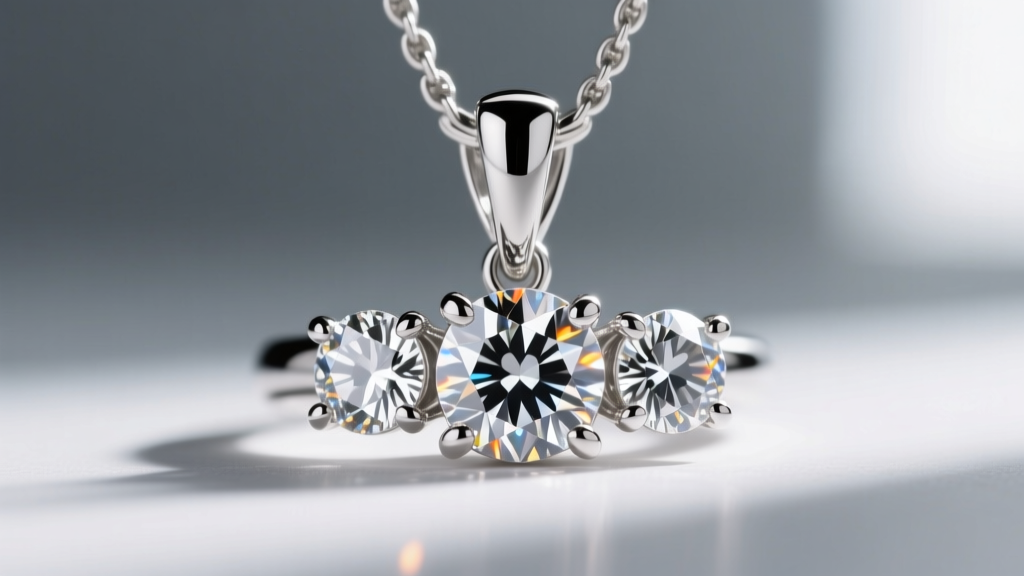
Understanding the technical specifications of the diamonds will ensure you do not overpay for invisible grades while maximizing brilliance. According to the Gemological Institute of America (GIA), the cut quality is the most critical factor in a diamond's brilliance. For a trilogy pendant, always insist on "Excellent" or "Ideal" cut grades for round brilliants, as poor light return in a small stone makes it look dull and glassy.
Graduated vs. Equal Weight Configurations
A well-proportioned graduated pendant should have a center stone that is roughly 20-30% larger in diameter than the side stones. For example, a 1.00 CTW graduated pendant might feature a 0.50-carat center stone (approx. 5.1mm) flanked by two 0.25-carat stones (approx. 4.1mm each). This creates a harmonious taper that flatters the collarbone. Equal weight configurations (e.g., three 0.33-carat stones) offer a more modern, geometric aesthetic that appeals to minimalist tastes.
Clarity, Color, and the Value Sweet Spot
Because the diamonds in a pendant sit further from the eye than a ring, you can be strategic with clarity and color grades. The American Gem Society (AGS) notes that inclusions are harder to spot in pendants due to the viewing distance. For stones under 0.50 carats each, an SI1 clarity grade is completely eye-clean and offers massive savings. For color, the G-H range (near colorless) is the ultimate sweet spot. When set in white gold or platinum, G-H stones face up brilliantly white to the naked eye, saving you up to 20% compared to D-F colorless grades.
"A well-proportioned trilogy pendant should have a center stone that is roughly 20-30% larger in diameter than the side stones, ensuring the eye is naturally drawn to the middle without the side stones looking like mere accents."
Chain Selection: Gauge Sizing and Styles
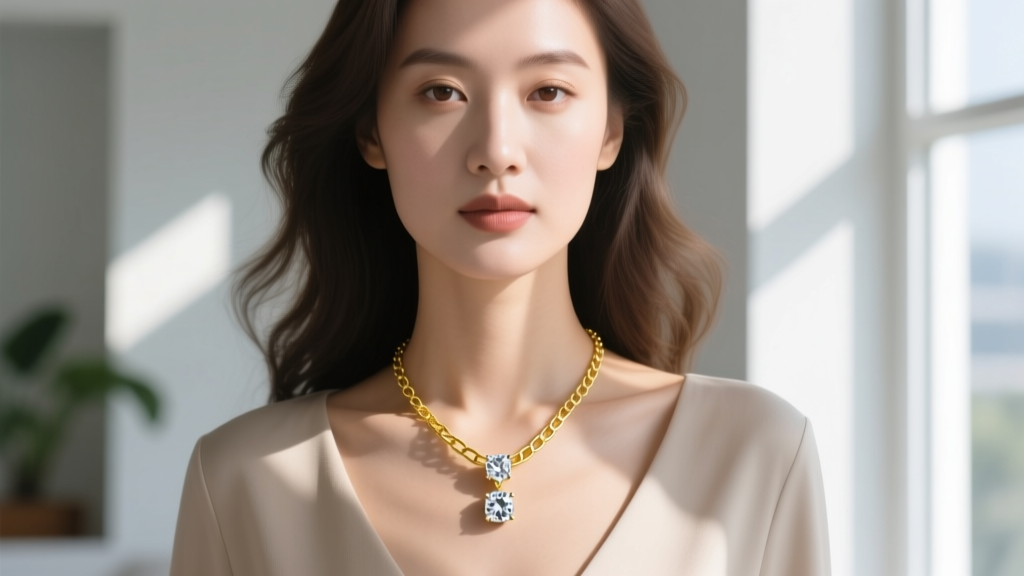
The pendant is only half the equation. A common mistake buyers make is pairing a heavy, diamond-laden pendant with a flimsy chain that is prone to snapping. The chain must be matched to the weight of the pendant and the lifestyle of the wearer.
Matching Chain Gauge to Carat Weight
- 0.8mm to 0.9mm Gauge: Suitable only for lightweight pendants (under 0.50 CTW). Best for delicate, minimalist layering.
- 1.0mm to 1.2mm Gauge: The industry standard for 0.75 CTW to 1.50 CTW pendants. Provides excellent tensile strength while remaining elegant.
- 1.3mm to 1.5mm+ Gauge: Required for heavy, high-carat pendants (2.00+ CTW) or solid platinum settings to prevent long-term metal fatigue and snapping.
When it comes to chain styles, box chains and wheat chains are the most durable choices for pendants. Box chains feature square, interlocking links that resist kinking, while wheat chains offer a woven, textured look that is incredibly strong. Avoid snake chains entirely; they are notorious for trapping hair, kinking permanently, and snapping under the weight of a diamond pendant.
2026 Pricing Tiers and Market Expectations
Pricing for a 3 stone diamond necklace varies wildly based on the exact millimeter dimensions of the stones, the metal chosen, and the brand premium. Below is a realistic breakdown of what to expect when shopping in the current market.
| Total Carat Weight (CTW) | Diamond Quality | Metal Choice | Estimated 2026 Price Range |
|---|---|---|---|
| 0.50 CTW | SI1 Clarity / H Color | 14k White Gold | $900 - $1,400 |
| 1.00 CTW | VS2 Clarity / G Color | 18k White Gold | $2,800 - $4,200 |
| 1.50 CTW | VS1 Clarity / F Color | Platinum | $5,500 - $7,800 |
| 2.00+ CTW | VVS2 Clarity / E Color | Platinum | $9,000 - $14,000+ |
Final Gifting Tips for Maximum Impact
When presenting a 3 stone diamond necklace, the unboxing experience matters just as much as the jewelry itself. Ensure the piece comes with a reputable gemological certificate (such as GIA or AGS) for the center stone, especially if it exceeds 0.50 carats. If you are gifting this for a specific milestone, consider having the date or a short meaningful phrase laser-inscribed on the hidden edge of the pendant's bail or the interior of the clasp. Finally, always include a high-quality polishing cloth and specific care instructions, advising the recipient to remove the necklace before applying lotions or perfumes, which can dull the diamond's brilliance over time by trapping oils beneath the setting.


