3D Printed Chain Necklace: Material Guide & Properties
Discover the best materials for a 3D printed chain necklace. Compare resins, nylons, and sintered metals for durability, weight, and skin safety.
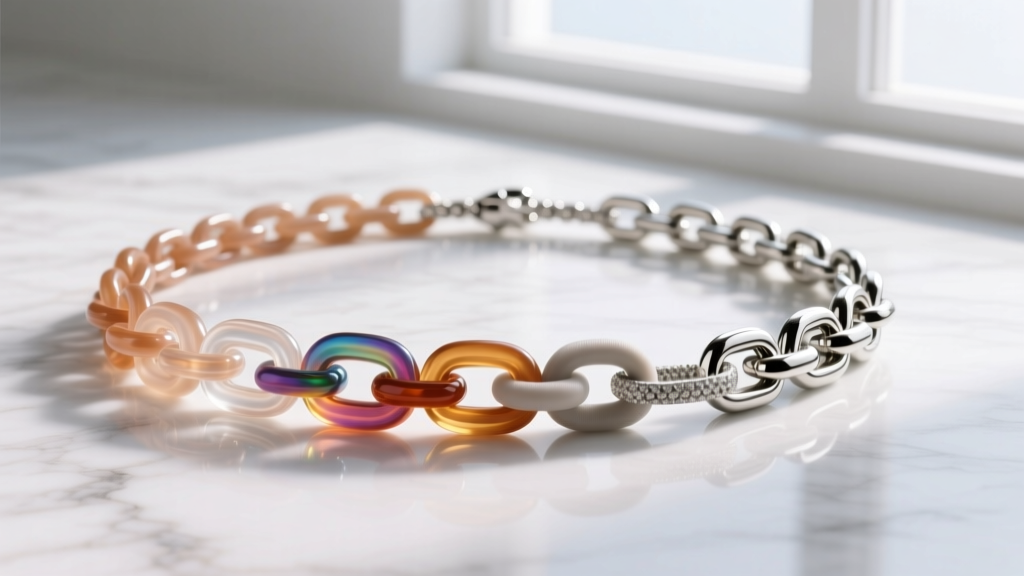
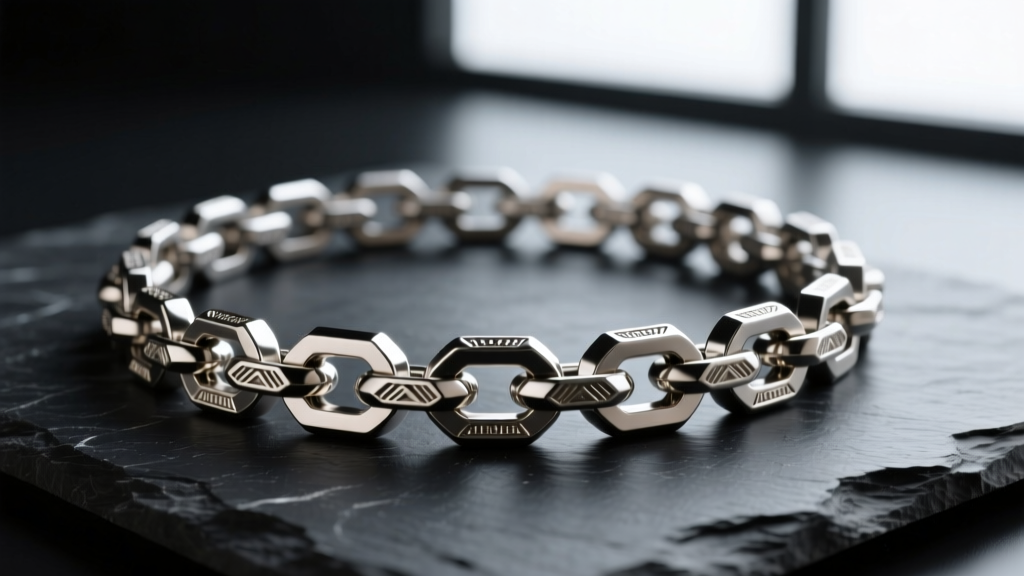
The Evolution of Direct-to-Wear Additive Jewelry
The jewelry industry has undergone a radical transformation over the last decade. While 3D printing was once relegated to creating sacrificial wax patterns for investment casting, the landscape in 2026 looks entirely different. Today, a 3D printed chain necklace is frequently a direct-to-wear, end-use product. Additive manufacturing now allows designers to produce complex, interlocking geometries—such as print-in-place chain links—that are impossible to achieve with traditional casting or hand-fabrication.
However, the success of a direct-wear 3D printed chain necklace hinges entirely on material selection. A chain is only as strong as its weakest link, and the mechanical properties of additive polymers and sintered metals differ vastly from their wrought or cast counterparts. This guide breaks down the exact material grades, tensile properties, and failure modes you need to understand before designing or purchasing a 3D printed chain.
Polymer vs. Metal: The Core Material Showdown
When engineering a chain necklace, you are primarily managing shear stress at the connection points and tensile stress along the length of the links. Let us examine the three dominant material categories used in modern additive jewelry.
High-Temperature and Biocompatible Resins (SLA/DLP)
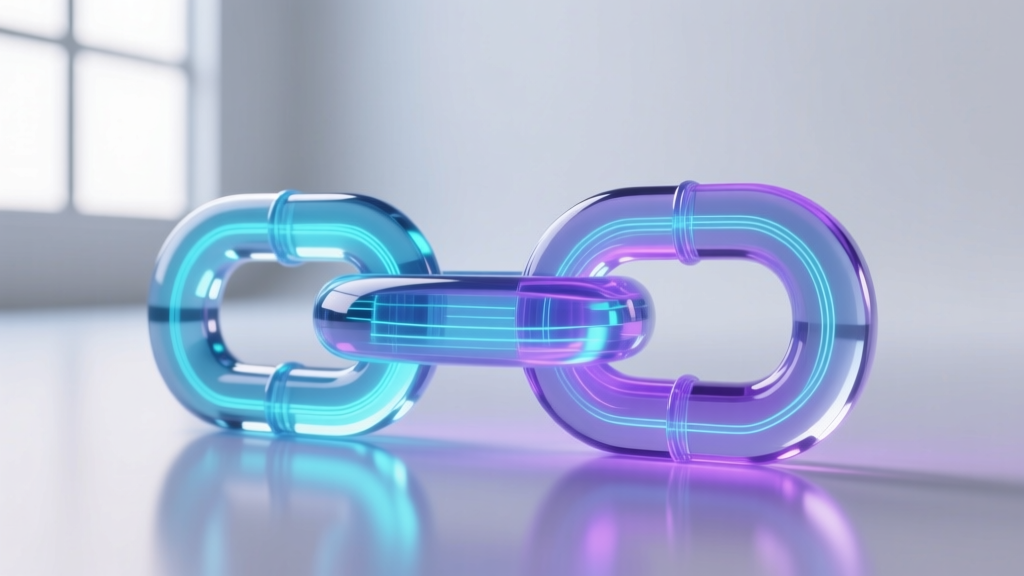
Stereolithography (SLA) and Digital Light Processing (DLP) offer the highest surface resolution, often achieving layer heights of 25 to 50 microns. For jewelry, standard resins are strictly prohibited due to the risk of allergic contact dermatitis caused by uncured acrylate monomers. Instead, designers must use certified biocompatible resins, such as Formlabs BioMed Clear or Dental SG. According to the Formlabs Biocompatible Materials Guide, these Class IIa medical-grade polymers are safe for prolonged skin contact once properly post-cured.
Mechanically, high-temp resins boast a tensile strength of roughly 45 to 65 MPa. However, their critical weakness is brittleness. A resin chain link will not stretch or deform plastically under stress; it will snap catastrophically. Therefore, resin chain links require a minimum cross-sectional thickness of 2.0mm at the connection loops to withstand the sudden kinetic shock of a necklace being snagged.
Direct Metal Laser Sintering (DMLS / SLM)
For high-end, permanent jewelry, Selective Laser Melting (SLM) and Direct Metal Laser Sintering (DMLS) are the gold standards. These processes fuse fine metal powders layer by layer using high-powered fiber lasers. The most common alloys for 3D printed chain necklaces are 316L Stainless Steel and Ti6Al4V (Grade 5 Titanium).
As detailed in the Hubs Metal 3D Printing Knowledge Base, modern SLM machines achieve part densities exceeding 99.5%. Titanium chains are exceptionally prized because Ti6Al4V offers a yield strength of over 830 MPa while remaining 45% lighter than stainless steel. This allows for the creation of delicate, micro-lattice chain links with cross-sections as thin as 0.8mm that can still support substantial pendant weights without permanent deformation.
Flexible Nylons and Polyamides (SLS)
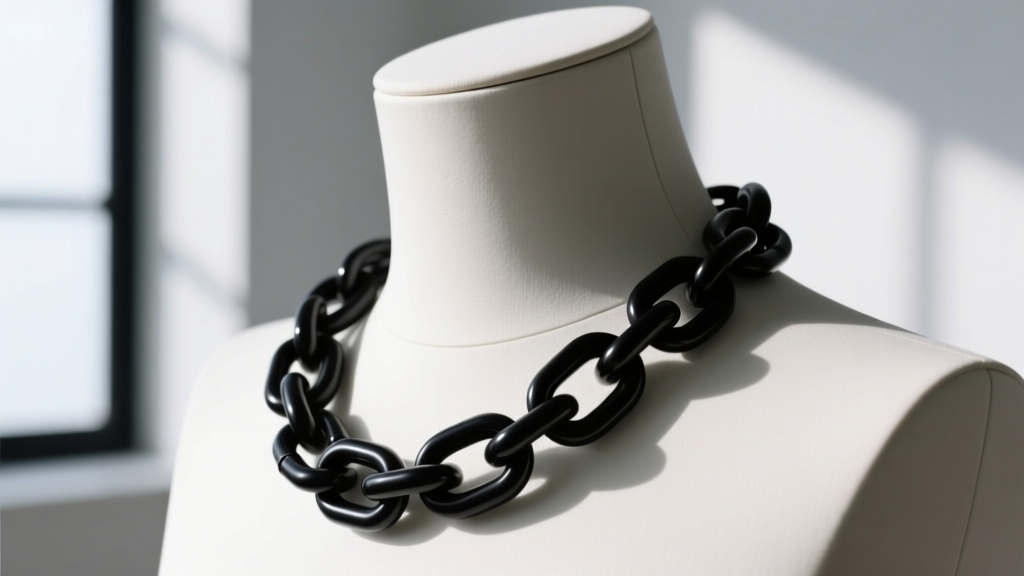
Selective Laser Sintering (SLS) uses a laser to sinter powdered polymers, most notably PA12 (Nylon 12) and PA11. SLS is the undisputed king of "print-in-place" assemblies. Because the unsintered powder acts as a natural support structure, designers can print a fully articulated, interlocking 3D printed chain necklace directly out of the machine without any assembly required.
PA11 is often preferred over PA12 for chain links due to its superior impact resistance and elongation at break (often exceeding 45%). This flexibility allows the chain to drape naturally like woven fabric, and if a link catches on clothing, it will stretch and deform rather than snap. The NIST Additive Manufacturing Portal frequently highlights SLS polyamides for their excellent strength-to-weight ratios in complex, moving assemblies.
Mechanical Properties & Wearability Matrix
To make an informed decision, compare the quantitative data below. This matrix outlines the physical realities of wearing different 3D printed materials against the skin.
| Material Grade | Process | Tensile Strength | Min. Link Thickness | Skin Safety | Est. Cost / cm³ |
|---|---|---|---|---|---|
| BioMed Clear Resin | SLA / DLP | ~50 MPa | 2.0 mm | High (Post-cured) | $0.80 - $1.20 |
| 316L Stainless Steel | SLM / DMLS | ~530 MPa | 1.0 mm | Excellent | $2.50 - $4.00 |
| Ti6Al4V (Gr. 5 Ti) | SLM / EBM | ~900 MPa | 0.8 mm | Excellent (Hypoallergenic) | $6.00 - $9.50 |
| PA11 (Nylon) | SLS | ~48 MPa | 1.5 mm | Good (Requires sealing) | $0.50 - $0.90 |
Chain Link Geometry and Tensile Failure Points
Designing a 3D printed chain necklace requires a deep understanding of vector forces. The primary failure point in any chain is the inner curve of the connecting loop, where shear stress concentrates. In traditional metallurgy, chains are formed by bending wire, which aligns the grain structure to resist these forces. In additive manufacturing, layer adhesion (the Z-axis) is inherently weaker than the XY plane.
"When orienting a chain link for 3D printing, the build orientation dictates the failure mode. If printed flat on the build plate, the Z-axis layer lines run perpendicular to the tensile load, creating a natural fault line. Printing links at a 45-degree angle or vertically, and utilizing interlocking print-in-place geometries, redistributes this stress and maximizes the isotropic strength of the material."
For SLS nylon chains, designers often employ a "double-loop" or "figure-eight" link geometry. This distributes the kinetic load across two connection points rather than one, effectively doubling the tensile threshold of the necklace without adding significant weight or material volume.
Post-Processing: The Secret to Skin-Safe Wear
A raw 3D print is rarely ready for direct skin contact. The post-processing phase is where a prototype becomes a piece of luxury jewelry.
- SLS Nylons (Vapor Smoothing): Raw SLS parts are highly porous, acting like a sponge for sweat, dead skin cells, and bacteria. To make a nylon chain necklace hygienic, it must undergo chemical vapor smoothing. This process melts the outer microscopic layer of the polyamide, sealing the pores and leaving a smooth, injection-molded-like finish that is easily wiped clean.
- SLM Metals (Electropolishing & Tumbling): Metal chains straight out of the printer suffer from surface roughness and partially fused powder particles. Tumbling in ceramic media removes the loose particulates, while electropolishing removes a microscopic layer of surface metal, eliminating embedded impurities and creating a passive oxide layer that prevents corrosion and nickel leaching.
- SLA Resins (UV Curing & Clear Coating): Even biocompatible resins require strict adherence to post-cure time and temperature profiles. Under-curing leaves toxic monomers on the surface. Many jewelers add a final dip in a UV-stable, medical-grade epoxy clear coat to guarantee zero skin irritation.
Pricing and Sourcing in 2026
The cost of a 3D printed chain necklace is no longer defined by the raw material cost, but by the machine time and post-processing labor. A standard 20-inch SLS PA12 nylon chain might cost between $40 and $80 to produce, making it highly accessible for avant-garde fashion jewelry. Conversely, a Ti6Al4V titanium chain of the same length requires inert argon gas atmospheres, extensive support removal via wire EDM, and hours of hand-polishing, pushing the retail price well past the $800 to $1,500 range.
Ultimately, the choice of material dictates the lifespan and purpose of the piece. Resins offer unparalleled optical clarity and intricate detailing for statement pieces; nylons provide lightweight, flexible, everyday comfort; and sintered metals deliver heirloom-grade permanence. By respecting the mechanical limits and post-processing requirements of each medium, designers can push the boundaries of what a chain necklace can be.


