The 4mm Necklace: A Technical Guide to Chain Durability
Discover the engineering behind the 4mm necklace. We analyze tensile strength, metal weights, clasp failure points, and link soldering for lasting durability.

The Engineering Threshold: Why 4mm is the Critical Inflection Point
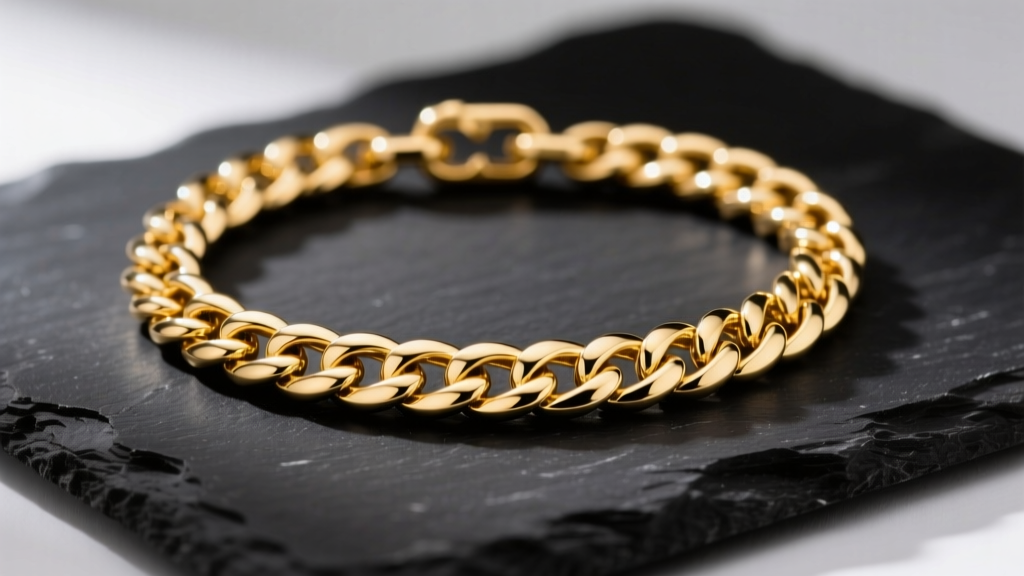
In the realm of jewelry fabrication, the 4mm necklace represents a critical engineering inflection point. Below 3mm, chains are primarily delicate pendant-bearers, constrained by fine link structures and low tensile limits that make them unsuitable for heavy daily wear. Above 5mm, chains transition into rigid, heavy statement pieces that dictate the wearer's silhouette and restrict articulation. The 4mm width is the ultimate structural sweet spot. It is robust enough to support pendants weighing up to 30 grams without plastic deformation, yet fluid enough to articulate smoothly around the cervical spine. Understanding the technical specifications of a 4mm chain is essential for making an informed investment in fine jewelry.
Wire Gauge vs. Overall Width: The Geometry of Strength
A common misconception among consumers is that the overall width of the chain dictates its strength. In reality, the sheer strength of a 4mm necklace is determined by the wire gauge used to forge the individual links. A standard 4mm Cuban link chain is typically fabricated from 14-gauge (1.6mm) or 12-gauge (2.0mm) wire. The internal geometry of the link—specifically the aspect ratio of the inner void to the outer wire thickness—determines its resistance to shearing forces. If the wire is too thin relative to the 4mm outer width, the links will collapse under lateral pressure. Master jewelers maintain a strict wire-to-width ratio to ensure the chain retains its structural integrity under dynamic loads.
Material Science: Yield Strength and Weight Metrics
The metallurgical composition of your 4mm necklace drastically alters its weight, drape, and tensile yield limit. According to metallurgical standards outlined by the Gemological Institute of America (GIA), alloying pure gold with metals like copper and zinc not only changes the color but fundamentally increases the Vickers Hardness (HV) and yield strength of the final piece. As of 2026, the spot price of precious metals has fundamentally shifted retail brackets, making alternative metals like 316L stainless steel highly prevalent in the 4mm category.
| Material | Vickers Hardness (HV) | Weight (20" Chain) | Tensile Yield Limit | Avg. Retail Price (2026) |
|---|---|---|---|---|
| 316L Stainless Steel | 150 - 190 HV | ~65 grams | ~290 MPa | $45 - $90 |
| 925 Sterling Silver | 60 - 75 HV | ~42 grams | ~125 MPa | $180 - $350 |
| 14k Yellow Gold | 125 - 140 HV | ~58 grams | ~350 MPa | $1,400 - $2,200 |
| 18k Yellow Gold | 110 - 125 HV | ~72 grams | ~280 MPa | $2,800 - $4,500 |
Notice that while 925 Sterling Silver is highly prized for its luster, its relatively low Vickers Hardness makes a 4mm unsoldered silver chain highly susceptible to stretching if subjected to sudden kinetic shocks.
Link Architecture: Soldered vs. Unsoldered Mechanics
When evaluating a 4mm necklace, the presence or absence of soldered links is the single most important factor in its longevity. In an unsoldered chain, each link has a microscopic seam where the wire was cut and bent into shape. When a 20-gram pendant is attached to an unsoldered 4mm cable chain, the downward force concentrates at this seam, eventually causing the link to pull apart—a process known as plastic deformation.
Conversely, soldered links are fused at the seam using a lower-melting-point alloy. Jewelry fabrication experts at Rio Grande note that modern laser welding techniques allow for incredibly precise, localized soldering that does not compromise the temper of the surrounding wire. A soldered 4mm Cuban or Figaro chain distributes tensile loads across the entire circumference of the link, effectively multiplying its weight-bearing capacity by a factor of three compared to its unsoldered counterpart.
The Clasp Bottleneck and Jump Ring Shear
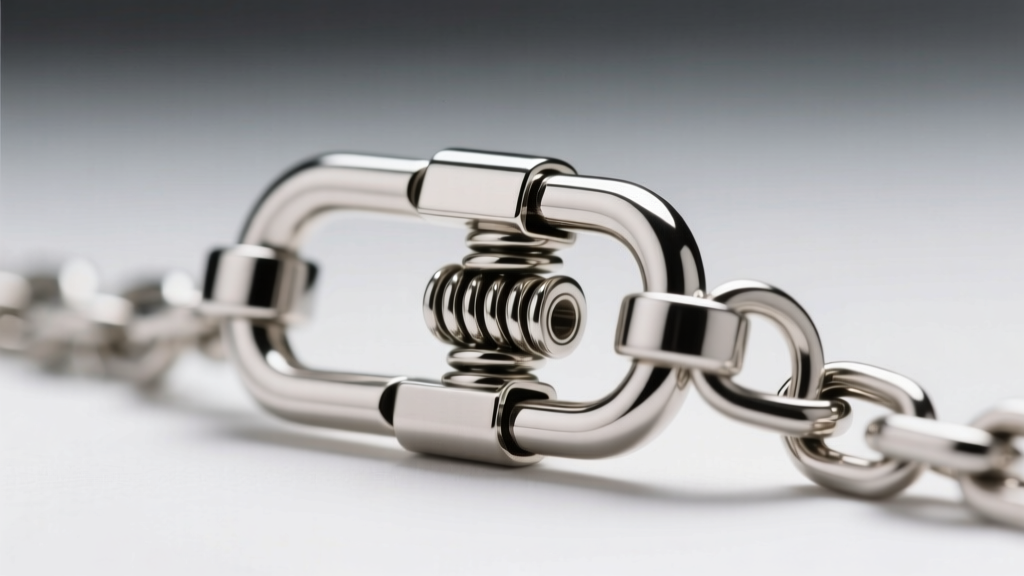
A high-quality 4mm gold chain can withstand over 40 pounds of tensile force, but the clasp assembly remains the critical failure point. Standard 10mm lobster clasps are entirely insufficient for a 4mm chain; the internal spring mechanism will fatigue, and the jump ring connecting the clasp to the chain will succumb to shear stress. For a 4mm necklace, you must specify a heavy-duty 14mm or 16mm lobster clasp, or ideally, a box clasp equipped with a figure-8 safety latch. Furthermore, the jump rings securing the clasp must be at least 16-gauge (1.29mm thick) and soldered completely closed to prevent accidental unspooling.
Real-World Failure Modes and Troubleshooting
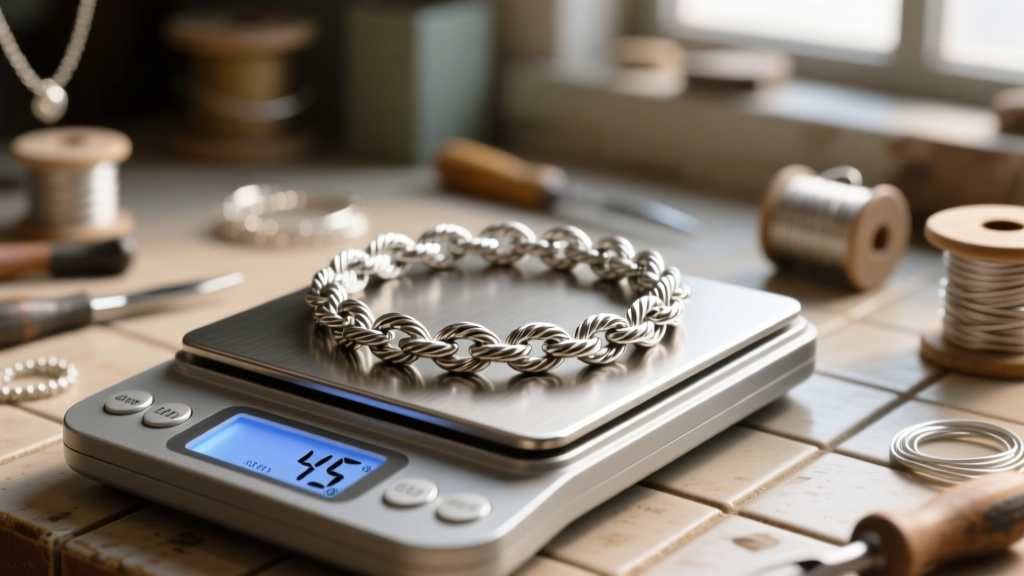
Even the most robust 4mm necklace will fail if subjected to adverse environmental or mechanical conditions. Understanding these failure modes allows you to troubleshoot and prevent catastrophic breakage.
- Work Hardening and Micro-Fractures: Repeated bending and twisting of a 4mm chain causes the metal's crystalline structure to become brittle—a phenomenon known as work hardening. Over time, this leads to microscopic fractures at the friction points between links. Annual professional polishing and ultrasonic cleaning can help identify these stress fractures before they snap.
- Galvanic Corrosion: If you pair a sterling silver 4mm chain with a base-metal or brass pendant, the introduction of moisture (sweat) creates a galvanic cell. This electrolytic reaction will rapidly corrode the jump ring, causing it to disintegrate. Always ensure your chain and pendant share compatible galvanic nobility.
- Abrasive Wear at the Clasp: The connection point between the chain and the clasp experiences the highest frequency of articulation. A 4mm chain rubbing against a hardened steel clasp loop will slowly act as a saw, wearing down the end links. Using a slightly softer gold or silver jump ring as a sacrificial buffer can save the chain links from permanent damage.
Sizing, Drape, and Articulation Physics
The physics of a 4mm chain dictate how it drapes across the clavicle. Because of the wire thickness, a 4mm chain has a minimum bending radius. If you purchase an 18-inch 4mm Cuban link chain, it may feel stiff and sit rigidly like a collar, as the length does not provide enough circumference for the links to fully articulate and lay flat against the skin. For optimal drape and fluid movement, a 4mm necklace should be sized at a minimum of 20 inches for men and 18 inches for women, allowing gravity to pull the links into a smooth, continuous curve.
Expert Tip: Never store a 4mm necklace coiled tightly in a small jewelry box. The forced bending radius can permanently distort the links. Always hang the chain vertically or lay it completely flat in a wide, velvet-lined tray to preserve its geometric memory.
Final Specifications for the Perfect 4mm Chain
To summarize, when sourcing a 4mm necklace that will last a lifetime, demand the following specifications: fully soldered links constructed from 14-gauge or 12-gauge wire, a minimum 14mm heavy-duty clasp, soldered-closed 16-gauge jump rings, and a length no shorter than 20 inches to ensure proper articulation. By prioritizing structural engineering over mere aesthetics, you secure a piece of jewelry that is as mechanically resilient as it is visually striking.


