5 Finger Necklace Meaning: Hamsa, Symbols & Metal Guide
Discover the 5 finger necklace meaning, from Hamsa hands to Mano Fico. Explore metal grades, casting techniques, and chain pairing for hand pendants.

Decoding the 5 Finger Necklace Meaning in Global Jewelry
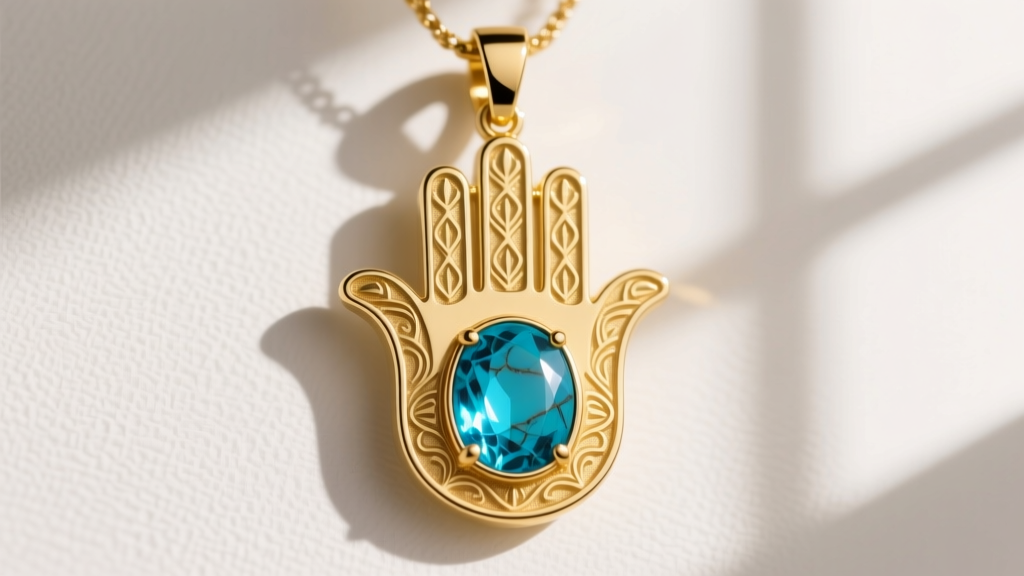
When collectors, historians, and jewelry enthusiasts search for the 5 finger necklace meaning, they are typically navigating a rich intersection of ancient talismanic lore and modern metallurgical craftsmanship. While the literal translation of a 'five-finger necklace' might seem purely anatomical, in the global jewelry trade, this search query almost exclusively points toward the Hamsa hand (also known as the Hand of Fatima or Hand of Miriam), alongside a few specialized cultural variants like the Italian Mano Fico. Understanding these pendants requires looking past their surface-level aesthetics and examining the specific finger configurations, cultural origins, and the precise metal alloys required to cast such intricate, multi-digit designs without structural failure.
According to the Victoria and Albert Museum's jewelry archives, hand-shaped amulets represent one of the oldest and most universally recognized protective symbols in human history. However, translating these ancient symbols into durable, everyday fine jewelry presents unique challenges on the jeweler's bench. This expert guide breaks down the exact anatomical differences between 5-finger motifs, the metallurgical grades best suited for their delicate phalanges, and the engineering required to suspend them properly on a chain.
The Hamsa Hand: Anatomy of a Symmetrical 5-Finger Pendant
The most common manifestation of the 5 finger necklace meaning is the Hamsa. Unlike a natural human hand, the traditional Hamsa is perfectly symmetrical. The thumb and the pinky finger are identical in length and shape, mirroring each other on either side of the three central fingers. This bilateral symmetry is not merely an artistic choice; it represents balance, universal protection, and the deflection of the 'evil eye' from all directions.
Metallurgical Requirements for Symmetrical Fingers
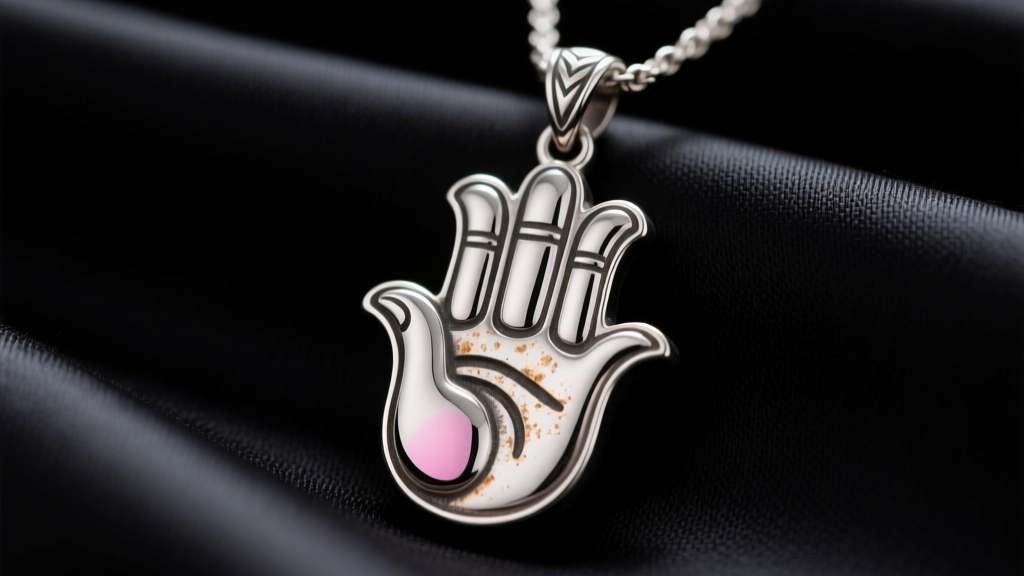
Because the outer fingers (the mirrored thumb and pinky) on a Hamsa pendant are often cast as thin, elongated tapers, the choice of metal is critical for preventing bending or snapping. Pure 24k gold and high-purity 22k gold are far too malleable for this design. A minor snag on a garment could permanently bend a 22k gold pinky finger. Therefore, expert jewelers strongly recommend 14k gold (58.5% gold purity) for 5-finger pendants. The alloying metals—typically copper, silver, and zinc—provide the necessary tensile strength and yield point to ensure the thin distal phalanges (fingertips) survive daily wear. For silver enthusiasts, 925 sterling silver is the standard, though it is frequently treated with an oxidized (antiqued) finish to highlight the intricate palm lines and finger joints that would otherwise be lost in a high-polish reflection.
Alternative 5-Finger Motifs: Mano Fico and Streetwear Hands
While the Hamsa dominates the search volume for the 5 finger necklace meaning, specialized collectors also seek out other five-digit configurations. The Mano Fico (or Figa) is a fist-shaped amulet where the thumb is explicitly wedged between the index and middle fingers. Originating in Roman times and heavily popularized in Italian and South American cultures, it is a fertility and luck charm. The asymmetrical, curled nature of the Mano Fico requires a completely different casting approach than the flat, open-palm Hamsa, as the overlapping digits create deep undercuts in the wax model.
In contemporary streetwear and gothic jewelry, the '5 finger' motif sometimes takes the form of anatomical skeleton hands or brass knuckle pendants. These designs abandon talismanic protection for edgy, counter-culture aesthetics, often utilizing darker metals like black rhodium-plated silver or surgical-grade stainless steel to emphasize a rugged, industrial look.
| Motif | Finger Configuration | Cultural Origin | Best Metal Grade |
|---|---|---|---|
| Hamsa (Hand of Fatima) | Symmetrical; thumb mirrors pinky | Middle East / North Africa | 14k Yellow Gold or Oxidized 925 Silver |
| Mano Fico (Figa) | Thumb wedged between index and middle | Italy / South America | 18k Rose Gold or Solid Brass |
| Brass Knuckle / Skeleton | Anatomical; four fingers curled or flat | Modern Streetwear / Gothic | Stainless Steel or Black Rhodium Silver |
Technical Manufacturing: Casting Challenges in Finger Motifs
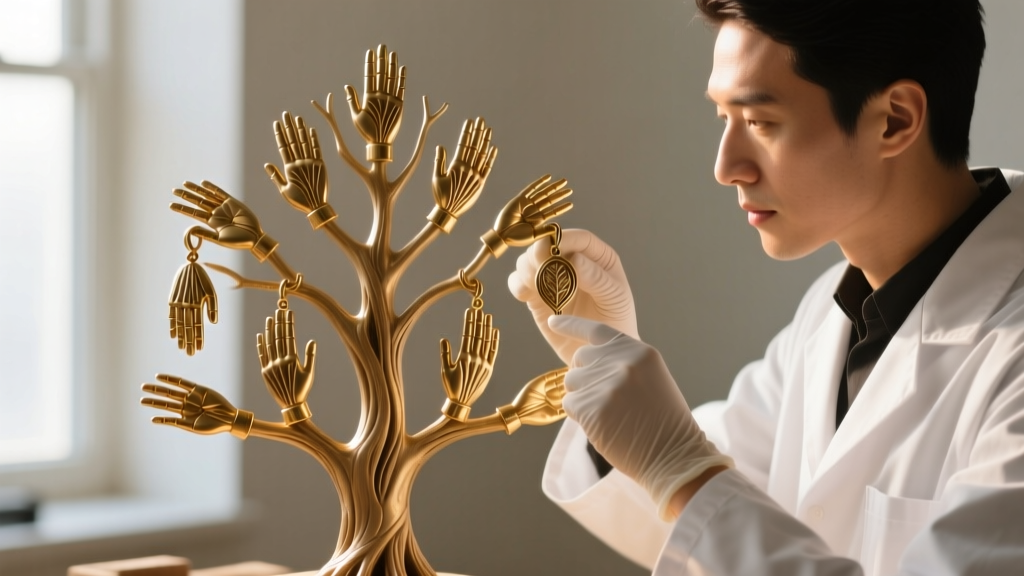
Manufacturing a high-quality 5-finger hand pendant via the lost-wax casting process is a technical tightrope. The primary vulnerability lies in the fingertips. When molten metal is injected into the plaster investment mold, it must flow through the narrow channels of the fingers before cooling. If the wax tree is not properly 'sprued' (the channels that feed molten metal into the piece), the fingertips will suffer from incomplete fill or shrinkage porosity.
The structural integrity of a five-finger pendant relies entirely on the sprue placement during the wax-tree phase. A poorly gated finger will inevitably suffer from micro-porosity at the fingertip, leading to a weak point that will snap under minimal tension.
— Master Bench Jeweler & Casting Technician
To mitigate this, high-end manufacturers use computer-aided design (CAD) to simulate metal flow and thermal cooling rates before printing the resin master. Furthermore, when a Hamsa pendant features a central 'eye' stone (often turquoise or lapis lazuli), the bezel setting must be engineered so that the pressure applied during stone setting does not warp the relatively thin palm plate beneath it. The GIA Gem Encyclopedia notes that porous stones like turquoise require careful bezel construction to avoid crushing the gem's matrix during the burnishing process.
Bail Engineering and Chain Pairing for Hand Pendants
A 5-finger pendant, particularly one cast in solid gold or heavy sterling silver, acts as a pendulum. The center of gravity is usually located in the lower palm, causing the pendant to swing and rotate. If paired with the wrong chain, this kinetic energy will quickly lead to chain kinking, bail wear, and eventual breakage.
Optimal Chain Profiles for 5-Finger Pendants
- Wheat Chains (1.5mm - 2.0mm): The woven, multi-directional links of a wheat chain offer exceptional tensile strength and resist the pendulum twisting that destroys standard cable chains.
- Rope Chains (2.0mm - 3.0mm): Ideal for heavier, oversized Hamsa pendants. The twisted links distribute the weight evenly and provide a luxurious, textured backdrop that complements the intricate finger detailing.
- Box Chains (1.2mm+): While sleek, box chains are prone to internal kinking if the pendant swings too violently. They are only recommended for lightweight, hollow-backed 5-finger pendants weighing under 4 grams.
The bail itself should be a heavy-gauge soldered loop or an integrated hidden bail that spans the width of the top three fingers. Pinch bails are strictly discouraged for hand motifs, as the uneven weight distribution will cause the bail to slip and the pendant to hang crookedly.
Care and Maintenance for Intricate Phalange Crevices
The deep crevices between the five fingers, as well as the engraved lines on the palm, are natural traps for skin oils, lotions, and environmental dust. While ultrasonic cleaners are excellent for plain metal jewelry, they pose a severe risk to 5-finger pendants that feature pave-set diamonds in the fingers or oxidized silver finishes. The high-frequency vibrations can shake loose micro-prongs, and the chemical baths will strip the intentional black oxidation from the palm lines, leaving the pendant looking flat and featureless.
For routine maintenance, use a soft-bristled baby toothbrush dipped in a mild solution of warm water and phosphate-free dish soap. Gently agitate the bristles between the fingers and along the thumb joints. For oxidized silver Hamsas, avoid silver dip solutions entirely; instead, use a treated polishing cloth only on the high-relief areas (the surface of the fingers and palm), deliberately avoiding the recessed lines to maintain the high-contrast, antiqued finish that gives the 5-finger necklace its depth and character.


