925 Italy Silver Necklace: Material Properties & Buyer Guide
Discover the metallurgical truth behind a 925 Italy silver necklace. Compare alloys, decode hallmarks, and learn pricing frameworks in our expert guide.

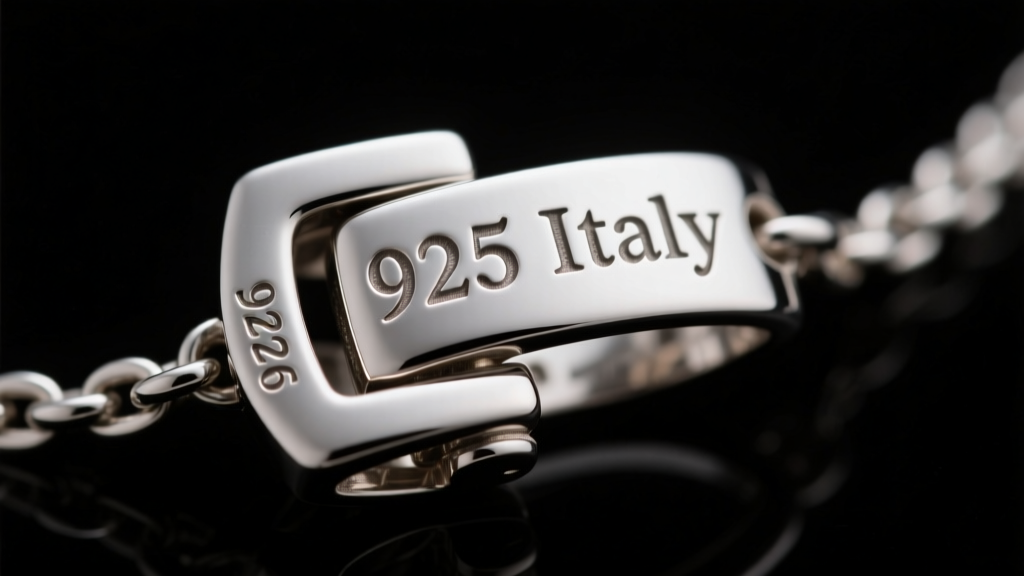
When investing in fine jewelry, the provenance and metallurgical composition of your pieces are just as critical as their aesthetic appeal. Among the most sought-after and frequently misunderstood items in the market is the 925 Italy silver necklace. While the stamp suggests a simple guarantee of origin and purity, the reality of Italian silversmithing involves complex alloy formulations, strict assay laws, and specific structural engineering that dictate how the piece will wear, tarnish, and age over time.
As a domain expert in jewelry materials, I frequently see consumers overpay for hollow chains or misunderstand the maintenance required for bare versus plated sterling. This comprehensive guide deconstructs the material properties of Italian sterling silver, compares it to global alternatives, and provides a concrete framework for evaluating your next purchase.
Decoding the '925 Italy' Stamp: Beyond the Basics
The '925' hallmark is a universal standard indicating that the alloy consists of 92.5% pure silver and 7.5% secondary metals. However, the 'Italy' designation is not merely a marketing term; it is a legally protected mark governed by Italian Presidential Decree 150/2002. To legally stamp a piece with 'Italy', the manufacturer must be registered with the local Assay Office and adhere to strict metallurgical tolerances.
Authentic Italian sterling jewelry will often feature a secondary maker's mark alongside the '925' and 'Italy' stamps. This mark typically consists of a star polygon, a numerical identification code, and a two-letter province code. For example, 'AR' denotes Arezzo and 'VI' denotes Vicenza—two of the most prominent hubs for high-precision chain manufacturing in the world. According to the Federal Trade Commission (FTC) Jewelry Guides, any piece sold in the US bearing a country of origin mark must accurately reflect the location of substantial manufacturing transformation, making the 'Italy' stamp a reliable indicator of European craftsmanship when paired with a valid maker's mark.
Metallurgical Breakdown: Italian vs. Global Sterling
The primary difference between a 925 Italy silver necklace and sterling silver sourced from other global hubs lies in the 7.5% alloy mix. Pure silver is too soft for functional chain links or pendant bails. While traditional US and UK sterling silver uses pure copper as the alloying agent, copper introduces two major issues: firescale (a dark oxidization that occurs during soldering) and rapid surface tarnish when exposed to sulfur and humidity.
Italian metallurgical mills frequently utilize a proprietary blend of copper, zinc, and occasionally trace amounts of germanium or platinum group metals. The addition of zinc reduces firescale, resulting in a brighter, whiter base metal that requires less aggressive chemical pickling during production. This creates a denser, more tarnish-resistant final product compared to copper-heavy alternatives.
| Origin | Silver Purity | Primary Alloy Metals | Tarnish Resistance | Best Application |
|---|---|---|---|---|
| Italy | 92.5% | Copper, Zinc, Trace Germanium | High (Slow oxidation) | Fine chains, intricate pendants, diamond-cut weaves |
| Thailand | 92.5% - 99.9% | Pure Copper (or none for fine silver) | Low (Rapid oxidation) | Heavy cast pieces, artisan rings, oxidized vintage styles |
| Mexico (Taxco) | 92.5% - 98.0% | Pure Copper | Medium | Hammered bangles, repoussé pendants, statement cuffs |
For a deeper understanding of how these alloying elements affect the optical properties and durability of precious metals, the Gemological Institute of America (GIA) provides extensive documentation on silver grading and treatment identification.
The Rhodium Factor: Plated vs. Bare Italian Silver
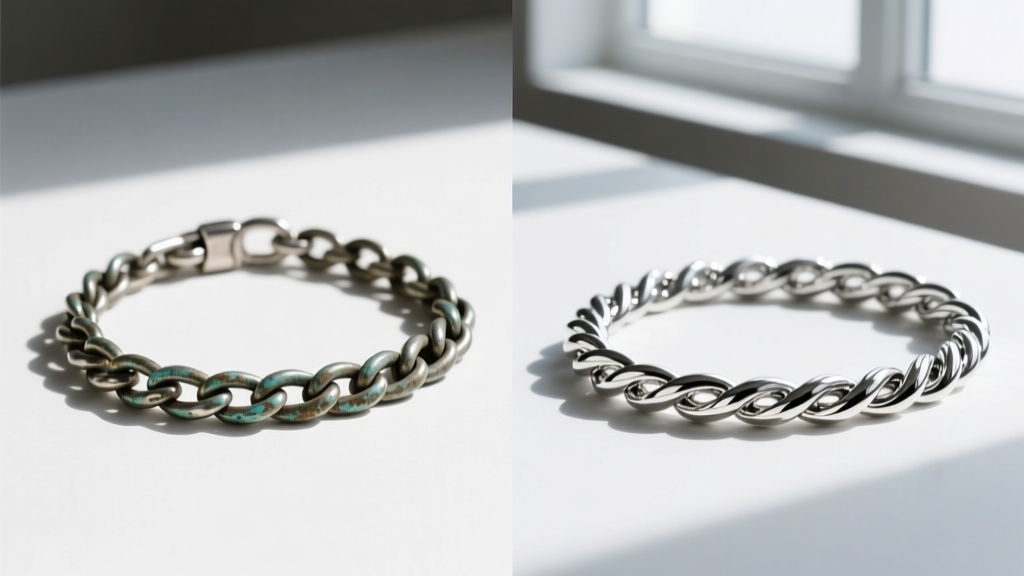
A significant percentage of modern 925 Italy silver necklace chains are flash-plated with rhodium, a rare platinum group metal. This plating is typically applied at a thickness of 0.1 to 0.5 microns. Rhodium is highly reflective, completely inert to oxygen and sulfur, and mimics the brilliant white luster of 18k white gold.
The Pros: Rhodium plating effectively halts tarnish and provides a scratch-resistant barrier. It is ideal for pendants and chains worn over clothing where friction is minimal.
The Cons: Plating is a sacrificial layer. On a necklace, high-friction areas—such as the clasp mechanism, the jump rings, and the back of the neck—will wear through the 0.5-micron layer within 6 to 18 months of daily wear. Once the rhodium breaches, the underlying silver is exposed to the oils and acidity of your skin, leading to localized, patchy tarnish that can be difficult to polish evenly without stripping the rest of the plating.
Expert Recommendation: If you plan to wear the necklace daily in the shower or while sleeping, opt for bare, unrhodiumed Italian sterling. It will develop a soft, natural patina over time but can be easily restored to a high polish with a treated jeweler's cloth. Reserve rhodium-plated pieces for occasional or evening wear.
Structural Vulnerabilities in Italian Chain Weaves
Italian manufacturers are renowned for their precision chain-making machinery, capable of producing weaves with microscopic tolerances. However, specific structural designs inherent to certain chain styles introduce unique failure modes that buyers must understand.
Snake Chains and Structural Memory
Snake chains are composed of tightly interlocking, slightly wavy rings that form a flexible, tubular surface. While visually striking and excellent for holding heavy pendants, they possess a critical vulnerability: structural memory. If a snake chain is bent at a sharp angle or kinked, the microscopic interlocking plates permanently deform. Unlike a curb or cable chain, a kinked snake chain cannot be repaired by a jeweler; the structural integrity is permanently compromised, and it will eventually snap at the crease.
Diamond-Cut Rope Chains
Rope chains are twisted to mimic the appearance of a woven fiber. Many Italian manufacturers apply a 'diamond-cut' finish, using a specialized lathe to shave flat, reflective facets into the links. While this maximizes light refraction, it inherently removes metal mass from the surface of the wire. A 2mm diamond-cut rope chain will have slightly less tensile strength than a 2mm standard rope chain. Always ensure the clasp and jump rings are soldered and proportionate to the chain's reduced surface mass.
Hollow vs. Solid Electroformed Chains
To offer a luxurious, thick appearance at a lower price point, some Italian factories use electroforming to create hollow chains. A 5mm hollow Cuban link might weigh the same as a 2mm solid cable chain. While visually impressive, hollow chains are highly susceptible to crushing. If slept in or snagged, the thin outer shell of silver will dent irreparably, and standard soldering techniques will melt the hollow structure. Always verify whether a chain is 'solid' or 'tubular/hollow' before purchasing.
Pricing Framework: Calculating True Value
Evaluating the price of a 925 Italy silver necklace requires moving beyond arbitrary retail markups and understanding the weight-based pricing model used by industry insiders. The true cost of a solid Italian silver chain is dictated by the daily spot price of silver, plus a manufacturing premium.
The Formula:
(Material Weight in Grams × Current Silver Spot Price per Gram) + (Italian Craftsmanship Premium)
The craftsmanship premium for high-quality Italian chains typically ranges from $2.00 to $6.00 per gram, depending on the complexity of the weave. A simple solid cable chain will sit at the lower end of the premium scale, while an intricate, multi-pass diamond-cut Figaro or Byzantine chain will command the higher end.
For example, if the spot price of silver is roughly $0.80 per gram, a 20-inch solid Italian rope chain weighing 15 grams would have a raw material cost of $12.00. Adding a $4.00/gram manufacturing premium brings the wholesale baseline to $72.00. Retail prices will naturally include overhead, but if you are being quoted $300 for a lightweight, simple 10-gram chain, you are paying for a brand name, not the metallurgical value.
Authentication and Long-Term Care
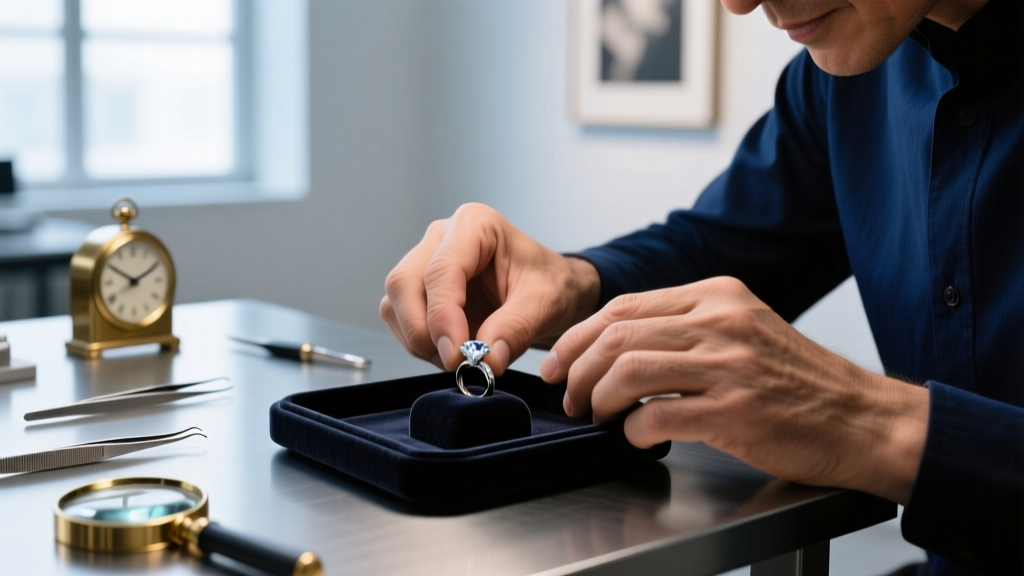
Because the '925 Italy' stamp commands a premium, it is frequently counterfeited by overseas manufacturers who cast the marks directly into base metal molds and apply a thick silver plating. Here is how to authenticate and care for your pieces using professional methodologies.
The Thermal Conductivity Test
Silver possesses the highest thermal conductivity of any common metal. If you place an ice cube on a bare 925 Italy silver necklace chain, the ice will begin to melt almost instantaneously, significantly faster than it would on a stainless steel or brass chain plated in silver. The metal will also become painfully cold to the touch within seconds as it rapidly draws heat from your fingers to the ice.
The Magnetic Slide Test
Silver is diamagnetic, meaning it is slightly repelled by magnetic fields rather than attracted to them. If you hold a strong neodymium magnet at a 45-degree angle and let a silver coin or thick chain slide down it, the magnet will fall slowly, as if moving through a viscous fluid, due to eddy current braking. A silver-plated brass or copper chain will drop at normal gravitational speed.
Proper Maintenance Protocols
- Never use liquid silver dips: These harsh thiourea-based chemicals strip rhodium plating, degrade the zinc alloys in Italian sterling, and can permanently cloud porous gemstones like turquoise or opals set in pendants.
- Use a treated polishing cloth: A microfiber cloth impregnated with jeweler's rouge is the safest way to remove sulfur oxidation without removing intentional patina or rhodium layers.
- Store in anti-tarnish environments: Keep your necklace in a sealed polyethylene bag with a 3M anti-tarnish strip or a simple piece of activated charcoal to absorb ambient sulfur compounds.
By understanding the precise metallurgical makeup, structural engineering, and assay laws behind a 925 Italy silver necklace, you transition from a passive consumer to an informed collector. Whether you are selecting a delicate rhodium-plated snake chain for a diamond solitaire or a heavy, bare sterling Figaro chain for daily wear, these material properties will dictate the longevity and beauty of your investment for decades to come.


