How to Value a Vintage Prayer Box Necklace Before Buying
Learn how to assess the true value of a vintage prayer box necklace. Discover pricing tiers, material markers, and tips to avoid overpriced reproductions.

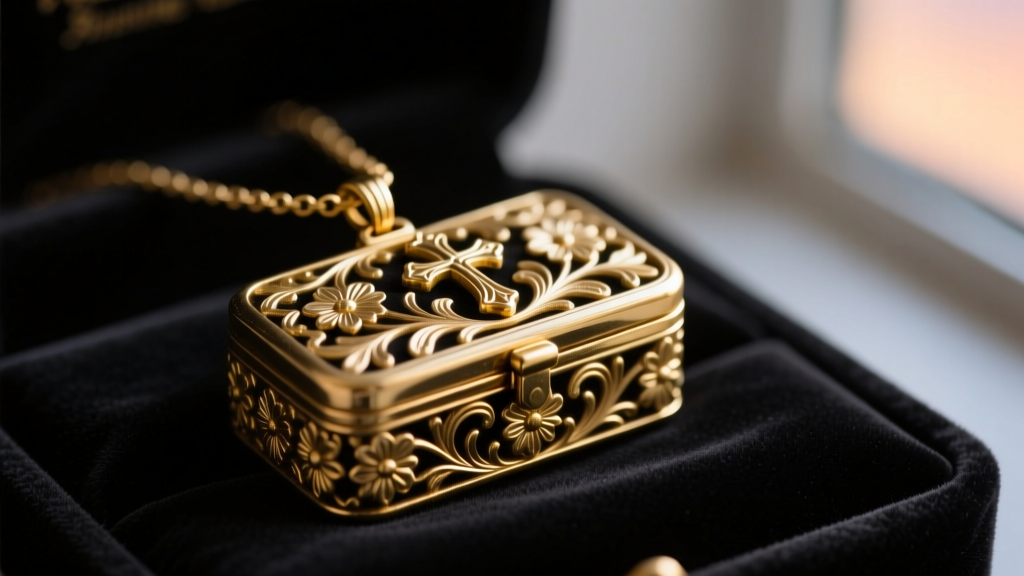
The vintage prayer box necklace—often referred to historically as a reliquary pendant or relicario—occupies a highly specific niche in the estate jewelry market. Originally designed to hold a tightly rolled prayer, a saint's relic, or a lock of hair, these pendants bridge the gap between devotional artifact and sentimental keepsake. However, the secondary market is currently saturated with 1970s mass-produced replicas and modern 'vintage-style' base metal imports disguised as antiques.
If you are evaluating a vintage prayer box necklace for purchase, assessing its true value requires looking past the ornate exterior. You must understand the metallurgical markers, mechanical construction techniques, and current restoration economics. This guide provides a comprehensive framework to determine if a piece is a genuine vintage treasure or an overpriced reproduction.
The Allure and Market Reality of Vintage Prayer Boxes
True vintage prayer boxes generally fall into two categories: late Victorian/Edwardian pieces (1890–1920) and mid-century devotional jewelry (1930–1960). The earlier pieces were often crafted in solid low-karat gold or heavy silver, featuring hand-engraved motifs or enamel work. Mid-century pieces, heavily influenced by the Catholic revival in Europe and the Americas, were predominantly made from rolled gold plate or gold-filled brass to keep them affordable for everyday parishioners.
Today, the market is flooded with modern cast replicas. These replicas are often produced using rubber mold casting, resulting in soft, indistinct floral patterns and a lack of sharp, hand-chased edges. Understanding the difference between a hand-fabricated vintage box and a modern cast copy is the first step in accurate value assessment.
Material Breakdown: What Are You Actually Paying For?
The most critical factor in pricing a vintage prayer box necklace is the metal composition. Sellers frequently mislabel base metals as 'gold' or 'silver' based purely on color. According to the Federal Trade Commission Jewelry Guides, specific thresholds must be met for a piece to be legally marketed as gold-filled or vermeil.
| Material Marking | Base Metal | Gold Layer Thickness | Value Retention | Typical Market Price |
|---|---|---|---|---|
| 1/20 14K GF | Brass / Copper | 5% of total weight | High | $120 - $280 |
| 1/40 12K RGP | Brass | 2.5% of total weight | Moderate | $65 - $110 |
| Vermeil | Sterling Silver | Min. 2.5 microns | High | $150 - $350 |
| Unmarked / Flash | Pewter / Zinc | < 0.1 microns | Negligible | $15 - $40 |
When examining the piece, look for hallmarks on the back bale (the loop the chain passes through) or stamped along the bottom rim of the box. A genuine '1/20 14K GF' stamp indicates a heavy layer of 14-karat gold mechanically bonded to a brass core, offering excellent longevity and intrinsic scrap value. Unmarked pieces that exhibit a brassy undertone where the gold has worn away are almost certainly modern flash-plated zinc alloys.
Authenticating Vintage vs. Modern Reproductions
Beyond hallmarks, the mechanical construction of the box reveals its true age. Vintage jewelry makers utilized specific fabrication techniques that are too labor-intensive for modern mass production.
The Hinge and Clasp Test
The hinge is the most reliable indicator of age. A genuine vintage prayer box will feature a mechanical friction hinge. This consists of two or three interlocking knuckles with a tiny steel or brass pin driven through the center. The ends of the pin are usually peened (flattened) or soldered to prevent it from sliding out. Under a 10x jeweler's loupe, you should see slight irregularities in the pin and minor tool marks around the knuckles.

Modern reproductions often use a continuous barrel hinge (common in cheap lockets) or, worse, rely on industrial adhesives to bind the two halves together. Furthermore, examine the latch. Vintage boxes typically use a simple friction snap or a tiny hook-and-eye catch soldered to the front edge. Modern replicas sometimes feature poorly integrated magnetic catches or lack a front latch entirely, relying solely on the stiffness of a newly cast hinge to stay closed.
Pricing Tiers: A Buyer’s Value Matrix
When negotiating or assessing a listing, use this value matrix to determine if the asking price aligns with the piece's actual market reality. Prices assume the piece includes an era-appropriate chain; pendant-only sales should be discounted by 15-20%.
- Tier 1: Base Metal / Modern Repro ($15 - $45) - Flash-plated, soft cast details, glued or barrel hinges. Often sold as 'vintage style' on mass-market platforms.
- Tier 2: Vintage Rolled Gold Plate / RGP ($65 - $120) - Genuine mid-century pieces, 1/40 RGP or gold electroplate over brass. Good condition, functional latch, minor patina.
- Tier 3: Vintage 1/20 14K Gold-Filled ($140 - $280) - High-quality mid-century or early 20th-century pieces. Heavy gold layer, sharp repoussé details, original steel hinge pin intact.
- Tier 4: Solid Sterling, Vermeil, or Low-Karat Gold ($300 - $850+) - Edwardian or Victorian era. Hand-engraved, possibly featuring guilloché enamel or seed pearl accents. Highly collectible.
Common Failure Modes and Restoration Costs
A vintage prayer box necklace is a mechanical object with moving parts, making it susceptible to specific failure modes. When assessing value, you must factor in the cost of potential restorations. According to estate jewelry restoration experts at Lang Antiques, repairing small mechanical components requires specialized bench jewelers, which can quickly erase the profit margin on a lower-tier piece.
Always inspect the interior cavity of a prayer box. If the previous owner stored a damp paper scroll or organic relic inside for decades, the trapped moisture can cause severe interior verdigris (copper oxide buildup), which weakens the structural integrity of the floor plate and can eventually cause the hinge to tear through the metal.
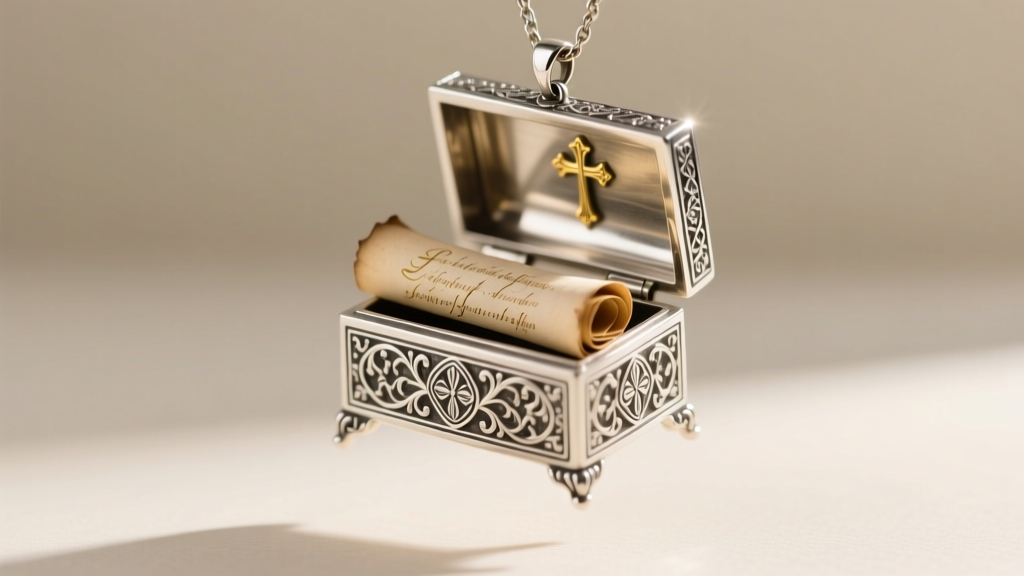
Restoration Cost Breakdown:
- Hinge Pin Replacement: $45 - $85. Required if the original friction pin has sheared off due to metal fatigue.
- Latch Rebuilding: $60 - $110. Involves soldering a new catch plate and adjusting the tension spring.
- Interior Cleaning / Verdigris Removal: $30 - $50. Ultrasonic cleaning and chemical neutralization to stop active corrosion.
- Replacement Interior Scroll: $15 - $25. Sourcing period-correct, tightly rolled vellum or cotton paper that fits the specific 1.5 x 0.5-inch cavity dimensions.
Final Verdict: When to Buy and When to Walk Away
A vintage prayer box necklace is a worthwhile investment when it exhibits clear markers of hand-fabrication, possesses verifiable metallurgical hallmarks (like 1/20 GF or 925), and features a fully functional mechanical hinge and latch. These pieces not only hold their value but often appreciate as the supply of well-preserved mid-century devotional jewelry continues to shrink.
However, you should walk away from any piece priced in the Tier 3 or Tier 4 range if the seller cannot provide clear macro photographs of the hinge pin, the interior cavity floor, and the back bale hallmark. The market is simply too saturated with high-quality modern castings to rely on visual aesthetics alone. By applying this strict material and mechanical assessment framework, you can confidently acquire a genuine piece of history without overpaying for a modern imitation.


